N9C Engine
- Engine
- 1998 cm3
- Aspiration
- Naturally aspirated engine
- Fuel
- Petrol (Gasoline)
- Fuel injection system
- Multi-port manifold injection
- Power
- 125 hp @ 5500 rpm
- Torque
- 177 Nm @ 2500 rpm
- Cylinders
- 4
- Valves
- 8, 2 per cylinder
- Cylinders position
- Inline
- Valvetrain
- DOHC
- Oil capacity
- 4.5 l
- Coolant
- 7.3 l
# Vehicles powered by this engine
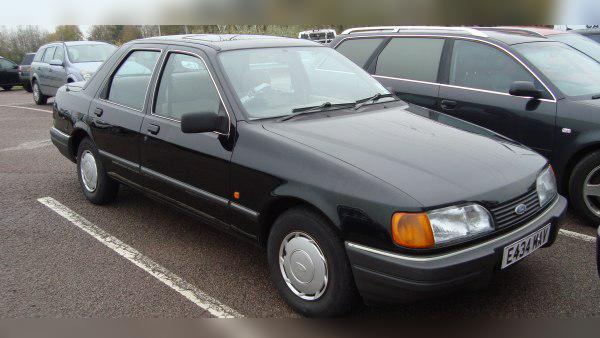
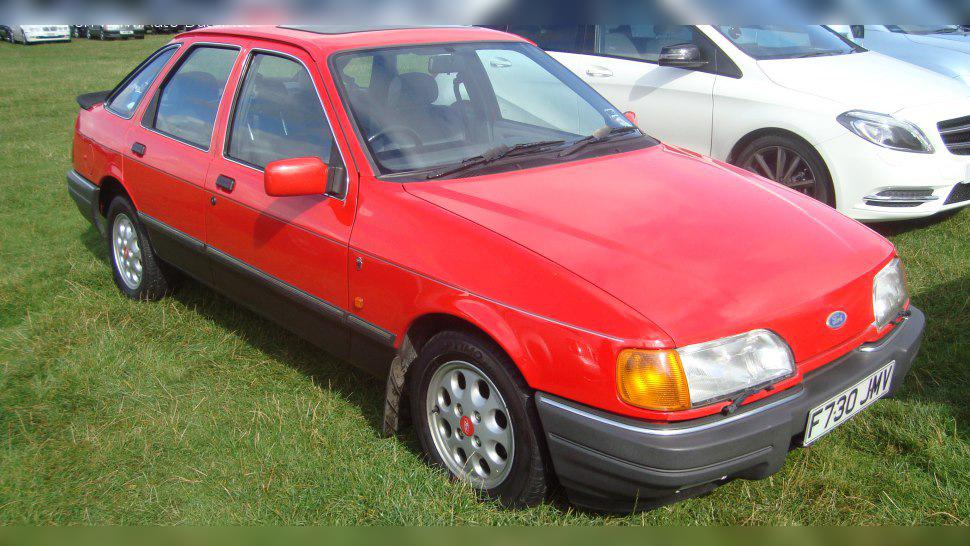
Ford 2.0 DOHC (N9C) – Experiences, issues, fuel consumption and buying tips
If you’re a fan of “old-school” Fords, the N9C code surely triggers some nostalgia. It’s the legendary 2.0 DOHC engine that replaced the famous Pinto in the Ford Sierra in the late ’80s and early ’90s. Back in the day, this engine offered an excellent balance of power and fuel consumption, but today, as a “youngtimer”, it requires a specific maintenance approach. In this text, as someone who has spent a lot of time under the hood of these models, I’ll give you a detailed breakdown of what to expect from this powerplant.
Key points in short (TL;DR)
- Dual camshafts, 8 valves: Although it’s DOHC (Double Overhead Cam), this engine has only 8 valves, which was a rather unusual design for that time.
- Chain-driven: It uses a timing chain that is long-lasting, but the plastic guides are its weak point.
- Sensitive cylinder head: The biggest issue with this engine is cracking of the head due to overheating. The cooling system must be perfect.
- LPG friendly: It runs very well on LPG, which is a lifesaver for your wallet considering its fuel consumption.
- MT75 gearbox: The manual gearbox is fantastic, while the automatic (A4LD) is best avoided.
- Fun character: With 125 hp in a relatively light Sierra, it offers genuine driving pleasure with rear-wheel drive.
Contents
- Technical Specifications
- Reliability and Maintenance
- Specific Parts and Costs
- Fuel Consumption and Performance
- Additional Options and Modifications
- Gearbox
- Verdict and Buying Advice
Technical Specifications
| Parameter | Value |
|---|---|
| Engine displacement | 1998 cc (2.0 L) |
| Engine code | N9C (DOHC I4) |
| Power | 92 kW (125 hp) at 5500 rpm |
| Torque | 177 Nm at 2500 rpm |
| Configuration | Inline 4-cylinder, DOHC, 8 valves |
| Injection type | Multi-point fuel injection (Ford EEC-IV) |
| Aspiration | Naturally aspirated |
| Camshaft drive | Chain |
Reliability and Maintenance
Chain or belt?
The N9C engine uses a timing chain to drive the two camshafts. In theory, this is a “maintenance-free” system, but in practice, on cars that are over 30 years old, things are different. While the chain itself rarely snaps, the plastic guides and tensioners become brittle and break. If you hear metal-on-metal rattling (“rustling”) on a cold start, that’s a sign that the chain is loose or the guides are worn. Replacing the full chain kit is a moderately demanding job, and parts are available but can be more expensive than an average timing belt kit.
Most common failures and the “Achilles’ heel”
The most serious problem with this engine is cracking of the cylinder head. The head is made of aluminum, while the block is cast iron. Due to the different thermal expansion of these materials, and the often faulty viscous fan on the radiator (standard on the Sierra), overheating is common. The head usually cracks between the valve seats. Symptoms include loss of coolant with no visible leaks, “mayonnaise” under the oil filler cap, or radiator hoses that go rock hard.
Oil leaks from the valve cover are also very common, as well as issues with the TPS (throttle position sensor), which can cause an unstable idle.
Service intervals and oil
There is no major service in the classic sense (no timing belt replacement), but it’s recommended to check the chain and water pump every 100,000 km to 150,000 km. Minor service (oil and filters) should be done every 10,000 km or once a year. Given the age of these engines, more frequent oil changes will extend the life of the hydraulic lifters.
Oil capacity: This engine takes approximately 4.0 to 4.25 liters of oil (with filter). The recommended grade is 10W-40 semi-synthetic. In colder climates you can use 5W-30, but for older, high-mileage engines, 10W-40 is the “sweet spot”.
Oil consumption: If in good condition, these engines shouldn’t consume much oil. Consumption up to 0.5 liters per 10,000 km is acceptable. If it burns a liter per 1000 km, the likely culprits are valve stem seals (a common age-related issue) or piston rings.
Specific Parts (Costs)
Dual-mass flywheel and clutch
Good news: the Ford Sierra with the N9C engine and a manual gearbox does NOT have a dual-mass flywheel. It uses a classic solid flywheel. This means the clutch kit (pressure plate, disc, release bearing) is much cheaper to replace compared to modern diesels. The clutch kit price falls into the “not expensive” category.
Injection system and injectors
The engine uses Ford’s EEC-IV management and multi-point injection. The injectors are robust and rarely cause trouble. If problems do appear, they are usually due to dirt and rust from an old fuel tank, not the injector design itself. Ultrasonic cleaning usually solves the issue. The fuel pump is electric and is mounted outside the tank (or inside on later versions), and it is more often the source of problems than the injectors.
Turbo, DPF, EGR
- Turbo: No, this is a naturally aspirated engine. No turbo, no intercooler, which means fewer parts to fail.
- DPF: No, this is a ’90s petrol engine.
- EGR: Some models for specific markets (e.g. Germany, Switzerland) had a primitive EGR system. It often clogs up with soot, which chokes the engine. Fortunately, it’s easy to block off or clean without any electronic side effects.
Fuel Consumption and Performance
Real-world fuel consumption
Don’t expect miracles. This is an old-design 2.0 engine.
City driving: Realistically, expect between 11 and 13 liters/100 km, depending on how heavy your right foot is and traffic conditions. In winter it can go up to 14 l/100 km.
Highway / open road: Here the engine is much more economical and can go down to 7.5 to 8.5 liters/100 km with moderate driving.
Performance and “sluggishness”
With 125 hp and 177 Nm, this engine is anything but sluggish in a Sierra body that weighs around 1150–1200 kg. On the contrary, a Sierra with this engine is quite lively. The engine likes to rev (maximum torque is low, at 2500 rpm), which makes it flexible in city driving. It’s quick off the line at traffic lights, and the rear-wheel drive allows for some fun driving in the wet.
Motorway
On the motorway it feels confident. Thanks to the well-chosen gearbox ratios, at 130 km/h the engine spins at around 3200–3500 rpm (in 5th gear with the manual). There is some noise, but nothing unbearable. There is enough power in reserve for overtaking without constantly having to shift down.
Additional Options and Modifications
LPG (Autogas)
This engine is an ideal candidate for LPG. Since it has a metal intake manifold (on most versions) and hydraulic valve lifters, it handles LPG very well. There is no need for expensive valve lubrication systems. A sequential LPG system is recommended, but this engine will run quite well even on a simple venturi system, provided the ignition system (spark plugs, leads) is in perfect condition. Installing LPG here is the smartest investment you can make.
Chipping (Tuning)
Forget about “chipping”. On a naturally aspirated petrol engine of this generation, a Stage 1 remap might give you 3–5 hp at best, which you won’t feel in real driving and is basically wasted money. Power gains here come the “old-school” way: head work, porting and polishing, performance camshafts and a tubular exhaust manifold. That’s expensive and not worthwhile for a daily driver.
Gearbox
Manual vs automatic
Two types of gearboxes were paired with the N9C engine:
- MT75 (5-speed manual): This is one of Ford’s best gearboxes from that era. It’s recognizable by the fact that reverse is engaged by pushing right and back (below 5th gear). It’s very precise, durable, and can handle much more torque than this engine produces.
- A4LD (4-speed automatic): A classic hydraulic automatic. Unfortunately, it’s not known for reliability. It often overheats the oil, shifts slowly and “eats” a lot of the engine’s power.
Gearbox issues
Manual (MT75): Almost indestructible. If it’s hard to engage first or reverse, the problem is usually in the plastic bushings of the gear lever or the clutch cable (which has a self-adjusting mechanism that can slip). It’s recommended to change the gearbox oil every 60,000–80,000 km (use 75W-90 suitable for the MT75, pay attention to the correct spec because the casing is aluminum).
Automatic (A4LD): Failures are common – slipping clutches, loss of torque converter lock-up. Overhaul is very expensive and often not worth it compared to the value of the car.
Buying Used and Conclusion
If you’re looking at a Sierra with the N9C engine, here’s the checklist:
- Cold start: Listen to the chain. Rattling for the first 3 seconds is “ok”; anything longer than that means upcoming expense.
- Overheating test: Let the car idle until the fan (or viscous fan) kicks in. Watch the temperature. Squeeze the hoses – if they’re rock hard, the head has probably cracked or the head gasket has failed.
- Oil check: Remove the oil filler cap. If you see an emulsion the color of milky coffee, walk away from that car.
- Rust: This isn’t engine-related, but Sierras rust badly on arches, sills and mounting points. The engine can be perfect, but it’s pointless if the body is disappearing.
Verdict: The N9C (2.0 DOHC) is probably the best “civilian” petrol engine ever fitted to the Sierra. It’s much more modern and efficient than the old Pinto, and cheaper to maintain than the V6 models. If you find an example that hasn’t been overheated and has solid bodywork, paired with the MT75 gearbox, you’ll get a reliable, fun classic that, with LPG, is very cheap to run. Avoid the automatic at all costs.
Was this content useful to you?
Your opinion helps us to improve the quality of the content.