LFB2 Engine
- Engine
- 1993 cm3
- Aspiration
- Naturally aspirated engine
- Fuel
- Petrol (Gasoline)
- Fuel injection system
- Multi-port manifold injection
- Power
- 143 hp @ 6200 rpm
- Torque
- 175 Nm @ 3500 rpm
- Cylinders
- 4
- Valves
- 16, 4 per cylinder
- Cylinders position
- Inline
- Max engine speed
- 6400 rpm
- Valvetrain
- DOHC, i-VTEC
- Oil capacity
- 3.8 l
- Coolant
- 4.88 l
- Systems
- Start & Stop System
# Vehicles powered by this engine
Honda 2.0 i-MMD Hybrid (LFB2): Experiences, problems, fuel consumption and used car buying guide
Key points (TL;DR)
- Exceptional reliability: The LFB2 is a naturally aspirated petrol engine running on the Atkinson cycle – the engine is unstressed and long-lasting.
- Hybrid system (i-MMD): This is not a conventional engine that constantly drives the wheels; most of the time it serves as a generator for the electric motor.
- Timing chain instead of belt: The timing drive uses a chain that does not require regular replacement.
- Fuel consumption: Ridiculously low for a sedan of this size, especially in the city (often below 5 l/100km).
- Specific sound: Under hard acceleration the engine runs at high revs (scooter-like effect), which can irritate drivers used to automatics with fixed gears.
- Maintenance: Requires strict adherence to the oil specification (0W-20) and regular checks of the hybrid system.
- Transmission: There is no conventional gearbox, but an e-CVT drive (without belt and cones) which is practically unbreakable.
Contents
Introduction: What is the LFB2 and where is it used?
The engine designated as LFB2 is the heart of Honda’s advanced third-generation hybrid system (i-MMD – Intelligent Multi-Mode Drive). Although on paper it is rated at 143 hp, that’s only part of the story. This two‑liter naturally aspirated petrol engine is designed to run on the Atkinson cycle, sacrificing some low‑end power in favor of top‑class thermal efficiency (over 40%).
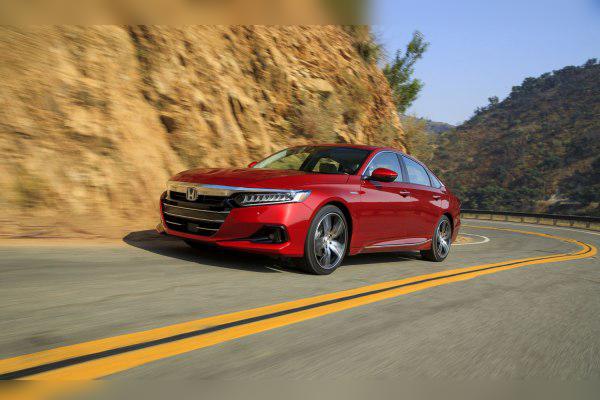
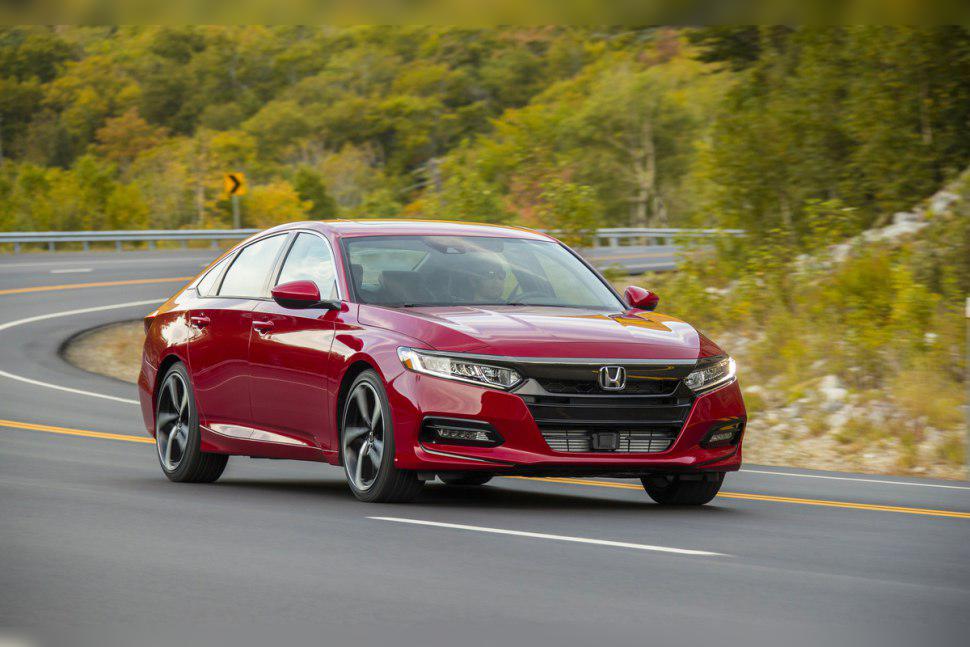
It is primarily installed in the Honda Accord X (10th generation) and its facelifted version (2020 facelift). It’s important to understand the philosophy of this powertrain: most of the time the petrol engine does not drive the wheels directly. It drives a generator that produces electricity, and that electricity is used by a powerful electric motor (181 hp / 315 Nm) to move the car. Only at higher motorway speeds does a clutch engage and the petrol engine takes over direct drive. That’s why the total system output is 212 hp, which is an impressive figure.
Technical specifications
| Parameter | Data |
|---|---|
| Engine displacement | 1993 cc (2.0 L) |
| Power (petrol engine) | 105 kW (143 hp) @ 6200 rpm |
| Torque (petrol) | 175 Nm @ 3500 rpm |
| System power (hybrid) | 158 kW (212 hp) |
| Engine code | LFB2 (L-series) |
| Injection type | PGM-FI (multi-point indirect injection) |
| Induction type | Naturally aspirated |
| Number of cylinders / valves | 4 / 16 (DOHC i-VTEC) |
Reliability and maintenance
Timing drive: Chain or belt?
Honda’s LFB2 engine uses a chain to drive the camshafts. This chain is extremely durable and designed to last as long as the engine itself (“lifetime”). Since the engine often runs in an optimal rpm range (because the computer controls it as a generator) and frequently shuts off in city driving, stress on the chain is minimal. Preventive replacement before audible symptoms appear is not required, and those symptoms rarely occur before 300,000 km.
Most common failures
This is one of the most reliable powertrains on the market today. Still, there are a few small things to watch out for:
- Hybrid battery cooling: The battery cooling fan (often located under the rear seat) can get clogged with pet hair or dust. If the battery overheats, the system reduces power.
- 12V battery: As with all hybrids, the small 12V battery is a weak point. If it dies, you won’t be able to start the car (the “Ready” light won’t come on), even if the high‑voltage traction battery is full.
- Sensors: Occasional issues with air‑flow sensors or oxygen sensors (lambda) at high mileage, but nothing out of the ordinary compared to the average.
Major and minor service
A “major service” in the classic sense (replacement of timing belts and tensioners) does not exist here as it does on diesels. Inspection and, if necessary, replacement of the auxiliary (serpentine) belt (for the water pump and other accessories) is done as needed, usually around 100,000 km or every 5–7 years.
The minor service (oil and filters) is done every 10,000 to 15,000 km or once a year. Since the petrol engine does not run all the time, the oil gets less contaminated, but it must not be neglected because of moisture condensation caused by frequent start/stop cycles.
Oil: Quantity and grade
The LFB2 engine takes approximately 3.7 to 4.0 liters of oil (with filter). The recommended grade is strictly 0W-20. Why? Because of the engine’s tight tolerances and the need for instant lubrication during cold starts (the hybrid often starts the engine while driving when it is still cold). Using thicker oil (5W-30 or 10W-40) can lead to increased fuel consumption and issues with the VTEC system.
Oil consumption
This engine is not known for oil consumption. If the engine is healthy, the level should not drop below minimum between services. Consumption of up to 0.5 liters per 10,000 km is considered acceptable, but anything above that points to problems with piston rings or the PCV valve, which is rare below 200,000 km.
Specific parts (costs)
Dual-mass flywheel
Good news: This engine DOES NOT have a dual-mass flywheel. In fact, it doesn’t even have a conventional flywheel or clutch in the traditional sense. The role of “shock absorber” is taken over by the electric motors and planetary gears inside the e-CVT housing. This is a huge plus for your wallet, as it eliminates one of the most expensive failures on modern cars.
Fuel injection system
The LFB2 uses a proven port (indirect) injection system into the intake manifold (PGM-FI), not direct injection (GDI), which is prone to carbon buildup on intake valves. The injectors are very durable and not as sensitive as on diesels. Replacement cost for injectors is “moderate” to “affordable”, but failures are extremely rare.
Turbocharger
The engine is naturally aspirated, so it does not have a turbocharger. That’s one more expensive component you don’t have to worry about. No intercooler, no oil leaks from the turbo, no turbo lag.
DPF and EGR
DPF: Being a petrol engine, it does not have a diesel DPF filter. However, newer models (Euro 6d‑TEMP and newer) for the European market may have a GPF (Gasoline Particulate Filter). A GPF regenerates much more easily than a DPF because petrol exhaust gases are hotter.
EGR: It does have an EGR valve. On hybrids running the Atkinson cycle, EGR is crucial for efficiency. It can get dirty at high mileage (over 200k km), which manifests as rougher engine operation. Cleaning is not expensive.
Fuel consumption and performance
Real-world consumption (city vs highway)
This is where the Accord Hybrid really shines.
- City driving: Expect consumption between 4.5 and 5.5 l/100km. In heavy traffic, the hybrid system saves the most thanks to regenerative braking.
- Motorway (130 km/h): Here consumption increases because the petrol engine directly drives the wheels. Expect around 6.5 to 7.5 l/100km.
Is the engine “sluggish”?
Not at all. Although 143 hp sounds modest for a large sedan, the 315 Nm electric motor is available IMMEDIATELY, from zero rpm. The 0–100 km/h sprint takes under 8 seconds, which is quicker than most 2.0‑liter diesels. In‑gear acceleration is lightning fast thanks to the instant response of the electric motor. There’s no waiting for a turbo to spool up.
Behavior on the motorway
At 130 km/h the engine runs relatively quietly because the clutch is engaged in “overdrive” mode (direct drive). However, during overtaking or on inclines, the system disengages the direct connection and the petrol engine jumps to high revs to generate electricity for the electric motor. This is when the so‑called “drone” effect appears – the engine drones at a constant pitch while the car accelerates. Some people find this annoying, but it is technically necessary for this type of hybrid.
Additional options and modifications
LPG installation
Technically it is possible (because it has indirect injection), but it is completely pointless. First, the engine already uses only about 5 liters of petrol. Second, in the Accord X Hybrid the boot is already partially occupied by the battery (even though it’s well hidden), so an LPG tank would further reduce the space. Third, the start/stop strategy is optimized for petrol; an LPG ECU would struggle to stay in sync with the hybrid management without triggering errors. Recommendation: Do not install LPG.
Chip tuning (Stage 1)
This engine cannot and should not be chip‑tuned in the traditional way. It is a naturally aspirated engine, so gains are negligible (maybe 3–5 hp). Also, the engine is controlled by a complex ECU that balances its operation with the electric motor. Any “tinkering” with the maps can disrupt battery charging and the operation of the hybrid system.
Transmission: e-CVT
Type of transmission
The LFB2 engine comes exclusively with an e-CVT. Important: This is NOT a conventional CVT with a belt (like on a scooter) that many people dislike for its unreliability. Honda’s i-MMD system actually does not have a traditional gearbox. It consists of two electric motors and a single lock‑up clutch. Power transfer is mostly electric, and at higher speeds a fixed gear ratio (equivalent to 6th gear) connects the engine to the wheels.
Failures and maintenance
- Most common failures: Virtually none. Since there are no friction elements (clutch plates, belts, cones) that wear out through friction, this system is more durable than any manual or conventional automatic transmission.
- Clutch replacement cost: There is no clutch kit replacement. The existing clutch is a “wet” unit used only to engage/disengage direct drive (lock‑up), and it lasts as long as the car.
- Transmission service: It is recommended to change the transmission fluid (Honda HCF-2 fluid) every 40,000 to 60,000 km. This is a simple drain‑and‑fill procedure and not expensive (about 3–4 liters of fluid). Regular changes are crucial for cooling the motor windings inside the housing.
Buying used and conclusion
What to check before buying?
- Service history: Check whether the oil was changed on time and whether 0W-20 was used.
- Hybrid battery test: At an authorized service center, ask for a battery capacity test. Although they are long‑lasting, replacement is “very expensive” (several thousand euros).
- Test drive: Pay attention to the transition from electric to petrol. It should be almost imperceptible, without jerks. A rough transition may indicate issues with the engine mounts (which are active/hydraulic and expensive).
- Front suspension: Due to the weight of the hybrid system and the high torque, control arm bushings and arms are under higher stress.
Final verdict
The LFB2 engine in the Honda Accord is a masterpiece of engineering for those who seek comfort, quiet operation and fuel efficiency. It is not for racers who want engine sound and gear shifting.
Who is it for? Ideal for drivers who cover a lot of kilometers in mixed driving, taxi drivers (because of reliability and city fuel economy) and families who want a “fill up and drive” car without worrying about turbos, dual‑mass flywheels and DPF filters.
Was this content useful to you?
Your opinion helps us to improve the quality of the content.