K24 Engine
- Engine
- 2354 cm3
- Aspiration
- Naturally aspirated engine
- Fuel
- Petrol (Gasoline)
- Fuel injection system
- Multi-port manifold injection
- Power
- 190 hp @ 6800 rpm
- Torque
- 220 Nm @ 4500 rpm
- Cylinders
- 4
- Valves
- 16, 4 per cylinder
- Cylinders position
- Inline
- Valvetrain
- DOHC
- Oil capacity
- 4.2 l
- Coolant
- 5.1 l
# Vehicles powered by this engine

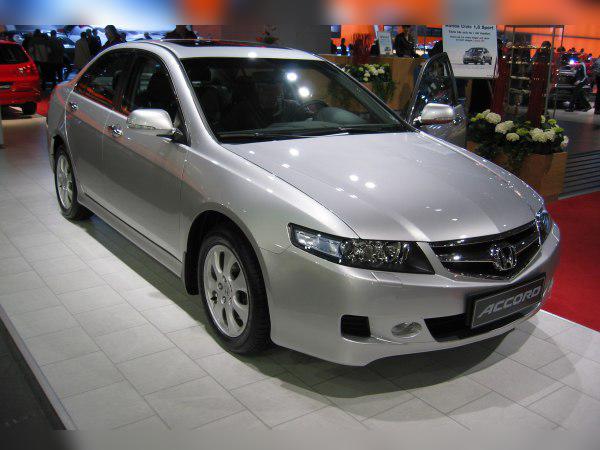
Honda K24 2.4 i-VTEC (190 hp) – Experiences, issues, fuel consumption and used car buying guide
Key points (TL;DR)
- Reliability: One of the most reliable petrol engines ever made. Mechanically extremely robust (“bulletproof”) with proper maintenance.
- Performance: Naturally aspirated 190 hp offers excellent throttle response and linear power delivery, but it needs high revs to really “breathe”.
- Fuel consumption: Not a low-consumption engine. In the city expect a two-digit figure (11–14 l/100 km), while on the open road it is very reasonable.
- Key issue: The VTC actuator (camshaft pulley) often rattles on cold start. Also, the engine tends to “drink” oil if driven frequently in VTEC mode.
- Maintenance: Requires high-quality oil and regular valve adjustment (mechanical lifters). Parts can be more expensive compared to European competitors.
- Gearbox: The manual gearbox is a masterpiece of precision, the automatic is slower but very durable.
- Recommendation: Highly recommended for enthusiasts and those who want peace of mind, provided they accept higher fuel consumption.
Contents
Introduction: The legend called K24
The K-series engine, specifically the K24 variant (most commonly designated K24A3 in the European Accord VII), represents the pinnacle of Honda engineering in the era of naturally aspirated four-cylinder engines. It was installed in the seventh-generation Honda Accord (CL9) and the wagon version (Tourer), as well as in the prestigious Type-S model. This is not an ordinary engine for getting from point A to point B; it is a powerplant that combines the longevity of Japanese taxis with the sporty spirit of the racetrack. For many, this is “the last true Honda engine” before the mass transition to the turbo era.
Technical specifications
| Parameter | Value |
|---|---|
| Engine displacement | 2354 cc |
| Power | 140 kW (190 hp) at 6800 rpm |
| Torque | 220–223 Nm at 4500 rpm |
| Engine code (Europe) | K24A3 |
| Injection type | MPI (Multi-Point Injection) – Indirect |
| Induction | Naturally aspirated |
| Valve train | DOHC, i-VTEC, Chain |
Reliability and maintenance
Does this engine have a timing belt or a chain?
The Honda K24 uses a timing chain. This chain is very durable and generally does not require replacement before 200,000 or even 300,000 km, provided the oil has been changed regularly. However, the chain can stretch if the engine has been run with a low oil level, which will trigger the “Check Engine” light (cam/crank correlation error).
What are the most common failures on this engine?
Although the engine is a real “workhorse”, there are some specific weak points:
1. VTC actuator (rattle at startup): The most common issue. On cold start you can hear an unpleasant metallic rattle for 1–2 seconds. This is a sign that the variable valve timing mechanism is starved of oil. It’s not catastrophic, but it is annoying and should be addressed.
2. Oil leaks: The VTEC solenoid gasket and the crankshaft oil seal tend to start leaking with age.
3. Oil consumption: Some units consume oil due to stuck oil control rings (a consequence of poor maintenance or overly long oil change intervals).
4. Knock sensor: Can fail, leading to loss of power and a check engine light.
At what mileage is the “major service” done?
Since the engine has a chain, a classic “major service” (as with a belt) does not exist at a fixed interval. Instead, at around 100,000–120,000 km the auxiliary (serpentine) belt (PK belt) is replaced along with tensioners and the water pump if needed. The timing chain is checked acoustically and via diagnostics at higher mileages.
How many liters of oil does this engine take and which viscosity is recommended?
The sump holds approximately 4.2 to 4.5 liters of oil (including the filter). The recommended viscosity is 5W-30 or 0W-30 (fully synthetic). Some owners switch to 5W-40 at higher mileage, but thinner oil is better for the VTEC system and cold starts.
Does it consume oil between services and what amount is considered normal?
Yes, K24 engines are known to “sip” some oil, especially if often driven in VTEC mode (over 6000 rpm). Consumption of 0.5 to 1 liter per 3,000–5,000 km can be considered acceptable for this engine under spirited driving. If you drive gently, consumption should be minimal. Always check the oil level every 500–1000 km! A low oil level is deadly for the chain and camshafts on this engine.
At what mileage should the spark plugs be replaced?
The factory interval for iridium spark plugs (NGK Laser Iridium or Denso) is around 100,000 to 120,000 km. Do not skimp on spark plugs; this engine requires top-quality plugs for proper coil operation.
Maintenance specificity – Valve adjustment:
This engine does not have hydraulic lifters. This means that mechanical valve clearance adjustment is required every 40,000 km (as recommended by enthusiasts) or at the latest at 100,000 km (factory). If you hear “ticking” or the engine runs rough, it’s time for an adjustment.
Specific parts (Costs)
Does the engine have a dual-mass flywheel?
Yes. Versions with a manual gearbox have a dual-mass flywheel. It is quite durable, but replacement is expensive (often over 600–800 EUR for a kit with clutch, depending on the market). Models with an automatic gearbox do not have a dual-mass flywheel.
What kind of injection system does it have and are the injectors problematic?
The engine uses a classic MPI (Multi-Point Injection) system with injection into the intake manifold. Petrol injectors are extremely reliable and failures are very rare. There are no issues with carbon buildup on the valves as with newer direct-injection engines.
Does the engine have a turbocharger?
No. This is a pure naturally aspirated engine. No turbo, no intercooler, no boost hoses that can burst. Its service life is significantly longer precisely because of its simplicity and the absence of a turbocharger.
Does this model have a DPF filter, EGR valve or AdBlue?
It has no DPF filter and no AdBlue (this is a petrol engine). It does have an EGR valve, but unlike diesels, on this engine the EGR very rarely clogs. Even if it gets dirty, cleaning is simple and cheap. The main emissions component is the catalytic converter, which can fail if the engine burns a lot of oil or is driven with an incorrect mixture.
Fuel consumption and performance
What is the real fuel consumption in city driving?
Let’s be honest – a 2.4-liter engine needs fuel.
- City (Manual): 11–13 l/100 km.
- City (Automatic): 12–15 l/100 km (in winter and heavy traffic it can be even higher).
If someone tells you this engine uses 9 liters in the city, they are probably lying or driving at night with no traffic lights.
Is this engine “lazy” for the weight of the car?
Absolutely not. With 190 hp and 220 Nm, the K24 handles the weight of the Accord (around 1400–1500 kg) very well. For a naturally aspirated engine, it is very flexible. Up to 4000 rpm it behaves like a tame sedan, and when VTEC kicks in (over 6000 rpm), the engine changes its sound and character, pulling strongly all the way to the redline (7200+ rpm). Overtaking is safe and quick, but it does require downshifting.
How does the engine behave on the motorway and at what rpm does it cruise at 130 km/h?
This is a born cruiser.
- Manual (6-speed): At 130 km/h the engine spins at about 3,200–3,400 rpm. The cabin is quiet and there is enough power for acceleration even in sixth gear.
- Automatic (5-speed): Revs are slightly lower due to longer gearing, which improves comfort.
Fuel consumption on the open road at 120–130 km/h is around 7.5 to 9 liters, which is an excellent result for this power level.
Additional options and modifications
Is this engine suitable for LPG (autogas) conversion?
Yes, but with caution. Honda engines have somewhat “softer” valve seats. LPG installation is possible and can pay off, but it requires:
1. A top-quality LPG system and an experienced installer.
2. More frequent valve clearance checks (every 20,000–30,000 km is a must!).
3. Many recommend a valve lubrication system (“dripper” or electronic additives), although regular valve adjustment is the key. If you neglect the valves on LPG, the cylinder head will suffer.
How much can this engine be safely “chipped” (Stage 1)?
On naturally aspirated engines, classic “chip tuning” does not bring big power gains (maybe 10–15 hp at most). However, on the Honda K24, the so-called ECU “reflash” is very popular.
The main benefit is not peak power, but lowering the VTEC engagement point (e.g. from 6000 to 4800 rpm). This drastically changes the car’s character – you get much more power in the mid-range, the car becomes livelier and more pleasant for everyday driving. This is considered a safe modification.
Gearbox
Which gearboxes are available?
With the 2.4 engine there are two options:
1. 6-speed manual: One of the best gearboxes in its class. Short, precise throws, a real joy to use.
2. 5-speed automatic: A classic torque-converter automatic (not DSG/CVT). Very smooth, but it “steals” some power and increases fuel consumption.
Most common issues and maintenance:
Manual: Almost indestructible by itself. Issues usually come down to the dual-mass flywheel (rattling at idle, vibrations) and the clutch kit. Gearbox oil (Honda MTF) should be changed every 60,000–80,000 km to preserve smooth shifting.
Automatic: Very reliable, but sensitive to old oil. Oil changes (only genuine Honda ATF-Z1 or the newer DW-1) are mandatory every 40,000–60,000 km. If the automatic “jerks” or hesitates, the problem is often just old oil or dirty solenoids. There is no dual-mass flywheel.
Buying used and conclusion
When buying a Honda Accord 2.4, pay attention to the following:
- Cold start: Insist that the engine is completely cold. Listen for a short rattle (1–2 seconds) immediately after starting. That’s the VTC actuator. The repair is not cheap (parts + labor).
- Steering rack: Check for oil leaks from the steering rack or knocking noises; this is a common weak point of this Accord generation.
- Driveshafts: During acceleration (especially in 2nd gear), check for vibrations in the steering wheel or body. This indicates worn inner CV joints.
- Oil: Pull out the dipstick. If the level is at minimum or below, walk away. An owner who doesn’t top up oil in a VTEC engine has likely damaged the chain or camshafts.
Final conclusion
The Honda Accord 2.4 i-VTEC is a car for drivers who appreciate engineering. The K24 engine is a masterpiece that offers a sporty sound and performance, and can cover 500,000 km without being opened (as long as it has oil). Maintenance costs are in line with the class average, but some specific parts (flywheel, original sensors) are expensive (depending on the market). If you can afford somewhat higher fuel consumption and registration costs (due to displacement in some countries), you will get one of the highest-quality packages on the used car market.
Was this content useful to you?
Your opinion helps us to improve the quality of the content.