F23 Engine
- Engine
- 2254 cm3
- Aspiration
- Naturally aspirated engine
- Fuel
- Petrol (Gasoline)
- Fuel injection system
- Multi-port manifold injection
- Power
- 154 hp @ 5700 rpm
- Torque
- 206 Nm @ 4700 rpm
- Cylinders
- 4
- Valves
- 16, 4 per cylinder
- Cylinders position
- Inline
- Valvetrain
- OHC
- Oil capacity
- 4.3 l
- Coolant
- 5.8 l
# Vehicles powered by this engine
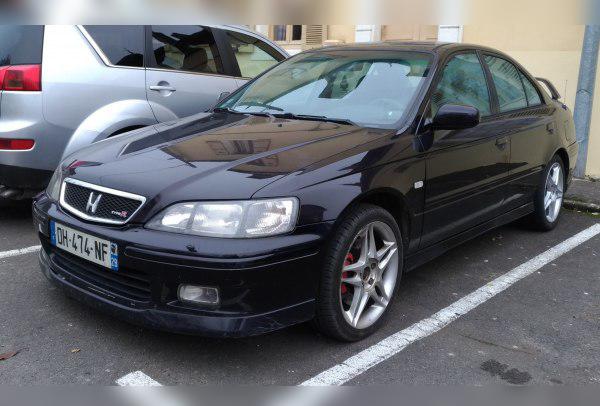

Honda F23 2.3i VTEC: Experiences, Issues, Fuel Consumption and Buying Tips
Key points in short (TL;DR)
- Timing: Uses a timing belt (must be replaced on time, together with the balance shaft belt).
- Reliability: Mechanically extremely robust “old-school” engine, capable of very high mileage without an overhaul.
- Achilles’ heel: Automatic transmissions from this era are sensitive and require specific Honda fluid.
- Oil consumption: Expect mild oil consumption in VTEC mode (high revs), which is normal for Honda.
- LPG (Autogas): Handles LPG well, but requires regular mechanical valve adjustment.
- Recommendation: An excellent choice if you want a comfortable sedan with enough power and reasonable running costs, provided you avoid a neglected example.
Contents
- Technical Specifications
- Reliability and Maintenance
- Specific Parts and Costs
- Fuel Consumption and Performance
- Additional Options and LPG
- Gearbox: Manual vs Automatic
- Buying Used and Conclusion
The Honda F23 engine (most commonly in F23Z5 or F23A1 variants for different markets) represents the peak of the evolution of Honda’s F-series engines from the late 90s and early 2000s. Installed primarily in the sixth-generation Honda Accord, this 2.3-liter engine offered a perfect balance between performance and cruising comfort. Unlike the smaller 1.8 or 2.0 engines, the F23 provides the torque needed for a heavier body, making driving more relaxed. Although it doesn’t have the sporty pedigree of “Type R” engines, the F23 is known as an indestructible workhorse if basic maintenance rules are followed.
Technical Specifications
| Parameter | Data |
|---|---|
| Engine displacement | 2254 cc |
| Configuration | Inline 4-cylinder, SOHC VTEC |
| Power | 113 kW (154 hp) @ 5700 rpm |
| Torque | 206 Nm @ 4700 rpm |
| Engine codes (typical) | F23A1, F23Z5, F23Z1 |
| Injection type | PGM-FI (multi-point indirect injection) |
| Induction | Naturally aspirated |
Reliability and Maintenance
Timing belt or chain?
This engine uses a timing belt. This is a critical maintenance point. Honda F23 engines actually have two belts: a large one for the timing (camshaft) and a smaller one for the balance shafts. During a major service, it is MANDATORY to replace both belts, the tensioners and the water pump. If the small balance shaft belt snaps, it often slips under the main timing belt, which leads to catastrophic engine failure (piston-to-valve contact).
Most common issues
Although the mechanicals are “bulletproof”, age takes its toll:
- Oil leaks: Most commonly from the crankshaft seal, valve cover gasket, or the VTEC solenoid gasket.
- EGR valve and passages: The intake manifold has EGR passages that gradually clog up with soot. Symptoms include rough running, hesitation under light throttle and the “Check Engine” light coming on.
- Distributor: On older Hondas this is a frequent weak point. The bearing can fail or oil can leak inside the distributor, causing starting and running issues.
- IACV (idle air control valve): Dirt can cause fluctuating idle (engine “surging” up and down). Cleaning usually solves the problem.
Major service
It is recommended to perform a major service every 100,000 km or 5 years, whichever comes first. Do not risk using cheap parts; use quality kits (e.g. Gates, Continental, INA) because a failure is very expensive.
Oil: Capacity and Consumption
The engine takes approximately 4.3 liters of oil with filter. The recommended grade is 5W-30 or 5W-40 (for higher-mileage engines and hotter climates, 10W-40 is also acceptable, but fully synthetic is better for the VTEC system).
Oil consumption: Honda engines, especially those with VTEC, are designed to consume a certain amount of oil at high rpm. Consumption of 0.5 to 0.8 liters per 10,000 km is completely normal and does not indicate a fault. If it uses a liter per 1000 km, then the piston rings or valve stem seals are worn.
Spark plugs
Standard (copper) spark plugs should be replaced every 20,000 - 30,000 km. Iridium plugs (NGK or Denso recommended) can last up to 100,000 km. Do not skimp on spark plugs, as bad plugs can damage the coil inside the distributor.
Specific Parts (Costs)
Flywheel and clutch
Good news: The petrol F23 engine in most cases (especially with a manual gearbox) uses a solid flywheel. This means clutch replacement is significantly cheaper than on diesels. A clutch kit (pressure plate, disc, release bearing) falls into the mid-price range (not expensive, depending on the market).
Fuel injection system
Uses classic multi-point PGM-FI injection. Petrol injectors are extremely durable and rarely cause issues before 300,000+ km, unless extremely dirty fuel is used.
Turbo, DPF, EGR, AdBlue
- Turbo: None. This is a naturally aspirated engine, which eliminates expensive turbo failures.
- DPF: None (that’s for diesels).
- AdBlue: None.
- EGR valve: It does have one. As mentioned, it is prone to clogging of the passages in the intake manifold, but cleaning is relatively inexpensive. It rarely needs replacement, just cleaning.
Fuel Consumption and Performance
City driving
This is not a small engine, so don’t expect miracles. In heavy city traffic, real-world consumption is between 11 and 13 liters per 100 km. In winter or with a heavy right foot, this can go up to 14 liters. The automatic uses about 1–1.5 liters more than the manual.
Is the engine “lazy”?
With 154 hp and 206 Nm, the engine is not lazy. In fact, thanks to the 2.3-liter displacement, it has noticeably more low-end torque compared to Honda’s 2.0 engines. An Accord with this engine pulls linearly and strongly. It’s not a sports car in the “pins you to the seat” sense, but overtaking is safe and easy.
Motorway and cruising
This is the natural habitat of the 2.3 Accord. On the motorway it is very stable. At 130 km/h, the engine (with the 5-speed manual gearbox) spins at about 3200–3400 rpm. Sound insulation is decent, and fuel consumption on the open road drops to around 7.5 to 8.5 liters.
Additional Options and Modifications
LPG conversion
Honda F-series engines generally handle LPG very well, but with one major caveat: Valve adjustment. This engine does not have hydraulic lifters; valve clearance is adjusted mechanically (screw and locknut). On petrol this is done every 40,000 km, but on LPG it is recommended to check clearances every 20,000 - 25,000 km. If this is ignored, the valves will slowly recess into their seats (“burnt valves”), which is an expensive repair. A valve lubrication system (drip oiler) is recommended.
Remapping (Stage 1)
Since this is a naturally aspirated petrol engine, “chipping” it is basically a waste of money. You might gain 3–5 hp and a slightly sharper throttle response, but it’s imperceptible in everyday driving. It’s better to invest that money in quality tyres or refreshing the suspension.
Gearbox
Types of gearboxes
- Manual (5-speed): Precise, short throw, typical Honda feel. Very reliable.
- Automatic (4-speed): Classic torque-converter automatic.
Most common gearbox issues
Manual: Almost indestructible. Failures are rare and usually related to the second or third gear synchro at very high mileage (grinding when shifting quickly).
Automatic: This is the weaker point. Honda automatics from this period are sensitive. Symptoms of failure include slipping (revs rise but the car doesn’t accelerate), jerking when shifting or a delay when engaging “D”. If the fluid hasn’t been changed regularly, failure is almost guaranteed between 200,000 and 250,000 km. Rebuilds are expensive (very expensive).
Gearbox servicing
- Manual: Change the oil every 3–4 years or 60,000 km (use Honda MTF or a quality 75W-80 oil).
- Automatic: Fluid changes are MANDATORY every 40,000–60,000 km. Crucial: Use ONLY Honda ATF-Z1 (or the newer DW-1) fluid. Universal ATF fluids can destroy this gearbox.
Buying Used and Conclusion
When buying an Accord with the F23 engine, pay attention to:
- Cold start: Listen for valve ticking (needs adjustment) or rattling (it doesn’t have a chain, but you may hear the tensioner bearing).
- Idle: Once the engine is warm, idle speed should be stable. If it “hunts” up and down, the IACV or a vacuum leak is the likely culprit.
- Gearbox (automatic): Test it both cold and hot. It should shift smoothly without bangs. Check the fluid on the dipstick – it should be reddish, not black or smelling burnt.
- Rust: The sixth-generation Honda Accord is prone to rust on the arches and underbody. The engine will outlive the body, so inspect the bodywork carefully.
Conclusion
The Honda F23 2.3i is an engine for drivers who value reliability and comfort over low fuel consumption. Although technologically it belongs to the previous century, that is actually its biggest advantage – it lacks complex emissions systems that drain your wallet. If you find an example with a manual gearbox and a solid body, with regular maintenance and quality oil this engine will serve you for hundreds of thousands of kilometres. Avoid neglected automatics.
Was this content useful to you?
Your opinion helps us to improve the quality of the content.