H22 Engine
- Engine
- 2157 cm3
- Aspiration
- Naturally aspirated engine
- Fuel
- Petrol (Gasoline)
- Fuel injection system
- Multi-port manifold injection
- Power
- 212 hp @ 7200 rpm
- Torque
- 215 Nm @ 6700 rpm
- Cylinders
- 4
- Valves
- 16, 4 per cylinder
- Cylinders position
- Inline
- Valvetrain
- DOHC
- Oil capacity
- 4.8 l
- Coolant
- 6.9 l
# Vehicles powered by this engine
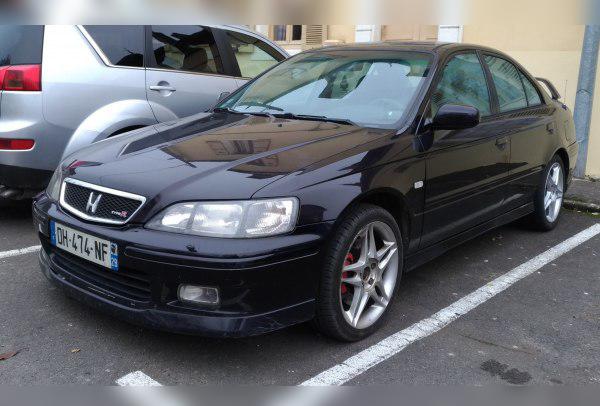
Honda H22 (2.2 Type-R) – Experiences, problems, fuel consumption and buying used
Key points (TL;DR)
- Performance and character: This is the legendary “Red Top” engine. Below 5,500 rpm it’s tame, above that VTEC kicks in and the engine turns into a race machine. Not for those who like low‑rev driving.
- Oil consumption: These engines tend to consume oil, especially in VTEC mode. This is often normal, but requires regular checking (every second fuel fill‑up).
- Major service: The engine is driven by a timing belt. The hydraulic tensioner is a weak point and it’s recommended to convert to a manual tensioner to avoid belt skipping.
- Valve adjustment: Unlike modern engines with hydraulic lifters, here you need manual valve adjustment every 40,000 km.
- Durability: If properly maintained and warmed up before hard driving, the bottom end is virtually indestructible. Still, due to age and the way these cars are driven, many examples are “tired”.
- Gearbox: Comes with a fantastic manual gearbox and a factory limited‑slip differential (LSD), which is rare and a big advantage.
Contents
- Technical specifications
- Reliability and maintenance
- Specific parts (costs)
- Fuel consumption and performance
- Additional options and modifications
- Gearbox
- Buying used and conclusion
The Honda H22 engine, specifically in the 212 hp variant (code H22A7), represents the pinnacle of late‑90s engineering. It was primarily installed in the Honda Accord Type‑R (CH1), a sedan whose driving characteristics embarrassed many sports coupes of that era. This is not an ordinary engine for a quick run to the grocery store; it’s a high‑revving machine that requires a driver who understands what VTEC is and how to use it. Although old, this powerplant still puts a smile on your face today, but only if you’re ready to accept its specific maintenance requirements.
Technical specifications
| Parameter | Value |
|---|---|
| Displacement | 2157 cc (2.2 L) |
| Power | 156 kW (212 hp) @ 7200 rpm |
| Torque | 215 Nm @ 6700 rpm |
| Engine code | H22A7 (most common for EU Type‑R) |
| Injection type | PGM‑FI (multi‑point indirect) |
| Induction | Naturally aspirated with VTEC system |
Reliability and maintenance
Timing belt or chain?
The H22 engine uses a timing belt. This is a critical maintenance item. In addition to the main timing belt, there is also a smaller belt for the balance shafts. What is specific and problematic on this engine is the factory automatic (hydraulic) timing belt tensioner. It is known to lose tension over time, which can lead to the belt jumping teeth and catastrophic engine damage.
Recommendation: Most experienced Honda mechanics recommend converting to a manual tensioner (often using a kit from the H23 engine) during the major service for peace of mind.
Most common failures
Although mechanically robust, the H22 has its quirks:
- Oil consumption: Due to high revs and piston/ring design, the engine naturally consumes oil. If the valve stem seals are bad, it will blow blue smoke on startup or after engine braking.
- VTEC solenoid: The gasket can start leaking or the internal screen can get clogged, which results in VTEC not engaging (the engine doesn’t “pull” after 5,500 rpm).
- EGR passages: The intake manifold has EGR passages that get clogged with soot. Symptoms are rough idle and jerking at low revs. Cleaning is a fiddly job.
- Distributor: On older Hondas, the distributor bearing or the internal ignition coil can fail, leaving you stranded.
Major service and spark plug replacement
The major service is recommended every 80,000 to 100,000 km or 5 years, whichever comes first. Since these cars are often driven aggressively, many owners shorten this interval. Spark plugs (NGK Iridium or Platinum are recommended) are replaced every 60,000 to 100,000 km, but should be checked more often due to oil burning.
Oil: quantity and grade
The engine takes about 4.8 to 5.3 liters of oil (with filter), depending on whether the oil pan is modified or standard. Recommended grades are 5W‑40 or 10W‑60 if the car is frequently driven on track or at high revs during summer. Oil consumption of 0.5 to 1 liter per 1,000 km can be considered “acceptable” for an engine that is constantly driven in the VTEC zone, even though it sounds like a lot. If it consumes this much during normal driving, the engine is due for a refresh (rings).
Specific parts (costs)
Flywheel and clutch
Good news: This engine does not have a dual‑mass flywheel. It uses a conventional solid flywheel. A clutch kit is relatively affordable (depends on the manufacturer, Exedy is a common recommendation), but keep in mind that the clutch on the Type‑R model is from the factory slightly stiffer with a more direct bite.
Fuel system, turbo, DPF, AdBlue
This is “old school” in the best sense:
- Injection: Classic multi‑point fuel injection. Injectors are extremely durable and rarely cause issues. They are not expensive to clean or replace.
- Turbo: The engine does not have a turbocharger. It makes power from high revs and variable valve timing/lift (VTEC). That means fewer parts to fail (no turbo, intercooler, high‑pressure piping).
- Emissions: No DPF, no AdBlue. It does have an EGR valve which, as mentioned, can cause intake fouling but can be cleaned. There is a catalytic converter, but on many used cars it has unfortunately been removed for “better flow” (check this for the technical inspection).
Fuel consumption and performance
Real‑world consumption and city driving
Don’t expect modern diesel economy. In city driving, an Accord Type‑R with this engine will use between 11 and 14 liters of petrol per 100 km, depending on how heavy your right foot is. In winter or in heavy traffic, this can go even higher.
Is the engine “lazy”?
This is a two‑faced engine (Jekyll & Hyde). Below 5,000 rpm it behaves like an ordinary 2.0 petrol – perfectly adequate for normal driving, but not explosive. Some would say it lacks low‑end torque compared to modern turbo engines. However, it is not lazy; it just requires you to drop a gear or two if you want sudden acceleration. The real fun only starts when the needle passes 5,500 rpm – then the engine’s sound and character change dramatically.
Behavior on the highway
On the highway it is stable and has enough power for effortless overtaking. However, due to the short gear ratios in the gearbox (for better acceleration), at 130 km/h the engine spins at a fairly high 3,800 to 4,000 rpm. This means noticeable engine noise in the cabin, which can be tiring on long trips. Fuel consumption on open roads is around 8–9 l/100 km.
Additional options and modifications
LPG conversion
Technically, an LPG conversion is possible and sequential systems work well. BUT, this is a Type‑R engine. The cylinder head and valve seats on Honda VTEC engines are sensitive to the higher combustion temperatures of LPG. If LPG is installed, it is essential to use a valve lubrication system and to adjust the valves much more frequently (every 15–20k km). Honestly, most enthusiasts consider fitting LPG to this collectible model a sacrilege.
Chipping (Stage 1)
On naturally aspirated engines, “chipping” (remap) does not bring dramatic power gains like on turbo engines. You can expect maybe 5–8 hp more, which is barely noticeable. Proper “chipping” on H22 engines is done mainly to lower the VTEC engagement point and raise the rev limiter, but that only makes sense if you have already upgraded the intake and full exhaust. The cost of quality tuning (e.g. Hondata system) is high (very expensive) compared to the gains if the engine remains stock.
Gearbox
Gearbox type and differential
With the H22A7 in the Accord Type‑R you only got a 5‑speed manual gearbox (code U2Q7). This gearbox is a gem – precise, with short throws. The most important feature is the factory‑fitted Torsen LSD (limited‑slip differential). It dramatically improves cornering grip and traction on corner exit, preventing the inside wheel from spinning.
Most common gearbox issues
- Synchros: Due to age and hard driving (fast shifting at high revs), the 5th‑gear synchro can fail (grinding when engaging). The 2nd and 3rd gear synchros also tend to get “tired”.
- Popping out of gear: If the gearbox has been neglected, the shifter can pop out of 5th gear.
Gearbox maintenance
Honda gearboxes are specific and require only genuine Honda MTF (Manual Transmission Fluid) oil. Replacement is recommended every 40,000 to 60,000 km. Do not use universal gearbox oils, as they can damage the synchros and worsen shift quality.
Buying used and conclusion
When buying an Accord with this engine, make sure to do the following:
- VTEC test: Wait until the engine is fully warmed up (coolant temperature in the middle). Find a straight road and accelerate hard in second gear. At about 5,500–5,800 rpm you must feel and hear a sudden change (the “kick”). If the change is barely noticeable or the engine hesitates, there is a problem with the VTEC system or oil pressure.
- Exhaust smoke: Have someone drive behind you. If, when shifting at high revs (in VTEC), it emits a bit of black smoke, that’s a rich mixture and is OK. If it smokes blue, the engine is burning oil (rings or valve stem seals) – walk away from that car, a rebuild is expensive.
- Rust: Although not part of the engine, the 6th‑gen Accord rusts badly (arches, floor, strut towers). A good engine is pointless if you don’t have a solid shell.
Conclusion: The H22 in Type‑R form is an engine for true enthusiasts. It offers a raw, mechanical driving experience that has all but disappeared today. It is not cheap to run (fuel, registration, parts), but it gives a lot in return. If you’re looking for a reliable family car, look at the 1.8 or 2.0 petrol. If you’re looking for a future classic and a weekend track toy, the H22 is the right choice.
Was this content useful to you?
Your opinion helps us to improve the quality of the content.