L / 20T2N Engine
- Engine
- 1994 cm3
- Aspiration
- Turbocharger
- Fuel
- Diesel
- Fuel injection system
- Direct injection
- Power
- 105 hp @ 4200 rpm
- Torque
- 210 Nm @ 2000 rpm
- Cylinders
- 4
- Valves
- 8, 2 per cylinder
- Cylinders position
- Inline
- Valvetrain
- OHC
- Oil capacity
- 4.8 l
- Coolant
- 7 l
# Vehicles powered by this engine
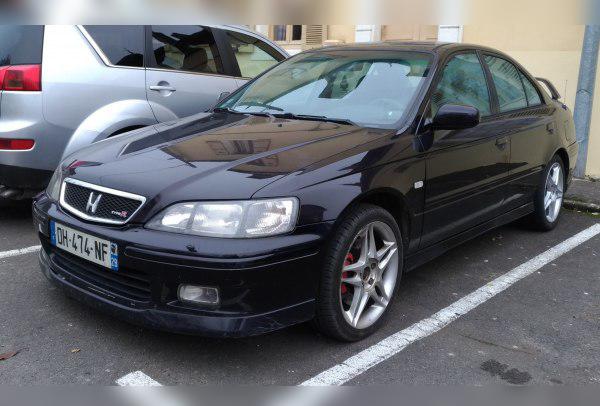

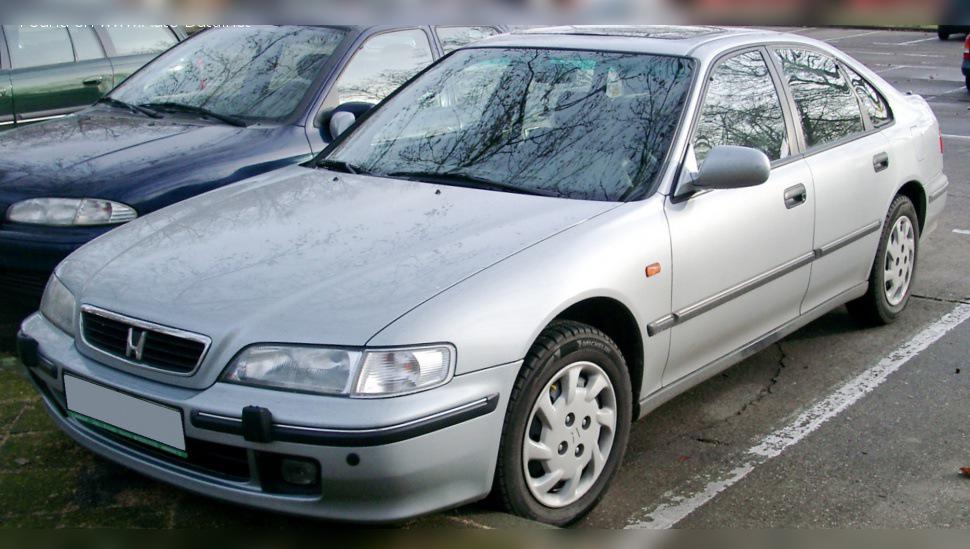
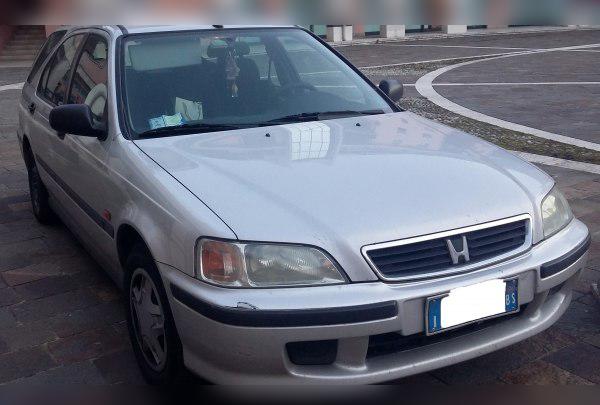
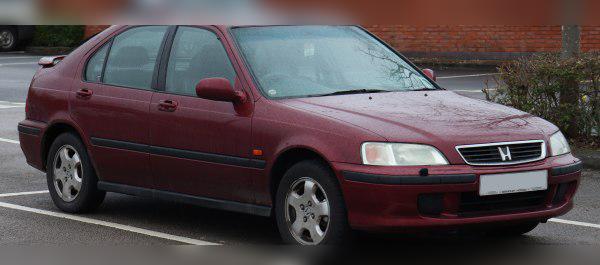
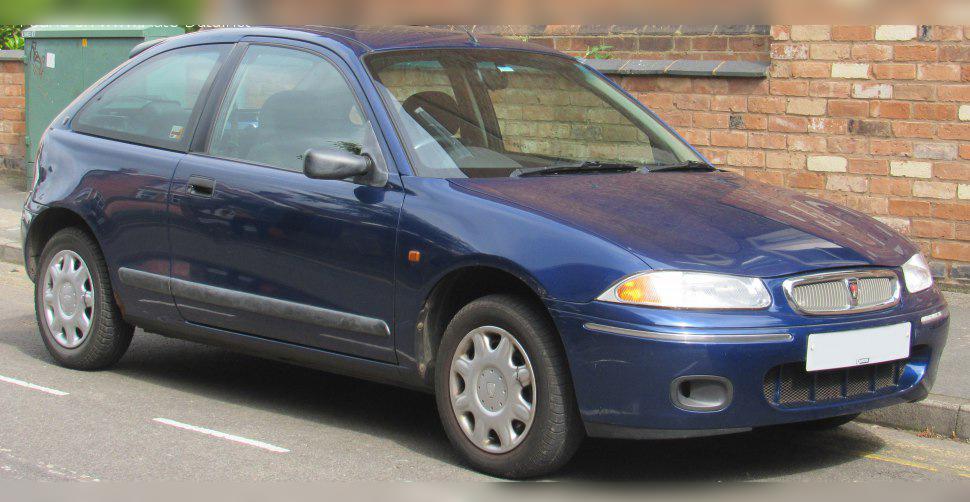
Honda / Rover 2.0 TD (20T2N) – Experiences, problems, fuel consumption and maintenance
Key points (TL;DR)
- Engine origin: This is not a Honda engine, but a Rover L-Series diesel. It was used because Honda did not have its own diesel unit at the time.
- Two timing belts: A specific feature of this engine is that it has two belts – one for the camshaft, the other for the high-pressure pump.
- Durability: Mechanically very robust (“tractor” style), capable of very high mileage with basic maintenance.
- Refinement: Quite noisy and transmits vibrations, much rougher than modern Common Rail diesels.
- Pump wiring: A common issue with the wiring harness going to the Bosch pump, which can cause the engine to stall.
- Recommendation: Excellent for those looking for a cheap “workhorse”, but it requires a mechanic familiar with old diesel systems.
Contents
Introduction: An English heart in a Japanese body
The engine we are talking about carries the code 20T2N (Honda) or simply L-Series (Rover). This is the first direct-injection diesel engine developed by Rover and it was crucial for Honda in Europe during the 1990s.
At that time, Honda did not have its own diesel engine, so cooperation with Rover resulted in this unit being installed in popular models such as the Accord VI and the “English” Civic (Fastback/Aerodeck). This is an old-school engine: loud, rough, but extremely durable if you pay attention to some specific maintenance details. It is important to note that this is not a Common Rail engine, but uses an electronically controlled rotary pump.
Technical specifications
| Parameter | Value |
|---|---|
| Engine displacement | 1994 cc (2.0 L) |
| Power | 77 kW / 105 hp |
| Torque | 210 Nm at 2000 rpm |
| Engine codes | 20T2N, 20T2R (L-Series) |
| Injection type | Direct injection (VP37 pump) |
| Charging | Turbocharger (intercooled) |
Reliability and maintenance
Timing system: Two belts
This is a critical point. The engine has a timing belt, but not just one – it has two. The main belt drives the camshaft on one side of the engine, while a smaller belt at the rear drives the high-pressure pump. The most common mistake made by inexperienced mechanics or thrifty owners is replacing only the main belt. If the pump belt snaps, the engine will simply stall (without internal damage), but if the main belt breaks, pistons and valves will collide. It is recommended to replace both belts at the same time.
Major service and oil
A major service is recommended every 80,000 to 100,000 km or 5 years. Considering the age of these cars today, I recommend shortening this interval to about 70,000 km for safety. The engine takes about 4.5 to 5 liters of oil. The recommended grade is 10W-40 semi-synthetic (ACEA B3 specification). This is an older-design engine and it prefers thicker oil, especially at higher mileage.
Oil consumption and leaks
Oil consumption between services is acceptable up to 0.5–0.8 liters per 10,000 km. If it uses more, the issue is usually not in the engine itself (piston rings), but in leaks. These engines are known for “marking their territory”. Oil often leaks at the crankshaft seal, valve cover gasket or oil cooler hoses.
Most common failures
Besides oil leaks, the most common issues are:
- MAF sensor (air flow meter): When it fails (Bosch system), the car loses power at low revs (“dead” below 2000 rpm). Symptoms are sluggishness and occasional smoke.
- Fuel pump wiring: The wires going to the VP37 pump often chafe through due to vibrations and touch the engine block. This causes short circuits, the “Check Engine” light to come on, and the engine to stall while driving.
- Intercooler hoses: They often crack due to age, which manifests as a hissing sound when you press the throttle and black smoke from the exhaust.
Injectors (longevity)
The injectors are classic mechanical ones with two-stage injection. They are extremely durable and less sensitive to poor-quality fuel compared to modern piezo injectors. They often last over 300,000 km. If a problem does occur, they can be overhauled and the cost is not high (only the injector nozzles are replaced). Symptoms of bad injectors are knocking (very loud running) and grey smoke on cold start.
Specific parts (costs)
Dual-mass flywheel
Here the situation depends on the model. Most Honda Accord VI (105 hp) cars with this engine HAVE a dual-mass flywheel. Its purpose is to dampen the strong vibrations of this diesel. On older models (Accord V, Rover 200) a solid flywheel is more common. The cost of replacing the full set with a dual-mass flywheel is high compared to the value of the vehicle (often over 400–500 EUR, depending on the market). That is why many owners convert to a solid flywheel, but this further increases vibrations in the cabin.
Turbocharger and injection system
The engine uses a single turbocharger (usually a Garrett GT15 or similar) without variable geometry on most versions. This is good news because the turbo is simple, cheap to overhaul and very durable. Its service life is often equal to the life of the engine, provided that oil is changed regularly. The injection system is based on a Bosch VP37 rotary pump. It is mechanically reliable, but the electronics on top of the pump can cause problems (rough running, stalling). Overhauling the pump electronics is a medium-cost job.
EGR, DPF and AdBlue
Good news for used-car owners:
- DPF filter: There isn’t one. No expensive replacements or regenerations.
- AdBlue: Absolutely none.
- EGR valve: The engine does have an EGR valve. It very often clogs up with soot, which chokes the engine and causes black smoke. Fortunately, it is easy to remove and clean, and many owners physically block it off (with a blanking plate) without any negative effects on engine operation, apart from slightly slower warm-up in winter.
Fuel consumption and performance
Fuel consumption
Although the technology is old, direct injection makes this engine quite economical.
- City driving: Expect between 6.5 and 7.5 l/100 km, depending on traffic and how heavy your right foot is. In winter it can go up to around 8 l.
- Open road: This is where the engine shines, with consumption of about 4.5 to 5.5 l/100 km.
Performance and “laziness”
Is the engine lazy? Up to 1,800 rpm – YES. This is a classic turbo diesel with a pronounced “turbo lag”. Below 1,800 rpm not much happens, but when the turbo kicks in (around 2,000 rpm), you get a sudden surge of torque (210 Nm). For the Accord body or Civic wagon, the power is adequate for normal driving, but overtaking requires downshifting and keeping the revs in the turbo zone. On the motorway at 130 km/h the engine spins at about 2,700–2,800 rpm (depending on the gearbox) and the noise in the cabin is noticeable.
Additional options and modifications
Remapping (Stage 1): Since the engine has an electronically controlled pump (EDC), it is possible to do a remap (chip tuning). Power can be safely raised to around 125–130 hp, and torque to about 260 Nm. This drastically changes the character of the car, reduces turbo lag and makes driving more pleasant. However, keep in mind that the extra power puts additional stress on the clutch and (if fitted) the dual-mass flywheel, as well as on old intercooler hoses which can burst under higher boost pressure.
Gearbox
Types of gearboxes
This engine was almost exclusively paired with a 5-speed manual gearbox. Honda used gearboxes compatible with the Rover engine series (often the PG1 series or a Honda adaptation). Automatic gearboxes in this combination are extremely rare or practically non-existent in most markets.
Gearbox issues and maintenance
The manual gearboxes are generally reliable, but they do have a few weak points:
- Differential bearings: They can become noisy (a whine that increases with speed).
- Play in the gear lever: The shift linkage wears out, so the gearbox feels “imprecise” or “rubbery”. This is cheap to fix (bushing replacement).
- Clutch: A heavy clutch pedal is a common sign that the pressure plate is near the end of its life. Replacing the clutch kit is a moderate cost, but if the flywheel is replaced as well, the price rises sharply.
It is recommended to change the gearbox oil every 60,000 km. Use MTF (Manual Transmission Fluid) specific to Honda or 10W-40 engine oil (on some older Rover gearboxes, but always check the exact specification in the vehicle manual because the wrong oil will destroy the bearings). The safest option is to use Honda MTF-3 oil.
Buying used and conclusion
Before buying a car with the 20T2N engine, make sure to check the following:
- Cold start: The engine should start quickly. If it cranks for a long time, it may be glow plugs or an issue with compression/pump.
- Smoke: Black smoke under full throttle is usually a split intercooler hose or a dirty EGR (fixable). Blue smoke indicates oil consumption (walk away). White smoke on a warm engine may point to a head gasket problem.
- Shutdown noise: When you switch the engine off, you should not hear a metallic knock (“clack-clack”). This is a sign of a bad dual-mass flywheel.
- Check Engine light: Is it on? It often points to a problem with the pump wiring or the MAF sensor.
Final conclusion
This engine is aimed at drivers who want cheap transport and are willing to tolerate noise and vibrations in exchange for low fuel consumption and mechanical simplicity. It is not refined, it is not fast, but it is a “mule” that can cover half a million kilometers if you regularly change the oil and belts. Ideal for drivers who can do at least some of the mechanical work themselves. If you are looking for silence and comfort, look for a petrol engine or a newer i-CTDi diesel.
Was this content useful to you?
Your opinion helps us to improve the quality of the content.