F18B2 Engine
- Engine
- 1850 cm3
- Aspiration
- Naturally aspirated engine
- Fuel
- Petrol (Gasoline)
- Fuel injection system
- Multi-port manifold injection
- Power
- 136 hp @ 6000 rpm
- Torque
- 175 Nm @ 4800 rpm
- Cylinders
- 4
- Valves
- 16, 4 per cylinder
- Cylinders position
- Inline
- Valvetrain
- OHC
- Oil capacity
- 4.3 l
- Coolant
- 5.8 l
# Vehicles powered by this engine
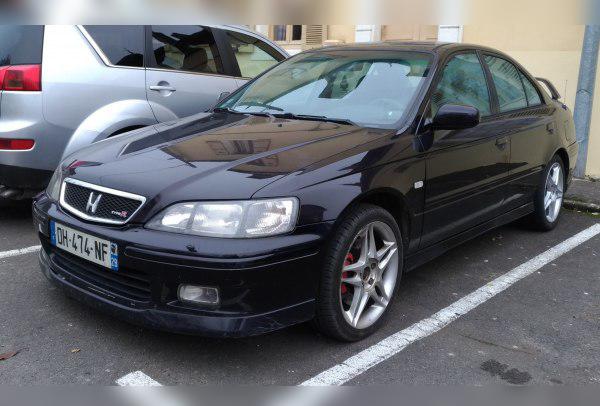

Honda F18B2 (1.8 VTEC) – experiences, problems, fuel consumption and used car buying guide
Key points (TL;DR)
- Reliability: Extremely durable engine if regularly maintained, legendary Honda engineering.
- VTEC system: Provides solid performance at high revs, but the engine needs to be “revved” to really go.
- Major service: The engine uses a timing belt, not a chain. There is also a balance shaft belt that is often forgotten.
- Oil consumption: Generally low, but with aggressive driving in the VTEC zone (over 4000 rpm) the engine will “drink” some oil, which is normal.
- LPG (Autogas): The engine handles LPG very well, but requires regular valve adjustment (mechanical setting).
- Biggest enemy: Not the engine itself, but body corrosion on the car it’s installed in (Accord VI).
- Recommendation: An excellent choice for fans of classic naturally aspirated engines who want reliability and a sporty sound.
Contents
- Introduction and applications
- Technical specifications
- Reliability and maintenance
- Specific parts and costs
- Fuel consumption and performance
- Additional options (LPG and tuning)
- Gearbox and drivetrain
- Buying used and conclusion
Introduction and applications
The Honda F18B2 belongs to the famous F-series of Honda engines and represents an “entry ticket” into the world of the sixth-generation Honda Accord (models produced between 1998 and 2002 for the European market). Although it is labeled as a 1.8, its actual displacement is 1850 cc, which puts it on the border with 2.0 engines.
This is a classic SOHC (single overhead cam) engine with VTEC technology. Unlike high-performance “Type R” engines, here VTEC is tuned for economy and flexibility, but it still delivers that recognizable “kick” once you pass a certain rpm. You’ll most commonly find it in the Honda Accord VI (sedan and hatchback), where it has proven to be one of the most reliable petrol engines of its time.
Technical specifications
| Parameter | Value |
|---|---|
| Engine code | F18B2 |
| Displacement | 1850 cc |
| Power | 100 kW (136 hp) at 6000 rpm |
| Torque | 175 Nm at 4800 rpm |
| Fuel injection system | PGM-FI (Multi-point injection) |
| Induction type | Naturally aspirated |
| Number of valves | 16 (SOHC VTEC) |
Reliability and maintenance
Timing belt or chain?
The F18B2 uses a timing belt. This is very important because many people mistakenly think all Hondas have a chain. In addition to the main timing belt, this engine also has a second, smaller belt that drives the balance shafts. During a major service, you MUST replace both belts, all tensioners and the water pump. If the mechanic “skips” the balance shaft belt, you risk unpleasant vibrations or a belt failure that can cause serious damage.
Major service and regular maintenance
A major service is recommended every 80,000 to 100,000 km or every 5 years, whichever comes first. Given the age of these cars, you shouldn’t risk overly long intervals.
As for engine oil, it takes about 4.3 to 4.5 liters (including the filter). The recommended viscosity is 5W-40 or 10W-40, depending on climate and engine condition. Honda engines have narrow oil passages due to the VTEC system, so high-quality oil and regular changes are the key to longevity.
Oil consumption
Does it burn oil? Yes and no. Under normal driving, consumption is negligible. However, VTEC engines are designed to be driven at higher revs. If you often drive in the “VTEC zone” (above 4000–4500 rpm), it is completely normal for the engine to consume 0.3 to 0.5 liters per 1000 km. This is not a fault, it’s a characteristic. If it burns a liter per 1000 km during gentle driving, the valve stem seals or piston rings are likely worn.
Most common issues
Although the engine is a real “workhorse”, age takes its toll:
- EGR valve and intake manifold: The EGR passages in the intake manifold (the so‑called “EGR plate”) get clogged with soot. Symptoms are rough idle, jerking at low revs and a check engine light. Cleaning solves the problem.
- IACV (idle air control valve): Dirt can cause fluctuating idle speed.
- Main relay: A well-known issue on older Hondas. The symptom is that the engine cranks but won’t start when the cabin is hot (in summer), yet starts normally once it cools down. Re-soldering the contacts fixes it.
- Distributor: Problems can occur with the distributor cap or the ignition coil inside it.
Spark plugs on this petrol engine are replaced every 40,000 km if they are standard nickel plugs, or every 100,000 km if you use iridium plugs (NGK recommended).
Specific parts (costs)
Dual-mass flywheel: Fortunately, this engine paired with the manual gearbox uses a classic solid flywheel. This means the clutch kit is much cheaper than on diesels or more modern petrol engines. Replacement cost is relatively low (not expensive).
Fuel injection system: It uses a reliable PGM-FI system with port injection. Petrol injectors are extremely durable and rarely cause problems before 300,000 km. They are not as sensitive as modern piezo injectors.
Turbo, DPF, AdBlue: The engine has no turbocharger, no DPF filter, no AdBlue. It’s an old-school naturally aspirated engine (“simple and tough”). It does have an EGR valve which, as mentioned, can get clogged, but cleaning it is inexpensive.
Fuel consumption and performance
Real-world fuel consumption
This is not a small engine, and the Accord VI is not a light car.
- City driving: Expect between 10 and 12 l/100 km. In winter and on short trips it can go up to 13 l.
- Highway / country roads: Here things are better, consumption is around 7 to 8 l/100 km.
Is the engine “lazy”?
With 136 hp, the engine is not weak, but the power delivery is typical Honda. Up to 3000 rpm it feels “dead” and lazy – that’s the economical driving zone. To make the car pull properly, you need to drop a gear and push it past 4000 rpm. That’s when VTEC wakes up and the car becomes very lively. For overtaking on country roads you have to work the gearbox; this is not a diesel that “pulls” from low revs.
On the motorway
The gearbox has relatively short ratios. At 130 km/h in fifth gear, the engine spins at around 3800–4000 rpm. This means noticeable engine noise in the cabin, but throttle response at that speed is instant – you don’t need to shift down to fourth to accelerate.
Additional options and modifications
LPG conversion
The F18B2 works very well on LPG, but with one big WARNING: This engine does not have hydraulic lifters; the valves are adjusted manually (the classic “screwdriver and spanner” system).
Because LPG burns hotter, the clearances on the exhaust valves close up faster (the valves “sink” into the seats). If you run LPG, valve adjustment is mandatory every 20,000–30,000 km. If you ignore this, the valves will burn. If you respect this interval, the engine can cover hundreds of thousands of kilometers on LPG.
Chip tuning
Forget about “chipping” it. This is a naturally aspirated petrol engine. A Stage 1 remap might give you 3–5 hp, which you won’t even feel, and you’ll just waste money. The best “tuning” for this car is a good set of tyres and a healthy suspension.
Gearbox
There were two gearbox options with this engine:
- 5-speed manual gearbox: One of the best gearboxes of its time. Precise, short throw, extremely reliable. Failures are rare. Gearbox oil (Honda MTF) should be changed every 60,000–80,000 km. As mentioned, there is no dual-mass flywheel.
- 4-speed automatic gearbox: Older technology. Slower than the manual and increases fuel consumption by about 1–2 l. Less reliable than the manual. If the oil hasn’t been changed regularly, it can start slipping and lead to expensive repairs.
If you have a choice, the manual gearbox is the absolute recommendation for this engine to get the most out of its 136 hp.
Buying used and conclusion
When buying a Honda Accord with the F18B2 engine, pay attention to the following:
- Bodywork (CRITICAL): The engine will outlive the body. Check the rear wheel arches, sills and especially the rear subframe. If the rear subframe is rotten, repairs are expensive and complicated.
- Exhaust smoke: Blue smoke when you press the throttle or after idling points to worn valve stem seals or piston rings.
- Idle speed: When the engine is cold, it should idle at elevated rpm, and once warm it should drop to a stable ~750–800 rpm. Fluctuations indicate a dirty intake/IACV.
Conclusion: The F18B2 is a true example of late‑90s Japanese engineering. It’s not the most economical by today’s standards, but it offers a combination of reliability and driving pleasure that is hard to find for this kind of money nowadays. It is aimed at drivers who appreciate a “mechanical” driving feel, maintain their car regularly and don’t mind slightly more frequent fuel stops in city driving in exchange for peace of mind when it comes to breakdowns.
Was this content useful to you?
Your opinion helps us to improve the quality of the content.