F23A5 Engine
- Engine
- 2254 cm3
- Aspiration
- Naturally aspirated engine
- Fuel
- Petrol (Gasoline)
- Fuel injection system
- Multi-port manifold injection
- Power
- 137 hp @ 5400 rpm
- Torque
- 196 Nm @ 4700 rpm
- Cylinders
- 4
- Valves
- 16, 4 per cylinder
- Cylinders position
- Inline
- Valvetrain
- OHC
- Oil capacity
- 4.3 l
- Coolant
- 5.4 l
# Vehicles powered by this engine
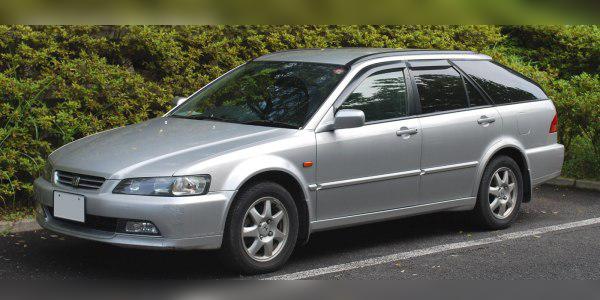
Honda F23A5 (Accord VI) – Experiences, issues, fuel consumption and maintenance: Japanese “old school”
Key points (TL;DR)
- Reliability: Extremely robust “old guard” engine. With regular maintenance it easily exceeds 400,000+ km.
- Achilles’ heel: The automatic transmission from this generation is sensitive and prone to failure if not meticulously maintained.
- Major service: The engine uses a timing belt, but it also has a balance shaft belt that must not be forgotten.
- Fuel consumption: Not economical in city driving. Expect double‑digit fuel consumption.
- LPG (Autogas): An ideal candidate for LPG conversion, handles it very well with proper valve adjustment.
- Power: With 137 hp it is adequate for cruising, but in the heavy wagon body it needs high revs for overtaking.
- Costs: Overall affordable to maintain, with no expensive modern systems (turbo, dual‑mass flywheel, direct injection).
Contents
Introduction and applications
The engine with the code F23A5 belongs to Honda’s renowned F‑series of engines. This is a 2.3‑liter four‑cylinder that represents an evolution of the older 2.2 engines. In this particular case, it was installed in the Honda Accord VI Wagon (estate version), a model that was assembled in the US for some markets and sold in Europe.
Unlike its more powerful VTEC siblings (such as the F23A1), the F23A5 often came as a more basic, more robust version focused on torque and longevity rather than high performance. This is a classic naturally aspirated petrol engine that does not suffer from the ailments of modern downsized engines. Its 2.3‑liter displacement gives it enough flexibility to cope with the heavier wagon body, but time has overtaken it in terms of fuel efficiency.
Technical specifications
| Characteristic | Value |
|---|---|
| Engine code | F23A5 |
| Displacement | 2254 cc (2.3 L) |
| Power | 101 kW (137 hp) @ 5400 rpm |
| Torque | 196 Nm @ 4500 rpm |
| Configuration | I4 (inline 4‑cylinder), SOHC, 16 valves |
| Injection type | MPI (Multi‑Point Injection) |
| Aspiration | Naturally aspirated (no turbo) |
| Engine block | Aluminum (open deck) |
Reliability and maintenance
Timing belt or chain?
This engine uses a timing belt. However, what many owners or inexperienced mechanics forget is that this engine also has a small balance shaft belt.
Critical warning: If the balance shaft belt snaps, it can slip under the main timing belt, cause it to jump or break, which leads to piston‑to‑valve contact (catastrophic engine failure). That’s why during a major service you must replace both belts, both tensioners and the water pump.
Most common issues
Although the engine itself is mechanically “indestructible”, peripheral components can cause problems:
- Oil leaks: Most commonly from the distributor shaft seal (O‑ring), valve cover gasket, or from the VTEC solenoid (if the version is equipped with it; F23A5 often has no VTEC, depending on the market, so check visually).
- EGR valve and passages: The intake manifold has exhaust gas recirculation passages that get clogged with soot over time. The symptom is a “Check Engine” light and rough running. Cleaning solves the problem.
- IACV (idle air control valve): Dirt can cause fluctuating idle (“hunting idle”).
- Distributor: On older models, the distributor bearing can fail or the internal ignition coil can die.
Service intervals and oil
A major service is recommended every 80,000 to 100,000 km or every 5 to 7 years, whichever comes first. Due to rubber aging, the time interval is more important on older used cars that don’t cover many kilometers.
The engine takes approximately 4.3 liters of oil (with filter). The recommended grade is 5W‑30 or 5W‑40, although for high‑mileage engines in warmer climates, 10W‑40 semi‑synthetic works perfectly well.
Oil consumption
Honda F‑series engines are known to “sip” some oil, especially if driven at high revs (VTEC zone, even though this engine has a lower rev limit). Consumption of 0.5 liters per 3,000–5,000 km is considered acceptable for an engine of this age. If it uses a liter per 1,000 km, that points to stuck oil control rings or worn valve stem seals.
Spark plugs
As a petrol engine, it is sensitive to spark plug condition. Standard copper/nickel plugs are replaced every 30,000–40,000 km. If you fit iridium plugs (NGK or Denso are recommended), the interval extends to around 100,000 km.
Specific parts (costs)
Flywheel and clutch
Good news: This engine (when paired with a manual gearbox) uses a solid flywheel. That means there is no expensive dual‑mass flywheel to fail. The clutch kit (pressure plate, disc, release bearing) is a standard wear item and its price is reasonable (depends on the market, but generally “not expensive”).
Fuel injection system and turbo
The engine uses a classic MPI (Multi‑Point Injection) system. Injectors are extremely durable and rarely cause problems. They are not as sensitive to fuel quality as modern GDI injectors.
The engine does not have a turbocharger. That’s one less thing to worry about – no turbo rebuilds, intercooler issues or boost hoses bursting under pressure.
DPF, EGR, AdBlue
- DPF / FAP: None. This is an older‑generation petrol engine.
- AdBlue: None.
- EGR valve: It has one. As mentioned, the intake manifold EGR ports clog up, which is a standard cleaning procedure at Honda service centers for these models.
- Catalytic converter: It has one, and it is often a target for thieves or it can clog/disintegrate due to age.
Fuel consumption and performance
Real‑world fuel consumption
Here we come to the biggest drawback of this engine today. A 2.3‑liter engine in a heavy wagon means fuel consumption.
- City driving: Expect 11 to 13 l/100 km. In winter or heavy traffic this can easily go up to 14–15 l/100 km.
- Highway / open road: With moderate driving it can drop to 7.5 to 9 l/100 km.
Is the engine “lazy”?
With 137 hp and 196 Nm, this is not a “racing” engine. The Accord Wagon is a heavy car. The engine is adequate for normal driving, but it can feel a bit sluggish when pulling away until it builds revs. For strong acceleration when overtaking, you need to shift down and rev it out (above 3500–4000 rpm), where Honda engines breathe best. It’s not “dead”, but it does require an engaged driver.
On the motorway at 130 km/h the engine spins at about 3,500 rpm (in fifth gear on the manual), which means sound insulation becomes an important factor.
Additional options and modifications
LPG conversion
Absolutely yes. The F23A5 is an excellent candidate for LPG. The intake manifold is (usually) metal, and the injection system is simple.
Important LPG note: This engine does not have hydraulic lifters; valve lash is adjusted mechanically (screw and locknut). Since LPG burns at a higher temperature, it is recommended to check valve clearances every 20,000–30,000 km. If this is neglected, the valves can recess and burn, leading to an expensive cylinder head overhaul. A valve lubrication system (“valve saver” drip) is desirable but not essential if valve clearances are adjusted regularly.
ECU remap (Stage 1)
On a naturally aspirated petrol engine of this generation, an ECU remap is basically a waste of money. You might gain 3–5 hp and a slightly sharper throttle response, but you won’t really feel it in practice. It’s better to invest that money in quality spark plugs, leads, and injector/intake cleaning.
Gearbox
Types of gearboxes
With this engine in the Accord Wagon, there were usually two transmission options:
- 5‑speed manual gearbox: Precise, short throw, typical Honda feel.
- 4‑speed automatic gearbox: Classic torque‑converter automatic.
Problems and maintenance
Manual gearbox: Practically indestructible. Failures are rare and usually come down to wear (synchros) after very high mileage. Gearbox oil (Honda MTF) should be changed every 60,000–80,000 km. Clutch replacement cost is moderate.
Automatic gearbox: This is the weakest point of Hondas from this period (late ’90s, early 2000s). The 4‑speed automatics paired with more powerful engines are prone to overheating, slipping and complete failure. Symptoms include harsh shifts between gears (especially 1st to 2nd), delay when engaging “D”, or slipping.
For the automatic it is imperative to change the fluid (Honda ATF‑Z1 or the newer DW‑1) every 40,000–60,000 km, and only by the “drain and fill” method (no machine flushing under pressure, which can damage an old transmission).
Buying a used car and conclusion
When buying an Accord Wagon with the F23A5 engine, pay attention to the following:
- Cold start: Listen for valve ticking (needs adjustment) or rattling from belts/pulleys (even though it has a belt, bad tensioners can be heard).
- Exhaust smoke: Bluish smoke when revving or after idling and then blipping the throttle indicates oil consumption (valve stem seals or piston rings).
- Gearbox (automatic): Test‑drive the car until it is fully warmed up. The gearbox should shift smoothly and almost imperceptibly. Any harsh shift is a red flag.
- Suspension: The Accord has a complex front suspension (double wishbone). Check ball joints and bushings, as a full suspension overhaul can be more expensive than average for this class.
Final verdict
The Honda Accord 2.3 with the F23A5 engine is a car for those who value reliability over fuel economy. This engine will serve you for years with minimal unexpected repair costs, provided you accept higher fuel consumption and somewhat higher registration/road tax due to displacement over 2.0 liters.
If you find a manual example with proof of recent belt replacement, you’re looking at a “tank” that can cover half a million kilometers. If you’re after an automatic, be extremely cautious.
Was this content useful to you?
Your opinion helps us to improve the quality of the content.