N15A1 Engine
- Engine
- 1498 cm3
- Aspiration
- Turbocharger, Intercooler
- Fuel
- Diesel
- Fuel injection system
- Diesel Commonrail
- Power
- 80 hp @ 3600 rpm
- Torque
- 160 Nm @ 1750 rpm
- Cylinders
- 4
- Valves
- 16, 4 per cylinder
- Cylinders position
- Inline
- Valvetrain
- DOHC, i-DTEC
- Oil capacity
- 4.4 l
- Coolant
- 3.96 l
- Systems
- Start & Stop System
# Vehicles powered by this engine

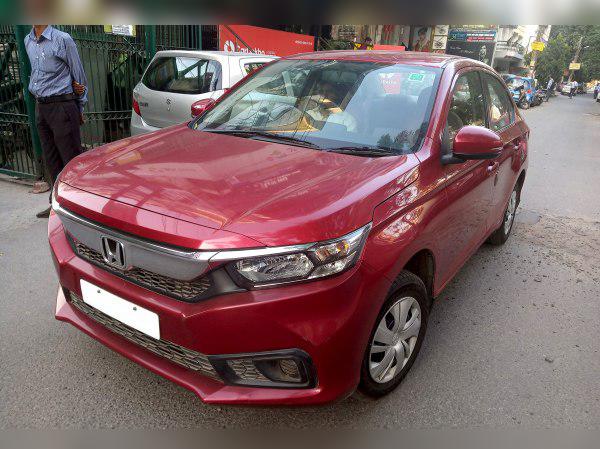
Honda 1.5 i-DTEC (N15A1) – Experiences, issues, fuel consumption and analysis of the 80 HP version
Key points (TL;DR)
- Exceptional efficiency: This is one of the most economical diesel engines on the market, especially when paired with the CVT gearbox.
- Reliable timing chain: The engine uses a timing chain designed to last the entire service life of the engine with regular maintenance.
- Specific power output: The 80 HP version is deliberately detuned to protect the CVT gearbox, while manual versions have 100 HP.
- CVT and diesel combination: A rare but, in Honda’s case, successful combination that offers comfort in city driving, though it takes some time to get used to the engine sound.
- DPF filter: Like every modern diesel, it is sensitive to exclusively urban driving, where clogging can occur.
- Noise: The aluminum engine block absorbs sound less effectively, so the engine is somewhat noisier (clattering) until it warms up.
Contents
- Technical specifications
- Reliability and maintenance
- Specific parts (Costs)
- Fuel consumption and performance
- Additional options and modifications
- Gearbox
- Used car buying guide and conclusion
Introduction
The engine designated as N15A1 belongs to Honda’s well-known “Earth Dreams” technology family. It is a 1.5‑liter i-DTEC diesel unit that caused a small revolution when it appeared, offering the lowest internal friction in its class. The version we’re discussing today is specific – it has 80 HP and 160 Nm, and is primarily installed in the Honda Amaze II with an automatic (CVT) gearbox. While manual versions of this engine deliver 100 HP and 200 Nm, Honda has electronically limited the power of this variant to ensure the longevity of the CVT gearbox, which is a bold engineering move that combines diesel economy with automatic transmission comfort.
Technical specifications
| Displacement | 1498 cc (1.5 L) |
| Power | 59 kW (80 HP) |
| Torque | 160 Nm at 1750 rpm |
| Engine code | N15A1 (i-DTEC Earth Dreams) |
| Fuel type | Diesel |
| Injection system | Common Rail (Solenoid injectors) |
| Induction | Turbocharger (Variable geometry) + Intercooler |
| Engine block | Aluminum (Open deck design) |
Reliability and maintenance
Timing system (Belt or chain?)
The N15A1 engine uses a timing chain. This is excellent news for owners, because the chain on this engine is designed to last the entire life of the vehicle. It is not prone to stretching like on some German competitors from the same period, provided that the oil is changed regularly. However, at higher mileages (over 200,000 km), you should listen for any “rattling” noise during a cold start.
Most common issues
Although the engine is generally mechanically “bulletproof”, peripheral components can cause problems:
- DPF filter and pressure sensors: Due to the intended use of this car (the Honda Amaze is often a city car), the DPF often clogs because it doesn’t get the chance to complete regeneration.
- Turbo lag: Not a fault, but a characteristic. Due to the lower power output (80 HP), the engine can feel sluggish until the turbo “spools up”.
- Noise: Since the engine block is made of aluminum (to reduce weight), its sound insulation is weaker than that of cast-iron blocks, so the diesel “knocking” is more noticeable in the cabin.
Service intervals and oil
There is no major service in the classic sense (timing belt replacement). However, the auxiliary (serpentine) belt and tensioner should be replaced at around 100,000 km or every 5–7 years.
The regular service (oil and filters) is mandatory every 10,000 km or once a year. Do not follow “long-life” recommendations of 30,000 km – that kills this engine and the turbo.
Oil: The engine takes about 4.0 to 4.4 liters of oil (always check the dipstick). The recommended viscosity is 0W-20 or 5W-30. It is very important that the oil is “Low SAPS” (ACEA C2/C3 standard) to protect the DPF filter.
Oil consumption
Honda i-DTEC engines are known for their precise manufacturing, so oil consumption between services should be minimal (below 0.5 liters per 10,000 km). If it consumes more, this may indicate a problem with the turbocharger or piston rings, but more often the issue is “oil dilution” – that is, the oil level rising due to failed DPF regenerations where fuel seeps into the sump. Check the oil level regularly – if it is rising, that is a bad sign!
Injector lifespan
This engine uses a Bosch injection system. The injectors are solenoid (electromagnetic) on most markets for this model, which is good news because they are cheaper to refurbish than piezo injectors. The expected service life is over 200,000 km with good-quality fuel. Symptoms of worn injectors include smoke under hard acceleration, rough idle and harder starting.
Specific parts (Costs)
Dual-mass flywheel
This is a key point. The version with the CVT gearbox (automatic) DOES NOT have a dual-mass flywheel. It uses a torque converter as the connection between the engine and the gearbox. This significantly reduces maintenance costs compared to the manual version, which does have a dual-mass flywheel.
Turbocharger
The engine has a single turbocharger with variable geometry (VGT) made by Garrett or Honeywell. Its service life is long, often over 250,000 km, if you follow the rule of cooling the turbo after fast driving (let the car idle for a minute before switching off). Overhaul is not cheap (depends on the market), but it is a standard procedure.
DPF and EGR
Yes, it has both a DPF and an EGR valve. The EGR valve can get clogged with soot, which causes jerking and loss of power. Cleaning is possible and not expensive. The DPF is a bigger problem if the car is driven only in the city. Replacing the DPF is very expensive (market-dependent), so it is recommended to monitor clogging via diagnostics.
AdBlue
The Honda Amaze 1.5 i-DTEC generally uses LNT (Lean NOx Trap) technology for exhaust gas treatment, which means it usually DOES NOT have an AdBlue system. This is a big advantage because there are no costs for urea or issues with AdBlue tank heaters. Still, be sure to check next to the fuel filler – if there is no blue cap, you don’t have AdBlue.
Fuel consumption and performance
Real-world fuel consumption
This is the strongest selling point of this car. In city driving, even with the CVT gearbox, fuel consumption is around 5.5 to 6.5 l/100 km. On open roads, at speeds of 80–90 km/h, consumption drops to a ridiculous 4.0–4.5 l/100 km. This makes it one of the most economical automatics in the world.
Is the engine “lazy”?
With 80 HP and a vehicle weight of around 1050–1100 kg, this car is no racer. The 0–100 km/h sprint takes about 12–13 seconds. In the city it is perfectly agile thanks to the diesel torque available low down, and the CVT keeps the engine in the ideal rev range. However, when overtaking on country roads with a fully loaded car, the lack of power is noticeable. You need to plan your overtakes.
Motorway driving
Cruising at 130 km/h is possible, but this is not the natural habitat of this engine. At 130 km/h, the engine runs at somewhat higher revs (around 2500–2700 rpm due to the characteristics of the CVT and the lower power), which increases cabin noise. The car is stable, but the engine “struggles” on uphill sections at those speeds.
Additional options and modifications
Remapping (Stage 1)
Here you should be very careful. Although the engine hardware is similar to the 100 HP version and can theoretically be “unlocked” to that power, the limiting factor is the CVT gearbox. Honda intentionally reduced the torque to 160 Nm because this specific CVT gearbox cannot handle the high torque typical of diesels. Remapping to 100+ HP and 200+ Nm would drastically shorten the gearbox’s lifespan, cause belt slip inside the transmission and overheating. Recommendation: Do not remap the CVT version.
Gearbox
Types of gearboxes
The 80 HP variant of this engine comes exclusively with a CVT (Continuously Variable Transmission). It is Honda’s CVT adapted for use with diesel engines. The manual gearbox is paired with the more powerful 100 HP version.
CVT issues and maintenance
Honda CVT gearboxes are generally reliable, but they require strict maintenance.
Most common issues: Slipping (feels like a slipping clutch), overheating on long climbs, and a “whining” noise.
Service: The oil in the CVT must be changed every 40,000 km or 2 years. This is critical! Use only the original Honda CVT Fluid (HCF-2). Universal oils can permanently damage the gearbox.
Costs
As mentioned, there is no dual-mass flywheel or clutch kit that wears out like on the manual. However, if the CVT gearbox fails, repairs are very expensive or a complete gearbox replacement may be required.
Used car buying guide and conclusion
What to check before buying?
- Gearbox service history: If there is no proof that the CVT oil has been changed regularly (every 40,000 km), skip that car.
- Chain noise: Listen to a cold start. If you hear metallic rattling for longer than 2–3 seconds, the chain or tensioner needs replacing.
- Test drive: Under steady throttle, the revs should not “flare” up and down. That indicates a CVT problem.
- DPF: Check how dirty the exhaust tips are. If they are black and sooty, the DPF has probably been removed or drilled through.
Who is this engine for?
The Honda 1.5 i-DTEC (80 HP) with CVT gearbox is a perfect choice for drivers who cover a lot of kilometers in city traffic (taxi drivers, sales reps, daily commuting). It offers the comfort of an automatic with the fuel consumption of a moped. It is not for racers or for those who constantly drive on the motorway at over 140 km/h. If you are looking for a reliable workhorse with very low fuel consumption and you don’t want to shift gears yourself, this is one of the best options on the market.
Was this content useful to you?
Your opinion helps us to improve the quality of the content.