F23A1 Engine
- Engine
- 2254 cm3
- Aspiration
- Naturally aspirated engine
- Fuel
- Petrol (Gasoline)
- Fuel injection system
- Multi-port manifold injection
- Power
- 150 hp @ 5700 rpm
- Torque
- 206 Nm @ 4800 rpm
- Cylinders
- 4
- Valves
- 16, 4 per cylinder
- Cylinders position
- Inline
- Valvetrain
- SOHC
- Oil capacity
- 4.3 l
# Vehicles powered by this engine
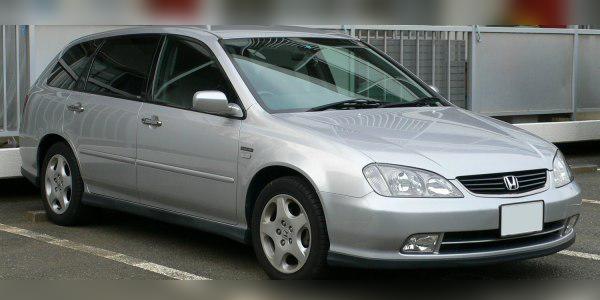
Honda F23A1 2.3 VTEC: Experiences, issues, fuel consumption and buying tips
Key points in short (TL;DR)
- Reliability: An extremely durable “workhorse” engine, provided the oil is changed regularly. It can cover very high mileage (over 400,000 km).
- Biggest downside: The automatic transmission paired with it in the Avancier is sensitive and requires strict maintenance with original oil.
- Fuel consumption: Not a small drinker. In the heavy Avancier body and with an automatic gearbox, city driving is expensive.
- Maintenance: The engine has no hydraulic lifters, so valve clearances must be adjusted manually.
- LPG: It handles LPG very well, but requires more frequent valve inspections.
- Recommendation: Ideal for those who want a comfortable cruiser and are ready to accept higher fuel consumption in exchange for Japanese mechanical reliability.
Contents
- Technical specifications
- Reliability and Maintenance
- Specific Parts and Costs
- Fuel Consumption and Performance
- Additional Options and Modifications
- Gearbox
- Used car buying guide and Conclusion
The F23A1 engine is one of those Honda powerplants that built the brand’s reputation in the late 90s and early 2000s. It is a 2.3‑liter four‑cylinder with a single overhead camshaft (SOHC) and VTEC system. Although it was installed in US‑market Accords, in our region it is most often seen (or sought after) in specific models such as the first‑generation Honda Avancier. This is not a high‑revving sports engine (like the B or K series), but a unit designed for torque and comfortable driving of heavier vehicles.
Technical specifications
| Specification | Data |
|---|---|
| Displacement | 2254 cc (2.3 L) |
| Power | 110 kW (150 hp) at 5700 rpm |
| Torque | 206 Nm at 4900 rpm |
| Engine code | F23A1 (VTEC SOHC) |
| Injection type | MPi (Multi-Point Injection) |
| Induction | Naturally aspirated (no turbo) |
Reliability and Maintenance
Timing belt or chain?
This engine uses a timing belt. It is very important to note that in addition to the main timing belt, this engine also has a smaller balance shaft belt. During a major service, both belts must be replaced, along with the tensioners and water pump. If the balance shaft belt snaps, pieces can get under the main belt and cause catastrophic engine damage (piston‑to‑valve contact).
Most common issues
Although the engine is “indestructible”, age takes its toll. The most common problems are:
- Oil leaks: Typical spots are the VTEC solenoid gasket, distributor shaft seal and valve cover gasket.
- EGR valve and intake ports: The EGR passages in the intake manifold often clog with soot, which triggers the “Check Engine” light and causes rough running. Cleaning is a dirty but necessary job.
- IACV (Idle Air Control Valve): A dirty valve causes fluctuating idle (“hunting idle”).
- Distributor: On older models, the ignition coil or ignition module inside the distributor can fail, leaving the car immobile.
Service intervals
The major service is done every 80,000 to 100,000 km or every 5 to 7 years, whichever comes first. Do not take risks with cheap timing components.
Oil: Capacity and consumption
The oil pan holds approximately 4.3 liters of oil with the filter. The recommended viscosity is usually 5W-30 or 10W-40 (for higher‑mileage engines in warmer climates).
Oil consumption: Yes, these engines do tend to use some oil, especially when VTEC is engaged often. Consumption of 0.5 to 0.8 liters per 1,000 km is, unfortunately, considered within tolerance for older Honda engines, although a healthy engine should not exceed 0.2–0.3 liters. The usual culprits are valve stem seals or oil control rings.
Spark plugs
Spark plugs are replaced every 40,000 km if you use standard copper plugs (NGK ZFR5F-11), or every 100,000 km if you use iridium plugs. It is recommended to stick with NGK or Denso.
Specific Parts (Costs)
Dual-mass flywheel and clutch
Since in the Honda Avancier this engine is paired with an automatic transmission, it does not have a dual‑mass flywheel. Instead, it uses a torque converter. That is good news for your wallet, as there is no expensive flywheel replacement like on many diesels.
Fuel injection system
The engine uses classic multi‑point fuel injection. The injectors are very durable and rarely cause problems. If an issue does arise, ultrasonic cleaning usually solves it. Fuel system maintenance costs are low.
Turbo, DPF, EGR
- Turbo: None. This is a naturally aspirated engine, which means fewer parts that can fail (no turbocharger, intercooler, high‑pressure hoses).
- DPF: None.
- EGR: Yes. As mentioned, it often clogs with soot, but it is usually cleaned rather than replaced.
- AdBlue: None.
Fuel Consumption and Performance
Real-world fuel consumption
Be prepared for the following – this is not an economical engine by today’s standards:
- City driving: Expect between 11 and 14 liters/100 km. In winter and heavy traffic this can go up to 15 liters. The heavy Avancier body and older‑type automatic take their toll.
- Highway / open road: Things are better here, with consumption dropping to around 8–9 liters/100 km with moderate driving.
Is the engine “lazy”?
For the weight of the Honda Avancier (close to 1.5 tons or more with passengers), 150 hp and 206 Nm is at the lower acceptable limit. In the city it is perfectly adequate thanks to good throttle response, but on the motorway, during overtaking, the lack of power can be felt. The gearbox will often need to kick down one or even two gears to accelerate, and the engine will become noisy. It’s not a sports car, it’s a cruiser.
Motorway speeds and revs
At 130 km/h, the engine spins at around 3,000 to 3,500 rpm (depending on whether the gearbox has 4 or 5 gears, but the F23A1 was most commonly paired with a 4‑speed automatic in that era). This means it’s not excessively loud, but the engine is clearly audible in the cabin.
Additional Options and Modifications
LPG conversion
Yes, the F23A1 is an excellent candidate for LPG. The intake manifold is metal (or high‑quality plastic), and the system handles LPG well. However, there is one crucial note: This engine does not have hydraulic lifters. This means valve clearances must be checked and adjusted manually. On petrol this is done every 40,000 km, and on LPG the clearances must be checked every 20,000–25,000 km. If this is neglected, the valves will recess into the head, compression will be lost and you are looking at an expensive cylinder head repair.
Chip tuning (Stage 1)
On naturally aspirated petrol engines, especially on this SOHC unit, chip tuning makes virtually no sense. The gain would be maybe 3–5 hp, which is imperceptible in real driving. It is better to invest that money in quality maintenance and fresh fluids.
Gearbox
Types of gearboxes
In the Honda Avancier, the F23A1 engine comes exclusively with a 4‑speed automatic transmission (classic hydraulic automatic). Manual gearboxes were paired with this engine in models like the Accord, but in the Avancier they are very rare (or non‑existent, depending on the market).
Automatic transmission issues
Honda automatics from this era (late 90s, early 2000s) are their Achilles’ heel. The most common problems are:
- Slipping between 2nd and 3rd gear.
- Harsh engagement when shifting into “R” or “D”.
- Clogging of the internal oil filter (which cannot be replaced without disassembling the entire gearbox).
Transmission maintenance
The transmission fluid must be changed every 40,000 to 60,000 km.
IMPORTANT: Use only Honda ATF-DW1 (or the older ATF-Z1) fluid. Universal ATF fluids can destroy this gearbox. Also, never perform a pressurized machine flush; use only the simple drain & fill method. Around 2.5–3 liters are replaced per change (although the total capacity is higher).
Used car buying guide and Conclusion
When looking at a Honda Avancier with this engine, focus on the following:
- Test the gearbox cold and hot: There should be no hesitation when setting off, nor jolts when shifting. If the gearbox “thinks” too long or slips, walk away from that car. Repair is very expensive (often exceeding the value of the vehicle).
- Listen to the engine: On a cold start there should be no metallic rattling (a sign of poorly adjusted valves or piston issues).
- VTEC test: Once the engine is warm, accelerate hard. Above 2500–3000 rpm the engine should pull linearly and strongly, without “flat spots”.
- Exhaust smoke: Bluish smoke when you press the throttle or after idling indicates oil consumption (valve stem seals/rings).
Conclusion: The Honda Avancier with the F23A1 engine is a niche car for fans of Japanese engineering. The engine is mechanically robust and can cover huge mileage, but it requires an owner who understands the need for regular valve adjustments and religious transmission fluid changes. If you are looking for cheap city running costs, this is not the car for you. If you want a comfortable, spacious vehicle for longer trips and you don’t mind the fuel consumption – this is a solid choice.
Was this content useful to you?
Your opinion helps us to improve the quality of the content.