N22B4 Engine
- Engine
- 2199 cm3
- Aspiration
- Turbocharger, Intercooler
- Fuel
- Diesel
- Fuel injection system
- Diesel Commonrail
- Power
- 150 hp @ 4000 rpm
- Torque
- 350 Nm @ 2000 rpm
- Cylinders
- 4
- Valves
- 16, 4 per cylinder
- Cylinders position
- Inline
- Oil capacity
- 5.5 l
- Coolant
- 6.8 l
- Systems
- Particulate filter
# Vehicles powered by this engine
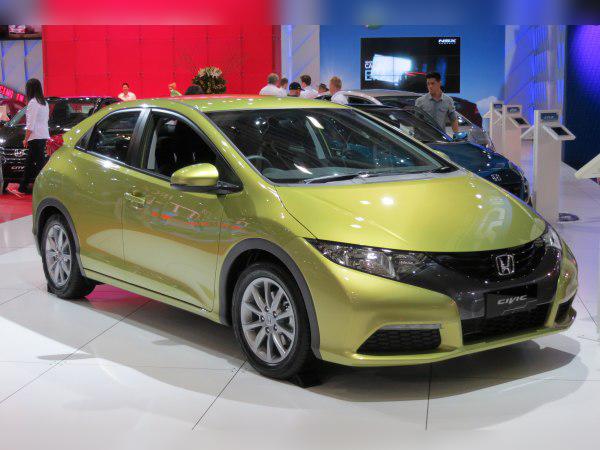

Honda 2.2 i-DTEC (N22B4) – experiences, problems, fuel consumption and used car buying guide
If you are looking for the last “proper” larger-displacement Honda diesel engine before the downsizing trend took over the market with smaller 1.6 units, the N22B4 is probably the best choice. This is an evolution of the legendary i-CTDi engine, refined to be quieter, cleaner and more efficient. Still, like every modern diesel, it comes with specific maintenance risks you need to be aware of before buying.
Key points in short (TL;DR)
- Timing drive: Uses a timing chain which is generally reliable and does not require regular replacement, but should be listened to at high mileage.
- Performance: With 150 hp and 350 Nm, this is an extremely capable engine, especially in the lighter Civic, while in the CR-V it behaves like a confident cruiser.
- Emissions: The DPF is a sensitive point, especially if the car is driven exclusively in the city. Regenerations are frequent.
- Injection system: Piezo injectors are precise and quiet, but they are difficult or impossible to refurbish, and replacement is expensive (depends on the market).
- Fuel consumption: Very economical on the open road, but in the heavy CR-V with automatic transmission and all-wheel drive, urban consumption is not negligible.
- Recommendation: An ideal engine for those who cover high mileage on open roads. Not recommended for short city trips.
Contents
- Technical specifications
- Reliability and maintenance
- Specific parts (costs)
- Fuel consumption and performance
- Additional options and modifications
- Gearbox
- Buying used and conclusion
Technical specifications
| Parameter | Data |
|---|---|
| Engine code | N22B4 (i-DTEC) |
| Displacement | 2199 cc |
| Power | 110 kW (150 hp) |
| Torque | 350 Nm at 2000 rpm |
| Fuel type | Diesel |
| Injection system | Common Rail (Piezo injectors) |
| Induction | Variable-geometry turbocharger + intercooler |
| Number of cylinders / valves | 4 / 16 |
Reliability and maintenance
Timing system: chain or belt?
The N22B4 engine uses a timing chain to drive the valves. This is great news for owners because, in theory, the chain is designed to last as long as the engine itself (“lifetime”). However, in practice, it is recommended to check the condition of the chain (by listening at cold start) after 200,000 km. Although it is more robust than the chain on the older N22A engine, irregular oil changes can lead to chain stretch. The symptom is a characteristic metal-on-metal rattling when starting a cold engine.
Most common failures
Although considered one of the more reliable diesels on the market, age and mileage take their toll. The most common problems are:
- DPF filter: Honda has a fairly aggressive regeneration system, but frequent city driving will inevitably clog it.
- EGR valve: Soot build-up on the valve leads to loss of power and the engine going into “safe mode”.
- Exhaust gas pressure sensors: They often fail and send false signals to the ECU.
- Cracked exhaust manifold: Although less common than on its predecessor (i-CTDi), it can still happen, and you may notice exhaust fumes smell in the cabin.
Major and minor service
Since the engine has a chain, a classic “major service” (timing belt replacement) is not done at a fixed interval. However, the auxiliary belt (serpentine belt) that drives the alternator and A/C should be replaced at around 100,000 – 120,000 km or every 5–7 years, together with the tensioners and the water pump if it shows signs of leakage.
The minor service (oil and filter change) is strictly recommended every 10,000 km, up to a maximum of 15,000 km, especially because the chain and turbocharger are sensitive to oil quality.
Oil: quantity and consumption
This engine takes a relatively large amount of oil – between 5.5 and 5.9 litres (depending on whether the filter is changed). The recommended grade is exclusively 0W-30 (Honda recommends oils that meet C2 or C3 standards because of the DPF).
As for oil consumption, the N22B4 is known for not consuming oil in significant quantities. It is normal to top up to 0.5 litres between services. However, pay attention to the opposite problem – rising oil level. If DPF regenerations are frequently interrupted, unburnt diesel will end up in the sump and dilute the oil. If you notice the oil level rising, change the oil immediately and check the DPF system.
Injector longevity
This engine uses sophisticated Piezo injectors. They allow extremely precise multi-stage injection, which makes the engine quieter and more efficient. Their lifespan is usually over 200,000 – 250,000 km with good-quality fuel. However, when they fail, refurbishment is often impossible or unsuccessful. You usually have to buy new or factory-refurbished injectors, which is very expensive (depends on the market).
Specific parts (costs)
Dual-mass flywheel
Yes, all models with a manual gearbox paired with this engine have a dual-mass flywheel. Given the high torque of 350 Nm, the flywheel is under significant stress. Symptoms of failure are knocking when switching the engine off, vibrations in the clutch pedal or juddering when pulling away. The price of replacing the clutch kit with the flywheel is high (falls into the expensive/very expensive category, depending on the market).
Turbocharger
The engine uses a single variable-geometry turbocharger. The turbo is generally very durable and rarely fails before 250,000 km, provided the engine is properly maintained and allowed to cool down after fast driving. Symptoms of problems are a whistling noise (like an ambulance siren) or a sudden loss of power accompanied by black smoke.
DPF and EGR
The engine is equipped with both a DPF filter and an EGR valve. As mentioned, these are the weakest points if the car is driven mainly in the city. Honda uses a system where the DPF regenerates by additional fuel injection. If the DPF warning light comes on, you must take the car out on an open road and drive at a constant speed above 2,000 rpm until the light goes out.
AdBlue
Most N22B4 engines (Euro 5 standard) fitted in the Civic IX and CR-V IV (pre-facelift) do not have an AdBlue system. They rely on an efficient catalytic converter and DPF filter to meet emissions standards. This is an advantage because you have one less thing (and cost) to worry about compared to newer 1.6 i-DTEC engines in later phases that may use urea.
Fuel consumption and performance
Real-world fuel consumption
Consumption varies drastically depending on model and gearbox:
- Honda Civic (manual): In the city it uses around 6.5 – 7.5 l/100 km. On the open road it can go impressively low, even below 5 l/100 km.
- Honda CR-V (AWD + automatic): This is the thirstiest combination. In the city expect 9 – 11 l/100 km. Vehicle weight, all-wheel drive and the conventional automatic take their toll. On the open road it drops to around 7 – 8 l/100 km.
Performance and “sluggishness”
This engine is anything but sluggish. With 350 Nm of torque available from just 2000 rpm, power delivery is linear and strong. In the Civic, this engine offers sporty performance (a “hot hatch” feel in a diesel way). In the CR-V, the engine is adequate – it is not a racer, but it allows safe overtaking and has no problem pulling a fully loaded car uphill. You will never feel that the engine is “running out of breath”.
Motorway driving
This is the natural habitat of the 2.2 i-DTEC engine. At 130 km/h in top gear, the engine spins at a pleasantly low 2,200 – 2,400 rpm (depending on the gearbox). The cabin is quiet, and there are power reserves available without the need to downshift.
Additional options and modifications
Chip tuning (Stage 1)
Honda’s 2.2 block is known for its robustness (“over-engineered”). A Stage 1 remap can safely raise power to around 180 – 190 hp and torque to about 400 – 420 Nm. The engine can mechanically handle this very well, but keep in mind that the clutch and dual-mass flywheel will be under greater stress and their lifespan will be reduced. With the automatic gearbox you should be more cautious about increasing torque.
Gearbox
Types of gearboxes
- Manual: 6-speed gearbox. This is one of the best manual gearboxes in its class – precise, with short throws, a real pleasure to use.
- Automatic: 5-speed conventional torque-converter automatic. It was fitted in the CR-V. This is older technology. It is not as fast as modern dual-clutch gearboxes, but it is extremely smooth.
Gearbox failures
The manual gearbox is mechanically “indestructible”. Problems are limited to wear items – the clutch kit and dual-mass flywheel. An oil change in the manual gearbox is recommended every 60,000 – 80,000 km (use genuine Honda MTF oil).
The automatic gearbox is also very reliable if maintained properly. Its biggest “fault” is its slowness. However, it requires regular oil changes every 40,000 – 60,000 km. If the oil is not changed, you may experience harsh shifting or slipping. The cost of maintaining the automatic is acceptable, but neglect leads to an expensive overhaul.
Buying used and conclusion
Before buying a Honda with the N22B4 engine, make sure to check:
- Chain noise: Listen at cold start. Any rattling lasting longer than 2–3 seconds is a red flag.
- Clutch and flywheel: Does the pedal vibrate? Is there a knock when switching the engine off? This is the most expensive wear item (very expensive, depending on the market).
- Injector diagnostics: Check injector corrections on diagnostics. Large deviations mean replacement is imminent.
- Exhaust smoke: A healthy DPF should not allow black smoke even at full throttle. If the exhaust tips are sooty, the DPF has probably been removed or is damaged.
Conclusion: The Honda 2.2 i-DTEC (N22B4) is an excellent engine for drivers who cover a lot of kilometres on open roads and want reliability, power and refinement. If you need a robust family SUV (CR-V) or a fast and economical hatchback (Civic) for long trips, this is a great choice. However, if you spend 90% of your time in city traffic, avoid this engine because of DPF issues and the potentially expensive clutch and flywheel replacement – in that case, a Honda petrol engine is a better option.
Was this content useful to you?
Your opinion helps us to improve the quality of the content.