K20A4 Engine
- Engine
- 1998 cm3
- Aspiration
- Naturally aspirated engine
- Fuel
- Petrol (Gasoline)
- Fuel injection system
- Multi-port manifold injection
- Power
- 150 hp @ 5500 rpm
- Torque
- 192 Nm @ 4000 rpm
- Cylinders
- 4
- Valves
- 16, 4 per cylinder
- Cylinders position
- Inline
- Valvetrain
- DOHC
- Oil capacity
- 4.2 l
- Coolant
- 5.3 l
# Vehicles powered by this engine
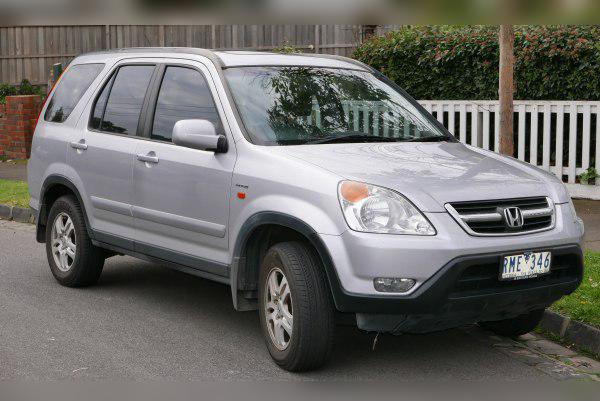
Honda 2.0 i-VTEC (K20A4): Experiences, Problems, Fuel Consumption and Buying Used
Key points in short (TL;DR)
- “Indestructible” reliability: The K20 engine series is considered one of the best petrol engine designs ever made.
- Timing chain instead of belt: It uses a chain drive that rarely needs replacement before very high mileage.
- Fuel consumption: This is not an economical engine, especially in a heavy body like the CR-V. Expect double‑digit consumption in city driving.
- LPG (Autogas): The engine works very well on LPG, but it requires regular valve clearance adjustment because it has no hydraulic lifters.
- Lack of torque: As a classic naturally aspirated engine, it feels “lazy” at low revs and needs to be revved to pull properly.
- VTC actuator: The characteristic “rattling” sound on cold start is its most common issue.
- Recommendation: An ideal choice for those who want to avoid expensive diesel repairs (turbo, dual‑mass flywheel, injectors) and are willing to pay more for fuel.
Contents
Introduction and engine applications
The engine designated as K20A4 belongs to Honda’s legendary K‑series of engines, which replaced the famous B‑series in the early 2000s. This is a 2.0‑liter naturally aspirated petrol engine equipped with i‑VTEC technology (intelligent variable valve timing and lift control). It was primarily installed in the second‑generation Honda CR‑V (2002–2006).
Why is this engine important? Because it represents the “golden middle” of motoring – modern enough to be efficient and clean, yet “old‑school” enough to avoid the unnecessary complications that today drain owners’ wallets. Its reputation is based on the fact that, with basic maintenance, it can cover hundreds of thousands of kilometers without the engine ever being opened.
Technical specifications
| Engine displacement | 1998 cc (2.0 L) |
| Power | 110 kW (150 hp) at 6500 rpm |
| Torque | 192 Nm at 4000 rpm |
| Engine code | K20A4 |
| Injection type | Multi‑point injection (indirect injection) |
| Induction | Naturally aspirated – no turbo |
| Number of cylinders/valves | 4 cylinders / 16 valves (DOHC i‑VTEC) |
Reliability and maintenance
Timing system: Chain or belt?
The K20A4 engine uses a timing chain. This is great news for owners because the chain on this engine is extremely robust. Unlike some European competitors where the chain stretches at 100,000 km, Honda’s chain in this engine often lasts as long as the engine itself (300,000+ km), provided that the oil is changed regularly. There is no scheduled replacement interval; it is replaced only if you hear rattling or if diagnostics report timing phase mismatch.
Most common failures and symptoms
Although reliable, it is not immune to problems:
- VTC actuator (cam gear): The most common issue. It manifests as a short, harsh metallic noise (rattling) lasting 1–2 seconds immediately after a cold start. It does not damage the engine right away, but it is irritating and over time can affect valve timing.
- Camshafts: On early K20 engines, wear of the exhaust camshaft (“pitting”) occurred. Symptoms are rougher engine operation and loss of power. On the K20A4 in the CR‑V this is rarer than on the Civic Type R, but it is still worth checking.
- Oil leaks: The VTEC solenoid gasket and crankshaft oil seal are places where the engine can “mark its territory”.
- Knock sensor: It can fail, which turns on the “Check Engine” light and may slightly increase fuel consumption.
Service intervals and oil
Minor service: Recommended every 10,000 km or once a year. Japanese engines like clean oil.
Major service: Since the engine has a chain, there is no classic “major timing service”. However, at around 100,000–120,000 km you should check and, if necessary, replace the auxiliary belt, belt tensioner, water pump and change the coolant.
Oil quantity and grade: The engine takes about 4.0 to 4.2 liters of oil with the filter. The recommended grade is 5W‑30 or 5W‑40 (fully synthetic). For high‑mileage engines that consume a bit more oil, 5W‑40 or 10W‑40 is a common choice in warmer climates.
Oil consumption: VTEC engines are designed to operate at high revs, and in that regime it is normal for them to “drink” some oil. Up to 0.5 liters per 1,000 km is considered “within limits” by the manufacturer, but in practice a healthy engine should not consume more than 0.5 to 1 liter between services (over 10,000 km). If it uses a liter per 1,000 km, the rings are probably stuck or the valve stem seals have hardened.
Spark plugs: Iridium spark plugs (NGK or Denso) are recommended. Their replacement interval is long, usually around 100,000 to 120,000 km.
Specific parts and costs
Fuel injection system and injectors
This engine uses classic MPI (Multi‑Point Injection) into the intake manifold. Petrol injectors are extremely reliable and almost never fail. They are not as sensitive to fuel quality as modern direct injectors (GDI/FSI). The cost of refurbishment or replacement is minimal and rarely needed.
Turbo, flywheel, DPF, EGR
- Turbocharger: There isn’t one. The engine is naturally aspirated, which means one (expensive) worry less.
- Dual‑mass flywheel: Petrol versions of the Honda CR‑V with a manual gearbox usually use a conventional (solid) flywheel or a very simple flywheel that rarely causes problems. This is a big advantage over the diesel version (2.2 i‑CTDi), which has a problematic dual‑mass flywheel.
- DPF filter and AdBlue: None. This engine meets Euro 3 or Euro 4 standards (depending on model year) without these systems. No clogged particulate filters, no urea refills.
- EGR valve: It does have an exhaust gas recirculation system. The EGR valve can clog with soot, causing unstable idle or jerking. Fortunately, it is easy to remove and clean (not expensive).
Fuel consumption and performance
Real‑world city consumption
This is where we get to the “pain point”. The second‑gen Honda CR‑V is a boxy SUV with the aerodynamics of a brick and Real Time 4WD. A naturally aspirated petrol engine has to rev to move that mass.
City driving: Expect between 11 and 14 liters per 100 km. In winter and heavy traffic, with an automatic gearbox, this can go up to 15 liters. This is not an engine for saving fuel.
Is the engine “lazy”?
Yes and no. With 192 Nm of torque available only at 4000 rpm, the engine feels lazy at low revs (below 3000 rpm). For overtaking or climbing hills, you need to drop one or two gears and push the engine above 4500 rpm. That’s when VTEC wakes up and the car pulls quite decently for its 150 hp. Drivers used to diesels will feel it “has no power” until they learn to drive it at higher revs.
Highway driving
On the highway the engine is noisy. Due to short gearing (especially with the 5‑speed manual), at 130 km/h the engine spins at about 3500–3800 rpm. This results in more noise in the cabin and consumption of around 9–10 liters. It really lacks a 6th gear for relaxed cruising.
Additional options and modifications
LPG installation – MUST READ
This engine is very suitable for LPG installation. The intake manifold is plastic, so a sequential system is recommended. However, there is one critical point: This engine does not have hydraulic valve lifters.
This means that valve clearance must be adjusted mechanically. While on petrol you do this every 40,000 km, on LPG it is mandatory to adjust valve clearances every 20,000 to 25,000 km! If you neglect this, the valves will “sink” into their seats (so‑called VSR – Valve Seat Recession), compression will be lost and you will eventually face an expensive cylinder head overhaul. If you adjust the valves regularly, the engine can cover hundreds of thousands of kilometers on LPG without issues.
Chip tuning (Stage 1)
On a naturally aspirated petrol engine like the K20A4, “chipping” is basically a waste of money. The gain is negligible (maybe 3–5 hp), which you will not feel in real driving. The only real tuning for K20 engines involves mechanical modifications (cams, intake, exhaust), but that is too expensive and not worthwhile for a family SUV.
Gearbox: Manual and automatic
Gearbox options
- Manual gearbox (5‑speed): Precise, with short throws, with the typical Honda feel. The gear lever is mounted on the dashboard, which is ergonomically excellent.
- Automatic gearbox (4‑speed): An older type of hydraulic automatic. No modern paddle shifters on the steering wheel or sport modes.
Failures and maintenance
Manual gearbox: Very reliable. Failures are rare and mostly related to the clutch kit (wear item). The cost of clutch replacement is moderate (depends on the market, but not expensive). Gearbox oil (Honda MTF) is changed every 60,000 to 80,000 km.
Automatic gearbox: Very robust, but “slow” and increases fuel consumption by about 1–2 liters. The most important maintenance item is oil replacement. The oil is changed using the “drain & fill” method every 40,000 to 60,000 km. Never do a pressurized machine flush on old gearboxes! Use only genuine Honda ATF‑Z1 or the newer ATF‑DW1 fluid. Failures are rare if the oil is changed; symptoms of problems are slipping during shifts or strong jolts when engaging D or R.
Buying used and conclusion
What to check before buying?
- Cold start: Insist that the engine is completely cold. Listen for a short “rattling” noise (VTC actuator) in the first 2 seconds.
- Idle: Once warm, the engine should run smoothly. Fluctuating revs may indicate a dirty idle air control valve (IACV) or the need for valve adjustment.
- Oil: Check the level. If it is at minimum or below, walk away. These engines do not forgive running low on oil (crankshaft bearings suffer).
- Suspension and rust: On CR‑V models, be sure to check the condition of the rear suspension (whether the wheels feel “loose”) and rust on the rear arches and underbody.
- Air conditioning: The A/C compressor is a known weak point on the CR‑V II. Check whether it cools properly and whether it makes strange noises when switched on.
Final verdict
The Honda CR‑V with the K20A4 engine is a vehicle for people who value peace of mind over fuel economy. If you drive up to 10–15 thousand kilometers per year, this is a better choice than a diesel. You will pay more at the pump, but you will save at the mechanic’s because there is no dual‑mass flywheel, no turbo and no sensitive injectors. It is an honest, durable mechanical package that, with a bit of attention to oil level and valve adjustment, can serve you for decades.
Was this content useful to you?
Your opinion helps us to improve the quality of the content.