B20B Engine
- Engine
- 1973 cm3
- Aspiration
- Naturally aspirated engine
- Fuel
- Petrol (Gasoline)
- Fuel injection system
- Multi-port manifold injection
- Power
- 128 hp @ 5200 rpm
- Torque
- 182 Nm @ 4200 rpm
- Cylinders
- 4
- Valves
- 16, 4 per cylinder
- Cylinders position
- Inline
- Oil capacity
- 3.8 l
- Coolant
- 3.9 l
# Vehicles powered by this engine
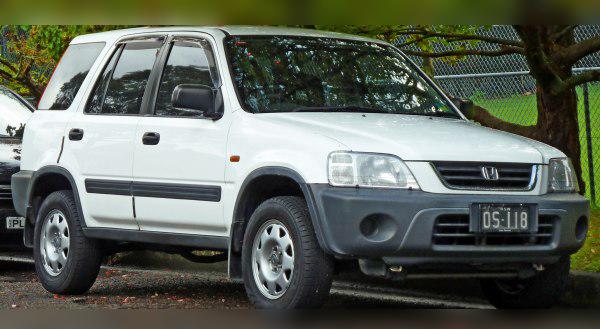
Honda B20B 2.0 16V (128 hp): Experiences, problems, fuel consumption and maintenance
Key points in short (TL;DR)
- Timing drive: Uses a timing belt that must be replaced regularly.
- Valve adjustment: No hydraulic lifters – valves must be adjusted mechanically every 40,000 km (crucial for longevity).
- Reliability: Extremely robust engine (“workhorse”), capable of huge mileage with basic maintenance.
- Fuel consumption: Quite high in city driving due to the boxy body of the CR-V and the older fuel injection system.
- LPG (autogas): Handles LPG well, but requires strict valve adjustment to prevent valve seat recession and burning.
- Power: With 128 hp it’s no sports car; the engine is tuned for low-end torque, ideal for light off-road driving.
Contents
- Introduction and applications
- Technical specifications
- Reliability, maintenance and failures
- Specific parts and fuel injection system
- Fuel consumption and performance
- LPG and tuning
- Gearbox and drivetrain
- Conclusion and used-buying tips
Introduction and applications
The Honda B20B engine is the heart of the first-generation Honda CR-V (RD1). It belongs to Honda’s legendary “B-series”, but unlike its Civic Type-R relatives that scream up to 8000 rpm, the B20B was designed as a workhorse. With a 2.0-liter displacement, its goal was to provide enough torque to move the then-new concept of a “soft off-roader” or SUV.
This engine is specific in that it has a longer stroke and larger displacement, but in this 128 hp version it does not have the famous VTEC system. That makes it simpler, cheaper to maintain, but also somewhat “sleepy” at high revs. For many Honda enthusiasts, this is one of the most reliable engines ever made, provided a few key service procedures are respected.
Technical specifications
| Specification | Data |
|---|---|
| Engine code | B20B (early versions) |
| Displacement | 1973 cc |
| Power | 94 kW (128 hp) at 5500 rpm |
| Torque | 182 Nm at 4200 rpm |
| Fuel type | Petrol (naturally aspirated) |
| Injection | PGM-FI (multi-point) |
| Number of cylinders/valves | 4 cylinders / 16 valves (DOHC) |
Reliability and maintenance
Timing system: belt or chain?
The Honda B20B uses a timing belt to drive the camshafts. This is a key maintenance item. It is recommended to do a major service every 100,000 km or 5 years (whichever comes first). When replacing the belt, you must also replace the tensioner as well as the water pump, since it is driven by the same belt. If the pump seizes, the belt will fail, and then the engine (pistons will hit the valves).
Most common failures and symptoms
Although the engine is extremely reliable, age takes its toll. The most common issues are:
- Out-of-adjustment valves: Symptoms are rough running, loss of power or stalling at idle. If ignored, this leads to overheating and valve failure.
- Oil leaks: Most often from the camshaft oil seal, valve cover gasket or the distributor O-ring. Also, the camshaft end plug (“cam seal”) often starts leaking.
- Radiator cracking: The plastic top tank of the radiator often cracks with age and heat cycles. Symptoms are the smell of coolant and light steam from under the hood.
- Distributor: On older models, the bearing inside the distributor can fail or the internal ignition coil can die, causing a no-start condition.
Oil: capacity and consumption
The engine takes approximately 3.8 to 4.0 liters of oil (with filter). The recommended viscosity is 5W-30 or 10W-40 (more commonly used on older engines in moderate climates).
Does it burn oil? Yes. B20B engines, especially those with over 200,000 km, are prone to oil consumption. Consumption of 0.5 to 1 liter per 10,000 km is considered completely acceptable and normal. If it uses more than that (e.g. 1L per 1000–2000 km), the usual culprits are valve stem seals or stuck oil control rings.
Spark plugs and injectors
This is a simple engine. Spark plugs are replaced every 20,000 to 40,000 km if you use standard copper/nickel plugs, or up to 100,000 km if you use iridium plugs (recommended for less hassle). The injectors are extremely durable and rarely cause problems if the car is run on petrol. Injector issues are usually the result of running exclusively on LPG, where the petrol injectors seize up from lack of use.
Specific parts (costs)
The good news for owners of this engine is the absence of expensive modern systems.
- Dual-mass flywheel: NONE. This engine uses a classic solid flywheel that doesn’t fail. Clutch replacement is therefore significantly cheaper.
- Turbocharger: NONE. The engine is naturally aspirated. No turbo, no intercooler, no boost hoses that can burst.
- DPF and EGR: No DPF filter (this is a petrol engine). An EGR valve exists in some markets, but it rarely clogs because petrol doesn’t produce soot like diesel. Even if it does get dirty, cleaning is simple.
- AdBlue: NONE.
Parts prices for the major service are affordable (not expensive), while original body parts or specific Honda sensors (depending on market) can sometimes be pricier than those of European competitors.
Fuel consumption and performance
City driving and “sluggishness”
Don’t expect miracles. The first-generation Honda CR-V is a heavy car with the aerodynamics of a brick. Real-world city fuel consumption ranges from 11 to 13 liters of petrol per 100 km. In winter or heavy traffic it can go up to 14 liters.
Is the engine sluggish? By today’s standards – yes. With 128 hp and 182 Nm, 0–100 km/h takes around 10–11 seconds (manual gearbox) or slower (automatic). Still, the engine is flexible and pulls nicely from low revs, so in town it doesn’t feel lethargic as long as you’re not expecting sports-car acceleration.
Behavior on the highway
This is the weakest point of this model. Due to the short gear ratios (to provide torque for light off-road use), the engine revs high on the highway. At 130 km/h, the engine is already at about 3500 to 4000 rpm (depending on gearbox). This results in more cabin noise and fuel consumption that doesn’t drop much below 9–10 liters on open roads. It’s not an ideal cruiser for long high-speed journeys.
Additional options and modifications
LPG (autogas) installation
This engine is suitable for LPG conversion, but with one BIG warning: Valve adjustment. The B20B cylinder head is sensitive to the high combustion temperatures of LPG. The valves sink into their seats faster than on petrol. While on petrol the valves are checked every 40,000 km, on LPG it is mandatory to check them every 15,000 to 20,000 km. If you ignore this, a cylinder head overhaul is guaranteed. Installing a valve lubrication system (“valve saver” drip) is also recommended.
Chip tuning (Stage 1)
Can it be chipped? Yes, but there is no real point. Since the engine is naturally aspirated, the power gain is negligible (maybe 3–5 hp), which you will not feel in real driving. Your money is better spent on quality spark plugs, leads and regular maintenance. Serious power gains require a turbo conversion or a “VTEC head” (the so-called CR-VTEC conversion), but that is already a serious engineering project.
Gearbox and drivetrain
Manual vs automatic
- Manual (5-speed): Very precise and robust. Failures are rare, usually worn synchros for second or third gear at very high mileage. The clutch kit is cheap because there is no dual-mass flywheel.
- Automatic (4-speed): Classic hydraulic automatic. Extremely durable, but it “steals” power from the engine and increases fuel consumption. It’s a bit slow to respond.
Gearbox and drivetrain service
Gearbox oil: On automatics it is crucial to change the oil every 60,000 km. Always use original Honda ATF (or a high-quality Z1/DW-1 spec equivalent), as these gearboxes are sensitive to incorrect fluids. On the manual gearbox, Honda recommends its own MTF oil (change at about 80,000–100,000 km).
Rear differential (Dual Pump System): A CR-V specialty. If you hear grinding or squeaking from the rear of the vehicle when turning the steering wheel to full lock (tight U-turns), it means the oil in the differential has degraded. An urgent oil change is required – use only Honda DPS-F (Dual Pump System Fluid). The system takes about 1 liter of fluid and is not expensive, and it solves the problem immediately.
Buying used and conclusion
Before buying, be sure to check:
- Valve noise: Does the engine “tick”? If it’s too quiet, that’s worse than some ticking – it means the valves are over-tightened.
- Exhaust smoke: Bluish smoke when revving or on overrun indicates oil consumption (rings/seals).
- Radiator: Look at the plastic top tank of the radiator for traces of coolant (greenish/blue stains).
- Propshaft: Check if the rear propshaft is still installed (some owners remove it due to a faulty rear differential or in pursuit of supposed fuel savings).
Conclusion: The Honda B20B in the CR-V is a car for those who need a cheap, simple and incredibly durable workhorse. It’s not for racing, nor for silence at 150 km/h on the motorway. This is an engine that, with minimal maintenance (oil, belt, valves), will take you to the end of the world and back, probably in snow or mud. It’s an ideal choice for weekend houses, hunters, anglers, or as a family car in areas with poor roads.
Was this content useful to you?
Your opinion helps us to improve the quality of the content.