J35Z2 Engine
- Engine
- 3471 cm3
- Fuel
- Petrol (Gasoline)
- Fuel injection system
- Multi-port manifold injection
- Power
- 271 hp @ 6200 rpm
- Torque
- 344 Nm @ 5000 rpm
- Cylinders
- 6
- Valves
- 24, 4 per cylinder
- Cylinders position
- V-engine
- Valvetrain
- SOHC, i-VTEC
- Oil capacity
- 4.3 l
- Coolant
- 6.6 l
# Vehicles powered by this engine
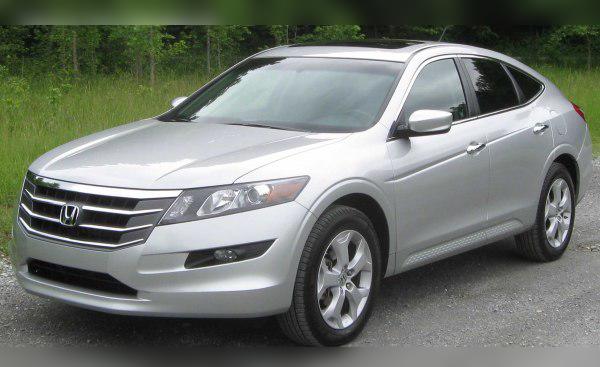
Honda J35Z2 3.5 V6 – Experiences, Issues, VCM System, Fuel Consumption and Buying Used
Key points in short (TL;DR)
- VCM System (Variable Cylinder Management): The most controversial aspect of this engine. Cylinder deactivation saves fuel, but can cause oil consumption, vibrations and fouled spark plugs.
- Timing belt: The engine does not use a chain. A major service is mandatory and not cheap, because it requires replacement of the belt, tensioner and water pump.
- Power and refinement: Extremely smooth, quiet and powerful engine. 271 hp is more than enough for any body style.
- Fuel consumption: Although it has a fuel-saving system, you should expect high consumption in city traffic. On the open road it is surprisingly economical.
- Reliability: Apart from the specifics around the VCM system, this is a “bulletproof” Honda engine that can cover huge mileage with regular maintenance.
- Suitable for LPG: Thanks to port (indirect) injection, it works very well on LPG, which significantly reduces running costs.
Contents
- Introduction and applications
- Technical specifications
- Reliability, Maintenance and the VCM issue
- Specific parts and fuel injection system
- Fuel Consumption and Performance
- LPG and Tuning
- Transmission and drivetrain
- Buying advice and Conclusion
Introduction and applications
The Honda J35Z2 is part of the legendary J-series of V6 engines, considered one of the best six‑cylinder engine families ever made. This particular unit was designed to reconcile the American appetite for displacement and power with increasingly strict fuel economy requirements. It was primarily installed in the Honda Accord Crosstour, a model that sits somewhere between a wagon and an SUV.
What sets this engine apart is the VCM (Variable Cylinder Management) technology, which allows it to run on 3, 4 or all 6 cylinders depending on load. While it looks great on paper, in practice it requires specific attention from the owner.
Technical specifications
| Specification | Data |
|---|---|
| Engine code | J35Z2 |
| Displacement | 3471 cc (3.5 L) |
| Configuration | V6, SOHC (single cam per bank), VTEC |
| Power | 202 kW (271 hp) @ 6200 rpm |
| Torque | 344 Nm @ 5000 rpm |
| Injection type | MPI (Multi-Point Injection) – Port injection |
| Induction | Naturally aspirated (no turbo) |
| Camshaft drive | Timing belt |
Reliability and Maintenance
Timing belt – the Achilles’ heel if it snaps
Unlike many modern engines that use a chain, the Honda J35Z2 uses a timing belt. This is a key piece of information for maintenance. It is an “interference” engine, which means that if the belt breaks, the pistons will hit the valves and cause catastrophic engine damage (bent valves, damaged head, holed pistons).
The major timing service must be done strictly on time. The recommendation is every 100,000 km to 120,000 km or every 7 years (whichever comes first). When replacing the belt, you must also replace:
- Timing belt
- Hydraulic tensioner (often a weak point, do not cheap out here)
- Water pump (driven by the timing belt)
- Accessory belt and its pulleys
VCM issues and oil consumption
The most common owner complaint is related to the VCM system. When the system activates (shuts off cylinders to save fuel), a vacuum can be created in the inactive cylinders that pulls oil past the rings into the combustion chamber. Typical symptoms are:
- Oil consumption: It’s not unusual for the engine to use 1 liter per 3,000–5,000 km if it is often driven in conditions where VCM is active. From the factory, consumption of up to 1L per 2,000 km is considered acceptable, but for owners that is simply too much.
- Oily/fouled spark plugs: Oil fouls the plugs in the cylinders that are being shut off, which leads to misfires and an illuminated “Check Engine” light.
- Vibrations: Although the engine has active engine mounts to counter this, the transition from 6 to 3 cylinders can be felt as a mild vibration.
Solution: Many owners install a “VCM Muzzler” or have the VCM system disabled in software. This way the engine always runs on all 6 cylinders – fuel consumption rises slightly, but oil consumption is prevented and the engine is protected.
Oil and spark plugs
The engine takes approximately 4.3 to 4.5 liters of oil (with filter). The recommended viscosity is 0W-20 or 5W-20. Honda insists on thinner oil due to narrow oil passages and the VTEC system. Because of the VCM‑related issues, check the oil level every 1,000 km.
The spark plugs are iridium (NGK or Denso). The replacement interval is 100,000 km. However, due to the aforementioned VCM problem, it is recommended to inspect them earlier (at 50–60,000 km) to see if there are oil deposits or heavy carbon build‑up.
Valve adjustment
This engine does not have hydraulic lifters; it requires manual valve clearance adjustment. It is recommended to check them every 40,000–60,000 km (especially if you run LPG), or if you hear a characteristic “ticking” from the top end when the engine is cold.
Specific Parts (Costs)
Fuel injection and turbocharging
The good news is that the J35Z2 uses classic MPI (Multi-Point Injection) fuel injection. The injectors are extremely durable, not as sensitive to fuel quality as direct injection (GDI) units, and they are cheap to clean or replace. There are also no issues with carbon build‑up on the intake valves.
The engine is naturally aspirated; there is no turbocharger, no intercooler, which means fewer potential failures and cheaper long‑term maintenance.
Emissions equipment (DPF, EGR, Catalytic converters)
Since it’s a petrol engine, it has no DPF filter and no AdBlue system, which is a huge advantage over diesels of similar power. It does have an EGR valve, which rarely gets clogged (because petrol burns cleaner). However, it has catalytic converters that can be expensive (depending on the market) if they fail due to poor combustion (oil burning caused by VCM).
Active engine mounts (Active Control Engine Mounts – ACM)
Because of 3‑cylinder operation, Honda uses expensive active engine mounts that electronically counteract vibrations. These mounts are very expensive (significantly more than regular rubber mounts) and often fail around 150,000 km. Symptoms include increased vibration in the cabin or oil leaking from the mount itself.
Fuel Consumption and Performance
The Crosstour is a heavy car (over 1.8 tons), and the engine has a large displacement. Don’t expect miracles.
- City driving: Real‑world consumption is between 13 and 16 liters per 100 km. In heavy winter traffic it can go even higher.
- Open road (secondary roads): This is where VCM does its job. It’s possible to bring consumption down to around 8–9 liters.
- Highway (130 km/h): At this speed the engine turns at a low 2,200–2,400 rpm. Consumption is about 9–10.5 liters.
The engine is anything but “lazy”. With 271 hp and linear power delivery, it pulls strongly from low revs. The sound of the V6 at full throttle (when VTEC kicks in) is fantastic and gives a genuinely sporty feel, despite the vehicle’s weight.
Additional Options and Modifications
LPG conversion
Is it suitable for LPG? Absolutely YES. Thanks to port injection, the conversion is straightforward and the system works perfectly. However, there are two important notes:
- You must check valve clearances more often (every 30–40,000 km), because Honda engines have relatively “soft” valve seats that are more sensitive to the higher combustion temperatures of LPG. A valve lubrication system is recommended.
- The LPG tank will take the place of the spare wheel, but the Crosstour’s boot is large enough that this is not a real problem.
ECU remap (Stage 1)
On naturally aspirated petrol engines, a Stage 1 remap doesn’t bring much. You can expect a gain of 10–15 hp and a slightly better throttle response, but it won’t drastically change the character of the car. The best software modification for this car is disabling the VCM system, not chasing extra horsepower.
Transmission
In the Crosstour, the J35Z2 comes exclusively with a 5‑speed automatic transmission (Honda 5AT). This is a traditional automatic with a torque converter.
- Reliability: Generally very reliable, but “old school” – not as quick as modern 8‑speed ZF gearboxes.
- Dual‑mass flywheel: This model does not have a dual‑mass flywheel in the way diesels with manual gearboxes do. It has a torque converter and a flexplate, both of which are long‑lasting.
- Maintenance: The transmission fluid (ATF) should be changed every 40,000 to 60,000 km. Use only Honda ATF‑DW1 fluid. Do not perform a pressurized machine flush; instead use the classic drain & fill method (three times in a row if the oil is very dirty).
- Failures: If the transmission “bangs” when changing gears or slips, it usually means the fluid is old or the solenoids are dirty. A neglected transmission may require an overhaul, which is expensive.
Buying used and Conclusion
When buying a used Honda with the J35Z2 engine, pay attention to the following:
- Noise on cold start: Listen for rattling. If you hear a metallic rattle that disappears as the engine warms up, the valves probably need adjustment.
- Timing belt service history: Ask for proof of timing belt replacement. If there is none, immediately factor that cost (parts + labor) into the price of the car, because the risk is too high.
- Test drive at 80–100 km/h: Try to drive at a constant speed so that VCM activates (the green ECO light will come on). If you feel jerking or strong vibrations, the engine mounts are likely worn or the system has fouled the spark plugs.
- Oil leaks: Look around the valve covers and at the junction between engine and transmission.
Conclusion
The J35Z2 engine is a fantastic choice for drivers who value refinement, quiet operation and linear power delivery, and who are willing to accept somewhat higher fuel consumption and registration costs. It is ideal for long‑distance travel. If you are planning to buy one, be sure to check the condition of the timing belt and seriously consider disabling the VCM system for the sake of engine longevity. With regular maintenance, this engine can easily exceed 400,000 km.
Was this content useful to you?
Your opinion helps us to improve the quality of the content.