D15B Engine
- Engine
- 1493 cm3
- Aspiration
- Naturally aspirated engine
- Fuel
- Petrol (Gasoline)
- Fuel injection system
- Multi-port manifold injection
- Power
- 105 hp @ 6400 rpm
- Torque
- 133 Nm @ 4500 rpm
- Cylinders
- 4
- Valves
- 16, 4 per cylinder
- Cylinders position
- Inline
- Valvetrain
- SOHC
# Vehicles powered by this engine
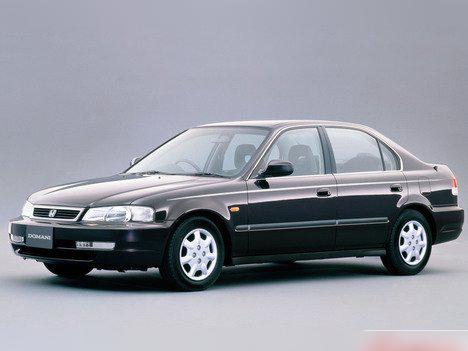
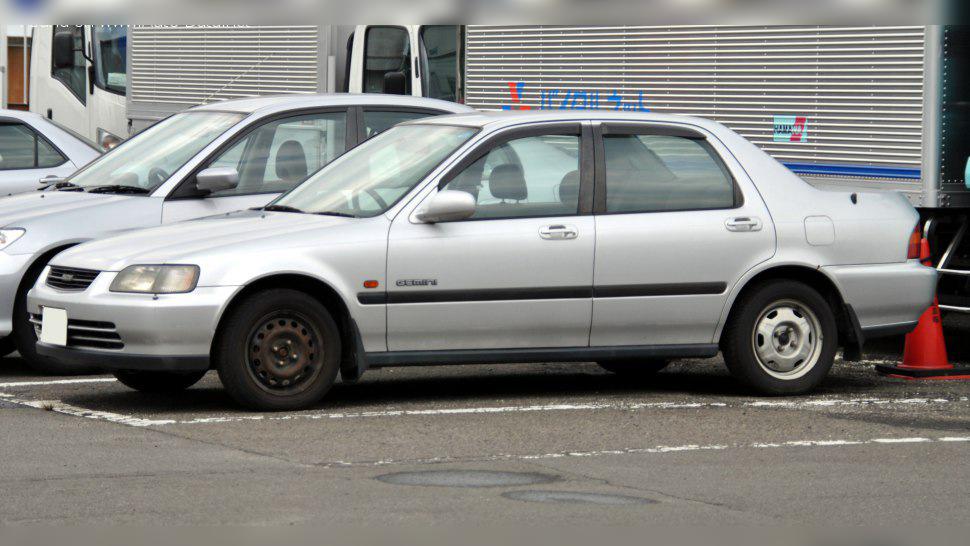
Honda D15B 1.5 (105 HP) – Experiences, problems, fuel consumption and buying tips
Key points in short (TL;DR)
- Exceptional reliability: Honda’s D-series engines are considered one of the most durable petrol engine designs of the 1990s.
- Low maintenance costs: Parts are widely available and affordable, and the mechanics are simple.
- Lack of torque: With 133 Nm, the engine needs higher revs for more agile driving, which is typical for Hondas.
- Sensitive distributor: This is the Achilles’ heel of older Hondas; the igniter or the coil inside the distributor often fails.
- Mechanical valve adjustment: There are no hydraulic lifters, so regular valve clearance adjustment is required.
- Excellent on LPG: The engine handles LPG installations very well if properly maintained.
- Recommendation: An ideal choice for drivers looking for a simple, long-lasting daily engine with minimal running costs.
Contents
Introduction and engine applications
The engine designated as D15B belongs to Honda’s legendary D-series, which defined the reputation of this Japanese brand during the 1990s. The version we’re talking about produces 105 HP and is specific in that it offers a perfect balance between fuel economy and decent performance for its time. This engine was installed in the Honda Domani II, as well as in the Isuzu Gemini (MJ), which shouldn’t surprise you – that generation of Isuzu Gemini was essentially a “rebadged” Honda Domani, created as a result of cooperation between the two manufacturers.
This is classic Japanese engineering: an aluminum block, a single overhead camshaft (SOHC) and 16 valves. Although it doesn’t have the performance of the sporty “Type R” models, the D15B is appreciated for its incredible durability and its ability to cover hundreds of thousands of kilometers with minimal maintenance.
Technical specifications
| Specification | Data |
|---|---|
| Engine code | D15B |
| Displacement | 1493 cc (1.5 L) |
| Power | 77 kW (105 HP) |
| Torque | 133 Nm |
| Fuel type | Petrol (Gasoline) |
| Fuel injection system | PGM-FI (Multi-point fuel injection) |
| Induction | Naturally aspirated |
| Number of cylinders/valves | 4 cylinders / 16 valves (SOHC) |
Reliability and maintenance
Timing belt or chain?
The D15B engine uses a timing belt to drive the camshaft. This is a key maintenance item. Honda engines from this series are mostly of the interference type, which means that a broken belt will almost certainly cause the pistons and valves to collide, resulting in catastrophic engine damage. It’s strongly advised not to gamble with replacement intervals.
Most common failures
Although the engine is extremely reliable, time takes its toll. The most common issues are:
- Distributor: This is the weakest point. The distributor bearing can seize, or more often, the igniter or the coil inside the housing fails. Symptoms include stalling while driving, no-start condition, or rough running.
- Main fuel pump relay: A well-known problem on Hondas of this era. When the cabin is hot (in summer), the engine cranks but won’t start because of cracked/cold solder joints in the relay. Once it cools down, it starts normally.
- Oil leaks: Most often from the valve cover gasket, camshaft oil seal, or the distributor O-ring.
- IACV (idle air control valve): It can get clogged with carbon deposits, causing fluctuating idle (revving up and down). Cleaning usually solves the problem.
Major service
The major service (replacement of timing belt, tensioner and water pump) is recommended every 80,000 to 100,000 km or every 5 years, whichever comes first. Along with the belt, be sure to check the crankshaft and camshaft oil seals, as this is the ideal time to replace them (the parts are cheap, but labor is expensive if done later).
Oil: capacity and consumption
The sump holds approximately 3.3 to 3.5 liters of oil, including the filter. The recommended viscosity is usually 5W-30 or 10W-40 semi-synthetic, depending on climate and mileage.
As for oil consumption, the D-series is known to “sip” some oil if driven at high revs (VTEC zone, although this 105 HP version likely doesn’t have an aggressive VTEC mode or may not have VTEC at all, depending on the market). Consumption of up to 0.5 liters per 1,000 km is tolerated on older engines, but ideally it should be much lower. If it uses more, the usual culprits are valve stem seals (blue smoke on cold start) or oil control rings (smoke at full throttle).
Spark plugs
On this petrol engine, standard copper spark plugs should be replaced every 20,000 to 30,000 km. NGK or Denso are the factory recommendation and it’s best to stick with them. There are iridium options that last longer (up to 100,000 km), but for this simple engine standard plugs work perfectly and are very cheap.
Specific parts (costs)
Dual-mass flywheel and clutch
Good news: this engine does not have a dual-mass flywheel. It uses a classic solid flywheel that practically never fails. A clutch kit (pressure plate, disc, release bearing) is relatively cheap and straightforward to replace.
Fuel injection system
The engine uses the Honda PGM-FI multi-point fuel injection system. The injectors are extremely durable and rarely cause problems. If they do, ultrasonic cleaning is usually enough. They are not expensive, either used or new (aftermarket).
Turbo and DPF/EGR
This is a naturally aspirated engine, which means it does not have a turbocharger. That eliminates potentially costly turbo-related failures.
Also, as an older petrol engine, it does not have a DPF filter (found on diesels). As for the EGR valve, it is present on some versions (especially the economical “VTEC-E” variants), while other D15B versions don’t have it. If fitted, the intake manifold passages can clog, causing jerking at light throttle. Cleaning is a DIY job and costs nothing besides time and a can of carb cleaner.
AdBlue
This engine does not use an AdBlue system. It was produced long before this technology became standard.
Fuel consumption and performance
Real-world fuel consumption
- City driving: Expect between 8 and 9 liters per 100 km. In winter or in heavy traffic it can go up to 10 liters, but rarely more than that if the engine is in good condition.
- Highway / open road: This is where the engine is most economical and can go down to about 6 to 6.5 liters per 100 km with moderate driving.
Is the engine “sluggish”?
With 105 HP in a Honda Domani or Isuzu Gemini body (which are relatively light cars by today’s standards, around 1,100 kg), the engine is not sluggish, but it does require gear shifting. Due to the low torque (133 Nm) at low revs, you won’t feel pushed back in your seat when taking off. To make the car pull properly, you need to rev it above 3,500–4,000 rpm. For normal city driving it is perfectly adequate and feels lively enough.
Behavior on the motorway
This is not an ideal long-distance cruiser for modern motorways, mainly because of noise and gearbox ratios. At 130 km/h, the engine spins at a fairly high 3,500 to 4,000 rpm in fifth gear (depending on the specific gearbox). This means the cabin is noisy, but the engine can maintain that speed for hours without any problem. For overtaking at those speeds you’ll usually need to shift down to fourth.
Additional options and modifications
LPG conversion
The Honda D15B is an excellent candidate for LPG. The intake manifold is metal (on most variants), and the electronics are simple. However, there is one crucial rule: since the engine does not have hydraulic lifters and LPG burns at a higher temperature, valve adjustment must be done more frequently – recommended every 15,000 to 20,000 km of driving on gas. If this is neglected, the valves can “sink” into the cylinder head and burn, leading to an expensive repair.
ECU remap (Stage 1)
To be realistic – remapping a small-displacement naturally aspirated petrol engine is basically a waste of money. A Stage 1 map might give you 3 to 5 HP, which is imperceptible in real driving. The only real way to increase power on the D-series is mechanical tuning (changing the intake manifold, exhaust, or the popular “Mini-Me swap” where a VTEC head is fitted to a non-VTEC block), but that goes beyond standard maintenance.
Gearbox
Types of gearboxes
This engine usually came with:
- 5-speed manual gearbox (codes S40 or S20).
- 4-speed automatic gearbox (classic hydraulic torque converter).
Gearbox failures
Manual gearbox: Extremely precise and durable. The most common issue is the input shaft bearing. The symptom is a rustling or grinding noise when the gearbox is in neutral and the clutch is released. When you press the clutch, the noise disappears. The replacement parts are not expensive, but the gearbox has to be removed.
Automatic gearbox: Older Honda automatics are reliable if the oil is changed regularly. If the gearbox bangs when shifting or slips, it’s usually too late for an oil change and a full rebuild is needed, which is (very expensive) (depends on the market).
Gearbox service
- Manual: Honda uses a specific MTF (Manual Transmission Fluid) oil. It is recommended to change it every 40,000 to 60,000 km. This gearbox takes about 2 liters of oil. Never use 90W differential gear oil, as it is too thick; in an emergency, 10W-40 engine oil can be used, but MTF is the correct choice.
- Automatic: Oil (Honda ATF) must be changed every 60,000 km (or more often if the car is driven only in the city).
Buying used and conclusion
When buying a car with a D15B engine, pay attention to the following:
- Cold start: The engine should start “on half a turn”. If it cranks for a long time, suspect the fuel pump or main relay.
- Exhaust smoke: Have someone rev the engine while you watch from behind. Blue smoke = oil consumption (rings/seals). White smoke (when the engine is hot) = head gasket.
- Idle quality: Once warm, idle should be steady (around 750–800 rpm). If it “hunts”, the IACV is dirty or there is a vacuum leak.
- Valve noise: Light ticking is normal for Hondas (like a sewing machine), but loud metallic knocking means the valves haven’t been adjusted for years or the camshaft is damaged.
Conclusion:
The Honda D15B (105 HP) is one of the best “workhorse” engines ever made. It’s not a sports engine, but it will take you to the end of the world and back with minimal costs. It is ideal for students, beginners, or anyone who needs reliable transport from point A to point B and is willing to tolerate a bit of noise and the spartan character of a 1990s car. If you find a car whose bodywork is not rotten (which is a bigger problem than the engine), you can buy it without overthinking.
Was this content useful to you?
Your opinion helps us to improve the quality of the content.