D17A2 Engine
- Engine
- 1668 cm3
- Aspiration
- Naturally aspirated engine
- Fuel
- Petrol (Gasoline)
- Fuel injection system
- Multi-port manifold injection
- Power
- 125 hp @ 6300 rpm
- Torque
- 154 Nm @ 4800 rpm
- Cylinders
- 4
- Valves
- 16, 4 per cylinder
- Cylinders position
- Inline
- Valvetrain
- DOHC
- Oil capacity
- 3.5 l
- Coolant
- 5.5 l
# Vehicles powered by this engine
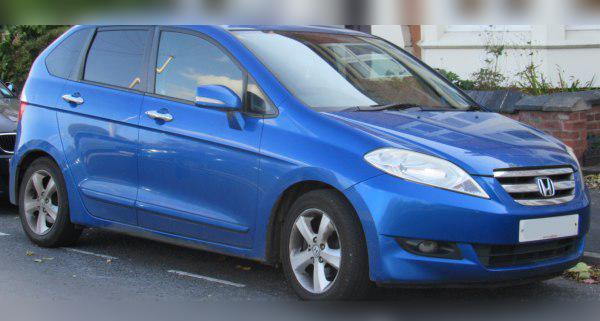
Honda D17A2 (1.7 i-VTEC) in the FR-V: Ownership Impressions, Common Issues, Fuel Consumption and Buying Tips
Key points (TL;DR)
- Timing drive: Uses a timing belt, not a chain. Timely replacement is crucial to avoid engine damage.
- Power vs Weight: The 125 hp engine is a bit “on the edge” for the heavy FR-V (six-seater) body, so it needs higher revs.
- Most common issue: Risk of head gasket failure if the cooling system is neglected.
- Gearbox: Manual gearboxes often suffer from input shaft bearing whine.
- Maintenance: No dual-mass flywheel, no turbo, no DPF – regular maintenance is relatively cheap.
- Who it suits: Ideal for calm drivers who value space and reliability over performance.
Contents
- Introduction and application
- Technical specifications
- Reliability and maintenance
- Specific parts and costs
- Fuel consumption and performance
- LPG and tuning
- Gearbox and drivetrain
- Used car buying advice and conclusion
Introduction: The heart of a family six-seater
The engine with the code D17A2 belongs to Honda’s legendary D-series. Although Honda engines are known for high revs and a sporty character, in the Honda FR-V (or Edix in Japan) this 1.7‑liter petrol unit is tasked with hauling a six‑member family and their luggage. It is a classic naturally aspirated engine with VTEC (variable valve timing), aiming to balance economy and performance. It’s worth noting that this is one of the last D‑series engines before Honda largely switched over to the R‑series (1.8 i‑VTEC).
Technical specifications
| Engine displacement | 1668 cc (1.7 L) |
| Power | 92 kW (125 hp) at 6300 rpm |
| Torque | 154 Nm at 4800 rpm |
| Engine code | D17A2 |
| Injection type | Multi-point injection (MPI) |
| Layout | I4, SOHC, VTEC, 16 valves |
| Aspiration | Naturally aspirated |
Reliability and maintenance
Timing belt or chain?
This engine uses a timing belt to drive the camshaft. This is very important because a snapped belt will cause the pistons and valves to collide (it’s an interference engine). The recommended interval for a major service is every 100,000 to 120,000 km or every 5 to 7 years (whichever comes first). Along with the belt, the tensioner and water pump must be replaced.
Most common failures
Although the D17A2 is generally reliable (Honda petrol engines have a “bulletproof” reputation), it does have a few weak points:
- Head gasket: This is the most serious issue on the D17 series. Due to the relatively small capacity of the cooling system and plastic thermostat housings, overheating can occur quite easily, which then leads to a blown head gasket. Symptoms include: coolant loss, overheating at idle, or “mayonnaise” under the oil filler cap.
- Camshaft/crankshaft position sensors: They can fail, causing hard starting or the engine to stall while driving.
- Oil leaks: Often from the VTEC solenoid (the rubber seal hardens) or from the crankshaft oil seal.
- IACV (idle air control valve): It can get dirty, causing fluctuating idle speed (revving up and down).
Engine oil: Capacity and consumption
The engine takes approximately 3.5 to 3.7 liters of oil (with filter). The recommended viscosity is 5W‑30 or 5W‑40 (fully synthetic).
Does it burn oil? Yes. Honda VTEC engines are designed in such a way that at higher revs (when VTEC engages) they can consume a certain amount of oil. Consumption of up to 0.5 liters per 1,000 km can be considered acceptable from the factory if the car is driven hard, but in normal use it shouldn’t exceed 1 liter between services (10,000 km). If it burns more, the usual culprits are valve stem seals or piston rings.
Spark plugs and injectors
Being a petrol engine, spark plugs are a consumable item.
Replacement interval: Standard nickel plugs should be replaced every 40,000 km. If you use iridium plugs (NGK or Denso are OEM), they can last up to 100,000 km.
The injectors are conventional electromagnetic units and are extremely durable. They rarely cause problems unless very dirty fuel is used.
Specific parts (costs)
Dual-mass flywheel: Fortunately, this engine does NOT have a dual-mass flywheel. It uses a conventional solid flywheel, which makes clutch replacement much cheaper. This is a big advantage over the diesel version (2.2 i‑CTDi).
Turbo and fuel system: The engine does not have a turbocharger. It’s an old-school naturally aspirated unit, which means fewer parts that can fail. The fuel system is indirect injection (MPI) and is not as sensitive as modern GDI systems with high-pressure pumps.
EGR and emissions: The engine is equipped with an EGR valve. On Honda D‑series engines, the EGR passages in the intake manifold often get clogged with soot, which triggers the “Check Engine” light and causes jerking under load. Cleaning is relatively inexpensive and solves the problem.
DPF and AdBlue: This engine does not have a DPF filter and does not use AdBlue. It has a conventional catalytic converter which rarely causes issues before 200,000 km.
Fuel consumption and performance
City driving and “sluggishness”
To be honest: the Honda FR‑V is a heavy car (around 1400–1500 kg), and 154 Nm of torque from 1.7 liters is not a lot.
Is the engine sluggish? At low revs (below 3000 rpm) – yes. You have to use the gearbox frequently to keep up with more dynamic traffic. Only above 4000 rpm, when VTEC “comes alive”, does the car pull reasonably well, but noise and fuel consumption go up.
Real-world city consumption: Expect between 9.5 and 11.5 l/100 km, depending on traffic and how heavy your right foot is. In winter it can easily reach 12 l/100 km.
Motorway and cruising
On the motorway, the lack of a 6th gear on the manual gearbox (some models had 5, some 6 gears depending on model year and market, but with the 1.7 engine it is usually a 5‑speed) is noticeable.
At 130 km/h, the engine spins at around 3800–4200 rpm. That means noticeable engine noise in the cabin. Fuel consumption on the open road is around 7–8 l/100 km.
Additional options and modifications
LPG conversion
Is it suitable? Yes, but with caution. Honda engines tend to have somewhat softer valve seats.
Essential: If you install LPG, you must check and adjust the valve clearances (mechanical adjustment) every 20,000 to 30,000 km. If you neglect this, the valves will recess into the seats, you’ll lose compression and the cylinder head will need machining (an expensive repair). A valve lubrication system (“valve saver” drip) is recommended.
Chip tuning (Stage 1)
On a naturally aspirated petrol engine of this displacement, “chipping” is basically a waste of money. You might gain 3 to 5 hp, which you won’t really feel in everyday driving. It’s better to invest that money in quality tyres or fresh oil.
Gearbox
This engine is most commonly paired with a 5‑speed manual gearbox. Automatic gearboxes (4‑speed) are rare in Europe and more common on Japanese domestic market (JDM) models.
Gearbox issues
- Manual gearbox: The best-known weakness of Honda gearboxes from this generation is the input shaft bearing.
Symptom: You can hear a whirring or grinding noise when the gearbox is in neutral, which disappears as soon as you press the clutch pedal. If you hear this, the gearbox has to be removed and opened to replace the bearings. - Automatic gearbox: Older Honda automatics are generally reliable if the fluid is changed regularly, but they are slow and further increase fuel consumption.
Clutch cost: Since there is no dual-mass flywheel, a clutch kit (pressure plate, disc, release bearing) is reasonably priced (the exact price depends on the market, but it falls into the “not expensive” category).
Gearbox service: The oil in the manual gearbox should be changed every 60,000–80,000 km. Use only Honda MTF (Manual Transmission Fluid), as other oils can make shifting difficult in cold weather.
Used car buying advice and conclusion
Before buying a used Honda FR‑V with the 1.7 engine, pay attention to the following:
- Cold start: Listen to the engine. Do you hear valve ticking? (Valve clearance adjustment needed.)
- Gearbox in neutral: With the gearbox in neutral, release the clutch and listen for changes in noise (possible input shaft bearing issue).
- Test drive: Warm up the engine, then accelerate hard in second gear up to the redline. VTEC should “kick in” smoothly without hesitation, and there should be no blue smoke from the exhaust (oil burning).
- Coolant: Check the colour of the coolant and the radiator cap (when the engine is cold!). Any trace of oil in the coolant is a sign to walk away.
Conclusion:
The Honda FR‑V 1.7 is a rational choice for a family that doesn’t need sports-car performance. The engine is simple, cheap to maintain (no expensive diesel components) and the car is very practical. Although it can feel sluggish and noisy on the motorway, its reliability and interior space make up for it. If you find a car with a well-documented service history (especially regarding the timing belt and valve adjustments), it’s a purchase that pays off in the long run.
Was this content useful to you?
Your opinion helps us to improve the quality of the content.