LEB Engine
- Engine
- 1496 cm3
- Aspiration
- Naturally aspirated engine
- Fuel
- Petrol (Gasoline)
- Fuel injection system
- Multi-port manifold injection
- Power
- 132 hp @ 6600 rpm
- Torque
- 156 Nm @ 4600 rpm
- Cylinders
- 4
- Valves
- 16, 4 per cylinder
- Cylinders position
- Inline
- Valvetrain
- DOHC, i-VTEC
- Oil capacity
- 3.3 l
- Coolant
- 3.6 l
# Vehicles powered by this engine
Honda 1.5 i-VTEC Hybrid (LEB) – Experiences, issues, fuel consumption and buying guide
Key points (TL;DR)
- Reliability: The LEB engine is very reliable, uses a timing chain and proven Honda technology.
- The gearbox is crucial: Unlike most Honda hybrids (which use e-CVT), this one has a 7-speed DCT (dual-clutch). It requires strict maintenance.
- Efficiency: Excellent fuel economy in city driving thanks to the hybrid system.
- Direct injection: Although efficient, it can lead to carbon buildup on intake valves at higher mileage.
- Costs: Regular engine maintenance is not expensive, but repairs on the hybrid system and DCT gearbox can be very costly.
- Recommendation: An excellent choice for those who want a hybrid but dislike the “scooter effect” of CVT gearboxes, provided the transmission has been serviced regularly.
Contents
Introduction: Honda LEB 1.5 i-VTEC Hybrid
The engine with the code LEB is the heart of Honda’s i-DCD (Intelligent Dual Clutch Drive) hybrid system. Unlike the older IMA systems or the newer e:HEV systems, this drivetrain is specific because it combines a naturally aspirated petrol engine with a single electric motor integrated directly into the dual-clutch gearbox.
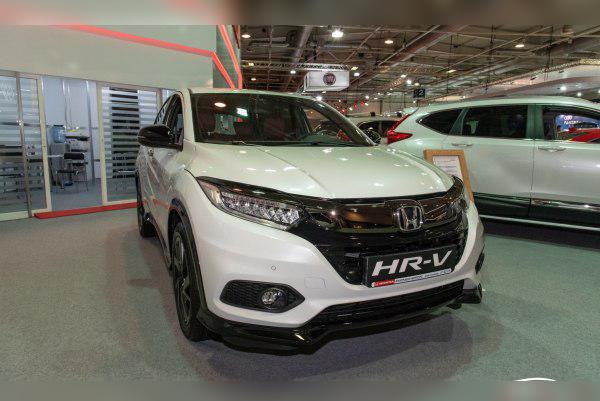
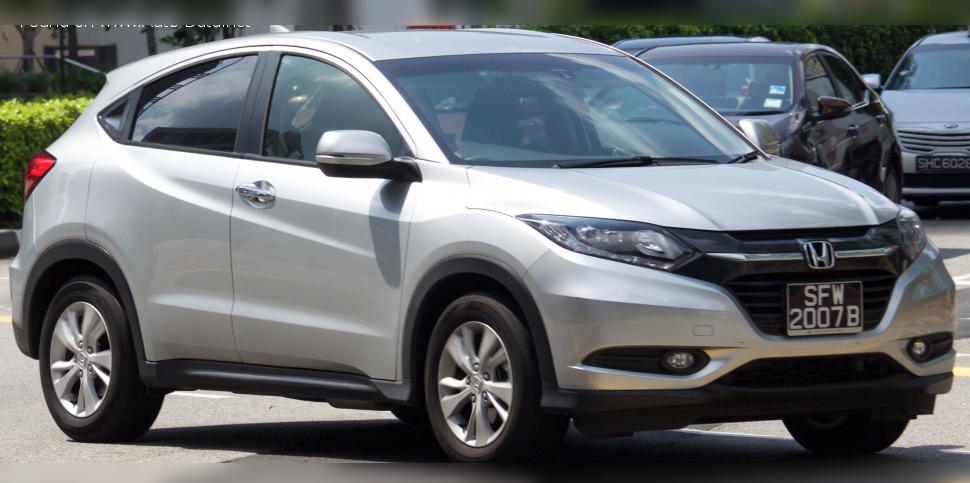
This engine is primarily found in the Honda HR-V II (facelift) and its Japanese counterpart, the Honda Vezel. It is important to note that this system was designed to provide a sportier driving feel compared to conventional hybrids, eliminating the rubber-band sensation typical of Toyota hybrids. However, that complexity also brings certain maintenance challenges.
Technical specifications
| Specification | Value |
|---|---|
| Engine displacement | 1496 cc |
| Petrol engine power | 97 kW (132 hp) |
| Total system power (Hybrid) | Around 112 kW (152 hp) – depends on market |
| Torque (petrol engine) | 156 Nm |
| Engine code | LEB (LEB-H1) |
| Injection type | Direct injection (Earth Dreams) |
| Induction | Naturally aspirated |
| Valve train | DOHC, 16 valves, i-VTEC |
Reliability and maintenance
Timing system: Chain or belt?
The Honda LEB engine uses a timing chain for valve timing. Honda chains are traditionally very durable, and on this engine they rarely cause issues before 200,000 or even 250,000 km, provided the oil is changed regularly. There is no need for an expensive “major service” to replace a timing belt; the chain is replaced only if you can hear rattling (stretching).
Most common engine issues
The petrol engine itself is “bulletproof”, but peripheral components can cause problems:
- Carbon buildup: Due to direct injection, the intake valves are not washed by fuel. At higher mileage (over 100,000 km), this can lead to rough idle or reduced performance. It is solved by walnut shell blasting.
- Gearbox actuators: Although not part of the engine block itself, they are inseparably linked to the drivetrain. Oil leaks on the clutch actuators have been an issue, especially on models produced before 2018.
- Small 12V battery: Hybrids often “kill” the small 12V battery if the car sits for longer periods. If the 12V battery is weak, the car will not start the hybrid system.
Service intervals and oil
An oil service is recommended every 10,000 to 15,000 km or once a year. This engine uses 0W-20 oil (Honda’s recommendation for hybrids, the so‑called “Green Oil”). The sump capacity is usually around 3.3 to 3.6 litres (with filter), which keeps maintenance costs low.
Oil consumption: This engine generally does not consume oil in worrying amounts. Consumption up to 0.5 litres per 10,000 km is acceptable, but most owners do not need to top up between services.
Spark plugs and ignition system
It uses iridium spark plugs (NGK or Denso). Their replacement interval is long, usually at 100,000 to 120,000 km. Do not try to save money by fitting standard plugs, as access is a bit more difficult (on some models you need to remove the plastic panel under the wipers), and the hybrid system frequently starts and stops the engine, so a strong, reliable spark is crucial.
Specific parts (costs)
Dual-mass flywheel
Yes. Since this engine is paired with a DCT (Dual Clutch) gearbox, the system uses a dual-mass flywheel to absorb vibrations when shifting gears and during start-stop operation. It tends to last longer than on diesels because the electric motor assists when setting off, but when it does need replacement, it is a very expensive job (depends on market).
Fuel injection system
The engine uses high-pressure direct injection (GDI). The injectors are generally reliable but sensitive to poor fuel quality. Symptoms of problems include hesitation under acceleration or a “Check Engine” light related to fuel mixture. Replacing a full set of injectors is expensive.
Turbo and eco systems
This engine does not have a turbocharger, which is a big advantage for long-term reliability and lower maintenance costs.
An EGR valve is present and can get dirty, but this rarely happens before 150,000 km. As for the DPF/GPF filters: Models for the European market (especially the HR-V after 2018) are equipped with a GPF (Gasoline Particulate Filter) to meet Euro 6d-TEMP standards. Unlike diesels, GPFs on petrol engines regenerate passively much more easily due to higher exhaust gas temperatures and rarely cause problems.
The engine does not have an AdBlue system.
Fuel consumption and performance
Real-world fuel consumption
This is the LEB engine’s strongest selling point.
- City driving: Expect between 4.5 and 5.5 l/100 km. In heavy traffic, the electric motor takes over a large part of the work in stop‑and‑go situations.
- Country roads: Consumption can drop below 4.5 l/100 km.
- Motorway (130 km/h): This is where the hybrid loses its advantage. Consumption rises to around 6.5 to 7.5 l/100 km because the petrol engine runs constantly and has to pull the extra weight of the batteries.
Is the engine “sluggish”?
Absolutely not. With 132 hp from the petrol engine and an additional “injection” of torque from the electric motor, this car in Sport mode goes surprisingly well. Throttle response is instant (thanks to the electric motor). The Honda HR-V/Vezel with this engine is quicker off the line than the regular 1.5 petrol version.
At 130 km/h the engine runs at relatively low revs thanks to the 7th gear in the DCT gearbox, which makes it quieter than versions with a CVT or a 5‑speed manual.
Additional options and modifications
LPG conversion
Not recommended. First, the engine has direct injection, which requires an expensive LPG system (that uses both petrol and LPG, or liquid LPG). Second, installing a tank would take up boot space that is already partially compromised or specific due to the hybrid battery (located under the boot floor in the Vezel/HR-V). Given the already low fuel consumption, the cost-effectiveness is questionable.
Remapping (Stage 1)
Since this is a naturally aspirated engine, a remap is a waste of money. The gain would be negligible (maybe 3–5 hp), and you risk upsetting the fine calibration between the petrol engine, electric motor and DCT gearbox. Honda’s hybrid control software is very complex and is best left untouched.
Gearbox: i-DCD (DCT)
In this configuration, the LEB engine comes exclusively with a 7-speed dual-clutch automatic gearbox (DCT). This is the car’s critical component.
Most common DCT gearbox problems
Early models (2013–2015 Vezel) had serious recalls due to overheating and software issues that could cause sudden acceleration or prevent the car from moving.
On models after 2018 (facelift), these problems were largely resolved, but the gearbox still requires attention. Symptoms of issues include:
- Rattling or metallic noise when shifting from 1st to 2nd gear.
- Hesitation when setting off.
- “Transmission High Temp” warning on the dashboard in heavy city traffic.
Gearbox maintenance
Crucial: The gearbox oil and the clutch actuator oil must be changed. The recommendation is every 40,000 to 60,000 km. Only genuine Honda oil for DW‑1 or the specific i‑DCD fluid should be used (check with an authorised dealer using the VIN). It is also necessary to periodically perform clutch calibration via diagnostic equipment.
The cost of replacing the clutch pack in this gearbox is very high (often over 1000–1500 EUR, depending on market), so checking the condition of the transmission before purchase is essential.
Buying tips and conclusion
Before buying a used car with the LEB engine:
- Test the gearbox when cold and hot: It must pull away smoothly, without jerks and without strange noises.
- Check the service history: Has the gearbox/actuator oil been changed? If not, and the car has over 100,000 km, walk away.
- Check the condition of the hybrid battery: Although they are long-lasting, check whether the battery charges and discharges very quickly (which can indicate reduced capacity).
Conclusion:
The Honda LEB 1.5 i-VTEC Hybrid is a technological gem that offers excellent performance with ridiculously low fuel consumption. In the HR-V/Vezel it provides far more driving enjoyment than competing CVT hybrids. However, it is not for owners who want to just “fill it up and drive” without maintenance. It requires quality oil, regular gearbox care and an understanding of how a hybrid DCT works. If you find a well-maintained example (especially model year 2018+), it is a fantastic purchase.
Was this content useful to you?
Your opinion helps us to improve the quality of the content.