G25A Engine
- Engine
- 2451 cm3
- Aspiration
- Naturally aspirated engine
- Fuel
- Petrol (Gasoline)
- Fuel injection system
- Multi-port manifold injection
- Power
- 180 hp @ 6500 rpm
- Torque
- 226 Nm @ 3800 rpm
- Cylinders
- 5
- Valves
- 20, 4 per cylinder
- Cylinders position
- Inline
- Valvetrain
- SOHC
- Oil capacity
- 5.2 l
# Vehicles powered by this engine
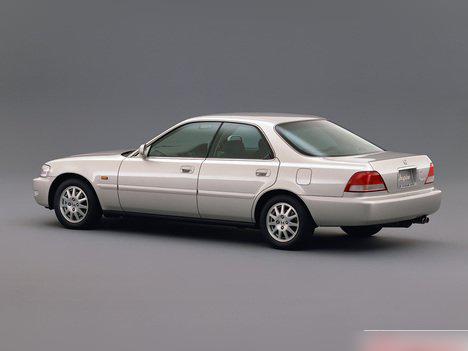
Honda G25A 2.5 i 20V – Experiences, Issues, Fuel Consumption and Maintenance
Key points in short (TL;DR)
- Unique design: This is an inline five-cylinder (Inline-5) engine that offers a fantastic sound and smooth operation, typical for Honda models from the 90s (Inspire, Vigor).
- Reliability: Like most Honda engines from this era, it is mechanically extremely robust (“bulletproof”), provided it always has enough oil and coolant.
- Fuel consumption: It is not economical. Expect double-digit consumption in the city, especially combined with an automatic transmission.
- Transmission maintenance: The automatic transmission is a sensitive point if you don’t use genuine Honda transmission fluid only.
- Parts: Wear-and-tear parts are available, but specific engine and body parts can be harder to find because this model is rarer than the Accord or Civic.
- LPG: It runs very well on LPG, which is recommended due to the high petrol consumption.
Contents
Introduction and applications
The Honda G25A is an engineering gem from the period when Honda was experimenting with bold solutions. It is a 2.5-liter inline five-cylinder (R5) engine. What makes it special is the installation layout – although the engine is mounted longitudinally, it drives the front wheels, which gives the car excellent weight balance and a very specific driving feel.
It was primarily installed in more luxurious sedans such as the Honda Inspire (second generation), as well as in the Vigor and Saber models. This engine is aimed at drivers who want a “premium” feel, linear power delivery and a sound that no V6 can imitate. Although old-school, this engine still offers sophistication today, but it requires an owner who understands the needs of older mechanicals.
Technical specifications
| Specification | Value |
|---|---|
| Engine code | G25A |
| Configuration | Inline, 5 cylinders (R5), 20 valves (SOHC) |
| Displacement | 2451 cc |
| Power | 132 kW (180 hp) @ 6500 rpm |
| Torque | 226 Nm @ 3800 rpm |
| Injection type | PGM-FI (multi-point indirect injection) |
| Aspiration | Naturally aspirated |
| Camshaft drive | Timing belt |
Reliability and maintenance
Timing system: Belt or chain?
The G25A engine uses a timing belt to drive the camshaft. This is a classic solution for Hondas from that period. It is very important to note that, since this is a five-cylinder, the engine is an interference design – which means that a snapped belt will almost certainly cause the pistons to hit the valves, i.e. catastrophic engine damage.
Major service
The interval for a major service (replacement of timing belt, tensioner and water pump) is recommended at 100,000 km or every 5 to 6 years, whichever comes first. Due to the age of these vehicles today, do not take risks – if you don’t have written service history, do the major service immediately after purchase. Parts cost is moderate, but labor can be more expensive due to the specific engine position (longitudinally mounted with tight space). (Price depends on the market.)
Oil: Quantity, grade and consumption
The G25A oil pan holds about 4.5 to 5 liters of engine oil (with filter). The recommended grade is 5W-30 or 10W-40, depending on climate and engine condition. For higher-mileage engines, a quality semi-synthetic 10W-40 is the most common choice.
Oil consumption: Honda engines like to rev, and on older examples oil consumption is common. Consumption up to 0.5 liters per 1,000 km can be tolerated with more spirited driving, but if the engine uses more than that, the problem is usually valve stem seals (they harden with age) or, less often, oil control rings. Regular oil level checks are mandatory!
Most common issues
Although mechanically robust, time takes its toll:
- Distributor: The Achilles’ heel of all 90s Hondas. Symptoms are hard starting, jerking while driving or the engine stalling. The bearing, oil seal (letting oil inside) or the ignition module itself often fail.
- Main relay: If the car won’t start when the cabin is hot (in summer), but cranks normally, the problem is usually cold solder joints in the main fuel pump relay.
- Oil leaks: The valve cover gasket and camshaft oil seal are common leak points. Also check the VTEC solenoid gasket (if present on a specific head variant, although the G25A is primarily SOHC without an aggressive “classic” VTEC, it uses variable intake).
- Spark plugs: Replace every 20,000–30,000 km if you use standard (copper/nickel) plugs, or up to 100,000 km if you use iridium. NGK or Denso are recommended.
Specific parts and costs
Fuel injection system and injectors
The engine uses Honda’s proven PGM-FI system. Petrol injectors are extremely durable and rarely cause problems. If the engine runs unevenly, ultrasonic cleaning is usually enough. They are not expensive to maintain.
Turbo, DPF, EGR, flywheel
- Turbo: No. This is a naturally aspirated engine. No turbo, no intercooler, which means fewer potential expensive failures.
- Dual-mass flywheel: Since this model (Inspire) almost exclusively came with an automatic transmission, it does not have a dual-mass flywheel. Instead, it uses a torque converter. Even the rare manual versions (if there are swaps) usually use a solid flywheel.
- DPF / AdBlue: No. This is an older-generation petrol engine, it doesn’t have these systems.
- EGR valve: Yes, it has an EGR system. It can get clogged with soot, which causes unstable idle or a check engine light. Cleaning is usually a sufficient solution.
Fuel consumption and performance
Real-world fuel consumption
Don’t fool yourself – 2.5 liters, 5 cylinders and an old automatic mean high fuel consumption.
- City driving: Expect between 12 and 15 l/100 km. In winter and heavy traffic this can easily go higher.
- Highway / open road: This is where the engine shines. At cruising speeds it uses about 8 to 10 l/100 km.
Performance and “sluggishness”
With 180 hp and 226 Nm, the Inspire is not a sports car in today’s sense of the word, but it is by no means “sluggish”. The engine is very flexible. Due to the 4-speed automatic, standing starts can feel a bit lazy until the revs build up, but in-gear acceleration (e.g. from 60 to 100 km/h) is excellent. The sound of the inline-five at full throttle gives a subjective feeling of higher speed.
Motorway
This is a born cruiser. The engine runs smoothly and quietly. At 130 km/h, due to the 4-speed automatic, the revs are somewhat higher than in modern cars, usually around 3,000–3,200 rpm. This doesn’t bother the engine, but it does affect noise and fuel consumption.
Additional options and modifications
LPG conversion
YES, absolutely. The G25A is an ideal candidate for LPG. It has a metal intake manifold (on older versions) and indirect injection. With a quality sequential system, the engine runs perfectly and running costs are cut in half.
Note: Because it has 5 cylinders, the installation is a bit more expensive than for a regular 4-cylinder (it requires an appropriate ECU and injectors). Be sure to check valve clearances more often if you run LPG (every 20–30k km).
Chip tuning (Stage 1)
On naturally aspirated petrol engines of this generation, “chipping” is a waste of money. You might gain 5–8 hp, which you won’t feel in real driving. It’s better to invest that money in quality spark plugs, leads and fresh transmission fluid – that will restore factory performance more than any software tweak.
Transmission: Manual and automatic
Types of transmissions
With the second-generation Honda Inspire and the G25A engine, the standard was a 4-speed automatic transmission (codes often MPYA or similar). Manual transmissions in this combination are extremely rare on the Inspire, and were more common on smaller Hondas or the Vigor in certain regions.
Automatic transmission issues
Honda automatics from the 90s are specific. They are not classic planetary automatics, but internally are more similar to automated manuals.
- Most common failure: Slipping between gears or harsh “kicks” when shifting. The cause is often dirty fluid or clogged solenoids.
- Maintenance: Transmission fluid should be changed every 40,000 to 60,000 km.
- GOLDEN RULE: In Honda automatic transmissions use HONDA ATF-DW1 ONLY (or the older ATF-Z1). Using universal Dexron fluids often leads to transmission failure after a short time!
- Oil filter: Most of these transmissions have an internal filter that can only be replaced by disassembling the transmission, so regular fluid changes (drain-and-fill method) are crucial.
Buying used and conclusion
Before buying, be sure to check:
- Cold start: Do you hear metallic rattling? If it’s heard for a few seconds and then disappears, it’s probably the hydraulic lifters (if that variant has them) or more commonly valve clearances that need adjustment (mechanical adjustment with a screw).
- Transmission: It must shift smoothly, without delay and without strong jolts, both when cold and when hot. Check the color of the fluid on the dipstick – it must be reddish, never black or smelling burnt.
- Rust: Wheel arches, sills and door bottoms. Unfortunately, Honda and rust are old friends.
- Smoke: Blue smoke from the exhaust when you press the throttle means oil consumption (rings/seals).
Conclusion
The Honda G25A in the Inspire is a car for enthusiasts. It offers outstanding smoothness and a sound that simply doesn’t exist in today’s class. Engine maintenance is not overly expensive (apart from some specific parts), but fuel consumption is high.
If you are looking for a reliable “workhorse” for city driving, skip it. But if you want a comfortable, fast sedan with character and you are ready to invest in proper maintenance (and fuel), this engine will put a smile on your face every time the tachometer needle goes past 4,000 rpm.
Was this content useful to you?
Your opinion helps us to improve the quality of the content.