G20A Engine
- Engine
- 1996 cm3
- Aspiration
- Naturally aspirated engine
- Fuel
- Petrol (Gasoline)
- Fuel injection system
- Multi-port manifold injection
- Power
- 165 hp @ 6700 rpm
- Torque
- 186 Nm @ 4000 rpm
- Cylinders
- 5
- Valves
- 20, 4 per cylinder
- Cylinders position
- Inline
- Valvetrain
- SOHC
- Oil capacity
- 5.2 l
# Vehicles powered by this engine
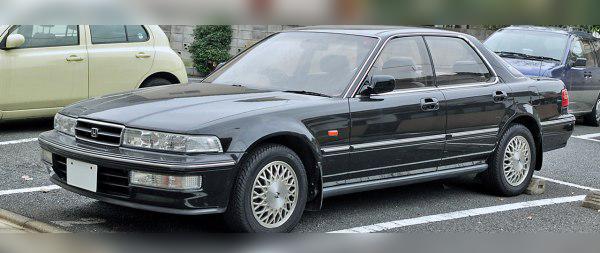
Honda G20A engine (2.0i) – experiences, problems, fuel consumption and buying used
Key points (TL;DR)
- Unique design: This is an inline five-cylinder engine (Inline-5), which gives it a distinctive and beautiful sound, but also less common parts compared to standard Honda engines.
- Reliability: A mechanically very durable “old-school” engine, capable of high mileage with regular maintenance.
- Fuel consumption: Not an economy champion. Due to older technology and the automatic transmission, city fuel consumption is high.
- Maintenance: Uses a timing belt that must be replaced regularly. Oil leaks at the distributor are a common occurrence.
- Parts: Wear-and-tear parts are available, but specific engine parts (due to 5 cylinders) can be harder to find and more expensive (depends on the market).
- Recommendation: An excellent choice for JDM culture enthusiasts and lovers of 5‑cylinder sound, less suitable for those who just want a cheap A‑to‑B commuter.
Contents
- Introduction and characteristics
- Technical specifications
- Reliability and maintenance
- Specific parts and systems
- Fuel consumption, performance and LPG
- Transmission and drivetrain
- Buying used and conclusion
Introduction and characteristics
The Honda G20A engine is a distinctive engineering gem from the early nineties. Unlike most two‑liter engines that have four cylinders, Honda used a configuration with five cylinders in line here. This engine was primarily installed in models such as the Honda Inspire, Vigor and Ascot (depending on the market).
What makes it special is its layout – the engine is mounted longitudinally, yet it drives the front wheels, which allowed engineers to achieve excellent weight balance and a low hood line. Although it has “only” 2.0 liters, thanks to Honda engineering and multi‑valve technology, it produces a respectable 165 hp, which for that period was an excellent figure for a naturally aspirated engine.
Technical specifications
| Specification | Value |
|---|---|
| Engine code | G20A |
| Displacement | 1996 cc (2.0 L) |
| Configuration | Inline 5 cylinders (I5), SOHC, 20 valves |
| Power | 121 kW (165 hp) @ 6700 rpm |
| Torque | 186 Nm @ 4000 rpm |
| Aspiration | Naturally aspirated |
| Fuel injection | PGM-FI (multi‑point injection) |
| Fuel type | Petrol (gasoline) |
Reliability and maintenance
Timing system and servicing
One of the first questions every buyer asks is: belt or chain? The Honda G20A uses a timing belt to drive the camshaft. This is a key maintenance item. The replacement interval is usually at 100,000 km or every 5 years, whichever comes first.
A snapped timing belt on this engine leads to a catastrophic failure (pistons hitting valves), so the major service must not be postponed. When replacing the belt, you must also replace the tensioner, idler pulleys and the water pump, since it is driven by the same system.
Most common failures and symptoms
Although mechanically robust, time takes its toll. The most common issues include:
- Distributor: This is the Achilles’ heel of Honda engines from the nineties. Seals harden and oil starts to leak inside the distributor or down the engine block. Symptoms are jerking while driving, hard starting or visible oil traces.
- Main fuel pump relay: If the car cranks but won’t start when the cabin is hot (e.g. in summer), the problem is usually cold solder joints in the main relay. This is a cheap repair (re‑soldering).
- Oil leaks: Besides the distributor, leaks are common at the valve cover gasket and camshaft oil seals.
- IACV (idle air control valve): Dirt can clog the idle valve, causing fluctuating revs (hunting up and down) while the car is idling. Cleaning usually solves the problem.
Engine oil and spark plugs
This engine takes approximately 4.0 to 4.5 liters of oil (always check with the dipstick). The recommended viscosity for most climates is 5W-30 or 10W-40 (semi‑synthetic), especially for higher‑mileage engines.
As for oil consumption, Honda engines with VTEC technology or those driven at high revs can consume some oil. Consumption of up to 0.3 – 0.5 liters per 1,000 km is often considered “acceptable” in factory manuals for aggressive driving, but a healthy engine in normal use should not require topping up between services (at most 1 L per 10,000 km).
Spark plugs should be replaced every 20,000 to 30,000 km if you use standard (copper) plugs, or every 80,000 to 100,000 km if you use Iridium or Platinum plugs.
Specific parts and systems
The Honda G20A is a naturally aspirated engine, which drastically reduces the potential for expensive failures. No turbocharger, no intercooler, no complex pressurized piping.
Fuel injection and emissions
The fuel injection system is PGM-FI (Honda Programmed Fuel Injection). The injectors are extremely durable and rarely cause problems before 250,000+ km. If issues do appear, they are usually due to poor fuel quality, and ultrasonic cleaning solves the problem.
The engine does not have a DPF filter (it’s a petrol engine) nor an AdBlue system. It does have an EGR valve for exhaust gas recirculation. It can clog with soot, which triggers the “Check Engine” light and causes rough running. Cleaning is possible and not expensive. There is a catalytic converter, which can fail if the engine burns a lot of oil or if the fuel mixture is poor.
Dual‑mass flywheel
Since the specific Honda Inspire model is paired with an automatic transmission, it does not have a dual‑mass flywheel. Instead, it uses a torque converter. This is a big advantage because it eliminates one of the most expensive failures in modern cars.
Fuel consumption, performance and modifications
Real‑world fuel consumption
Don’t expect miracles. This is a 2.0 engine with 5 cylinders and an old automatic transmission.
- City driving: Expect between 11 and 14 L/100 km. In heavy traffic and winter conditions, it can go even higher.
- Open road: On country roads it can go down to about 7.5 – 8.5 L/100 km.
- Highway: At 130 km/h, consumption is around 9 – 10 L/100 km.
On‑road performance
Is it “lazy”? With 165 hp, the Inspire is not a slow car, but the 186 Nm of torque is available only at 4,000 rpm. That means you need to rev it for it to pull properly. At low revs it can feel sluggish due to the body weight and the automatic transmission that “eats” some power. On the highway it is stable, and at 130 km/h it runs at somewhat higher revs (often around 3,500 rpm due to the 4‑speed gearbox), but the 5‑cylinder sound makes it pleasant.
Tuning and LPG
LPG conversion: Yes, this engine is suitable for LPG. It has indirect injection and (usually) a metal intake manifold. You need to install a quality sequential LPG system and pay attention to mapping because it has 5 cylinders (you need an ECU that supports 5 or more injectors). The LPG tank is usually fitted in the spare wheel well.
ECU remap (Stage 1): On naturally aspirated petrol engines, remapping is mostly a waste of money. The gain is negligible (maybe 3–5 hp), which you won’t feel in real driving. It’s better to invest in good tyres and regular servicing.
Transmission
The G20A in the Inspire I model most often comes with a 4‑speed automatic transmission. There were also manual versions (5‑speed) on some markets (Vigor/Ascot), but they are rare.
- Automatic transmission: Old Honda automatics are generally reliable if maintained properly. They don’t have dual clutches or a mechatronic unit that tends to fail. However, they only have 4 gears, which increases fuel consumption and noise on the highway.
- Automatic issues: The most common problem is dirty shift solenoids, which cause the gearbox to “slam” when changing gears or to shift late. Also, clutch pack slippage inside the gearbox is a sign it’s reaching the end of its service life.
- Transmission maintenance: Automatic transmission fluid (ATF) should be changed every 40,000 to 60,000 km. Always use genuine Honda fluid (ATF-Z1 or the newer ATF-DW1) because these gearboxes are sensitive to universal fluids.
Buying used and conclusion
If you are thinking about buying a Honda with the G20A engine, here is what you should check:
- Cold start: The engine should start immediately. If it cranks for a long time, the relay or fuel pump may be the problem.
- Exhaust smoke: Blue smoke when you press the throttle means the engine is burning oil (piston rings or valve stem seals). Black smoke means a problem with the fuel mixture.
- Transmission operation: Test‑drive the car until the gearbox is fully warmed up. Shifts should be smooth, without harsh jolts. Check the colour of the ATF on the dipstick – it should be red, never black or smelling burnt.
- Rust: Honda models from this period are very prone to rust on wheel arches and sills. This is often a bigger problem than the engine itself.
Conclusion:
The G20A engine is aimed at enthusiasts. It offers a unique 5‑cylinder sound and refined operation that 4‑cylinder engines lack. Basic maintenance is not expensive (depends on the market), but specific parts can be difficult to source. If you are looking for a reliable classic for weekend drives or to enjoy JDM engineering, it is a great choice. If you need an economical car for city traffic, look for something more modern and with a smaller displacement.
Was this content useful to you?
Your opinion helps us to improve the quality of the content.