L13Z1, L13Z2 Engine
- Engine
- 1339 cm3
- Aspiration
- Naturally aspirated engine
- Fuel
- Petrol (Gasoline)
- Fuel injection system
- Multi-port manifold injection
- Power
- 99 hp @ 6000 rpm
- Torque
- 127 Nm @ 4800 rpm
- Cylinders
- 4
- Valves
- 16, 4 per cylinder
- Cylinders position
- Inline
- Oil capacity
- 3.6 l
- Coolant
- 4.42 l
# Vehicles powered by this engine
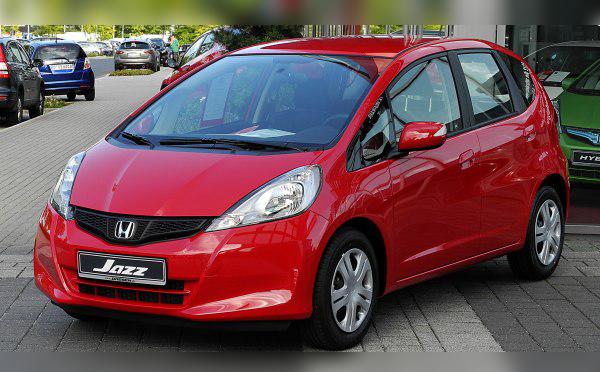
Honda 1.4 i-VTEC (L13Z1 / L13Z2): Experiences, problems, fuel consumption and buying tips
Key points (TL;DR)
- Reliability: Extremely reliable engine, one of the best in its class.
- Timing system: Uses a chain, which significantly reduces regular maintenance costs.
- Driving: Ideal for city driving, but on open roads the engine needs high revs and can be noisy due to the lack of a sixth gear (with the manual gearbox).
- Fuel consumption: Very economical in city conditions, but increases on the highway.
- Maintenance: Requires specific attention to valve adjustment (no hydraulic lifters) and high-quality oil.
- Gearbox: The manual is precise, while the CVT takes some getting used to and requires regular oil changes.
Contents
- Technical specifications
- Reliability and Maintenance
- Specific Parts and Costs
- Fuel Consumption and Performance
- Additional Options and Modifications (LPG & Tuning)
- Gearbox (Manual vs CVT)
- Used car buying and Conclusion
Introduction
The engines designated as L13Z1 and L13Z2, commercially known as 1.4 i-VTEC, are the heart of the second generation Honda Jazz (especially the facelift models from 2011 onwards). Although the badge says "1.4", technically it is a 1.3-litre engine (1339 cc). It is a classic representative of Honda’s philosophy: a naturally aspirated petrol engine that loves revs, offers variable valve timing (i-VTEC) and focuses on efficiency and longevity.
It was primarily installed in the Honda Jazz (GE generation), but can also be found in certain versions of the Honda Civic in some markets. For used car buyers, this is often the “golden middle ground” – it is stronger than the base 1.2 engine while offering similar fuel economy.
Technical specifications
| Parameter | Value |
|---|---|
| Engine displacement | 1339 cc (1.3 L) |
| Power | 73 kW / 99 hp |
| Torque | 127 Nm at 4800 rpm |
| Engine codes | L13Z1, L13Z2 |
| Injection type | Multipoint (Indirect injection) |
| Aspiration | Naturally aspirated (No turbo) |
| Number of cylinders/valves | 4 cylinders / 16 valves (SOHC i-VTEC) |
Reliability and Maintenance
Does this engine have a timing belt or chain?
The engine uses a timing chain. This is great news for owners because the chain on these L-series engines rarely causes problems and is not intended to be replaced at a fixed interval. It usually lasts as long as the engine itself, provided the oil is changed regularly. If you hear chain rattling on a cold start, that is a sign to urgently check the tensioner, but this rarely happens before 200,000+ km.
What are the most common failures on this engine?
The engine is mechanically very robust, but there are a few small things to watch out for:
- EGR valve: Due to city driving, the EGR valve can get clogged, which leads to hesitation while driving or an uneven idle. Cleaning usually solves the problem.
- Valve adjustment: This is not a failure, but an obligation. This engine does not have hydraulic valve lifters. Valve clearance must be checked and adjusted mechanically every 40,000 to 100,000 km (check the service book). If this is neglected, the engine becomes noisy and, in extreme cases, valve damage can occur.
- Oil leak at the VTEC valve: The gasket (seal) of the VTEC solenoid can deteriorate over time and cause a minor oil leak. The repair is not expensive.
At what mileage is the “major service” done?
The classic “major service” (timing belt replacement) does not exist here because of the chain. However, at around 100,000 - 120,000 km it is recommended to replace the auxiliary belt (alternator/AC belt), the auxiliary belt tensioner, check the water pump and definitely check the valve clearances. Spark plugs are also replaced at that time.
How many litres of oil does this engine take and which grade is recommended?
The engine takes approximately 3.6 litres of oil (with filter). Honda recommends thin, synthetic oils for the efficiency of the i-VTEC system. It is best to use 0W-20 or 5W-30. Using thicker oils (such as 10W-40) is not recommended as it can affect the operation of the variable valve timing system and the chain tensioner.
Does it consume oil between services?
A healthy L13Z engine should not consume a noticeable amount of oil between services (up to 0.5 litres per 10,000 km is acceptable). Increased oil consumption can appear on examples driven exclusively on short trips with poor-quality oil, which leads to stuck oil control rings, but this is not a systemic flaw of this engine.
At what mileage are the spark plugs replaced?
This model uses iridium spark plugs (usually NGK or Denso). The replacement interval is long, usually at 100,000 km or 120,000 km. Although they are more expensive than regular plugs (Price: Medium to High, depending on the market), their longevity justifies the cost. Do not experiment with cheap “standard” spark plugs.
Specific Parts (Costs)
Does this engine have a dual-mass flywheel?
No. Petrol versions of the Honda Jazz with a manual gearbox have a classic, solid flywheel. This significantly reduces potential maintenance costs compared to diesels.
What kind of injection system does it have and are the injectors problematic?
The engine uses a classic, indirect multipoint fuel injection system into the intake manifold. This system is simple, proven and very tolerant of variations in fuel quality. The injectors are extremely reliable and rarely require any intervention.
Does the engine have a turbocharger?
No, this is a naturally aspirated engine. There is no turbo, no intercooler, which means fewer parts that can fail.
Does it have a DPF filter or EGR valve?
As a petrol engine, it does not have a DPF filter. It has a catalytic converter which is long-lasting (unless the engine burns oil or is run on poor-quality LPG). It does have an EGR valve, which, as mentioned, can get dirty from city driving, but it can often be cleaned without replacement.
Does it use AdBlue?
No, this engine does not use AdBlue fluid.
Fuel Consumption and Performance
What is the real-world fuel consumption in city driving?
Thanks to the low weight and efficient i-VTEC system, real-world city consumption is between 6.5 and 7.5 litres per 100 km. If you drive carefully and use the Start-Stop system (if the car has it), it is possible to get close to 6 litres. In winter or in heavy traffic, expect around 8 litres.
Is this engine “lazy” for the weight of the car?
With 99 hp, the engine is not weak, but it has a lack of torque (only 127 Nm), which is available only at a high 4800 rpm. In the city it is lively and responsive. However, uphill or with a fully loaded car, you will have to “rev it out” and shift down to maintain pace. It is not lazy, but it does require active use of the gearbox.
What is the engine like on the motorway and at what revs does it cruise at 130 km/h?
This is its weak point. Due to the short ratios in the 5-speed gearbox, at 130 km/h the engine spins at about 3500 to 3800 rpm (depending on the gearbox). This creates noise in the cabin and increases fuel consumption to around 7.0 - 7.5 litres. A sixth gear is missing for relaxed cruising.
Additional Options and Modifications
Is this engine suitable for LPG conversion?
Yes, but with caution. Honda engines have “soft” valve seats. If you are installing LPG, a valve protection system (valve saver) is mandatory or, even better, a system that injects petrol at high revs for cooling. Most importantly: If you run on LPG, you must check the valve clearances more often, every 20,000 - 30,000 km. If you do not do this, you will definitely damage the cylinder head (valve seat recession).
How much can this engine be safely tuned (Stage 1)?
With small-displacement naturally aspirated petrol engines, chiptuning is a waste of money. You might gain 3 to 5 hp at best, which you will not feel in real driving. It is better to invest the money in quality tyres and regular servicing.
Gearbox
Which manual and automatic gearboxes are fitted?
- Manual: 5-speed gearbox.
- Automatic: In facelift models (from 2011) the CVT gearbox was reintroduced. Before the facelift (2008-2010) a robotised i-SHIFT was used, which was notorious for jerky operation. So, look for a 2011+ model if you want an automatic.
Most common gearbox issues?
Manual: Extremely reliable. Gear lever throws are short and precise (“Honda click”). Failures are rare, possibly gearbox bearings at high mileage (whining noise).
CVT (Automatic): The CVT gearboxes in the facelift models are much better than the old i-SHIFT. The main “issue” is the sensation of slipping (the engine holds high revs while the car accelerates), which is normal for a CVT. Failures occur exclusively due to lack of maintenance. If the oil has not been changed, shuddering when taking off can appear.
Clutch replacement cost and gearbox maintenance?
Clutch (Manual): The clutch kit is not expensive (depends on the market, but falls into the more affordable category) and there is no dual-mass flywheel.
Gearbox service: On the manual gearbox, the oil is changed at around 60,000 - 80,000 km (Honda MTF oil). On the CVT gearbox, oil changes (only Honda HCF-2 or the exact equivalent) are critical and should be done every 40,000 km or 2 years. Neglecting this leads to costly failures.
Used car buying and Conclusion
What should be checked before buying?
- Chain noise check: Listen to the engine on a cold start. There must be no metallic rattling in the first 2–3 seconds.
- Idle: The engine must run smoothly. Fluctuations can indicate a dirty EGR, throttle body or the need for valve adjustment.
- Air conditioning: When you switch on the AC, the revs should rise slightly. If they drop and the car shakes, the compressor may be creating too much resistance or needs servicing.
- Corrosion: Although better than the first generation, the second-generation Jazz should be checked underneath, especially around the rear suspension and wheel arches.
- CVT check (if automatic): When taking off there should be no “juddering” or jolts. Acceleration must be linear.
Conclusion: Who is this engine for?
The Honda Jazz with the 1.4 i-VTEC engine is one of the most rational choices for a used city car. The engine is practically indestructible with basic maintenance. It is intended for drivers who want maximum practicality and minimal visits to the mechanic.
It is not for you if you often drive long motorway trips (because of the noise) or if you expect sporty performance. For everything else, this is a “get in and drive” machine that holds its value very well.
Was this content useful to you?
Your opinion helps us to improve the quality of the content.