J35A Engine
- Engine
- 3471 cm3
- Aspiration
- Naturally aspirated engine
- Fuel
- Petrol (Gasoline)
- Fuel injection system
- Multi-port manifold injection
- Power
- 243 hp @ 5500 rpm
- Torque
- 328 Nm @ 4500 rpm
- Cylinders
- 6
- Valves
- 24, 4 per cylinder
- Cylinders position
- V-engine
- Valvetrain
- DOHC
- Oil capacity
- 4.4 l
- Coolant
- 9.4 l
# Vehicles powered by this engine
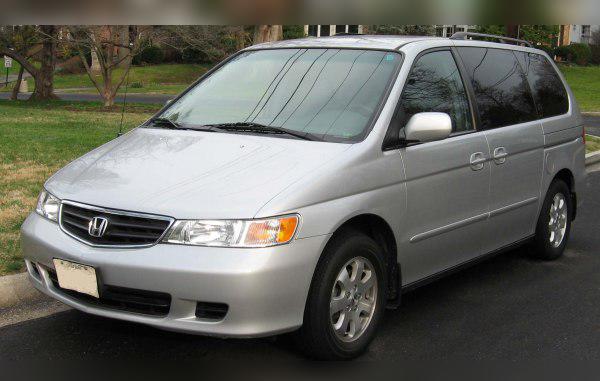
Honda J35A 3.5 V6 (243 hp): Experiences, problems, fuel consumption and buying tips
Key points in short (TL;DR)
- Timing belt driven: This is not a chain-driven engine. Replacement is expensive but mandatory and critical for engine life.
- Automatic transmission is the weak point: The biggest issue with this powertrain in the second-generation Honda Odyssey is the automatic transmission, which is prone to overheating and failure.
- Fuel consumption: Be prepared for high numbers. In the city this V6 easily “drinks” over 15 liters.
- VTEC technology: The engine is extremely flexible, powerful and refined. It’s not lazy, despite the vehicle’s weight.
- Adjustable valves: There are no hydraulic lifters. Valve clearances must be adjusted mechanically, which adds to maintenance cost.
- Ideal cruiser: On the open road it’s the “king of comfort”, but it’s not meant for sporty corner carving.
Contents
- Technical Specifications
- Reliability and Maintenance
- Specific Components and Systems
- Fuel Consumption and Performance
- LPG and Tuning
- Transmission: Problems and Maintenance
- Buying Used and Conclusion
The Honda J35A is a large, naturally aspirated V6 engine that belongs to Honda’s famous J-series. While in Europe we’re used to smaller four-cylinder engines, this unit is the “heart” of many larger Honda models intended primarily for the US but also global markets, such as the second-generation Honda Odyssey (facelift models from 2002 to 2004). With its 3.5-liter displacement and VTEC system, it represents old-school engineering – big displacement, linear power delivery and (generally) exceptional long-term durability of the engine itself, provided it is properly maintained.
Technical specifications
| Engine code | J35A (most commonly J35A4 in this version) |
| Displacement | 3471 cc (3.5 L) |
| Configuration | V6, SOHC (single cam per head), VTEC |
| Power | 179 kW (243 hp) @ 5500 rpm |
| Torque | 328 Nm @ 4500 rpm |
| Injection type | Multipoint (MPI) – indirect |
| Induction | Naturally aspirated |
Reliability and Maintenance
In terms of the “iron”, the J35A is an extremely robust engine. However, it requires meticulous maintenance, which is not cheap.
Timing belt or chain?
This engine uses a timing belt. This is crucial information for every owner. The belt also drives the water pump. The replacement interval is usually around 100,000 to 120,000 km or 7 years (whichever comes first). This is an interference engine – if the belt snaps, the pistons will hit the valves and the engine is destroyed. During the major service you must replace the belt, tensioners, idler pulleys and water pump.
Most common engine issues
The block and heads themselves are very durable. Still, pay attention to:
- Oil leaks: Often occur at the valve cover gaskets and at the VTEC solenoid.
- Engine mounts: Due to the high torque and weight, the hydraulic engine mounts often fail, which is felt as strong vibration in the cabin (especially in “D” with the car stationary).
- EGR valve: EGR passages can clog with soot, leading to rough running and a lit “Check Engine” light.
Minor service and engine oil
This engine takes approximately 4.3 to 4.6 liters of oil (with filter). The recommended viscosity is usually 5W-20 or 5W-30 (depending on climate, 5W-30 is the safer choice for European summers). As for oil consumption, Honda V6 engines can use 0.5 to 1 liter per 5,000 km as they age, which is considered acceptable, but a sudden increase in consumption may indicate stuck piston rings or a leak.
Spark plugs and valves
The spark plugs are iridium and are replaced at around 100,000 km. However, what many people forget is valve adjustment. J35 engines do not have hydraulic lifters. The valves must be checked and adjusted every 40,000–50,000 km. If you hear a “ticking” sound, the clearance is too large. If the engine is very quiet and runs roughly, the valves may be too tight (which is more dangerous, as they can burn).
Specific Components (Costs)
As an old-school naturally aspirated petrol engine, the J35A is relatively simple compared to modern diesels.
- Dual-mass flywheel: Since this engine in the Odyssey II is almost exclusively paired with an automatic transmission, it does not have a dual-mass flywheel. Instead, it uses a flexplate and a torque converter.
- Fuel injection system: It uses classic MPI (multipoint) injection. The injectors are very reliable and rarely cause problems. They are not as sensitive as with direct injection, and they are cheaper to replace or clean.
- Turbo: There is no turbocharger. That’s one less thing to worry about (no turbo rebuilds, intercooler, hoses, etc.).
- DPF and AdBlue: Being a petrol engine, it has no DPF filter and does not use AdBlue. It does have catalytic converters, which can be expensive to replace if they fail, but that usually happens only at very high mileage.
- EGR valve: It does have an EGR valve. As mentioned, the intake manifold passages are prone to clogging, but cleaning is relatively cheap and routine.
Fuel Consumption and Performance
Is the engine “lazy”?
Absolutely not. With 243 hp and 328 Nm, this engine easily moves the heavy Honda Odyssey body (which weighs around 2 tons). Acceleration is linear and strong, especially when VTEC kicks in at higher revs. Overtaking on country roads is safe and quick.
Real-world fuel consumption
This is where we get to the painful part. This is a big engine in a heavy vehicle with a not-so-aerodynamic shape.
- City driving: Expect between 14 and 17 l/100 km. In winter traffic jams it can go even higher.
- Open road: With moderate driving (80–90 km/h) you can get it down to 9–10 l/100 km.
- Highway: At 130 km/h the engine spins at a relatively low 2,500–2,600 rpm (thanks to the 5th gear in the automatic), and consumption is around 11–12 l/100 km.
Additional Options and Modifications
Is it suitable for LPG?
Yes, but with caution. The J-series engines have cylinder heads that are sensitive to the high combustion temperatures of LPG (relatively “soft” valve seats). LPG conversion is possible and brings huge savings, but it requires:
- A top-quality system with precise mapping so the mixture is not lean.
- Mandatory use of a valve saver system (Flashlube) or a system that injects petrol at high rpm to cool the valves.
- Much more frequent valve clearance checks (every 20,000–30,000 km).
Chip tuning (Stage 1)
This is a naturally aspirated engine. With “chip tuning” (remapping) you might gain 5 to 10 hp, which in practice is barely noticeable. It’s not worth it. It’s better to invest that money in quality transmission maintenance.
Transmission: Achilles’ heel
With this engine in the Honda Odyssey II (2002–2004 facelift) you get a 5-speed automatic transmission. Manual gearboxes were not an option for this market and model.
Automatic transmission problems
This is the biggest problem of the entire car. Honda’s 5-speed automatics from this period are notorious for failures. Issues include overheating, clutch pack wear inside the transmission and torque converter failure, whose metal shavings then clog filters and passages.
Failure symptoms:
- Slipping during gear changes.
- Harsh “thumps” when engaging a gear.
- Shuddering at constant speed (lock-up converter problem).
- Delayed response when shifting from P to D or R.
Transmission maintenance
If the transmission is still working well, extend its life with the following steps:
- Fluid change: Change the transmission fluid every 30,000–40,000 km. Use only genuine Honda ATF-Z1 (or the newer DW-1) fluid. Never use universal ATF fluids.
- Transmission cooler: Installing an additional external transmission cooler is highly recommended. It’s the best investment you can make for this car.
The cost of rebuilding this transmission is very high (it depends on the market, but expect a serious expense).
Buying used and Conclusion
When buying a Honda Odyssey with the J35A engine, 80% of your attention should be focused on the automatic transmission. Test drive the car until it is fully warmed up. The transmission must shift smoothly, without jerks or slipping. Check the color of the fluid on the transmission dipstick – it must be red or light pink, never brown or black with a burnt smell.
Also, ask for proof of timing belt replacement. If there is none, immediately factor that cost in (it’s expensive).
Conclusion: This engine is a fantastic piece of engineering in terms of power and refinement. It is ideal for large families who travel long distances. However, the risk of automatic transmission failure and high fuel consumption make it a choice only for those who are ready for higher running costs in exchange for top-notch comfort and space.
Was this content useful to you?
Your opinion helps us to improve the quality of the content.