J35Y8 Engine
- Engine
- 3471 cm3
- Aspiration
- Naturally aspirated engine
- Fuel
- Petrol (Gasoline)
- Fuel injection system
- Direct injection
- Power
- 285 hp @ 6100 rpm
- Torque
- 355 Nm @ 5000 rpm
- Cylinders
- 6
- Valves
- 24, 4 per cylinder
- Cylinders position
- V-engine
- Valvetrain
- DOHC, i-VTEC
- Oil capacity
- 5.5 l
- Coolant
- 7.67 l
- Systems
- Start & Stop System
# Vehicles powered by this engine
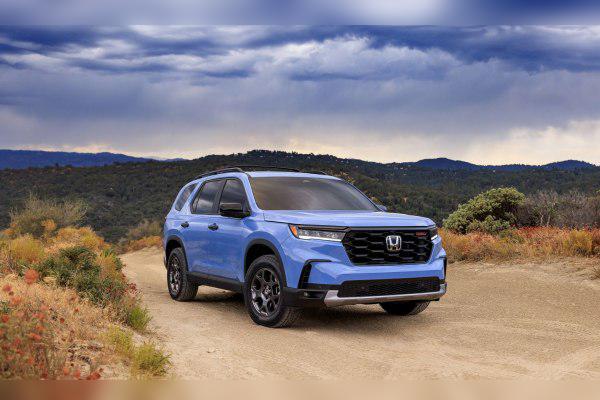

Honda J35Y8 3.5 V6: Experiences, Fuel Consumption, Problems and Maintenance
Key points in short (TL;DR)
- Old-school naturally aspirated: Large displacement, no turbo, linear power delivery – a rarity these days.
- DOHC revolution: Unlike older J35 engines, the Y8 variant has dual overhead camshafts (DOHC), which results in smoother operation.
- Timing belt: It’s not a chain. Requires an expensive and regular major service.
- Fuel consumption: In city driving it’s a serious guzzler, expect double-digit figures.
- Transmission: Paired with an excellent Honda 10-speed automatic that gets the most out of the engine.
- Direct injection: A sophisticated system that requires high-quality fuel and makes cheap LPG conversions difficult.
- Recommendation: Ideal for highway cruising and drivers who avoid small turbo engines, provided they can afford the fuel.
Contents
Introduction: Evolution of a Legend
The engine designated as J35Y8 represents the latest evolution of Honda’s legendary J-series V6 engines. It debuted in the fourth generation of the Honda Pilot (from 2023 onwards). What makes this engine technically fascinating, and somewhat controversial for purists, is the move from SOHC (single cam) to a DOHC (dual overhead camshaft per head) configuration. The goal was to meet stricter emission standards and improve efficiency while retaining the characteristic V6 smoothness. This is an engine for people who want power without turbo lag, but it comes with maintenance costs that match its large displacement.
Technical Specifications
| Parameter | Data |
|---|---|
| Displacement | 3471 cc (3.5 Liters) |
| Configuration | V6, DOHC (24 valves) |
| Power | 210 kW (285 hp) @ 6100 rpm |
| Torque | 355 Nm @ 5000 rpm |
| Engine code | J35Y8 |
| Injection type | Direct injection (GDI) |
| Aspiration | Naturally aspirated |
Reliability and Maintenance
Belt or Chain?
Although Honda switched to a DOHC cylinder head design on the J35Y8, the engineers kept a timing belt for the valvetrain. This is very important to know because the belt is not “lifetime”.
Most common faults and issues
Since the J35Y8 is a relatively new engine (in use only for a few years), long-term data is still being collected, but based on its construction and previous experience with the J-series, you should pay attention to:
- VCM system (Variable Cylinder Management): Honda uses cylinder deactivation to save fuel. Although this has been significantly improved on the Y8 generation, historically this system has been known to cause excessive oil consumption and vibrations that shorten the life of engine mounts. Symptoms are mild vibrations when cruising at a constant speed.
- Carbon buildup on intake valves: Due to direct injection, fuel does not “wash” the valves. Over time, carbon deposits can form and restrict airflow, which manifests as a rough idle or a slight loss of power.
- Oil leaks at gaskets: The J-series is known for liking to “mark its territory” as it ages, especially at valve cover gaskets and VTEC/VTC solenoids.
Major service
The recommended interval for timing belt replacement is usually around 100,000 to 120,000 km or every 7 years (whichever comes first). During this service, the tensioner must also be replaced, as well as the water pump which is part of the same system. Skipping this service is Russian roulette – if the belt snaps, it will cause catastrophic engine damage.
Oil and Spark Plugs
The engine takes approximately 5.4 to 5.7 liters of oil (always check the exact level while filling). The recommended grade is strictly 0W-20. This thin oil is crucial for proper VTC operation and lubrication during cold starts.
As for oil consumption, engines with the VCM system can use about 0.5 to 0.8 liters per 10,000 km, which is considered “normal” by factory standards, but anything above that requires checking the piston rings or the PCV valve.
Spark plugs are iridium and long-lasting. The replacement interval is usually at 100,000 to 120,000 km. Do not cheap out on them, because a weak spark on a direct-injection engine quickly destroys ignition coils.
Specific Parts (Costs)
Dual-mass flywheel: This engine is paired with an automatic transmission that uses a hydraulic torque converter. So, there is no conventional dual-mass flywheel like on diesels with manual gearboxes, which is one less thing to worry about.
Fuel injection system: The engine uses high-pressure direct injection. Injectors are expensive (market-dependent, but generally in the “expensive” category) and sensitive to poor fuel quality. They are not as easy to refurbish as on older engines and are usually replaced.
Turbo and EGR: The engine does not have a turbocharger, which significantly simplifies maintenance and eliminates potential failures of the turbo, intercooler and hoses. It does have an EGR system for exhaust gas recirculation, which can clog, but far less often than on diesels.
Emissions (DPF/GPF/AdBlue): Being a gasoline engine, it does not have a DPF or AdBlue fluid. However, for the European market, newer models often come with a GPF (Gasoline Particulate Filter). It is much less prone to clogging than a diesel DPF because exhaust gas temperatures on petrol engines are higher. If you occasionally drive on the open road, you should not have issues.
Fuel Consumption and Performance
Real-world fuel consumption
Let’s be honest – a 3.5-liter engine in a heavy SUV (Honda Pilot) cannot be economical.
- City driving: Expect consumption between 14 and 17 liters per 100 km, depending on traffic and how heavy your right foot is. In winter, even more.
- Highway / open road: This is where the engine feels at home. Thanks to the efficient transmission, fuel consumption can drop to 9 to 10 liters per 100 km with moderate driving.
Performance: Is it “lazy”?
With 285 hp and 355 Nm, this engine is anything but lazy, but the power delivery is different from turbo engines. There is no sudden “punch” of torque at 2000 rpm. The engine needs revs to pull hard. For the weight of the Honda Pilot (over 2 tons), the power is perfectly adequate (Adequate+). Overtaking is safe, and the V6 sound at full throttle is music to the ears.
Highway cruising
On the highway this engine is in its element. Thanks to the 10-speed transmission, at a speed of 130 km/h the engine spins at a low 1800–2000 rpm. This ensures a quiet cabin and reasonable fuel consumption for such a large vehicle.
Additional Options and Modifications
LPG conversion
This is where the financial challenge appears. Since the engine has direct injection, you cannot install a simple sequential LPG system. You need a system designed for direct injection that still uses a small amount of petrol while running on LPG (to cool the injectors), or an expensive liquid-phase LPG injection system. Installation is very expensive and the cost-effectiveness is questionable unless you cover very high annual mileage.
Chip tuning (Stage 1)
On naturally aspirated engines, “chip tuning” (remapping) brings very small gains. Realistically, you can expect an increase of about 10 to 15 hp and a slightly better throttle response. Considering the price of a quality remap, it is not worth it to do Stage 1 on this engine. The factory has already extracted the optimum.
Transmission
With the J35Y8 engine in the fourth-generation Honda Pilot you only get a 10-speed automatic transmission (Honda’s own design, not ZF). Manual gearboxes are not offered.
Transmission reliability and maintenance
This transmission has proven to be significantly better and more refined than the old 9-speed ZF unit. Gear changes are quick and seamless. The most common issues are software-related and are resolved with updates at the dealer.
Transmission fluid change: Although manufacturers often state “lifetime” fluid, for longevity it is recommended to change the fluid every 60,000 to 80,000 km. It uses specific Honda ATF Type 3.1 (or equivalent) fluid. Regular changes are the key for the transmission to last 300,000+ km.
Buying Used and Conclusion
When buying a vehicle with this engine, make sure to check:
- Proof of timing belt replacement (if the vehicle is close to 100k km).
- Noise at cold start: Rattling may indicate a problem with the belt tensioner or camshaft actuators.
- Check engine mounts: Active mounts are expensive (very expensive) and tend to fail due to the VCM system. Put the transmission in D, hold the brake and apply a bit of throttle – if the engine moves excessively, the mounts need replacement.
Conclusion: The Honda J35Y8 is an engine for drivers who appreciate refinement, linear power delivery and the sound of a true V6 petrol engine, and are willing to pay the price in the form of higher fuel consumption and more expensive registration (in most EU countries). Its reliability is traditionally good, but maintenance is not as cheap as on small city cars. It is an ideal machine for large families and long journeys.
Was this content useful to you?
Your opinion helps us to improve the quality of the content.