J35Z5 Engine
- Engine
- 3471 cm3
- Aspiration
- Naturally aspirated engine
- Fuel
- Petrol (Gasoline)
- Fuel injection system
- Multi-port manifold injection
- Power
- 250 hp @ 5700 rpm
- Torque
- 335 Nm @ 4300 rpm
- Cylinders
- 6
- Valves
- 24, 4 per cylinder
- Cylinders position
- V-engine
- Max engine speed
- 6300 rpm
- Valvetrain
- SOHC, VTEC
- Oil capacity
- 5.3 l
- Coolant
- 8.1 l
# Vehicles powered by this engine
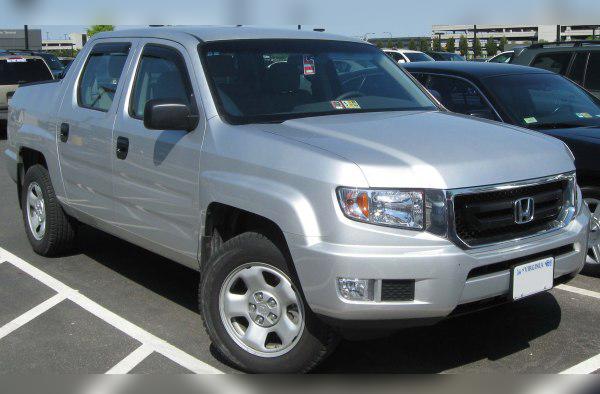
Honda J35Z5 3.5 V6 VTEC: Experiences, Issues, Fuel Consumption and Maintenance
Key points in short (TL;DR)
- Reliability: Extremely durable engine, one of Honda’s best V6 units, provided it is serviced regularly.
- Major service: The engine uses a timing belt, not a chain. Replacement is critical and expensive, and must not be ignored.
- VCM system: Unlike related models (Pilot, Odyssey), the J35Z5 in the Ridgeline does not have VCM (cylinder deactivation), which means fewer issues with oil consumption and engine mounts.
- Fuel consumption: This is a large naturally aspirated petrol engine in a heavy vehicle. Expect high fuel consumption, especially in city driving.
- Transmission: Comes exclusively with a 5-speed automatic which is robust but requires genuine Honda fluid.
- Recommendation: Ideal for those who want the power and sound of a V6 and are willing to pay for fuel and regular valve adjustments.
Contents
The Honda J35Z5 is a member of the legendary J-series engines, specifically designed for heavier-duty use. It is best known for its application in the Honda Ridgeline (first generation, facelift models from 2009 to 2014). This is an “old-school” engine – a large naturally aspirated V6 that delivers power linearly, without the help of a turbocharger. Unlike many modern engines that sacrifice longevity for emissions, the J35Z5 is built to last, but that comes at a cost at the fuel pump. In the automotive world, this engine is considered a “workhorse” that, with proper maintenance, easily surpasses 400,000+ kilometers.
Technical Specifications
| Manufacturer | Honda |
| Engine code | J35Z5 |
| Displacement | 3471 cc (3.5 L) |
| Configuration | V6 (6 cylinders in V layout) |
| Power | 184 kW (250 hp) @ 5700 rpm |
| Torque | 335 Nm @ 4300 rpm |
| Induction | Naturally aspirated |
| Valve train | SOHC VTEC (Timing belt) |
| Fuel injection | PGM-FI (Multi-point port injection) |
Reliability and Maintenance
Timing belt or chain?
This is the most important technical question for an owner of this engine. The Honda J35Z5 uses a timing belt. This is not a chain-driven engine. If the belt snaps, the pistons and valves will collide (interference engine), which leads to catastrophic engine failure. Respecting the replacement interval is therefore imperative.
Most common issues
Although the engine is very reliable, age and mileage bring certain problems:
- Oil leak at the VTEC (spool) valve: The seals harden and oil starts leaking directly onto the alternator, which can cause alternator failure. This is a common J-series issue.
- Valve adjustment: This is not a failure, but a maintenance requirement. The valves are not self-adjusting (no hydraulic lifters). If you hear a “ticking” noise from the engine, it’s time for an adjustment. If neglected, it can lead to burnt valves.
- Hydraulic timing belt tensioner: It can weaken before the scheduled replacement interval, which manifests as rattling on cold start.
- Oil pressure sensor: It can start leaking or send false signals.
Major service
The major service is done every 100,000 to 120,000 km or every 7 years (whichever comes first). At that time, you must replace: the timing belt, tensioners, idler pulleys and water pump. It is recommended to also inspect and, if necessary, replace the crankshaft and camshaft seals, as well as the accessory belt.
Oil: Capacity, grade and consumption
The engine takes approximately 4.3 to 4.5 liters of oil with the filter. The recommended grade is 5W-20 or 0W-20. Honda insists on thinner oil because of the narrow oil passages and the VTEC system.
As for oil consumption, the J35Z5 is better than its relatives equipped with VCM (cylinder deactivation). Still, consumption of 0.5 to 0.8 liters per 10,000 km is considered completely normal for a V6 of this displacement, especially if driven more aggressively. If it uses more than 1 liter over a service interval, the PCV valve or valve stem seals should be checked.
Spark plugs
The engine uses iridium spark plugs. The factory replacement interval is around 100,000 km (160,000 km is often quoted in the US, but in Europe earlier replacement is recommended due to fuel quality). Access to the rear bank of cylinders (towards the cabin) is a bit more difficult, so mechanics usually charge more labor for this job.
Specific Parts (Costs)
Dual-mass flywheel: In the Honda Ridgeline this engine is paired exclusively with an automatic transmission. So there is no dual-mass flywheel in the sense that diesel manuals have it. It has a torque converter which is part of the transmission and is very durable.
Fuel injection system: It uses classic PGM-FI port injection into the intake manifold. This is great news for a used vehicle. The injectors are simple, cheap to refurbish and very rarely cause problems. Also, there is no carbon buildup on the intake valves like on direct-injection engines.
Turbo, DPF, EGR, AdBlue:
- Turbo: None. The engine is naturally aspirated. Fewer parts to fail.
- DPF/AdBlue: None. This is a petrol engine.
- EGR valve: It does have one. The passages in the intake manifold can clog (a known J-series issue), which triggers the check engine light and causes rougher running. Cleaning is usually sufficient and not expensive.
Fuel Consumption and Performance
Real-world city consumption: Be prepared for high numbers. The Honda Ridgeline is a heavy vehicle with all-wheel drive and a boxy shape. In city traffic, real-world consumption is between 14 and 18 liters per 100 km. In winter and on short trips it can go up to 20 liters.
Is the engine “lazy”? With 250 hp and 335 Nm, the engine is not lazy, but it’s not sporty either. The feeling is more like a truck – strong, linear shove. The engine needs to rev past 3500 rpm for the VTEC system to kick in and deliver full power. For overtaking and towing a trailer, it has more than enough power.
On the highway: This is the natural habitat of this vehicle. At 130 km/h, the engine spins at relatively low rpm (thanks to the 5th gear), usually around 2200–2500 rpm. Driving is quiet and comfortable then. Highway consumption drops to around 10 to 12 liters per 100 km.
Additional Options and Modifications
LPG conversion: The J35Z5 is suitable for LPG installation, and this is a common choice due to its high fuel consumption. However, Honda engines have relatively “soft” valve seats. If you install LPG, you must insist on a quality system with OBD integration and, most importantly, check valve clearances more frequently (every 30,000–40,000 km). A valve lubrication system (dripper) is also recommended, although opinions on its effectiveness are divided.
Chiptuning (Stage 1): Since this is a naturally aspirated engine, “chiptuning” does not bring dramatic results. You can expect a gain of around 10–15 hp and a slightly better throttle response, but in practice the difference is barely noticeable. Larger gains come only with physical modifications (intake, exhaust), which are expensive. For the average driver, Stage 1 is a waste of money.
Transmission
The J35Z5 in the Ridgeline comes with a 5-speed automatic transmission. A manual gearbox was not an option.
Automatic transmission reliability: Honda’s 5-speed automatics from this era are significantly better than those from the early 2000s. They are generally reliable but have one critical weak point: the transmission cooler. The fittings on the cooler can corrode, allowing engine coolant and transmission fluid to mix (known as the “Strawberry Milkshake of Death”). If that happens, the transmission is usually destroyed. Preventive replacement of the cooler or installation of an external cooler is recommended.
Transmission maintenance: The transmission fluid should be changed every 40,000 to 60,000 km. Always use genuine Honda ATF DW-1 fluid. These transmissions do not tolerate universal fluids. The change is done using the “drain and fill” method (about 3–3.5 liters come out), never by machine flushing under pressure, which can damage the fine passages.
Buying Used and Conclusion
Before buying a Honda with the J35Z5 engine, pay attention to the following:
- Proof of timing belt replacement: If there is no documentation, immediately factor the cost of a major service into the price (it’s expensive, depending on the market).
- Engine sound: Listen to it on a cold start. Rattling may indicate valves that need adjustment or a failing belt tensioner.
- Coolant and fluid color: Check the coolant reservoir and the transmission dipstick. Any sign of emulsion (oil and coolant mixing) is a reason to walk away.
- Rust: The Ridgeline in particular suffers from corrosion of the rear subframe, although this is not directly related to the engine.
Conclusion: The Honda J35Z5 is a gem for old-school enthusiasts. No turbo lag, no DPF filter, and the sound of a V6 is music to the ears. If you can afford its thirst for petrol and regular maintenance (major service and valve adjustments), you will get an engine that very rarely breaks down and offers excellent comfort on the road.
Was this content useful to you?
Your opinion helps us to improve the quality of the content.