F20C Engine
- Engine
- 1997 cm3
- Aspiration
- Naturally aspirated engine
- Fuel
- Petrol (Gasoline)
- Fuel injection system
- Multi-port manifold injection
- Power
- 240 hp @ 8300 rpm
- Torque
- 208 Nm @ 7500 rpm
- Cylinders
- 4
- Valves
- 16, 4 per cylinder
- Cylinders position
- Inline
- Valvetrain
- DOHC
- Oil capacity
- 4.8 l
- Coolant
- 6.5 l
# Vehicles powered by this engine
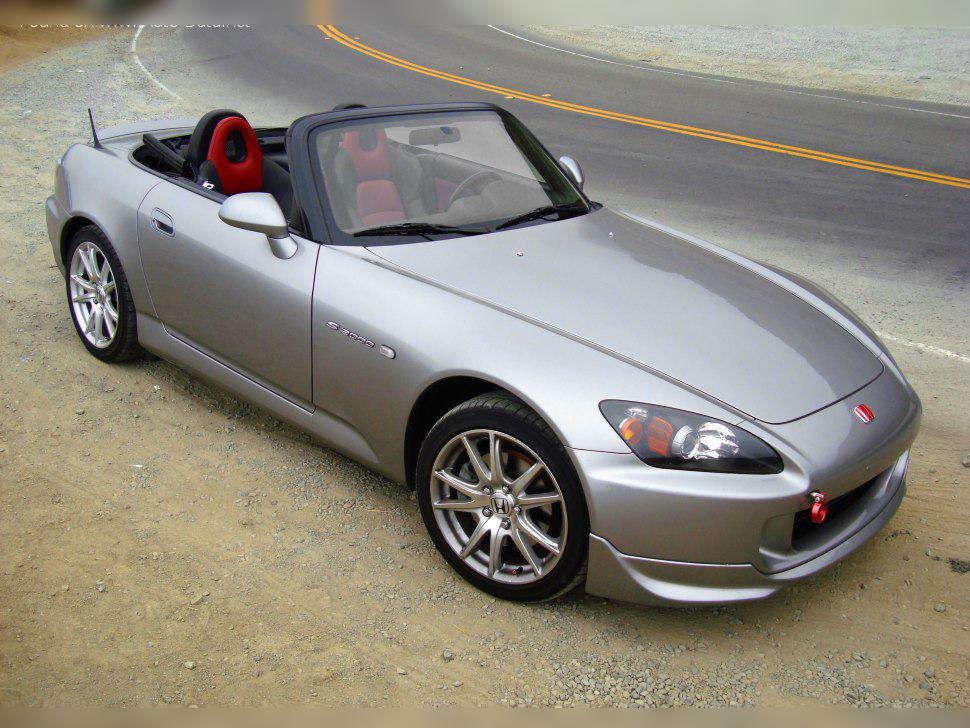

Honda F20C (S2000) 2.0 VTEC – experiences, problems, fuel consumption and buying tips
Most important in short (TL;DR):
- Legendary status: One of the best naturally aspirated engines ever made, with a redline at 9,000 rpm.
- Timing chain tensioner (TCT): The weakest point of the engine. Almost every owner encounters the characteristic chain rattle.
- Oil consumption: Due to high revs, oil consumption is an expected occurrence, not necessarily a sign of failure. Regular checking is critical.
- Lack of torque: Below 6,000 rpm the engine behaves like an ordinary 2.0 unit; real power is available only at high revs.
- Valve adjustment: Requires mechanical valve adjustment (no hydraulic lifters), which is a mandatory part of maintenance.
- Costs: Maintenance is not cheap, parts are specific and prices are rising as the engine becomes a collector’s item.
- Not for LPG: Although technically possible, installing LPG on this engine is considered sacrilege and a risk for the cylinder head.
Contents
- Introduction and models
- Technical specifications
- Reliability and Maintenance
- Specific Parts and Systems
- Fuel Consumption and Performance
- Additional Options and Modifications
- Gearbox and Drivetrain
- Buying Tips and Conclusion
Introduction: Honda’s engineering masterpiece
The Honda F20C is an engine that needs no special introduction to car enthusiasts. Designed specifically for the Honda S2000 (AP1 chassis), this unit held the world record for the highest specific power per liter of displacement (120 hp/L) for naturally aspirated engines for years, until it was surpassed by the Ferrari 458 Italia. This is not an ordinary passenger car engine; this is a racing engine adapted for the street.
It was primarily installed in S2000 models from 1999 to 2009 (in Europe and Japan the F20C remained until the end of production, while the US later received the larger-displacement F22C). It is important to understand that the F20C requires a completely different approach to driving and maintenance compared to an average two-liter petrol engine. It lives above 6,000 rpm and that’s where it delivers what it was made for.
Technical specifications
| Characteristic | Data |
|---|---|
| Displacement | 1997 cc (2.0 L) |
| Power | 177 kW (240 hp) at 8,300 rpm |
| Torque | 208 Nm at 7,500 rpm |
| Engine code | F20C (JDM versions may be marked F20C1/C2) |
| Injection type | PGM-FI (Multipoint indirect injection) |
| Aspiration | Naturally aspirated |
| Compression ratio | 11.0:1 (varies by market, JDM 11.7:1) |
| Camshaft drive | Chain |
Reliability and Maintenance
Timing system: Chain or belt?
The F20C engine uses a chain to drive the camshafts. The chain itself is extremely robust and rarely breaks. However, its “Achilles’ heel” is the timing chain tensioner (TCT - Timing Chain Tensioner). This is probably the most common issue on this engine. The tensioner loses pressure or the worm mechanism wears out, which leads to a characteristic noise.
Symptoms: A metallic “rattle” sound or like having a “playing card in bicycle spokes” at idle or low revs, especially when the engine is warm. The solution is to replace the TCT (an upgraded aftermarket version is recommended, as brand-new OEM parts often fail again after a few tens of thousands of kilometers).
Most common failures and issues
Besides the TCT, the F20C has several specific weak points:
- Valve retainers: On early AP1 models, the intake valve retainers are prone to cracking if the engine is over-revved (over-rev due to a wrong downshift). If they crack, a valve can drop into the cylinder and destroy the engine. The recommendation is a preventive replacement with reinforced retainers from AP2 models.
- MAP sensor: A dirty or faulty MAP sensor can cause jerking and unstable running. It is often temporarily solved by simply cleaning the passage and “tapping” the sensor (known as the “MAP whack” in the community), but replacement is the permanent solution.
- Cold start and VTEC solenoid: The screen on the VTEC solenoid can clog up if the oil is not changed regularly, which prevents the VTEC system from engaging.
Minor and major service
Minor service: Recommended every 5,000 to 7,000 km or once a year. Due to high revs and thermal stress, the oil degrades faster.
Major service: Since the engine uses a chain, there is no classic “major service” at a fixed mileage in terms of belt replacement. However, at around 100,000 km you should check valve clearances, chain condition, replace the water pump and coolant, as well as the auxiliary belt (for alternator/AC).
Oil: Quantity and consumption
The engine takes about 4.8 to 5.1 liters of oil (with filter). Honda recommends different grades depending on climate, but in Europe high-quality fully synthetic 5W-40 or 10W-30 oil is most commonly used.
Oil consumption: Yes, this engine consumes oil and that is normal. Due to forged pistons, high revs and the VTEC system, consumption of 0.5 to 1 liter per 1,000 km under aggressive driving is not unusual. In normal city driving, consumption should be significantly lower. An S2000 owner must check the oil level at every refueling. Lack of oil is fatal for this engine (the crankshaft bearings are the first to fail).
Spark plugs
Only iridium spark plugs are used (NGK PFR7G-11S is the factory standard). The factory replacement interval is around 100,000 km, but enthusiasts replace them at 40,000 - 60,000 km for optimal performance. It is very important that they are tightened correctly (with a torque wrench), as there have been cases where a plug loosened and damaged the thread in the head.
Specific Parts and Systems
Flywheel and clutch
This model does not have a dual-mass flywheel in the usual diesel sense. It uses a simpler flywheel, but the clutch can be specific. Early AP1 models are known for a “clutch buzz” sound when decelerating (engine braking). This is not a failure, but resonance of the springs in the clutch disc. Later models had a revised disc that solved this noise issue.
Fuel injection system
It uses classic indirect (port) injection. The injectors are very reliable and rarely cause problems. Unlike modern direct-injection engines, there is no issue with carbon buildup on the intake valves here.
Turbo, DPF, EGR, AdBlue?
The F20C is a purebred naturally aspirated petrol engine.
- Turbo: None. Engine life is longer because there is no turbocharger thermal stress, but you also don’t get the “effortless” low-end drive that a turbo provides.
- DPF / AdBlue: None.
- EGR: It uses an exhaust gas recirculation system, but it rarely causes problems to the point where it needs to be blocked off or replaced, because high revs tend to “blow out” the system.
Fuel Consumption and Performance
City driving
Do not expect fuel efficiency. In the city, real-world consumption ranges from 12 to 15 liters per 100 km. If you have a heavy right foot, the figure easily goes higher. This is a sports car and it drinks like one.
Is the engine “lazy”?
This is the most controversial topic. Yes, below 6,000 rpm the engine feels relatively tame, even lazy by today’s turbo standards. With only 208 Nm of torque high up in the rev range, you will not get that “kick in the back” at 2,000 rpm. You have to work the gearbox to make the car go fast. However, when VTEC “kicks in” (around 6,000 rpm), the character changes dramatically and the engine becomes explosive all the way to the 9,000 rpm redline.
Highway and cruising
Due to short gearbox ratios (to compensate for the lack of torque), the F20C spins high on the highway. At 130 km/h in 6th gear, the engine sits at about 4,000 - 4,200 rpm. This means the cabin is quite noisy and fuel consumption on the open road rarely drops below 8.5 - 10 l/100 km. It is not an ideal long-distance cruiser.
Additional Options and Modifications
LPG conversion
Not recommended. Although it is physically possible to install sequential LPG, the F20C cylinder head is not designed for the high combustion temperatures of LPG without adequate valve lubrication. Valve clearances on LPG shrink dramatically faster, which leads to burnt valves. Also, given that the S2000’s trunk is tiny, there is hardly any place to put the tank. Most buyers will avoid an S2000 that has been converted to LPG.
ECU remap (Stage 1)
As a naturally aspirated engine that is already “wound up” to the maximum from the factory (120 hp/L), there is very little room for software-only gains. A Stage 1 remap may bring perhaps 5–8 hp, mostly by lowering the VTEC engagement point and smoothing the power curve. You will not get a significant performance boost from software alone. Serious power requires a supercharger or turbo kit, which is very expensive (depending on the market, expect to spend several thousand euros).
Gearbox
Gearbox type
The S2000 with the F20C came exclusively with a 6-speed manual gearbox. There is no automatic option. This gearbox is considered one of the best manual transmissions ever made due to its short throw and precision (“rifle-bolt action”).
Most common gearbox issues
Although robust, aggressive driving takes its toll:
- 2nd gear synchro: Often fails due to fast high-rpm shifts from first to second. The symptom is grinding when engaging second gear.
- Differential: The rear differential is more sensitive than the gearbox. Aggressive launches can break it.
Gearbox service
Gearbox oil should be changed every 40,000 to 60,000 km, or more frequently if the car is tracked. Only genuine Honda MTF-3 oil is recommended, as it provides the best shift feel and synchro protection. Clutch replacement costs (kit: pressure plate, disc, release bearing) are moderately high (depending on the market), but labor can be more expensive due to access.
Buying Tips and Conclusion
When buying a used car with the F20C engine, make sure to do the following:
- Compression: Measure compression on all cylinders. It must be even. This is the best indicator of engine health.
- Chain noise: Listen to the engine on cold start and when warm. Rattling indicates a TCT problem (solvable, but use it to negotiate the price).
- Oil level: Pull out the dipstick. If the level is below minimum, walk away. An owner who does not check the oil on an S2000 has not maintained the car properly.
- Differential: Listen for whining from the rear of the car while driving.
Conclusion:
The Honda F20C is not an engine for everyone. It demands attention, consumes oil, is loud and needs to be revved to the redline to show its teeth. However, if you are looking for a pure driver’s experience, mechanical perfection and a sound that gives you goosebumps, this is one of the best choices in the history of motoring. Buy one while you can still find a good example, because prices are only going up.
Was this content useful to you?
Your opinion helps us to improve the quality of the content.