OM 651.930 Engine
- Engine
- 2143 cm3
- Aspiration
- Turbocharger, Intercooler
- Fuel
- Diesel
- Fuel injection system
- Diesel Commonrail
- Power
- 170 hp
- Torque
- 350 Nm
- Cylinders
- 4
- Valves
- 16, 4 per cylinder
- Cylinders position
- Inline
- Valvetrain
- DOHC
- Oil capacity
- 6.5 l
- Coolant
- 9.6 l
- Systems
- Start & Stop System, Particulate filter
# Vehicles powered by this engine



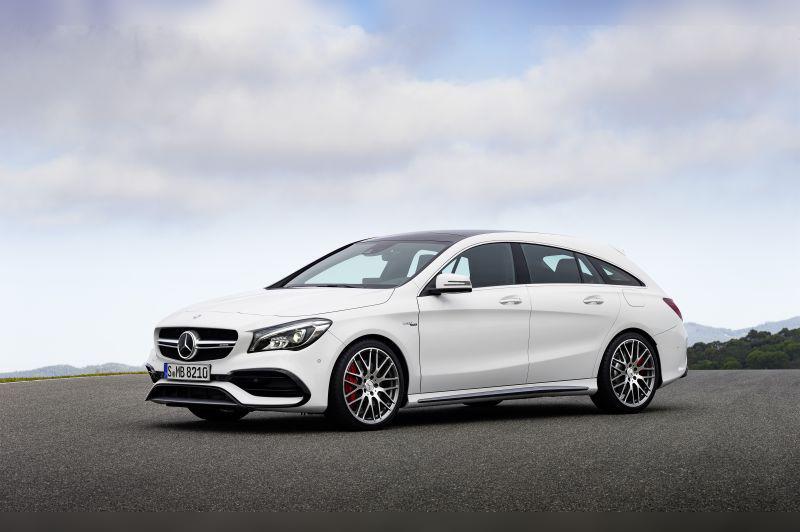
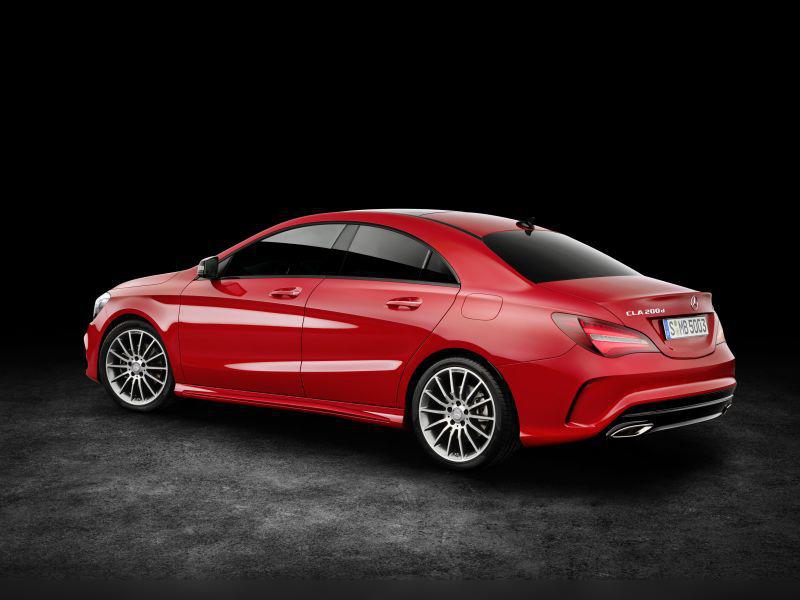


OM 651.930 (2.2 CDI/2.2d) – Experiences, issues, fuel consumption and maintenance
Key points (TL;DR)
- Class leader: This is Mercedes’ most common diesel engine of the past decade – robust, powerful and very economical.
- Achilles’ heel: The timing chain is located at the rear of the engine (towards the cabin). Although on this version (.930) the problem is rarer than on the first series, replacement is extremely expensive because the engine has to be removed.
- Performance: With 170 hp and 350 Nm, this is the “golden middle”. It offers excellent in-gear acceleration and has no problem pulling heavier bodies (Infiniti Q50, GLA).
- Specific trait: The engine is known for somewhat rougher operation and more noise while cold, which is a normal characteristic, not necessarily a fault.
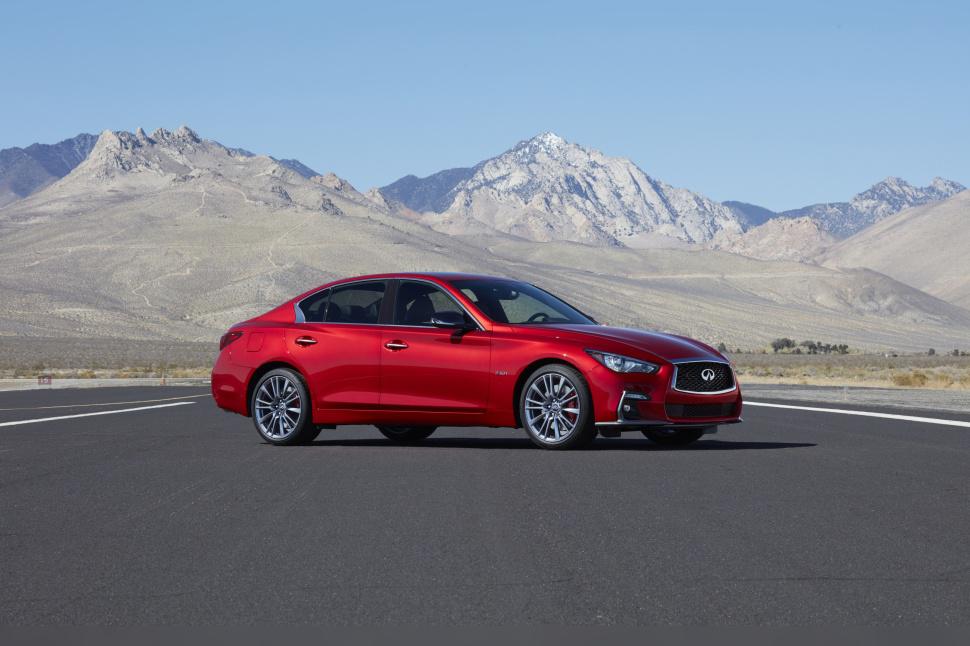
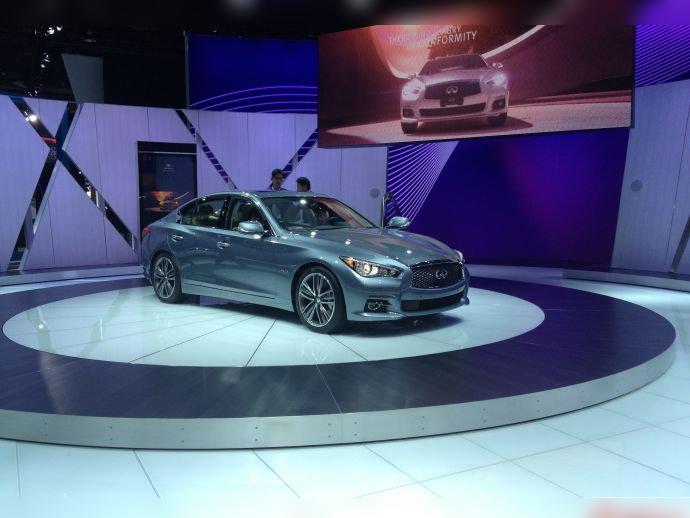
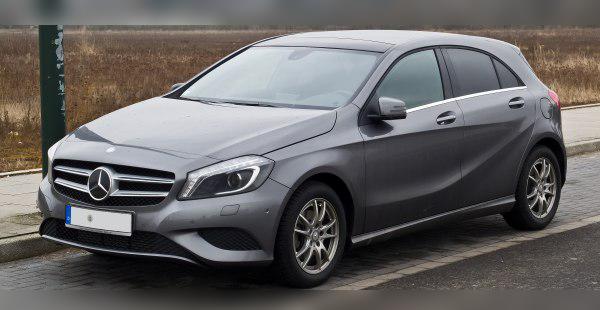
- Infiniti connection: In Q30/QX30 models this is the identical engine as in the A‑Class. In the Q50/Q70 it’s the same base engine, but mounted longitudinally.
- Recommendation: An excellent choice for drivers who cover a lot of highway mileage, provided the chain has been checked or replaced.
Contents
- Introduction and engine applications
- Technical specifications
- Reliability and maintenance (Chain, oil, failures)
- Specific parts and costs
- Fuel consumption and performance
- Gearbox (DCT vs automatic vs manual)
- Additional options and remapping
- Used car buying guide and conclusion
Introduction: German heart in Japanese clothing
The engine designated OM 651 is probably one of the most important powerplants in the modern history of Mercedes‑Benz. The version we’re talking about today, OM 651.930 (and related variants installed in the listed models), represents an evolution of this four‑cylinder unit. It is specifically designed for transverse installation (for front‑wheel‑drive vehicles such as the A‑Class, CLA, GLA and Infiniti Q30), but its base is also used in longitudinal (rear‑wheel‑drive) models such as the Infiniti Q50.
This engine replaced the legendary but outdated larger‑displacement engines, offering more torque with lower fuel consumption. Although it carries the commercial designation “2.2” (CDI or d), its exact displacement is 2,143 cc, which unfortunately means more expensive registration in some countries.
Technical specifications
| Specification | Value |
|---|---|
| Engine displacement | 2143 cc (2.1 L) |
| Configuration | Inline‑4 (4 cylinders) |
| Power | 125 kW (170 hp) at 3400–4000 rpm |
| Torque | 350 Nm at 1400–3400 rpm |
| Engine code | OM 651.930 (and variations depending on drivetrain) |
| Injection | Common Rail (CDI), up to 2000 bar |
| Turbocharger | VGT turbo (single) or bi‑turbo (depending on version) |
| Camshaft drive | Chain (simplex – single‑row) |
Reliability and maintenance
Does this engine have a timing belt or a chain?
The engine uses a timing chain. And this is the most controversial aspect of this engine. The chain is located at the rear of the engine (between the engine and gearbox). This means that when the time comes to replace it, the gearbox (and often the entire engine) has to come out.
On the first OM651 versions (before 2012), the chain would stretch and snap at relatively low mileage. The .930 version and models from 2014 onwards (the ones you’re looking at) have revised tensioners and chain, so failures are less common. Still, at around 200,000 – 250,000 km, you can expect to hear chain rattling (“rustling”) on cold start. That’s a sign for urgent replacement. The cost is very high (often over 1000 EUR due to many labor hours).
What are the most common failures on this engine?
Apart from the chain, pay attention to:
- Oil filter housing and oil cooler: Oil leaks or mixing of oil and coolant often occur at the plastic housing. Symptoms are an oily patch under the car or emulsion in the coolant reservoir.
- Water pump: Here it is vacuum‑operated. It can start leaking or the vacuum valve can stick, which leads to overheating.
- Sensors: Failures of the DPF differential pressure sensor and NOx sensors are common (on newer Euro 6 models with AdBlue system).
- Intake manifold: The plastic intake manifold can crack at the seams, or the swirl flap linkage can seize/break.
At what mileage is the major service done?
Since it has a chain, a classic “major service” (scheduled belt replacement at a fixed interval) doesn’t exist in that sense. Only the serpentine belt and its tensioners are replaced at around 100,000 – 120,000 km. However, the chain is replaced as needed (when it starts making noise). Experienced mechanics recommend preventive chain replacement at around 200,000 km to avoid catastrophic failure.
How many liters of oil does it take and what grade?
The sump capacity is quite large, which is good for oil longevity. The OM 651.930 takes about 6.5 to 7.0 liters of oil (depending on whether it’s 4MATIC or not, as the sumps can differ slightly).
Recommendation: Exclusively 5W‑30 with specification MB 229.51 or MB 229.52 (Low SAPS due to the DPF).
Does it consume oil?
A healthy OM 651 engine should not consume noticeable amounts of oil. Consumption up to 0.5 liters per 10,000 km is acceptable (especially if driven fast on the motorway). If it consumes more than a liter between services, check the turbocharger or leaks at the oil cooler.
Specific parts (costs)
Does the engine have a dual‑mass flywheel?
Yes. All versions with a manual gearbox have a classic dual‑mass flywheel. Versions with automatic gearboxes (DCT or 7G‑Tronic) also have a flywheel (dual‑mass flywheel for DCT), which serves to dampen vibrations of this four‑cylinder. On automatics it lasts longer, but when it fails you’ll hear metallic knocking at idle. Replacement is expensive.
Injection system and injectors
The first OM651 series (2009–2011) had catastrophic issues with Delphi piezo injectors. However, engines in the models you mentioned (2014, 2016, 2017 model years) mostly use more reliable electromagnetic (solenoid) Delphi injectors or the piezo injectors have been sorted out. The injectors are generally durable, but sensitive to poor‑quality fuel. Refurbishment is possible and the price is in the “medium‑expensive” range. Symptoms of bad injectors are rough idle and increased black smoke under acceleration.
Turbocharger
The 170 hp version (transverse .930) most commonly uses a single variable‑geometry turbocharger (VGT). It is quite reliable and, with regular oil changes, can easily last over 250,000 km. Note: Some variants (especially in the C‑Class or higher‑output versions) use a bi‑turbo setup (two turbos, small and large). If you’re looking at an Infiniti Q50/Q70, check by VIN, because longitudinal engines more often have the bi‑turbo setup, which is more expensive to maintain (more complex vacuum and control system).
DPF filter and EGR valve
It has both. The EGR valve is prone to clogging from city driving, which manifests as hesitation when accelerating or a Check Engine light. Cleaning is possible. The DPF filter is robust, but doesn’t like short trips. If you drive only in the city, it will clog. Regeneration is automatic, but requires occasional driving on open roads.
Fuel consumption and performance
What is the real‑world fuel consumption in city driving?
This is one of the most economical engines in its class.
- City (heavy foot/traffic jams): 7.0 – 8.5 l/100 km.
- City (moderate driving): 6.0 – 6.5 l/100 km.
- Open road/motorway: Incredibly low, often 4.5 – 5.5 l/100 km.
Is the engine “lazy”?
Absolutely not. With 350 Nm (available from low revs) and 170 hp, this engine is more than adequate even for heavy bodies such as the Infiniti Q70 or Mercedes GLA 4MATIC. It pulls strongly, overtaking is safe and quick. It’s not a sports engine in terms of sound and high revs, but it has enough “backbone” for any situation.
Behavior on the motorway
This is its natural habitat. At 130 km/h in 7th gear, the engine spins at a low 2000 – 2200 rpm (depending on the gearbox). The cabin is quiet, and the engine has enough power in reserve to accelerate to 160 km/h without strain. An ideal machine for long distances.
Additional options and modifications
LPG conversion
No. This is a diesel engine. LPG conversion on diesel engines is technically possible (diesel‑gas mix systems), but it is not cost‑effective for passenger cars, it’s complicated and rarely done. Forget about it.
Remapping (Stage 1)
The engine responds very well to remapping because it is factory “detuned” (there are versions of the same block with 204 hp). A safe Stage 1 tune raises power to about 200 – 205 hp and torque to 420 – 450 Nm. This drastically changes the character of the car. However, keep in mind that higher torque puts additional stress on the chain and gearbox. Do this only if the chain is in perfect condition.
Gearbox
Which gearboxes are used?
Here the difference between the models you mentioned is important:
- Mercedes A, B, CLA, GLA, Infiniti Q30, QX30: Use 7G‑DCT. This is a dual‑clutch gearbox (similar to VW’s DSG). It is quick, sporty and mounted transversely.
- Infiniti Q50, Q70 (and Mercedes C‑Class, E‑Class): Use 7G‑Tronic Plus (automatic gearbox with torque converter). It is smoother and more comfortable, but a bit slower than the DCT, and mounted longitudinally.
- Manual gearbox (6‑speed): Exists, but is rare in these trim levels.
Most common gearbox issues and maintenance
7G‑DCT (dual‑clutch):
Requires oil and filter change every 5 years or 100,000 km (it’s advisable to shorten this to 60,000 km). If not maintained, the mechatronics unit fails (expensive!), and the clutches can slip. Symptoms of failure: jerking when setting off, hesitation when shifting, harsh shifts.
7G‑Tronic (torque converter):
Extremely reliable if the oil is changed every 60,000 km. Failures are mostly related to the conductor plate electronics inside the gearbox. Symptoms: the gearbox stays in one gear, doesn’t shift smoothly.
Manual:
Failures are rare, but the clutch kit with dual‑mass flywheel is a wear item. Replacement cost for the set is from 600 to 1000 EUR (including the flywheel).
Used car buying guide and conclusion
Before buying a car with the OM 651.930 engine (170 hp), do the following:
- Cold start is crucial: Insist that the engine is completely cold. Start it and listen to the rear of the engine for the first 3–5 seconds. If you hear metallic rattling or knocking that disappears once oil pressure builds up – the chain needs replacing. Walk away or knock at least 1000+ EUR off the price.
- Check for leaks: Remove the plastic engine cover and, using a flashlight, inspect around the oil filter housing. Everything must be dry.
- Diagnostics: Check the DPF filter status (soot loading) and injector correction values.
Final verdict
The 170 hp OM 651 is an excellent engine for long‑distance driving. It is powerful, economical and, in post‑2014 models, significantly more reliable than at the beginning of production.
Who is it for? For drivers who cover more than 20,000 km per year, mostly on open roads.
Who is it not for? For those who drive exclusively short city trips (because of the DPF) and those who are not prepared to pay for preventive chain replacement when the time comes. Pairing it with Infiniti models is a “best‑buy” option because you get Mercedes mechanics at a lower price.
Was this content useful to you?
Your opinion helps us to improve the quality of the content.