204PT Engine
- Engine
- 1999 cm3
- Aspiration
- Turbocharger, Intercooler
- Fuel
- Petrol (Gasoline)
- Fuel injection system
- Direct injection
- Power
- 240 hp @ 5500 rpm
- Torque
- 340 Nm @ 3200 rpm
- Cylinders
- 4
- Valves
- 16, 4 per cylinder
- Cylinders position
- Inline
- Valvetrain
- DOHC
- Oil capacity
- 5.4 l
- Coolant
- 8.4 l
# Vehicles powered by this engine

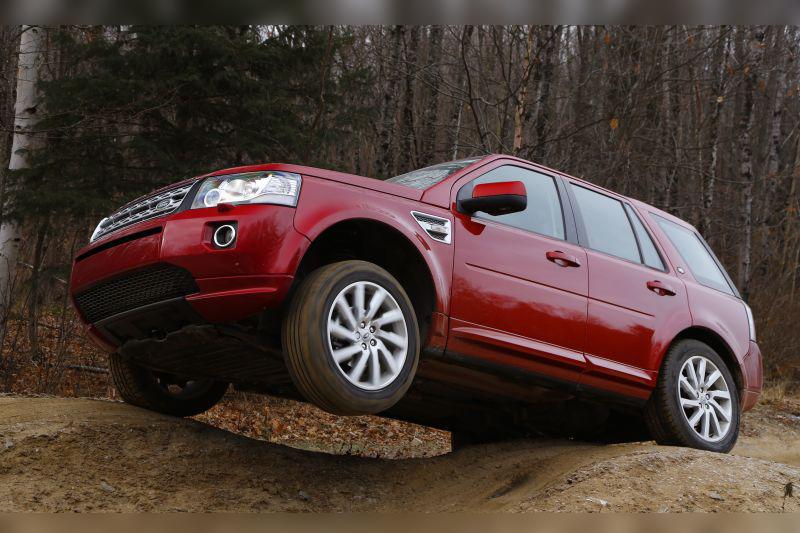
Engine 204PT (2.0 Si4 / GTDi) – Experiences, issues, fuel consumption and maintenance
Key points in short (TL;DR)
- Origin: Behind the 204PT code is actually the first‑generation Ford 2.0 EcoBoost engine, which means good parts availability, but also some specific weaknesses of that design.
- Performance: With 240 hp, this is a very lively engine that copes excellently with the weight of the Jaguar XF and Freelander, but it makes you pay for that at the pump.
- Biggest concern: Cracking of the exhaust manifold is a common problem which, if ignored, destroys the turbocharger.
- Fuel consumption: Not for those with a “light wallet”. In the city (especially in the heavy Freelander) consumption easily goes over 13–14 liters.
- Maintenance: Requires strictly regular oil changes due to the sensitive variable valve timing system and turbocharger.
- LPG (Autogas): Possible, but expensive (liquid phase or direct injection), because this is a direct‑injection petrol engine.
Contents
- Technical specifications
- Reliability and maintenance
- Specific parts and costs
- Fuel consumption and performance
- Additional options and modifications
- Gearbox: manual and automatic
- Used‑car buying tips and conclusion
Introduction and technical specifications
The engine with the code 204PT is Jaguar Land Rover’s (JLR) implementation of the well‑known Ford 2.0 EcoBoost engine. It was installed during the period when Ford still had ownership influence or a technological partnership with the JLR group. You’ll find it under the bonnet of the prestigious Jaguar XF saloon and the capable SUV Land Rover Freelander 2. This engine replaces large naturally aspirated six‑cylinders – it offers similar power, more torque at lower revs, but with (theoretically) lower fuel consumption.
| Parameter | Value |
|---|---|
| Displacement | 1999 cc (2.0 L) |
| Power | 177 kW (240 hp) |
| Torque | 340 Nm at 1750–4000 rpm |
| Engine code | 204PT (Si4 / GTDi) |
| Injection type | Direct injection (GDI) |
| Induction | Turbocharger (BorgWarner K03) + intercooler |
| No. of cylinders/valves | 4 cylinders / 16 valves |
Reliability and maintenance
Timing: chain or belt?
The 204PT engine uses a timing chain to drive the camshafts. Although people often say a chain is “maintenance‑free”, in practice on this engine it can start to stretch after 150,000–200,000 km. Symptoms include rattling at cold start (for the first few seconds) or uneven running. Still, the chain is generally a more reliable part of this assembly compared to some rival engines (e.g. first‑generation VW TSI).
Most common failures and symptoms
The biggest weakness of this engine is the exhaust manifold. On earlier series (which includes Freelander 2 and XF before 2013/14), the manifold was made of a material that couldn’t withstand high thermal cycles, so it tended to crack.
Symptoms: Smell of exhaust gases in the cabin and a strange “whistling” noise under load.
Consequence: Metal fragments from the cracked manifold can get into the turbocharger and destroy it. This is an expensive failure.
There is also a frequent issue with the variable cam timing (VCT) solenoids, which manifests as loss of power and the “Check Engine” light coming on. Oil leaks at the crankshaft seal or valve cover are not uncommon at higher mileages.
Service intervals and oil
Major service: Since it has a chain, the “major service” is done as needed (when the chain becomes noisy) or preventively around 200,000 km. However, the auxiliary (serpentine) belt and its tensioners should be replaced every 5–6 years or 100,000 km.
Minor service and oil: This engine takes about 5.4 to 5.6 liters of oil.
The recommended grade is 5W‑30. It is very important to use oil that meets the specification (often Ford WSS‑M2C913‑C or newer JLR specs).
Editor’s recommendation: Forget factory intervals of 20,000+ km. Change the oil every 10,000–12,000 km. This is a turbocharged direct‑injection engine that “contaminates” the oil, and the turbo and chain depend on clean lubrication.
Oil consumption: The 204PT tends to “drink” a bit of oil, especially if driven aggressively. Consumption of 0.3 to 0.5 liters per 1,000 km on older examples can be considered acceptable, but anything above that points to problems with piston rings or valve stem seals.
Specific parts (costs)
Fuel injection system and injectors
The engine uses direct petrol injection into the cylinders at high pressure. The injectors are generally durable, but sensitive to poor‑quality fuel. Replacing a full set of injectors falls into the “expensive” category.
The main problem of direct injection is not injector failure, but carbon buildup on the intake valves. Since the fuel does not “wash” the valves (because it is injected directly into the cylinder), after 100,000 km there can be a drop in performance and rough running. The solution is mechanical cleaning (walnut shell blasting) or chemical treatment.
Turbocharger and dual‑mass flywheel
The engine has a single turbocharger (BorgWarner K03 type). Its lifespan is directly linked to regular oil changes and driving style (cool‑down after fast driving). They usually last around 200,000 km, unless a cracked exhaust manifold destroys them earlier.
Dual‑mass flywheel: This depends on the gearbox. Since the models you mentioned (Jaguar XF and Freelander 2 Si4) came exclusively with automatic transmissions, they DO NOT have a dual‑mass flywheel in the classic sense (as with manuals). They use a torque converter, which is a long‑lasting assembly.
Note: If you were to find a manual version (rare for this engine), it would have a dual‑mass flywheel.
DPF and EGR
As a petrol engine of this vintage, it DOES NOT have a DPF filter (GPF filters only arrived later with Euro 6d standards). This is a big advantage over diesels for city driving. There is an exhaust gas recirculation system (similar to EGR), but on petrol engines it clogs far less often than on diesels. Problems are rare.
Fuel consumption and performance
Is it sluggish and how thirsty is it?
With 240 hp and 340 Nm (already from 1,750 rpm), this engine is anything but sluggish. In the Jaguar XF, acceleration is linear and convincing (0–100 km/h in about 7.9 seconds). In the Freelander 2, which is heavy and boxy (poor aerodynamics), the engine has to fight the mass, but still provides excellent overtaking performance.
Real‑world fuel consumption: This is where we get to the painful part.
City driving: Expect 12 to 15 l/100 km. In heavy winter traffic, the Freelander can reach 16 liters.
Country roads: It’s possible to get it down to 8–9 l/100 km with careful driving.
Motorway (130 km/h): Consumption is around 9.5–11 l/100 km. Thanks to multi‑ratio automatic gearboxes, at 130 km/h the engine spins at a pleasant 2,200–2,500 rpm, which makes driving quiet and comfortable.
Additional options and modifications
LPG conversion
Since this is a direct‑injection engine, ordinary (cheap) sequential LPG systems CANNOT be installed.
You need a dedicated system for direct injection that either uses a blend (for example, 20% petrol and 80% LPG to cool the petrol injectors) or a liquid‑phase system (which uses the petrol injectors for LPG).
Cost: Very expensive (often over 800–1000 EUR). Considering the complexity, it only really pays off if you cover huge mileages.
Remapping (Stage 1)
This engine responds very well to tuning because it is factory “detuned” for emissions and fuel economy. A Stage 1 remap safely raises power to 260–270 hp and torque to almost 400 Nm. The engine becomes noticeably more agile. However, before remapping, you must check the condition of the chain and turbocharger.
Gearbox
For the models mentioned, the gearbox situation is as follows:
Jaguar XF (facelift 2011+)
Uses the famous ZF 8HP (8‑speed automatic).
Experience: This is one of the best automatic transmissions ever made. Fast, smooth and reliable.
Maintenance: Although the manufacturer often claims the oil is “lifetime”, ZF (the gearbox manufacturer) recommends changing the oil and filter (integrated into the gearbox pan) every 80,000–100,000 km. The change is moderately expensive (specific ZF Lifeguard oil).
Land Rover Freelander 2 (2012+)
Usually uses the Aisin AWF21 (6‑speed automatic).
Experience: A robust Japanese gearbox, somewhat slower than the ZF, but very durable.
Failures: If the oil is not changed, the valve body fails, which shows up as harsh shifts (especially from N to D or when shifting 2–3).
Maintenance: Oil changes every 60,000 km are mandatory for a long service life.
Buying used and conclusion
Before buying a car with the 204PT engine, pay attention to the following:
- Cold start: Listen to the engine when it is completely cold. Any rattling longer than 2–3 seconds points to a problem with the chain or VCT pulleys.
- Smell in the cabin: Turn the ventilation to maximum. If you smell exhaust gases, the exhaust manifold is probably cracked (a non‑negligible expense).
- Smoke from the exhaust: Bluish smoke when you blip the throttle after idling suggests oil consumption or a bad turbo. Black smoke is a sign of poor combustion (injectors/spark plugs/air).
- Gearbox service history: If the car has over 150,000 km and the gearbox oil has never been changed, be cautious.
Final verdict
The 204PT engine is an excellent choice for drivers who want performance, quietness and the refinement of a petrol engine, and who do not cover more than 15,000 km per year. In the Jaguar XF it offers a truly classy driving experience. In the Freelander it provides agility that the diesel cannot match.
However, if your priority is low fuel consumption or you drive high mileages, the diesel variants (2.2 TD4/SD4) are a more rational, although “dirtier”, choice. This petrol engine is bought with the heart, and maintained with discipline.
Was this content useful to you?
Your opinion helps us to improve the quality of the content.