HN05 Engine
- Engine
- 1199 cm3
- Aspiration
- Turbocharger, Intercooler
- Fuel
- Petrol (Gasoline)
- Fuel injection system
- Direct injection
- Power
- 100 hp @ 5500 rpm
- Torque
- 205 Nm @ 1750 rpm
- Cylinders
- 3
- Valves
- 12, 4 per cylinder
- Cylinders position
- Inline
- Valvetrain
- DOHC
- Oil capacity
- 3.5 l
- Systems
- Start & Stop System, Particulate filter
# Vehicles powered by this engine

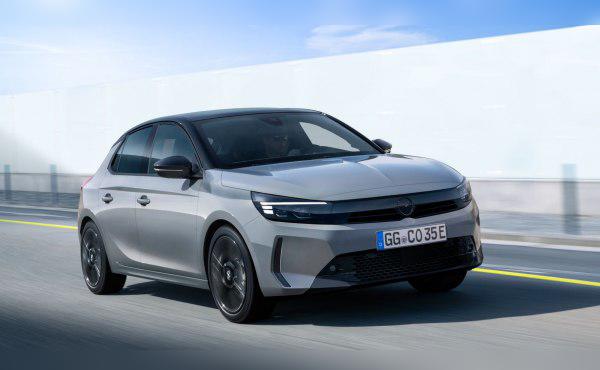
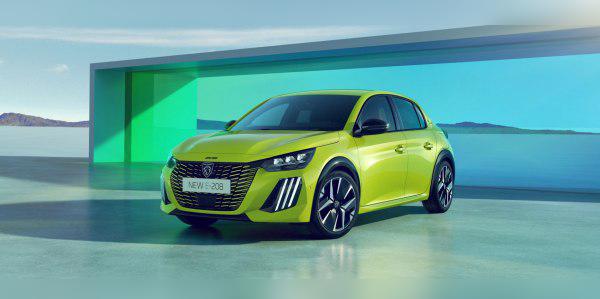
1.2 PureTech / GSE T3 (HN05) Experiences, Problems, Fuel Consumption and Used Car Buying Guide
Key points (TL;DR)
- Timing system type: The classic petrol version has a timing belt running in oil (Wet Belt), while the new e-Hybrid (48V) version has a chain. This is the crucial difference!
- Main weakness: On belt versions, belt degradation can clog the oil pump strainer and cause engine failure if the exact specified oil is not used.
- Performance: Surprisingly lively engine. 205 Nm of torque provides excellent in-gear acceleration in city driving.
- Fuel consumption: Very economical in the city (around 6.5–7.5 liters), but sensitive to a heavy right foot on the motorway.
- Maintenance: Requires stricter discipline than an average engine. Service intervals must be shortened to 10,000–15,000 km.
- Recommendation: Excellent choice for new cars under warranty. For used cars, checking belt condition and oil pressure before purchase is mandatory.
Contents
- Introduction: A modern three-cylinder at the heart of Stellantis
- Technical Specifications (Table)
- Reliability and Maintenance: Belt or Chain?
- Specific Parts and Costs
- Fuel Consumption, Performance and Driving Characteristics
- Additional Options: LPG and Remapping
- Gearbox: Manual vs Automatic
- Buying Used and Conclusion
Introduction: A modern three-cylinder at the heart of Stellantis
The engine with the code HN05 (often known as EB2ADTD in the PSA group or 1.2 GSE T3 in Fiat/Jeep nomenclature) is a modern turbo petrol engine that powers a huge number of vehicles from the Stellantis group. It is an evolution of the famous (and sometimes notorious) 1.2 PureTech engine.
This engine is key because it replaces older naturally aspirated, larger-displacement engines, offering more torque at lower revs. In models such as the Jeep Avenger, the updated Opel Corsa F and Peugeot 208, it represents the “golden middle ground” – it’s not the weakest, but it’s not a sporty version either; rather, it’s an ideal balance for the average driver. Still, its reputation precedes it, so it’s important to clarify what has been fixed in the newer versions (from 2023 onwards), and what has remained the same.
Technical Specifications
| Characteristic | Data |
|---|---|
| Displacement | 1199 cc (1.2 liters) |
| Configuration | R3 (3 cylinders in line), 12 valves |
| Power | 74 kW (100 hp) at 5500 rpm |
| Torque | 205 Nm at 1750 rpm |
| Engine codes | HN05, EB2ADTD (often), GSE T3 (Jeep/Fiat designation) |
| Injection type | Direct injection |
| Charging | Turbocharger with intercooler |
| Emission standard | Euro 6d / Euro 6.4 (depending on model year) |
Reliability and Maintenance
Does this engine have a timing belt or a chain?
Drivers need to be extremely careful here because there are two completely different variants sold under a similar name:
- Standard 1.2 Turbo (100 hp, manual gearbox/EAT8): Uses a timing belt running in oil (Wet Belt). This is the third generation of the belt, chemically more resistant, but the principle is the same.
- 1.2 e-Hybrid / MHEV (100 hp and 136 hp, e-DCS6 gearbox): A new engine operating on the Miller cycle and using a CHAIN. If you’re buying a Jeep Avenger e-Hybrid or Corsa Hybrid, you have a chain and you’re rid of the belt headache.
What are the most common failures on this engine (belt version)?
The biggest problem of the HN05 engine is still related to timing belt degradation. Although the new belts are better, it still happens that micro rubber particles separate, fall into the oil pan and clog the oil pump strainer.
Symptoms: First, the oil pressure warning light comes on (often only under hard braking or in corners at the beginning). If ignored, this leads to “dry starts” and damage to the crankshaft or camshaft bearings, and even engine seizure. There can also be an issue with the brake vacuum pump, which can get clogged by the same debris, resulting in a hard brake pedal.
Another common issue is LSPI (Low Speed Pre-Ignition), i.e. pre-ignition of the mixture at low revs, which can damage the pistons, although this has been resolved in newer series by software updates and better oils.
At what mileage should the major service be done?
The manufacturer has changed the intervals several times (it used to be a crazy 175,000 km). For HN05 engines (from 2020 onwards), the realistic recommendation from any experienced mechanic is: Maximum 6 years or 100,000 km for timing belt replacement (major service). However, the condition of the belt must be visually checked through the oil filler opening at every minor service using a special tool (template) that measures whether the belt has swollen from fuel and oil.
How many liters of oil does it take and which grade?
The engine takes approximately 3.5 to 3.8 liters of oil (depending on the filter size and oil pan of the specific model). Very important: ONLY oil with specification PSA B71 2010 (0W-20) may be used. The older specification (5W-30) is no longer recommended for newer engines because 0W-20 has additives that are less aggressive to the structure of the timing belt. Using the wrong oil drastically accelerates belt degradation.
Oil consumption
Like any turbocharged three-cylinder, some oil consumption is to be expected. Consumption of up to 0.3–0.5 liters per 10,000 km is perfectly acceptable. If it consumes more than that (e.g. a liter every 2–3 thousand km), this points to a problem with piston rings or valve stem seals, which is not uncommon on engines that have been run with dirty oil.
Specific Parts (Costs)
Dual-mass flywheel and clutches
Good news: The 100 hp version with a manual gearbox usually DOES NOT have a dual-mass flywheel, but a classic solid flywheel. This significantly reduces the cost of clutch kit replacement. Versions with automatic gearboxes have a different torque transfer system (torque converter on EAT8 or clutches inside the gearbox on e-DCS6), and there is no classic dual-mass flywheel as a wear item.
Injection system and injectors
It uses high-pressure direct injection. Injectors are generally reliable and rarely fail before 150,000 km, but they are expensive (200+ EUR each). A problem that comes with direct injection is carbon buildup on intake valves. Symptoms are rough idle and a slight loss of power. It is recommended to occasionally “blow it out” on the open road or do chemical intake cleaning at higher mileages.
Turbocharger and DPF/GPF
The engine has a small, low-inertia turbocharger. Its service life is long (over 200,000 km) if the oil is changed regularly. It usually fails due to a clogged oil pump strainer that reduces oil supply to the turbo. All HN05 engines have a GPF (Gasoline Particulate Filter). Unlike diesel DPFs, GPFs regenerate much more easily (they heat up faster because petrol exhaust is hotter) and rarely clog, unless the car is driven literally 100% in heavy city stop-and-go traffic for years.
Fuel Consumption and Performance
Real-world fuel consumption and city driving
This is one of the strongest points of this engine.
- City: Expect between 6.5 and 7.5 l/100 km depending on traffic. The Hybrid version in the city can bring this down to around 5.5–6.0 l/100 km.
- Open road: On country roads, consumption drops to 4.5–5.0 l/100 km.
Is the engine “lazy” and how does it perform on the motorway?
The engine is not lazy at all. With 205 Nm available from just 1750 rpm, in light bodies such as the Corsa or 208, the car “flies”. In the heavier Jeep Avenger (which is a crossover after all), the engine is perfectly adequate, but you can feel it running out of breath if the car is fully loaded with passengers and luggage on an uphill stretch.
On the motorway at 130 km/h in top gear (6th or 8th on automatics), the engine spins at around 2600–2800 rpm. This is a comfortable zone, noise is not high, and there is enough power in reserve for overtaking without having to downshift, except on steep inclines.
Additional Options and Modifications
LPG installation
Not recommended. Due to direct injection, an expensive system is required (liquid phase system or a system that uses both petrol and LPG at the same time to cool the injectors). Installation costs from 800 to 1200 EUR, and the savings are smaller than on older engines. Also, additional injectors and drilling the intake manifold can complicate an already sensitive electronics system.
Remapping (Stage 1)
The engine has potential because it is hardware-wise similar to the 130 hp version. A Stage 1 remap can safely raise it to about 125–130 hp and 230 Nm. However, the question is: Do you really want to additionally stress an engine that already has a sensitive timing belt and thermal management? If the car is under warranty, forget about this.
Gearbox
Types of gearboxes
- Manual (6-speed): Precise, although typically for Peugeot/Opel it has a slightly longer gear lever throw. Reliable.
- Automatic EAT8 (Aisin): Classic hydraulic automatic with 8 gears. A top-notch gearbox, probably the best part of the drivetrain. Shifts smoothly, very reliable.
- e-DCS6 (Hybrid only): New dual-clutch gearbox integrated with an electric motor. So far it looks good, but the technology is new and more expensive to repair (clutches are integrated).
Gearbox maintenance
- Manual: Oil change at 80,000–100,000 km (even though the manufacturer says it’s “lifetime”, it isn’t). The cost is negligible.
- EAT8 automatic: Mandatory oil change every 60,000 km. This is an expensive service (from 150 to 300 EUR), but crucial if you want the gearbox to run 300k km without issues.
Buying Used and Conclusion
What to check before buying?
If you’re looking at a used Corsa F or 208 with this engine:
- Open the oil filler cap: Look at the timing belt (it’s visible to the naked eye). Is it crumbling? Is it cracked? Does it look “swollen” (wider than it should be)?
- Ask for service history: If the oil was changed every 30,000 km, skip that car. Look for examples serviced every 10–15 thousand km.
- Cold start: Listen for chain rattling (on hybrids) or knocking until the engine builds up oil pressure.
Final verdict
The 1.2 Turbo (HN05) is an engine that drives nicely, but demands a meticulous owner. Who is it for? Drivers who cover up to 15–20 thousand km per year, mostly in city and suburban driving, and who are willing not to skimp on quality oil and regular servicing.
If you’re buying a new car (especially the Hybrid version with a chain), this is an excellent purchase. If you’re buying a used one with 100k+ km, be prepared for a preventive major service and oil pan cleaning immediately after purchase for peace of mind.
Was this content useful to you?
Your opinion helps us to improve the quality of the content.