G4FA Engine
- Engine
- 1396 cm3
- Aspiration
- Naturally aspirated engine
- Fuel
- Petrol (Gasoline)
- Fuel injection system
- Multi-port manifold injection
- Power
- 90 hp @ 6000 rpm
- Torque
- 137 Nm @ 4000 rpm
- Cylinders
- 4
- Valves
- 16, 4 per cylinder
- Cylinders position
- Inline
- Valvetrain
- DOHC
- Oil capacity
- 3.3 l
- Coolant
- 5.3 l
# Vehicles powered by this engine
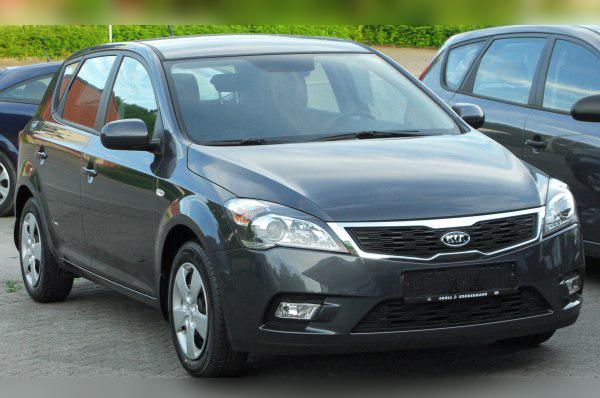
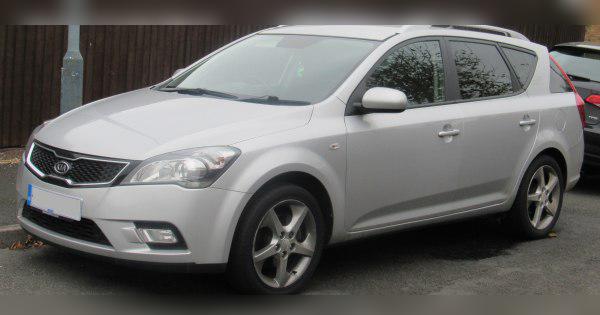
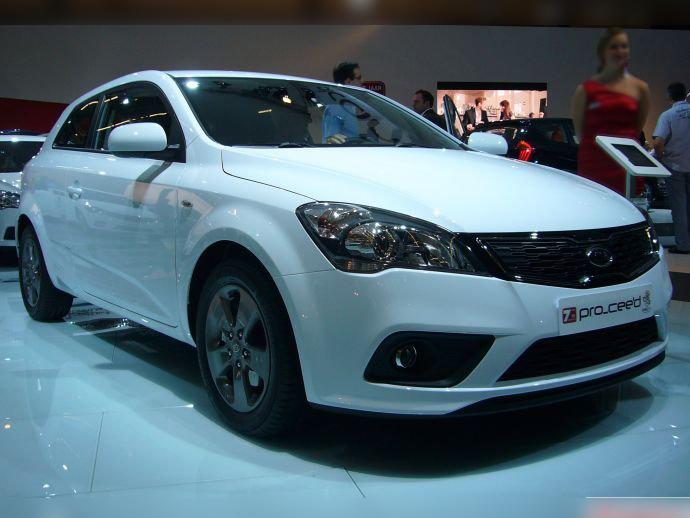
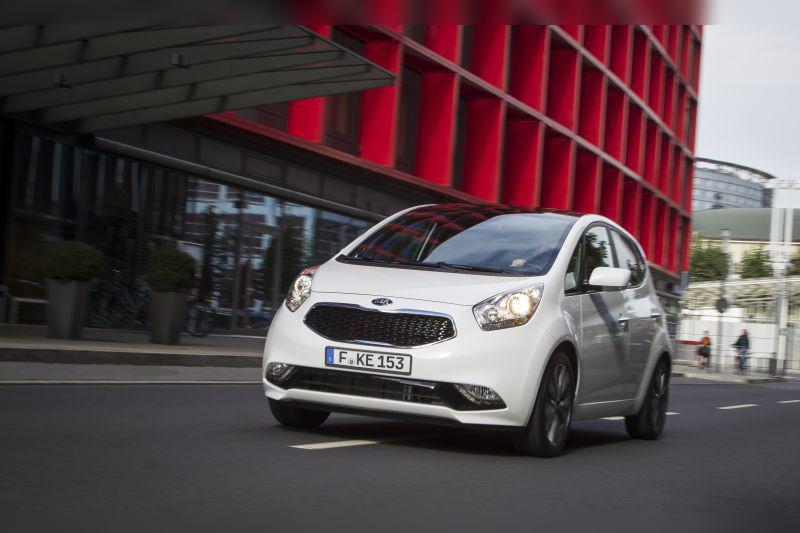
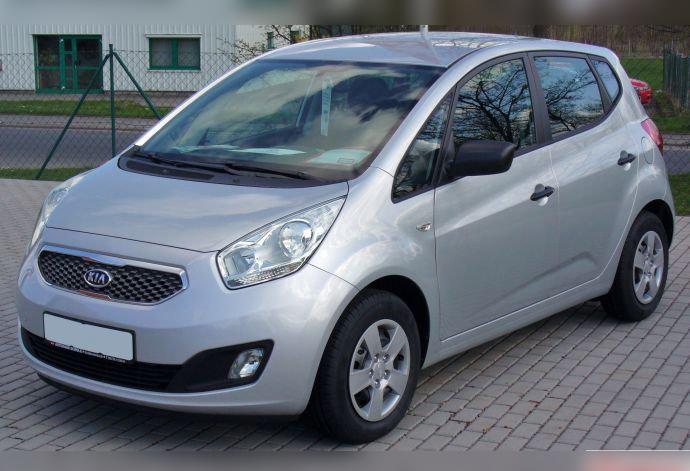
Kia 1.4 16V CVVT (G4FA) 90 HP – Experiences, problems, fuel consumption and used car buying guide
Key points (TL;DR)
- Timing: The engine uses a timing chain. Although designed to last the life of the engine, chain stretch is common after 150,000 km.
- Character: With 90 HP in bodies such as the Cee'd or Venga, this is an engine for relaxed driving. Overtaking requires high revs.
- Expensive failures: The most dangerous issue is the catalytic converter whose honeycomb can disintegrate, with ceramic dust then being sucked into the cylinders and destroying the engine.
- Running costs: Maintenance is affordable. No dual-mass flywheel, no turbo, no DPF filter.
- LPG: It is possible to install, but the engine has no hydraulic tappets. Valve clearance must be checked more often than on petrol only.
- Verdict: An excellent choice for city and regional roads, very reliable if the catalytic converter is dealt with preventively and the chain is monitored.
Contents
- Technical Specifications
- Reliability and Maintenance
- Specific Components (Costs)
- Fuel Consumption and Performance
- Additional Options and Modifications
- Gearbox
- Buying Used and Conclusion
The engine with the code G4FA belongs to Hyundai/Kia’s "Gamma" engine family. It is the entry-level unit for many C-segment models and MPVs of the Korean giant. The 90 HP (66 kW) version is actually a software-"detuned" variant of the stronger 109 HP engine, primarily for tax benefits and fleet sales in certain European countries. It was installed in facelifted first-generation Cee'd models and the Venga MPV. It is considered a simple engine that can take a lot of abuse, but it has two or three critical points every owner needs to know about.
Technical Specifications
| Engine displacement | 1396 cc (1.4 L) |
| Power | 66 kW (90 HP) at 6000 rpm |
| Torque | 137 Nm at 4000 rpm |
| Engine code | G4FA (Gamma first generation) |
| Injection type | MPI (Multi-Point Injection) – Indirect |
| Induction | Naturally aspirated – No turbo |
| Valvetrain | 16 valves (DOHC), CVVT (variable valve timing) |
| Engine block | Aluminium |
Reliability and Maintenance
When we talk about the G4FA engine, we’re talking about one of the most rational used-car purchases on the market, provided the previous owner was conscientious.
Does this engine have a timing belt or a chain?
The engine uses a timing chain. In theory it is "maintenance-free", but practice has shown otherwise. On these engines the chain tends to stretch and the chain tensioner can weaken. This usually happens between 120,000 and 180,000 km, although there are examples that go over 250,000 km without intervention.
Symptoms: A metallic rattle or clatter on cold start that lasts a few seconds, or constant whirring/rumbling from the engine bay on the passenger side. If you hear this, replacing the chain kit is urgent to avoid skipping teeth and catastrophic failure.
What are the most common failures on this engine?
Besides the chain, the biggest enemy of this engine is the catalytic converter. It is located very close to the exhaust manifold (for faster warm-up). When the catalyst honeycomb disintegrates (due to poor fuel, age or ignition issues), the engine can, due to backpressure when engine braking, suck ceramic dust back into the cylinders. That dust acts like sandpaper and destroys the cylinder walls (creates scoring).
Symptoms: Increased oil consumption, loss of compression and power. The solution is a preventive inspection of the catalytic converter with an endoscopic camera through the lambda sensor opening.
At what mileage is the “major service” done?
Since it has a chain, a classic “major service” like on belt-driven engines does not exist at a fixed interval. The auxiliary (serpentine) belt and tensioners are replaced at around 60,000 – 90,000 km or based on condition. The chain is replaced only when it becomes noisy. However, the water pump is replaced when it starts leaking or preventively at higher mileages.
How many litres of oil does this engine take and which grade is recommended?
The sump holds relatively little oil: about 3.3 to 3.6 litres (always buy 4 litres). The recommended grade is 5W-30 (ACEA A3/B4 or A5/B5). 5W-40 can also be used, especially in warmer climates or on higher-mileage engines. The minor service (oil and all filters) must be done strictly every 10,000 km up to a maximum of 15,000 km. Because there is a small amount of oil in the system, it degrades faster, so do not postpone the change.
Does it consume oil between services?
A healthy G4FA engine should not consume a significant amount of oil. Consumption up to 0.5 litres per 10,000 km is acceptable. If it uses more (e.g. 1 litre per 2,000 km), that is an alarming sign which usually points to issues with the piston rings (often caused by the aforementioned dust from the catalytic converter) or valve stem seals.
Specific Components (Costs)
Does the engine have a dual-mass flywheel?
No. The 1.4 G4FA petrol engine comes only with a solid flywheel. This is a huge advantage because a clutch kit is dramatically cheaper (usually between 80 and 150 EUR, depending on brand), and there is no expensive flywheel to fail.
What type of injection system does it have and are the injectors problematic?
It uses a conventional MPI (Multi-Point Injection) system. The injectors are extremely robust, inexpensive and rarely cause problems. They are not as sensitive to fuel quality as GDI (direct injection) injectors found in newer generations.
Does the engine have a turbocharger?
No. This is a naturally aspirated engine. No turbo, no intercooler, no issues with oil leaks from the turbo or expensive turbo overhauls.
Does it have a DPF filter or EGR valve?
It does not have a DPF filter (only diesels do). The engine does have an EGR valve, but on petrol engines it rarely causes problems until very high mileages. If it gets dirty, it can usually be cleaned. The much bigger issue in the exhaust system is the already mentioned catalytic converter.
Fuel Consumption and Performance
What is the real fuel consumption in city driving?
The Kia Cee'd and Venga are not light cars (they weigh around 1200–1300 kg). In the city, you can expect real-world consumption between 8 and 9.5 litres per 100 km, depending on traffic and how heavy your right foot is. In winter it easily goes up to 10 litres. On open roads (single carriageway) it can drop to around 6 litres.
Is this engine “lazy”?
To be honest – yes. With 90 HP and only 137 Nm of torque available as high as 4000 rpm, this engine needs to be “wrung out” to pull properly. In the Kia Venga, which is tall and has more aerodynamic drag, the feeling of sluggishness is even more pronounced than in the Cee'd. The air conditioning further “kills” performance. For relaxed driving it is perfectly adequate, but for overtaking you have to drop two gears and rev it over 4000 rpm.
What is the engine like on the motorway?
This is not an engine for long motorway trips. Due to the short gearbox ratios (especially on 5-speed versions), at 130 km/h the engine spins at around 3800–4000 rpm. That means the cabin is noisy and fuel consumption increases (around 7.5–8.5 litres at 130 km/h). It really lacks a sixth gear to bring the revs down (some newer models got it, check the gear lever).
Additional Options and Modifications
Is this engine suitable for LPG installation?
In general yes, thanks to MPI injection the installation is simple and cheap. BUT, there is a catch: This engine (G4FA) does not have hydraulic tappets, but mechanical buckets. This means valve clearance is not self-adjusting. LPG burns at a higher temperature and can cause valve seat recession.
Recommendation: If you install LPG, it is essential to fit a valve lubrication system (“valve saver” drip or an electronic split-fuel system) and to check valve clearances regularly every 40,000–50,000 km. Adjusting the clearances is expensive because it requires removing the camshafts and replacing the buckets.
How much can this engine be safely “chipped” (Stage 1)?
Since this is a naturally aspirated engine, “chipping” it is basically throwing money away. You might gain 3 to 5 horsepower at best, which you won’t feel in real driving. The only situation where a software tweak makes sense is if the engine is deliberately software-limited (as this 90 HP version is compared to the 109 HP one). In that case, by restoring the factory map from the more powerful version you can gain those ~20 HP, but this must be done by someone who knows the exact differences in the ECU maps.
Gearbox
Which gearboxes are fitted?
You will most commonly find a 5-speed manual gearbox (in earlier facelift models) and a 6-speed manual (in later Venga and Cee'd model years). An automatic gearbox combined with the 1.4 engine is extremely rare (it was more often paired with the 1.6), but if you find one, it is the old 4-speed automatic (traditional torque converter).
Most common gearbox issues and maintenance
- Manual: Very reliable. Failures are rare. The clutch is light and long-lasting. Clutch replacement cost is low. Gearbox oil is changed preventively at around 100,000 km or every 5–7 years (it takes about 2 litres of 75W-85 GL-4).
- Automatic (4-speed): Extremely “lazy” and slow, it increases fuel consumption by at least 1–1.5 litres. However, it is robust. Failures are mostly related to solenoids or overheating if the oil is not changed. Changing the oil and filter in the automatic is mandatory every 60,000 km.
Buying Used and Conclusion
If you are looking at a used Cee'd or Venga with this engine, focus on the following steps during inspection:
- Cold start: Insist that the engine is completely cold. Listen for the first 5 seconds. If you hear loud chain rattling, prepare around 300–400 EUR for a chain kit replacement.
- Idle: Once warm, the engine should run “like a clock”. If you hear a “tick-tick-tick” sound, it may be valves that need adjustment (an expensive job).
- Power and smoke: Test drive it. If it is unusually sluggish and also emits bluish smoke under heavy throttle, walk away – the cylinders are likely damaged due to the catalytic converter.
- Clutch: It should be light and engage smoothly.
Final verdict: The Kia Cee'd and Venga with the 1.4 (90 HP) engine are champions of rationality. They are not fast, they are not quiet at 140 km/h, but they will serve you faithfully with minimal maintenance costs. They are ideal for drivers who spend most of their time in the city and on secondary roads, and who want a cheap car without the hidden “landmines” of modern diesels.
Was this content useful to you?
Your opinion helps us to improve the quality of the content.