G4NA Engine
- Engine
- 1999 cm3
- Aspiration
- Naturally aspirated engine
- Fuel
- Petrol (Gasoline)
- Fuel injection system
- Multi-port manifold injection
- Power
- 150 hp @ 6200 rpm
- Torque
- 192 Nm @ 4000 rpm
- Cylinders
- 4
- Valves
- 16, 4 per cylinder
- Cylinders position
- Inline
- Oil capacity
- 4 l
- Coolant
- 7.1 l
# Vehicles powered by this engine
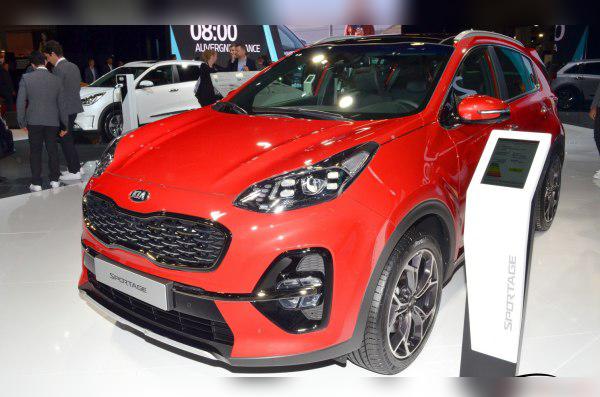
Kia / Hyundai 2.0 MPI (G4NA) – Experiences, issues, fuel consumption and buying tips
The engine designated as G4NA belongs to Hyundai/Kia’s "Nu" family of powertrains and is the heart of many mid-size models, most notably in our market in the Kia Sportage IV (2018 facelift). This is a classic naturally aspirated petrol engine that attracts buyers who want to avoid complicated diesels, DPF filters and expensive turbochargers. However, is simplicity always a guarantee of reliability, and are 150 horsepower enough for a heavy SUV?
Key points in short (TL;DR)
- Reliability: Generally solid, especially on models after 2017 (facelift), where piston cooling issues were resolved.
- Main advantage: MPI injection which is cheap to maintain and ideal for LPG (autogas) conversion.
- Biggest drawback: High fuel consumption in city driving and a “lazy” feel due to the lack of a turbocharger.
- Maintenance: Chain-driven, no turbo, no dual-mass flywheel (on automatics), which makes it cheaper to run than a diesel.
- Recommendation: An excellent choice for drivers who don’t cover huge mileages or plan to install LPG and don’t demand sporty performance.
Contents
- Technical specifications
- Reliability and Maintenance (Chain, Oil, Failures)
- Specific Parts and Costs (Flywheel, Turbo, Injectors)
- Fuel Consumption and Performance
- Additional Options (LPG and Remapping)
- Gearbox (Manual vs Automatic)
- Used car buying guide and Conclusion
Technical specifications
| Engine code | G4NA (Nu family) |
| Displacement | 1999 cc (2.0 L) |
| Power | 110 kW (150 hp) at 6200 rpm |
| Torque | 192 Nm at 4000 rpm |
| Fuel type | Petrol (Gasoline) |
| Aspiration | Naturally aspirated |
| Injection | MPI (Multi-Point Injection) – Indirect |
| Camshaft drive | Timing chain |
Reliability and Maintenance
When it first appeared, the G4NA engine carried the bad reputation of its predecessor (G4KD) related to cylinder wall damage. However, the version installed in the Kia Sportage IV facelift (from 2018 onwards) was significantly revised. The manufacturer added oil squirters that cool the pistons (oil jets), which drastically reduced the risk of overheating and seizure, previously the “Achilles’ heel” of earlier generations.
Does this engine have a timing belt or a chain?
This engine uses a timing chain. In theory it is a “lifetime” component, but in practice the chain can stretch at mileages over 150,000–200,000 km. The symptom is rattling on cold start. Replacing the chain is more expensive than a timing belt, but it is done much less frequently.
What are the most common issues with this engine?
- Cylinder wall damage (scuffing): Although this is rarer on 2018+ models thanks to the oil squirters, it can still happen if the engine is driven hard when cold or if oil changes are neglected. The symptom is a characteristic knocking sound that follows engine speed, similar to a diesel clatter.
- Oil consumption: Stuck piston rings can lead to increased oil consumption, especially in stop-and-go city driving.
- Catalytic converter: The ceramic core of the catalytic converter can break up and, due to its proximity to the engine, ceramic dust can be sucked back into the cylinders and cause serious damage (scratching the cylinder walls).
At what mileage is the “major service” due?
Since the engine has a chain, a classic “major service” (timing belt replacement) does not exist at a fixed interval. The condition of the chain is usually checked at around 150,000 km. However, the auxiliary (serpentine) belt that drives the alternator and A/C, together with the tensioners and water pump, should be replaced at around 90,000–120,000 km or every 5–6 years.
How many liters of oil does it take and which grade?
The sump holds about 4.0 to 4.3 liters of oil. The recommended grade is 5W-30 (ACEA A5/B5 specification) for European conditions. If you live in very cold regions, 5W-20 can also be used. Important: The 30,000 km oil change interval sometimes mentioned in service books is “death” for this engine. Change the oil at a maximum of 10,000 km or once a year to protect the rings and the chain.
Does it burn oil?
These engines are prone to moderate oil consumption. Consumption of up to 0.5 liters per 10,000 km is considered excellent, while the manufacturer often “washes their hands” by stating that up to 1L/1000 km is normal (which in practice indicates a fault). Check the dipstick regularly, at least once a month.
Specific Parts (Costs)
Does this engine have a dual-mass flywheel?
Here the situation depends on the gearbox:
- Automatic gearbox: Does NOT have a dual-mass flywheel. It uses a hydraulic torque converter.
- Manual gearbox: Most 2.0 MPI versions for the European market have a solid (single-mass) flywheel, which makes clutch replacement cheaper. Still, always check by VIN, as some specific AWD versions may differ.
What kind of injection system does it have?
The engine uses an MPI (Multi-Point Injection) system. This is great news for owners. Injectors are cheap, simple and not as sensitive to poor fuel quality as on GDI engines. There are also no issues with carbon buildup on intake valves.
Turbocharger and lifespan?
This engine does NOT have a turbocharger. That means one (expensive) worry less. No turbo to fail, no intercooler, no complicated vacuum hoses.
DPF filter and EGR valve?
Being a petrol engine, it does not have a DPF filter. It has a three-way catalytic converter for emission control. An EGR valve is often not present as a separate component because exhaust gas recirculation is achieved via variable valve timing (CVVT), which is one more maintenance concern off the list.
Fuel Consumption and Performance
What is the real-world fuel consumption in city driving?
Expect no miracles here. The Sportage is a heavy car (over 1.5 tons), and a naturally aspirated petrol engine needs revs to pull it properly.
City driving: Expect between 10 and 13 liters per 100 km, depending on traffic and how heavy your right foot is. In winter this can easily go above 13 liters.
Combined: A realistic average is around 8.5–9.5 l/100 km.
Is this engine “lazy”?
By today’s turbo standards – YES, it feels lazy. With 192 Nm of torque available only at a high 4000 rpm, you won’t get that “kick in the back” when you floor it. Overtaking requires downshifting and revving the engine to 5000+ rpm. If you’re driving fully loaded uphill with the A/C on, you will feel the lack of power.
What is it like on the motorway?
On the motorway it is comfortable and quiet as long as you maintain a steady speed. At 130 km/h in sixth gear the engine spins at about 3,000–3,200 rpm. Fuel consumption at that speed is around 8–9 liters. Sound insulation in the Sportage IV is good, so engine noise is not too intrusive.
Additional Options and Modifications
Is it suitable for LPG (autogas) conversion?
Absolutely YES. This is one of the best modern engines for LPG conversion. Thanks to MPI injection, installation is straightforward, using a standard sequential system (no need for an expensive direct-injection kit). This is the only way to make its high city consumption economically acceptable. Be sure to have the system installed by a reputable specialist using quality injectors.
Can it be “chipped” (Stage 1 remap)?
It’s not worth it. Naturally aspirated engines cannot be effectively tuned with software alone. The gain would be negligible (maybe 5–8 hp), which you won’t feel in real driving. It’s better to invest that money in good tyres or regular servicing.
Gearbox
Manual and Automatic gearboxes
With the 2.0 MPI in the Sportage you get:
- 6-speed manual gearbox: Precise and robust. Failures are rare. Clutch kit replacement is reasonably priced (“moderately expensive”).
- 6-speed automatic gearbox: This is a conventional torque-converter automatic (Hyundai/Kia design). It is not a fast DCT (dual-clutch), but a comfortable, “old-school” automatic.
Most common gearbox issues and maintenance
Automatic: Very reliable if maintained properly. It doesn’t suffer from the jerks typical of DCT gearboxes in city driving. It is recommended to change the automatic transmission fluid every 60,000 to 80,000 km using a machine flush, even though the manufacturer often claims the oil is “for life”. If the oil is never changed, slipping or harsh shifting can appear around 150,000 km.
Manual: An oil change is recommended at around 100,000 km. Issues are mostly related to wear items (clutch).
Used car buying guide and Conclusion
When buying a used Sportage with this engine, pay attention to:
- Cold start: The engine should run smoothly. Any metallic knocking or rattling that does not disappear after a few seconds may indicate a chain issue or piston damage (piston slap).
- Exhaust: Black soot on the tailpipe is common on these engines, but blue smoke is a sign of oil burning.
- Service history: Insist on proof of regular oil changes (every 10–15k km, not every 30k km).
Final verdict:
The 2.0 MPI G4NA engine in the Kia Sportage IV (2018+) is a rational, not an emotional choice. It is aimed at drivers who want simplicity, low running costs and longevity, and who are ready to accept higher fuel consumption (which can be mitigated with LPG) and average performance. If you’re looking for a car to “thrash” or to tow heavy trailers, look at the 2.0 CRDi diesel. If you need a family tank that will rarely break down – this is the right engine for you.
Was this content useful to you?
Your opinion helps us to improve the quality of the content.