BAR Engine
- Engine
- 4163 cm3
- Aspiration
- Naturally aspirated engine
- Fuel
- Petrol (Gasoline)
- Fuel injection system
- Direct injection
- Power
- 350 hp @ 6800 rpm
- Torque
- 440 Nm @ 3500 rpm
- Cylinders
- 8
- Valves
- 32, 4 per cylinder
- Cylinders position
- V-engine
- Valvetrain
- DOHC
- Oil capacity
- 9.1 l
- Coolant
- 12 l
# Vehicles powered by this engine
4.2 FSI V8 (BAR) – Experiences, issues, fuel consumption and used-car buying tips
Key points (TL;DR)
- Sound and power: The naturally aspirated V8 offers linear throttle response and a beautiful sound that modern turbo engines simply can’t replicate.
- Timing chain system: The biggest weakness of this engine. It’s located at the rear of the engine (towards the cabin), so replacement requires removing the entire engine – a very expensive job.
- Carbon buildup: As an FSI (direct injection) engine, it is prone to carbon deposits on the intake valves, which gradually choke the engine over time.
- Fuel consumption: Expect high numbers. In heavy bodies (Q7, Touareg), city driving rarely goes below 18–20 liters.
- Gearbox: The Tiptronic automatic is extremely robust and comfortable, provided the oil is changed on time.
- Recommendation: An engine for enthusiasts who want the refinement of a V8 petrol and have the budget for premium maintenance, but don’t want the complexity of diesels (DPF/Injectors/Turbos).
Contents
- Introduction and applications
- Technical specifications
- Reliability, maintenance and failures
- Specific parts and costs
- Fuel consumption and performance
- LPG and remapping
- Gearbox
- Conclusion and buying advice
Introduction and applications
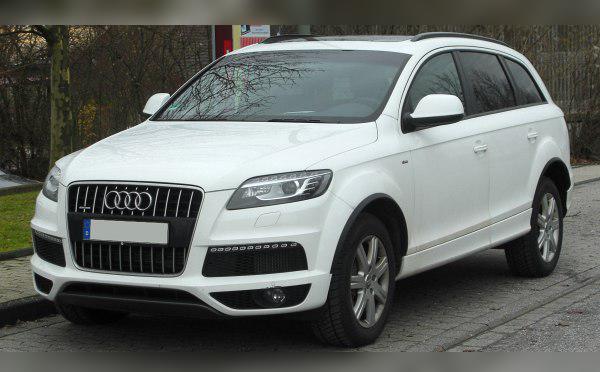
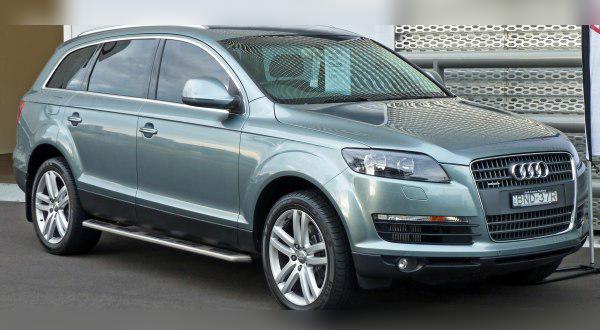
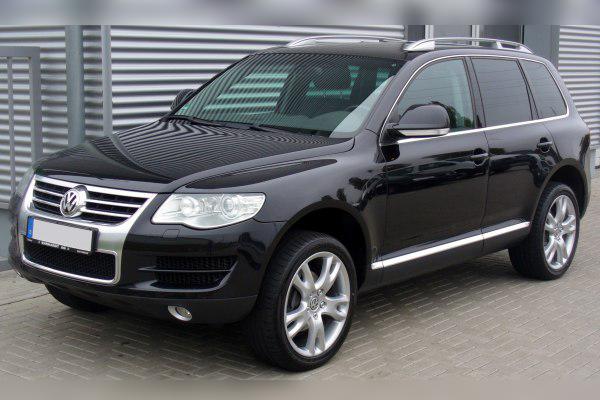
The engine with the code BAR represents Audi’s (and Volkswagen’s) vision of a powerful, naturally aspirated V8 petrol before the era of mass “downsizing” and turbochargers. Installed in heavy SUV models such as the Audi Q7 (4L) and VW Touareg, this engine was an alternative for those who didn’t want a diesel but were looking for prestige and linear power delivery.
It is a 4.2 FSI unit. The FSI (Fuel Stratified Injection) designation tells us it is a direct-injection engine. It was technologically advanced for its time, made of aluminum, compact (to fit the engine bay) and very refined. However, this compactness also brought certain engineering solutions that today cause headaches for used-car owners.
Technical specifications
| Parameter | Value |
|---|---|
| Displacement | 4163 cc (4.2 L) |
| Configuration | V8 |
| Power | 257 kW (350 hp) at 6800 rpm |
| Torque | 440 Nm at 3500 rpm |
| Engine code | BAR |
| Injection type | FSI (Direct injection) |
| Induction | Naturally aspirated |
| Camshaft drive | Chain (At the rear of the engine) |
Reliability and maintenance
Does this engine have a timing belt or a chain?
The BAR engine uses a chain system for timing. What’s specific about this engine is that the chain system (there are several chains, usually 4) is located at the rear of the engine, towards the firewall, i.e. towards the gearbox. This was done to save space (to make the engine shorter and reduce load on the front axle), but it is a nightmare to service.
What are the most common failures on this engine?
Besides the mentioned chain, here are the most common issues with detailed explanations:
- Chain stretch and tensioner failure: This is the most expensive failure. Symptoms include rattling on cold start (metal-on-metal sound) that lasts longer than 2–3 seconds. If ignored, the chain can jump and cause catastrophic engine damage. In 99% of cases, the engine has to be removed to replace the chain, which makes labor costs extremely high.
- Carbon buildup: Due to FSI direct injection, fuel does not wash the intake valves. Over time, oily deposits (from oil vapors) accumulate on the valves. Symptoms: rough idle, loss of power (engine feels “choked”) and increased fuel consumption. The solution is mechanical cleaning (walnut shell blasting).
- Oil leaks: Most commonly from the valve covers and the oil filter housing. V8 engines generate a lot of heat which eventually hardens rubber gaskets.
- Coil packs (ignition coils): They often fail, causing one or more cylinders to stop firing (misfire). Fortunately, they are not too expensive and are easy to replace.
At what mileage is the major service done?
Since the engine has a chain, a classic “major service” like with a belt is not prescribed at a fixed mileage. The chain was intended to last “for the life of the engine”, but in practice, on this engine problems often start between 150,000 and 200,000 km. Chain replacement is done as needed (when noise appears). However, the auxiliary (serpentine) belt and related pulleys are replaced regularly, usually at around 100,000 km or every 5 years.
How many liters of oil does this engine take and which grade is recommended?
This is a large engine with a large oil sump. It takes around 9.1 liters of oil (depending on whether the filter is also changed; always check the level with the dipstick). The recommended grade is 5W-30 or 5W-40, with mandatory compliance with VW standards (e.g. VW 502 00 or VW 504 00).
Does it consume oil between services?
Yes, 4.2 FSI engines are known for oil consumption. This is partly due to design and partly due to high operating temperatures. Consumption of 0.5 to 1 liter per 2,000–3,000 km is often considered “normal” by factory standards, even though it annoys owners. If it consumes more than 1 liter per 1,000 km, this indicates an issue with piston rings or the oil separator (PCV valve). Regular oil level checks are MANDATORY.
At what mileage should the spark plugs be changed?
For this petrol engine, it is recommended to change the spark plugs every 60,000 km up to 90,000 km at the latest (or every 4–6 years). Use only iridium or platinum-tipped plugs intended for FSI engines (e.g. NGK or Bosch), as poor-quality plugs can quickly damage the coil packs.
Specific parts (costs)
Does this engine have a dual-mass flywheel?
Since this engine in the Q7 and Touareg is almost exclusively paired with a Tiptronic automatic gearbox, it does not have a classic dual-mass flywheel like on manual gearboxes that wears out and rattles. Instead, it uses a torque converter with a flexplate. This is a more durable solution and rarely requires replacement, except when overhauling the entire gearbox.
What kind of injection system does it have and are the injectors problematic?
The system is FSI (Fuel Stratified Injection) with high-pressure fuel pumps (HPFP). The injectors are piezo-electric and operate at high pressure. They can become problematic at higher mileages – they may start to “dribble” (leak) fuel into the cylinder, which washes away the oil film and can damage the engine. However, they are not as sensitive as on modern diesels, but they are expensive to replace (price depends on the market, but it is high).
Does this engine have a turbocharger?
No. The BAR engine is naturally aspirated. It has no turbochargers, no intercoolers. This is a big advantage from a maintenance standpoint, as you have one (very expensive) component less to worry about. It makes power through large displacement.
Does this model have a DPF filter or an EGR valve?
Being a petrol engine, it DOES NOT have a DPF filter. Also, most FSI engines of this generation do not have a classic EGR valve that clogs with soot like on diesels; instead, the effect of exhaust gas recirculation is achieved by variable valve timing (overlap of intake and exhaust valve opening). So there are no clogged DPFs and EGR valves leaving you stranded.
Does this engine use AdBlue?
No, AdBlue is used exclusively on diesel engines (SCR catalysts). This petrol engine does not have such a system.
Fuel consumption and performance
What is the real-world city fuel consumption?
There is no sugar-coating here. The Q7 and Touareg weigh over 2.2 tons, have permanent all-wheel drive and an automatic gearbox. In pure city driving (stop-and-go), real consumption is between 18 and 22 liters per 100 km. If you have a heavy right foot, it easily goes over 25 liters.
Is this engine “lazy” for the weight of the body it’s installed in?
With 350 hp and 440 Nm, the engine is not lazy, but don’t expect the “explosive” shove of a turbo diesel (e.g. V8 TDI with 800 Nm). A naturally aspirated petrol needs revs. At low revs it is smooth and sufficient for normal driving, but to really move that mass, the gearbox has to drop a gear and spin it over 4,000 rpm. Throttle response is instant (no turbo lag), which makes it pleasant to drive.
What is it like on the motorway and at what revs does it cruise at 130 km/h?
This is the engine’s natural habitat. On the motorway it is extremely quiet and composed. Thanks to the 6-speed gearbox and high torque, at 130 km/h it runs at relatively low revs (usually around 2,600–2,800 rpm, depending on the final drive). Fuel consumption on the open road drops to a more tolerable 11–13 liters.
Additional options and modifications
Is this engine suitable for LPG (autogas) conversion?
Due to FSI direct injection, LPG installation is complicated and expensive. A regular sequential system cannot be installed because the petrol injectors would burn out without fuel flowing through them. There are two options:
- Mixed system: Uses about 80–90% LPG and 10–20% petrol (to cool the injectors). Cheaper, but still more expensive than a regular system.
- Liquid phase (LDI): Injects LPG through the petrol injectors. The best solution, no power loss, runs only on LPG, but installation is very expensive (often over 1,500–2,000 EUR, depending on the market).
Given the age of these vehicles, the cost-effectiveness of installing a quality system is questionable unless you cover very high annual mileage.
How much can this engine be safely remapped (Stage 1)?
Naturally aspirated engines gain very little from remapping. A Stage 1 tune can bring 15 to 20 hp and slightly better throttle response, but you won’t feel a dramatic difference in performance. It is often done only to remove the speed limiter or slightly smooth out the torque curve.
Gearbox
Which gearboxes are fitted?
With the BAR engine in the Q7 and Touareg, a 6-speed Tiptronic automatic gearbox was standard. The gearbox is made by the renowned German manufacturer ZF (6HP series model). Manual gearboxes are extremely rare or non-existent in this combination on most markets.
What are the most common automatic gearbox issues?
The ZF 6HP is an extremely reliable gearbox. The issues that do appear are:
- Oil leaks from the gearbox pan: The pan is plastic and deforms over time.
- Mechatronics and solenoids: At higher mileage, the channels in the valve body can clog if the oil has not been changed, which leads to harsh shifts or slipping.
- Torque converter: It can show signs of wear through fluctuating revs at a constant speed (the tachometer needle “wobbling”).
Gearbox service and oil change
Although the manufacturer often states that the oil is “lifetime”, ZF (the gearbox manufacturer) recommends changing the oil and filter (pan) every 80,000 to 100,000 km, or every 8 years. If you are buying a used car with 200,000 km and the oil has never been changed, it is risky to do a change because fresh oil (which is more aggressive) can wash off deposits and clog the channels.
Buying used and conclusion
Before buying, make sure you do the following:
- Cold start: Insist that the engine is completely cold. Listen to the sound during the first 3–5 seconds. If you hear strong rattling/knocking from the chain at the rear of the engine – walk away or lower the price by 2,000+ EUR (depending on the market).
- Diagnostics: Check the “phase position” (camshaft angles) via diagnostics. This can reveal chain stretch before the warning light comes on. Also check the “misfire” counters.
- Test drive: The gearbox must shift imperceptibly, both cold and hot. Any thump when stopping or pulling away is a bad sign.
Conclusion:
The 4.2 FSI (BAR) engine is intended for people who want refinement, sound and prestige, and who do not cover huge annual mileage. It is a “gentleman’s” engine. It is much simpler than modern diesels (no turbo, DPF, AdBlue), but fuel consumption and the risk related to the chains are the price you pay. If you find an example with the chains already replaced and with regular servicing, it can easily exceed 400,000 km while providing genuine driving pleasure.
Was this content useful to you?
Your opinion helps us to improve the quality of the content.