Fiat 1.2 16V (188A5000) engine: Experiences, issues, fuel consumption and used car buying tips
Key points in short (TL;DR)
- Extremely reliable and simple naturally aspirated petrol engine from the famous FIRE engine generation.
- Maintenance is not expensive (depends on the market), and spare parts are widely available everywhere.
- It is driven by a timing belt whose regular replacement is mandatory, because if it snaps it will damage the valves.
- Almost an ideal engine for cheap installation of LPG.
- Lively enough for the lighter Fiat Punto, but noticeably sluggish in heavier bodies such as the Fiat Stilo and Idea.
- Does not have expensive parts like a dual-mass flywheel, DPF filter or turbocharger.
Contents
- Key points in short (TL;DR)
- Introduction: Meet the 1.2 16V FIRE
- Technical specifications
- Reliability and maintenance
- Specific parts and costs
- Fuel consumption and performance
- Additional options and modifications
- Gearbox and drivetrain
- Buying used and conclusion
Introduction: Meet the 1.2 16V FIRE
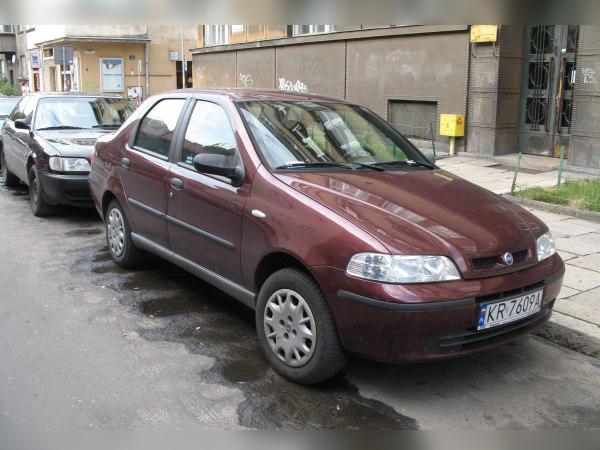
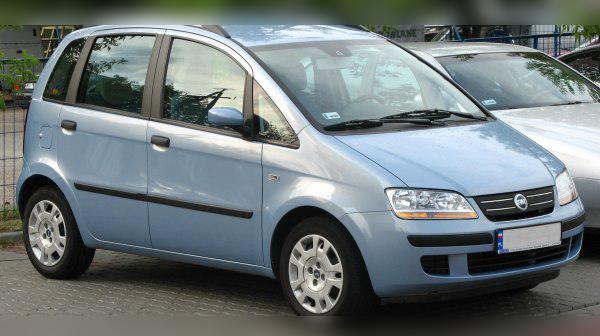
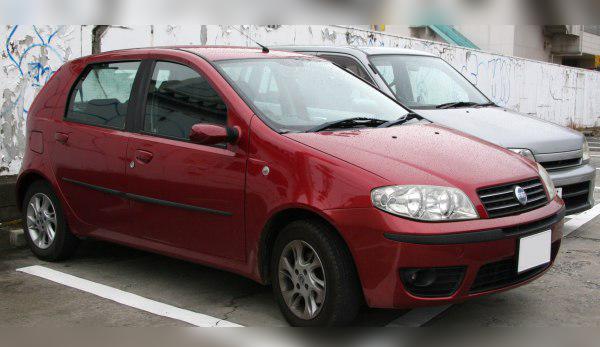
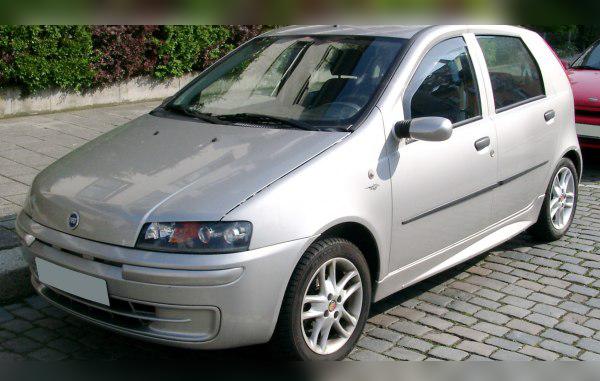
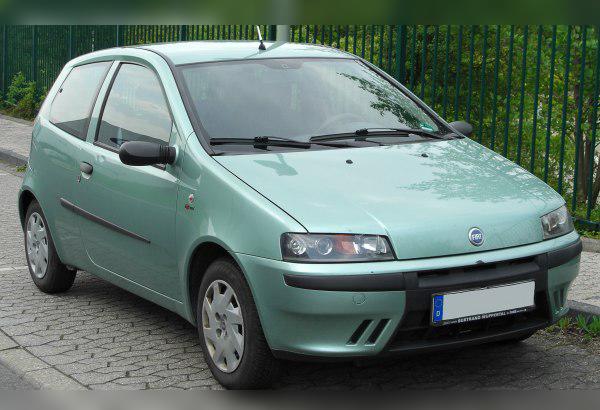
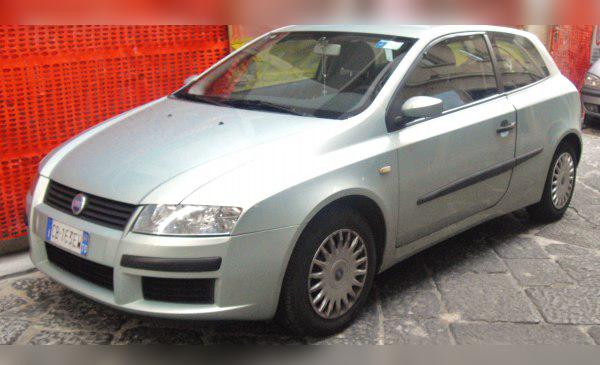
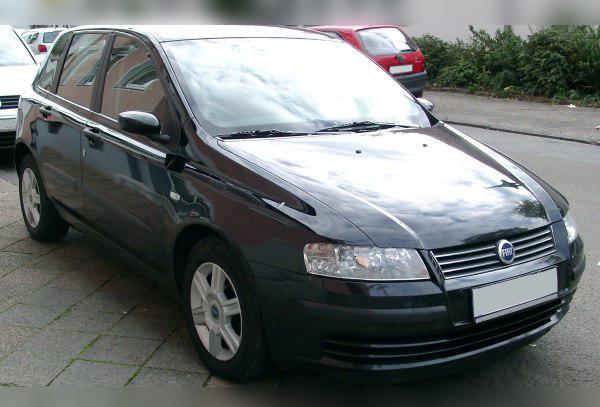
The engine designated as 188A5000 is one of the most successful evolutions of Fiat’s FIRE (Fully Integrated Robotised Engine) family. Introduced as a more powerful alternative to the basic 8-valve version, this unit delivers a respectable 80 hp (59 kW) from a small displacement. Its importance lies in the fact that it powered a huge number of vehicles during the first decade of the 2000s, bringing more advanced injection and valvetrain technology into mass production. It is most commonly found in the Fiat Punto II (including the facelift), where it proved to be a perfect match, but also in the Fiat Stilo, Fiat Idea and Fiat Albea, where it offered an economical entry ticket into the world of slightly larger cars.
Technical specifications
| Specification | Data |
|---|---|
| Engine code | 188A5000 |
| Displacement | 1242 cc |
| Power | 59 kW (80 hp) |
| Torque | 114 Nm |
| Injection type | MPI (Multi-Point Injection) |
| Aspiration | Naturally aspirated engine |
| Fuel type | Petrol (Gasoline) |
Reliability and maintenance
Fiat’s 1.2 16V is generally a very durable engine, provided that basic service intervals are not neglected. Unlike older and weaker 8-valve FIRE engines, this engine has an interference design, which means that the timing is driven by a timing belt whose failure will inevitably cause contact between pistons and valves, resulting in major engine damage.
Service intervals and oil
The major service (replacement of timing belt, idler, tensioner and water pump) must be done every 60,000 to 80,000 km or every 5 years, whichever comes first. Parts for the major service are not expensive (depends on the market).
The oil sump capacity is very small, it holds only about 2.8 litres of oil (with filter). Because of this small oil quantity, regular changes every 10,000 to a maximum of 15,000 km are crucial. Fully synthetic or semi-synthetic oil is recommended, most commonly in grades 5W-40 or 10W-40 (depending on climate and mileage). As for oil consumption, it is completely normal for this engine to use between 0.1 and 0.3 litres per 1000 km, especially if driven aggressively at higher revs. Regular dipstick checks are mandatory.
Most common failures
Mechanically the unit is very solid, but the peripherals can cause minor headaches:
- Ignition system: Coils and spark plug leads are wear items. If the engine starts jerking, misfiring under acceleration or running on three cylinders, this is the first suspect. Spark plugs must be replaced every 30,000 to 40,000 km. If you delay changing the plugs, you increase the load on the coil and can cause it to fail.
- Oil leaks: The valve cover gasket very often fails, so you will notice oil residue around the engine. Replacement is quick and not expensive (depends on the market).
- Unstable idle: The most common cause is a dirty throttle body or the pressure/temperature sensor in the intake manifold (MAP sensor). Cleaning the throttle body with spray usually solves the rev fluctuation problem at traffic lights.
- Thermostat: It often gets stuck in the open position. Symptom: on the open road the engine temperature gauge drops significantly, and in winter the cabin heating is weak.
Specific parts and costs
One of the biggest advantages of this engine compared to more modern units is what it does not have. It was designed before the era of extreme downsizing and very strict emission standards, which is good news for the wallet of any used car owner.
- Dual-mass flywheel: It doesn’t exist here. This engine uses a standard solid flywheel, so only a conventional clutch kit (pressure plate, disc, release bearing) is replaced, which is not expensive (depends on the market).
- Injection system: It uses an MPI (Multi-Point) system with one injector per cylinder, located in the intake manifold. The injectors operate at low pressure, are extremely durable and rarely cause problems. If they do get dirty (symptom: hard cold starts in the morning), ultrasonic cleaning is inexpensive.
- Turbocharger: The engine is naturally aspirated, so there is no turbo, no intercooler and no associated expensive hoses.
- EGR, DPF and AdBlue: Since this is an older petrol engine, there is no DPF filter, no complex water-cooled EGR valve that clogs with soot (it has a simple PCV crankcase ventilation system), and there is no AdBlue system of any kind, which is reserved exclusively for modern diesels. Emissions are handled by a conventional catalytic converter and lambda sensors.
Fuel consumption and performance
The driving experience with this engine varies greatly depending on the car it is installed in.
If you drive it in a Fiat Punto, 80 hp combined with its low weight (around 950 kg) provides very lively performance. The car is nippy in town and safe enough for overtaking on country roads. However, if the engine is in the heavier Fiat Stilo (over 1200 kg) or Fiat Idea, it has to be described as “sluggish”. To get these heavier cars to pick up speed briskly, the driver has to rev the engine high (over 4000 rpm), which drastically increases noise and fuel consumption.
Fuel consumption:
- City driving: Expect real-world consumption between 7.5 and 9 l/100 km, depending on how heavy your right foot is, traffic conditions and the specific car model.
- Open road (country roads): It can go down to about 5.0 to 5.5 l/100 km.
- Motorway: This engine was not born for long-distance high-speed cruising. At 130 km/h in fifth gear, the crankshaft spins at a relatively high 3800 to 4000 rpm. Cabin noise becomes noticeable and consumption rises to around 7.0 to 7.5 l/100 km.
Additional options and modifications
LPG conversion
Thanks to its classic MPI injection, the 188A5000 is an ideal candidate for a sequential LPG system. The engine handles LPG very well, has no issues with valve overheating, and the investment in installation pays off very quickly. The only things that require special attention are the spark plugs and leads, which must be in perfect condition, because an LPG mixture is more sensitive to a weak spark than petrol.
Remapping (Stage 1)
As with most small naturally aspirated petrol engines, a so‑called “Stage 1” remap is a complete waste of money. By changing the ECU software you can gain at most 3 to 5 horsepower, which you will not really feel in everyday driving. The stock 80 hp is close to the maximum this engine can offer without serious (and very expensive) mechanical upgrades.
Gearbox and drivetrain
Several gearbox options were offered with the 188A5000 engine, and buyers need to be very careful here.
Manual gearboxes
A five-speed manual gearbox is standard (in some cases even a six-speed, as in the Stilo). They are reliable, and the only more common issue is synchro wear (usually in second or third gear), which shows up as grinding when shifting quickly. As mentioned, there is no dual-mass flywheel, so replacing the complete clutch kit is cheap. Gearbox oil is often neglected, but it should be changed every 80,000 to 100,000 km.
Automatic and CVT gearboxes
In the Punto, Fiat also offered a CVT (Continuously Variable Transmission) known as Speedgear. It is comfortable for city driving, but buying a used car over 15 years old with a CVT gearbox is a big risk. The most common CVT failures are wear of the drive belt and deterioration of the pulleys, and repairs are very expensive (depends on the market), often exceeding the value of the car itself. The oil in a CVT gearbox must be changed every 40,000 to 60,000 km. If there is no proof of gearbox oil changes in the service book, it is best to avoid that particular car.
Buying used and conclusion
When inspecting a vehicle equipped with the 188A5000 engine, be sure to check the following:
- Engine sound: At idle the engine should run smoothly and evenly. Any ticking that resembles a sewing machine may indicate the need for valve clearance adjustment or camshaft wear due to poor lubrication.
- Fluids check: Look at the oil filler cap. If there is thick yellowish sludge (“mayonnaise”) underneath, it may mean that oil and coolant have mixed (blown head gasket), although in small amounts during winter it can simply be the result of condensation from short city trips.
- Exhaust smoke: Bluish smoke from the exhaust when you blip the throttle after idling indicates oil consumption due to worn valve stem seals or piston rings.
Final verdict
Fiat’s 1.2 16V (188A5000) is one of those engines that mechanics genuinely recommend. Its design has stood the test of time. It is primarily intended for drivers with a limited maintenance budget, beginners, and those who mainly drive in the city. If you are buying one, look for it in the lighter Fiat Punto with a manual gearbox – in that combination you get a cheap, reliable and surprisingly lively car. In heavier vehicles such as the Fiat Stilo, be prepared for more frequent shifting and a lack of breath on uphill sections, but reliability will still remain at a high level.