YMCB 2.0 EcoBlue Engine (150 hp): Experiences, Issues, Fuel Consumption and Used-Buying Tips
- Timing belt-in-oil system: Requires strict adherence to the specified engine oil, otherwise the belt starts to disintegrate and clogs the oil pump.
- Excellent torque: With 370 Nm, this engine copes very well with heavy bodies (Edge, Galaxy, S-MAX).
- DPF and AdBlue systems: Sensitive to exclusively city driving; they require regular highway runs for proper regeneration.
- Automatic transmissions: Absolutely require oil changes every 60,000 km to avoid extremely expensive failures.
- Injectors and fuel: The modern Common Rail system is efficient, but does not tolerate poor-quality fuel or infrequent fuel filter changes.
- Purpose: An ideal engine for longer family trips and highway cruising; not suitable for short urban commutes.
Contents
- Introduction: About the YMCB 2.0 EcoBlue Engine
- Technical Specifications
- Reliability and Maintenance
- Specific Components (Costs)
- Fuel Consumption and Performance
- Additional Options and Modifications
- Transmission and Drivetrain
- Buying Used and Conclusion
Introduction: About the YMCB 2.0 EcoBlue Engine
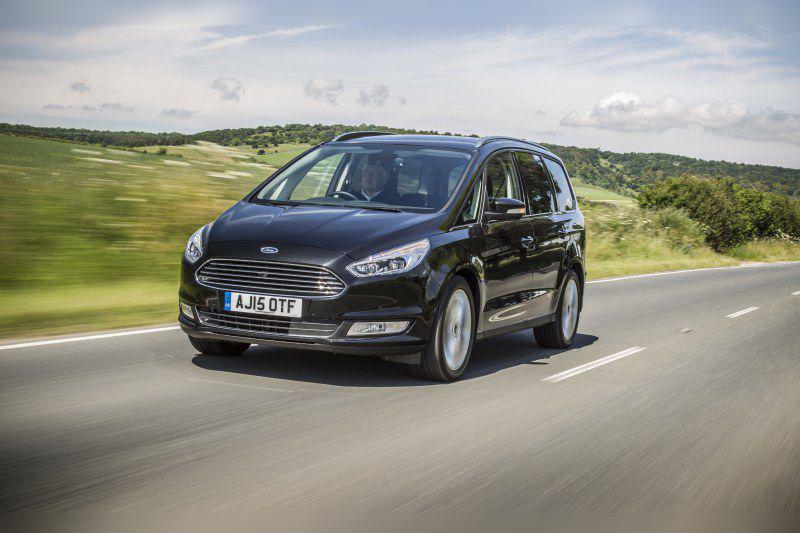
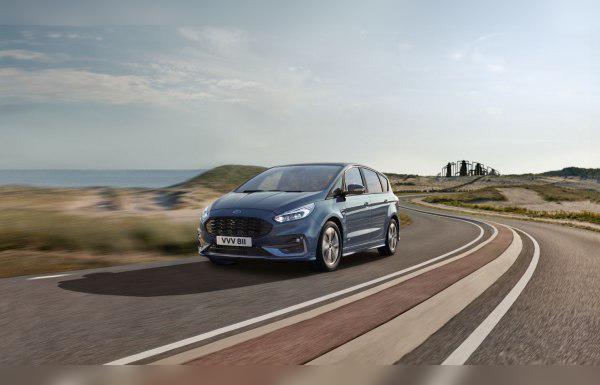
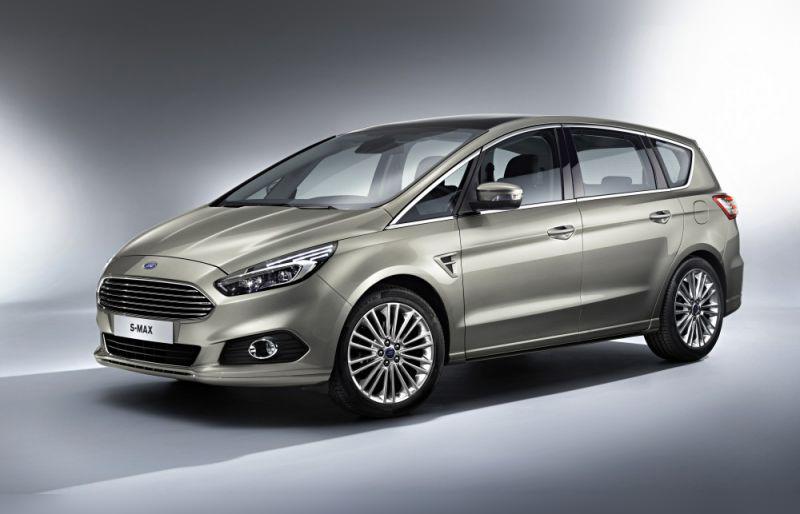
The engine designated as YMCB belongs to Ford’s modern 2.0 EcoBlue generation of diesel powerplants. This engine was developed as the successor to the renowned 2.0 TDCi (DW10) engine. The goal was to meet strict Euro 6 emission standards, reduce internal friction and increase efficiency. It is primarily installed in larger and heavier vehicles such as the Ford Edge II, Ford Galaxy III and Ford S-MAX II. Since these cars are designed to carry more passengers and cover long distances, the 150-horsepower version represents a basic but rational power level, focused mainly on generous torque and fuel economy on the open road.
Technical Specifications
| Parameter | Value |
|---|---|
| Displacement | 1997 cc |
| Power | 110 kW (150 hp) |
| Torque | 370 Nm |
| Engine code | YMCB |
| Injection type | Direct injection (Common Rail, Piezo) |
| Charging type | Variable-geometry turbocharger, intercooler |
Reliability and Maintenance
Timing belt in oil (Belt-in-Oil)
This is the most important technical feature – and the biggest potential weak point – of this engine. The YMCB 2.0 EcoBlue does not have a chain; instead it uses a timing belt that runs submerged in engine oil. The goal of this design was to reduce noise and friction. However, in practice, if the wrong oil specification is used or the change interval is exceeded, the belt material starts to crumble. These tiny rubber particles fall into the oil pan and clog the oil pump strainer. The symptom is the oil pressure warning light coming on, which, if ignored, leads to total engine failure. For this reason, it is recommended to shorten the interval for the major service to around 120,000 to 150,000 km (even though the manufacturer often states more), and the condition of the belt should be visually checked through the oil filler cap.
Minor service: Oil and filters
This engine takes approximately 6.1 liters of engine oil. The viscosity grade that absolutely must be used is 0W-30, strictly complying with Ford’s specification WSS-M2C950-A. Any experimentation with other oils is a death sentence for the timing belt. As for oil consumption, these engines are not known as “oil burners”. Mild consumption of about 0.2 to 0.5 liters per 10,000 km is considered completely normal, especially on cars that are often driven at high speeds on the motorway.
Condition of injectors
The high-pressure injection system is excellent, but sensitive to contamination. Injectors usually last for over 200,000 km without issues if the fuel filter is replaced regularly (every second minor service) and quality Euro-diesel is used. The first symptoms of worn injectors are: rough running on cold start, harsh knocking sound when flooring the throttle (so-called “diesel knock”) and increased black or white smoke from the exhaust.
Specific Components (Costs)
Dual-mass flywheel
Yes, this engine is equipped with a dual-mass flywheel (on versions with a manual gearbox, while automatics have a similar vibration-damping system integrated into the torque converter or dual clutch, depending on the exact transmission type). Its lifespan is around 150,000 to 200,000 km. Symptoms of failure include vibrations at idle, a metallic noise when switching the engine off and difficulty engaging gears. Replacing the complete clutch kit with flywheel is expensive (depends on the market), so this should be taken into account when buying.
Turbocharger
The engine has a single variable-geometry turbocharger (VGT). If lubrication is good (clean oil pump strainer), the turbo can outlive the vehicle’s chassis. However, driving at very low revs can cause soot build-up on the variable vanes. Symptoms of problems include a whistling noise under load, the engine going into “safe mode” (loss of power) and the presence of oil in the intercooler pipes. Rebuilding the turbo is affordable to moderately priced (depends on the market).
DPF, EGR and AdBlue system
As a Euro 6 engine, the YMCB 2.0 EcoBlue comes with a full emissions package. The DPF filter and EGR valve fail prematurely if the car never leaves the city. A clogged EGR results in jerking at low revs and loss of power, while a blocked DPF manifests itself through frequent regeneration attempts (cooling fan running and elevated idle speed).
The AdBlue system (SCR catalyst) is a separate story. It is prone to failures of the fluid level sensor, AdBlue pump and the tank heater in winter (AdBlue crystallizes at low temperatures). Repairs of the tank module are very expensive (depends on the market), and the driver notices this through a warning on the dashboard which, after a certain number of kilometers, prevents the engine from being restarted.
Fuel Consumption and Performance
Driving characteristics and fuel consumption
The models it is installed in (Galaxy, S-MAX, Edge) are large and heavy (often close to or over 1.8 tons, plus all-wheel drive – AWD on some versions). With 150 hp the engine is not a racer, but it is not “sluggish” either thanks to the high torque of 370 Nm available from low revs. It allows safe overtaking, although when fully loaded (7 passengers) it can show a slight lack of breath on steep climbs compared to the more powerful 190 hp versions.
In purely stop-and-go city driving, real-world fuel consumption ranges from 8.0 to 10.0 l/100 km, depending on vehicle weight and transmission. On the open road things change. On the motorway at a cruising speed of 130 km/h, the engine usually runs at a relaxed 2000–2200 rpm, eats up the kilometers effortlessly, and consumption drops to a very respectable 6.5 to 7.5 l/100 km.
Additional Options and Modifications
Remapping (Stage 1 tune)
This engine block is very robust and shares its base with more powerful variants within the EcoBlue range. With a software tune (Stage 1), power can be safely raised from 150 hp to around 180 to 190 hp, while torque climbs to 420–440 Nm. The car becomes noticeably more agile. However, it is essential to pay attention to the condition of the automatic transmission and the DPF filter before remapping, as these will be the first to suffer from the increased load and exhaust gas temperatures.
Transmission: Manual and Automatic
Options and typical failures
With the YMCB engine, 6-speed manual gearboxes or modern 8-speed automatic transmissions were fitted (they replaced the older dual-clutch Powershift units in these model years/facelifts). Some versions can also be found with AWD (all-wheel drive).
Manual gearboxes are mechanically very robust and rarely cause problems. As a preventive measure, the oil should be changed at around 100,000 km, although few owners actually do this. The main cost here is the clutch kit and dual-mass flywheel at around 150,000 km.
8-speed automatic transmissions offer a high level of comfort, but require uncompromising maintenance. Oil changes every 60,000 km at most are mandatory! If this is neglected, the valve body (mechatronic/hydraulic block) suffers, which the driver feels as jerks when shifting from “P” to “D” or “R”, as well as harsh shifts in the lower gears. Repairing a damaged automatic is extremely expensive (depends on the market).
Buying Used and Conclusion
What to check before buying?
Buying a used car with the 2.0 EcoBlue engine requires a cool head and a thorough inspection. Be sure to follow these steps:
- Service history: Ask for invoices. If you cannot prove that 0W-30 (WSS-M2C950-A) oil was used, be very cautious.
- Visual inspection of the belt: A good mechanic can, through the oil filler cap, with a camera or visually, assess whether the belt is already flaking.
- Cold-start sound test: The engine should start instantly, without rough running or smoke. Listen to the dual-mass flywheel at idle.
- Diagnostics: A full fault-code scan is mandatory (including stored/cleared codes) related to the AdBlue system (pump pressure) and DPF saturation (ash mass).
- Automatic transmission test: It must shift smoothly and imperceptibly, without any jolts, both under full throttle and during gentle deceleration when approaching a traffic light.
Final conclusion
The YMCB 2.0 EcoBlue engine (150 hp) is a modern, quiet and flexible powerplant created for open-road and motorway driving. It pulls heavy cars very well and rewards the driver with acceptable fuel consumption. However, due to the specific “belt-in-oil” architecture and the complex Euro 6 system (AdBlue, DPF), this is not an engine for someone who neglects regular servicing. Nor is it a good choice if you need a car only for short trips from home to work or school in the city. A properly maintained example will serve you faithfully, while a neglected one will very quickly drain your wallet.