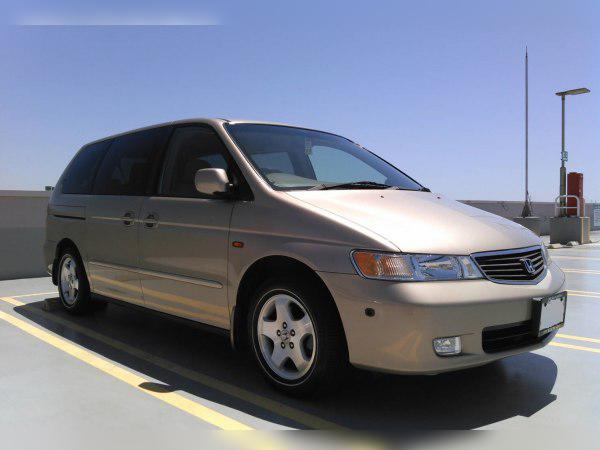
Honda J35A4 3.5 V6 VTEC: Experiences, issues, fuel consumption and maintenance
Key points in short (TL;DR)
- The engine is “bulletproof”: The engine’s mechanicals (block, pistons, head) are extremely durable and easily exceed 500,000+ km with regular maintenance.
- Achilles’ heel – the gearbox: Automatic transmissions paired with this engine in the early 2000s are notorious for failures. This is the biggest risk when buying.
- Major service is expensive: The engine uses a timing belt, and replacement is complicated, requiring many labor hours and quality parts.
- Fuel consumption: This is a large naturally aspirated petrol engine. In the city you can expect high numbers, but on the open road it is surprisingly economical for its displacement.
- VTEC system: Provides excellent performance and sound, but requires quality oil and checking the solenoids if leaks appear.
- LPG (Autogas): The engine handles LPG very well, but requires regular valve clearance checks (mechanical adjustment).
Contents
- Introduction and Models
- Technical Specifications
- Reliability and Maintenance
- Specific Parts and Costs
- Fuel Consumption and Performance
- Additional Options and Modifications (LPG/Tuning)
- Transmission: Issues and Maintenance
- Buying Used and Conclusion
Introduction: An American heart in a Japanese body
The Honda J35A4 is part of the legendary Honda J-series V6 engines. This powerplant was primarily designed for the US market, where torque and smooth operation are the main priorities. It was installed in the Honda Lagreat (which is actually the Japanese name for the second-generation US-market Honda Odyssey).
Unlike European engines of that era that chased high revs from small displacements, the J35A4 is a “cruiser”. Its purpose is quietness, linear power delivery and the ability to pull a heavy minivan or SUV body without strain. Although it carries the VTEC badge, it is tuned more for flexibility than racing, although once it passes 4500 rpm, it shows its teeth.
Technical specifications
| Parameter | Value |
|---|---|
| Engine displacement | 3471 cc (3.5 L) |
| Power | 177 kW (240 hp) @ 5500 rpm |
| Torque | 324 Nm @ 4500 rpm |
| Engine code | J35A4 |
| Configuration | V6, SOHC VTEC, 24 valves |
| Injection type | MPFI (Multipoint Indirect Injection) |
| Induction | Naturally aspirated |
Reliability and Maintenance
Timing belt or chain?
This engine uses a timing belt. This is a critical maintenance item. The J35A4 is an interference engine, which means that if the belt snaps, the pistons will hit the valves and cause catastrophic engine damage (bent valves, damaged pistons, destroyed head). There is no warning before failure, so the interval must be strictly followed.
Major service
The major service is recommended every 100,000 to 120,000 km or every 7 years (whichever comes first). When replacing the belt, you must also replace the hydraulic tensioner, idler pulleys and the water pump, since it is driven by the timing belt as well. The cost of this service falls into the expensive category (depends on the market), mainly due to the amount of labor required to access the parts on a transversely mounted V6.
Most common engine issues
Although the engine is mechanically robust, there are some specific issues:
- Oil leak at the VTEC valve: The seals (gaskets) on the solenoid housing (spool valve) often fail with age. Symptoms include a burning smell because oil drips directly onto the exhaust manifold, or visible oil traces down the engine block.
- EGR valve and passages: This is classic for Hondas of that era. The passages in the intake manifold leading to the EGR valve clog with soot. Symptoms are rough running, hesitation at light throttle and the “Check Engine” light coming on. Cleaning solves the problem.
- Engine mounts: Due to the high torque and heavy body, the engine mounts (some are active/hydraulic) fail. You’ll feel strong vibrations in the cabin, especially when the gearbox is in “D” and the car is held on the brake.
Oil: Capacity and Consumption
The engine takes approximately 4.3 to 4.6 liters of oil (with filter). The recommended viscosity is usually 5W-20 or 5W-30. Honda recommends thinner oils due to the narrow oil passages for the camshafts and VTEC system.
As for oil consumption, the J35A4 is not known as a heavy oil burner if the rings and valve stem seals are in good condition. Consumption up to 0.5 liters per 10,000 km is considered acceptable for an older engine. If it uses more, it is usually due to leaks (crankshaft seal or VTEC gasket) rather than burning oil inside the cylinders.
Spark plugs
This engine requires quality iridium spark plugs (NGK or Denso). Replacement interval is long, usually around 100,000 to 120,000 km.
Note: Replacing the spark plugs on the rear bank of cylinders (by the firewall) is difficult due to poor access. Many mechanics have to remove intake components or the plastic cowl under the wipers to reach them.
Specific Parts (Costs)
Fuel injection system and injectors
The engine uses classic multipoint (MPI) injection. The injectors are extremely reliable and not problematic. They are very tolerant of fuel quality variations (unlike direct injection). Injector cleaning is done only if poor running is noticed; it is not regular maintenance.
Turbo, DPF, EGR, AdBlue
- Turbo: None. This is a naturally aspirated engine. The intake system’s service life is practically unlimited.
- DPF / AdBlue: None. This is an older-generation petrol engine.
- EGR valve: It has one. As mentioned, it tends to clog, but it can be cleaned. The price of a new valve is moderate (not expensive), but often cleaning the passages is enough.
- Dual-mass flywheel: In the Honda Lagreat this engine comes exclusively with an automatic transmission that uses a torque converter. So there is no dual-mass flywheel to replace as a wear item like on manual diesels.
Fuel Consumption and Performance
Real-world fuel consumption
Let’s be honest – a 3.5-liter V6 in a heavy vehicle cannot be economical in city driving.
- City driving: Expect between 14 and 17 l/100 km. In heavy winter traffic, this can go even higher.
- Open road: This is where the engine shines. Thanks to the high torque and long gearbox ratios, consumption can drop to 9 to 11 l/100 km with normal driving.
Is the engine “lazy”?
Absolutely not. With 240 hp and 324 Nm, this engine moves the Lagreat (Odyssey) body with ease. Acceleration is convincing, overtaking is safe. The feeling is not sharply “sporty”, but more like an unstoppable force pushing you forward.
Behavior on the highway
This is the natural habitat of this engine. At 130 km/h it runs at very low revs (usually around 2200–2500 rpm, depending on the gearbox). The cabin is quiet, and the engine has enough power reserve to accelerate to 160 km/h without downshifting.
Additional Options and Modifications
LPG conversion (Autogas)
Yes, this engine is suitable for LPG conversion, and this is a common choice among owners due to the high fuel consumption.
Important note: Honda engines do not have hydraulic lifters; they require manual valve clearance adjustment. When running on LPG, the clearances on the exhaust valves close up faster (“valve seat recession”). The clearances should be checked more often, every 30,000 to 40,000 km, to prevent burnt valves. A valve lubrication system (so‑called “valve saver” drip system) is recommended.
Chip tuning (Stage 1)
On naturally aspirated petrol engines, “chip tuning” (remap) brings negligible results. You might gain 10–15 hp and a slightly better throttle response, but considering the cost of a quality remap, it is not worth it. You risk upsetting the fuel mixture, and the performance gain will hardly be noticeable.
Transmission
Which gearbox is used?
With the J35A4 in the Honda Lagreat you usually get a 5-speed automatic transmission. A manual gearbox with this engine in this body style does not exist from the factory.
Most common failures (CRITICAL)
This is the most important part of the text. Honda’s 5-speed automatics from this period (gearbox codes often start with B, e.g. BYBA, BGRA) had serious factory flaws.
- Problem: Insufficient lubrication of certain gears (often second gear) and overheating lead to clutch pack failure inside the gearbox. The debris then clogs the filter (which is built into the transmission and cannot be replaced without disassembly), leading to complete failure.
- Symptoms: Slipping during gear changes, harsh engagement when shifting into “D” or “R”, the “D” light on the dash flashing, or the gearbox getting stuck in one gear.
- Cost: Rebuilding this gearbox is very expensive (depends on the market).
Transmission service
Due to its sensitivity, the transmission fluid must be changed more often than the factory interval. The recommendation is the so‑called “drain and fill” method every 30,000 to 40,000 km.
Be sure to use: Only genuine Honda ATF-DW1 fluid (or the older Z1). Universal fluids can speed up this gearbox’s demise.
Buying used and Conclusion
If you are looking at a Honda Lagreat with the J35A4 engine, you are actually not buying the engine – you get that “for free” because it’s virtually indestructible. What you are really buying is the gearbox and the condition of the body.
What to check before buying?
- Transmission, transmission and transmission: The car must shift imperceptibly, both cold and hot. Test hard accelerations. If you feel any slipping (revs rise but the car doesn’t accelerate immediately) or a strong jolt – walk away.
- Proof of timing belt replacement: If there is no sticker or invoice showing when it was changed, immediately factor the cost of the major service into the price (expensive).
- Oil leaks: Inspect the engine from below and from the sides (near the wheels). A leak at the crankshaft seal between the engine and gearbox is an expensive repair due to labor.
- Idle quality: The engine should run so smoothly that it is barely noticeable in the cabin. If it shakes, the engine mounts are likely worn or the valves are out of adjustment.
Conclusion
Who is this engine for? Families who need huge, comfortable space and drivers who value quietness and power, and are willing to pay higher registration and fuel costs. The J35A4 is an excellent piece of engineering as far as the engine itself is concerned. If you find a car where the gearbox has been rebuilt or regularly serviced with genuine fluid, you will have a vehicle that can cover hundreds of thousands of kilometers without stress. Otherwise, the gearbox can become a bottomless money pit.