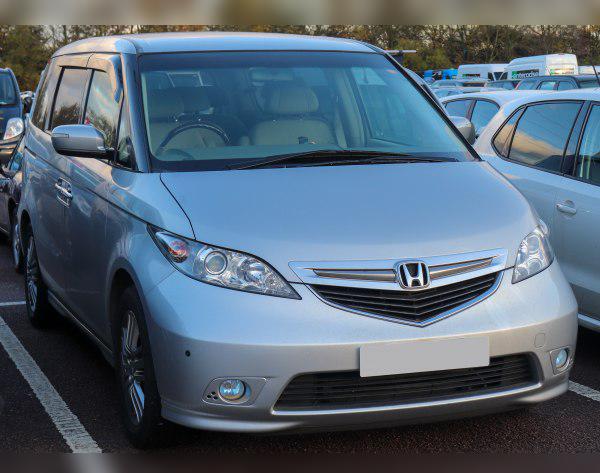
Honda K24A 2.4 i-VTEC: Experiences, Issues, Fuel Consumption and Buying Used
Key points (TL;DR)
- Reliability: One of the best four-cylinder engines Honda has ever made. Extremely durable with regular maintenance.
- Timing chain: Uses a timing chain that is generally long-lasting, but sensitive to poor-quality oil and stretching at high mileage.
- Oil consumption: On older examples or those with poor service intervals, oil consumption due to stuck piston rings is not uncommon.
- Performance in the Elysion: The engine is capable, but the Honda Elysion is a heavy vehicle (MPV). Don’t expect sports-car performance, but comfortable cruising.
- VTC actuator: A characteristic metallic noise (rattling) on cold start is the most common issue.
- Transmission: The automatic gearbox requires regular oil changes (every 40–60,000 km) to last as long as the engine.
- Recommendation: An excellent choice for a family MPV if you accept somewhat higher fuel consumption in city driving.
Contents
Introduction
The Honda K24A series is legendary in the automotive world. It’s a “big block” four-cylinder 2.4-liter engine that was installed in a wide range of models, from the Accord and CR-V to the minivan we’re talking about today – the Honda Elysion I. The 160 hp (118 kW) version is optimized for torque at lower revs, which is crucial for moving a heavy vehicle like the Elysion.
This is not a sporty “Type R” engine that screams at 8000 rpm, but a workhorse designed to cover hundreds of thousands of kilometers without being opened, provided the owner treats it with respect. For drivers in Europe, this engine is somewhat exotic in terms of displacement (expensive registration in some countries), but it offers peace of mind when it comes to mechanical reliability.
Technical Specifications
| Specification | Value |
|---|---|
| Displacement | 2354 cc (2.4 L) |
| Power | 118 kW (160 hp) @ 5500 rpm |
| Torque | 218 Nm @ 4500 rpm |
| Engine code | K24A (various versions, e.g. K24A1, K24A4, K24A8 depending on market) |
| Injection type | Multi-point injection (MPI/PFI) |
| Induction | Naturally aspirated |
| Valvetrain | 16V DOHC i-VTEC |
Reliability and Maintenance
The K24 series is considered one of the most reliable petrol platforms of the last 20 years. Still, like any machine, it has its specifics.
Timing (Chain or Belt?)
This engine uses a timing chain. That’s good news because there’s no regular timing belt replacement every 60–80 thousand kilometers. However, the chain is not eternal. Its lifespan depends directly on the quality of the engine oil and how regularly it’s changed. If the oil is changed on time, the chain can last over 250,000–300,000 km. The first symptom of trouble is chain rattle at startup or a diagnostic error (crankshaft/camshaft correlation).
Most common issues
Although robust, the K24A in the Elysion can have the following problems:
- VTC actuator (Variable valve timing control): This is the best-known issue. On cold start you hear a short, sharp grinding or rattling noise lasting 1–2 seconds. That’s a sign the actuator is losing oil pressure. While it often doesn’t cause catastrophic failure right away, it’s annoying and should be fixed.
- Oil leaks: The VTEC spool valve gasket and crankshaft oil seal tend to harden and leak with age.
- Knock sensor: Often fails, which triggers the “Check Engine” light and causes a slight drop in performance.
- PCV valve: If it clogs, crankcase pressure rises, leading to increased oil consumption and leaks at the seals.
Major and Minor Service
A classic “major service” (timing belt replacement) is not done at fixed intervals here because of the chain. However, the serpentine belt that drives the alternator, A/C and water pump should be checked and replaced at around 100,000–120,000 km, together with the tensioner.
Minor service: Recommended every 10,000 km or once a year. Japanese engines like fresh oil.
Oil: Capacity and Consumption
The K24A engine takes approximately 4.2 to 4.4 liters of oil (with filter).
Viscosity: Honda recommends 0W-20 or 5W-30. For higher-mileage engines (over 200k km) and warmer climates, 5W-30 or even 5W-40 (quality synthetic) is often a better choice for protection and lower consumption.
Oil consumption: Yes, K24 engines are known to consume some oil. Manufacturers often state that 0.5 to 0.8 liters per 1,000 km is “within spec”, but in practice a healthy engine shouldn’t burn more than 1 liter between services (over 10,000 km). If it uses a liter per 1,000 km, the usual culprit is oil control rings that have stuck due to carbon buildup.
Spark Plugs and Injectors
This engine uses iridium spark plugs (NGK or Denso). Replacement interval is 100,000 to 120,000 km. Don’t cheap out on plugs; they protect the ignition coils (which are expensive).
Valve adjustment: This is crucial on Hondas! The K24 does not have hydraulic lifters. Valve clearances must be checked and adjusted every 40,000–45,000 km. If you ignore this, you risk burnt valves (especially exhaust valves).
Specific Parts and Costs
- Dual-mass flywheel: The Honda Elysion with this engine comes exclusively with an automatic transmission. Automatics do not have a dual-mass flywheel; they use a torque converter and a flexplate instead. So you don’t have the cost of a dual-mass flywheel.
- Fuel injection system: Uses classic port fuel injection (MPI) into the intake manifold. The injectors are extremely reliable, rarely fail and are cheap to clean or replace. They are not as sensitive to fuel quality as modern GDI injectors.
- Turbocharger: The engine is naturally aspirated, there is no turbocharger. That’s one (expensive) worry less.
- DPF and EGR: Being a petrol engine, it does not have a DPF filter. It does have an EGR valve which can get dirty, but it’s easy to clean. There is a catalytic converter, which can fail if the engine burns a lot of oil or is driven with a poor mixture.
- AdBlue: No AdBlue system.
Fuel Consumption and Performance
Let’s be realistic – the Honda Elysion is a box on wheels weighing almost 2 tons. A 2.4-liter engine has to be “fed”.
- City driving: Expect real-world consumption between 12 and 15 liters/100 km. In heavy traffic and winter, it can go even higher.
- Open road: At speeds of 80–100 km/h, consumption can drop to 8–9 liters/100 km.
- Motorway (130 km/h): Due to the van-like aerodynamics, consumption is around 10–11 liters/100 km.
Is the engine “lazy”? For the Elysion’s body, 160 hp and 218 Nm is “adequate”, but not impressive. In the city it’s perfectly sufficient for smooth traffic flow. However, on uphill sections with a fully loaded vehicle and luggage, you will feel the lack of torque (which turbo diesels have in abundance). The gearbox will often downshift to maintain speed.
At 130 km/h the engine spins at about 2600–3000 rpm (depending on whether it’s the 5-speed automatic), which is acceptable in terms of noise, but it’s not low-rpm “cruising” like in modern diesels.
Additional Options and Modifications
LPG Conversion
K24A engines can be converted to LPG, and this is a common choice among owners due to the high petrol consumption. However, Honda engines have somewhat “softer” valve seats.
WARNING: If you run on LPG, you must shorten the valve adjustment interval to every 20,000–30,000 km without exception! A valve lubrication system (“dripper” or electronic system) is also recommended. With proper maintenance, the engine runs very well on LPG.
Chip Tuning (Stage 1)
On naturally aspirated petrol engines, chip tuning is not worth it. The power gain is minimal (maybe 5–8 hp), which you won’t feel in a heavy Elysion. It’s better to invest that money in quality maintenance or good tyres.
Transmission
The first-generation Honda Elysion with the 2.4 engine usually comes with a conventional 5-speed automatic transmission (Honda parallel-axis automatic). Some models (depending on year and market, mainly facelift) may have a CVT, but the conventional automatic is more common on the first generation.
- Reliability: Honda automatics from this period are decent, but more sensitive than the engine. Their biggest enemies are old oil and overheating.
- Failures: Possible issues include problems with shift solenoids, as well as slipping in 2nd or 3rd gear if the clutch packs are worn. A whining noise or jerks during shifting are bad signs.
- Maintenance: Changing the transmission fluid is MANDATORY every 40,000 to 60,000 km.
Very important: On Honda automatics you only do a drain-and-fill (around 3–3.5 liters), NEVER a pressurized machine flush, as that can clog the fine passages inside the transmission. Use only Honda ATF-DW1 (or the older ATF-Z1) fluid. The cost of the change is not high (just the oil).
Buying Used and Conclusion
If you’re looking at a Honda Elysion with the K24A engine, you’re looking for a family fortress.
What to check before buying?
- Cold start: Insist that the engine be completely cold. Listen for a “krrr” noise in the first 2 seconds (VTC actuator).
- Oil level: Check the oil level. If it’s at minimum or below, the owner is not monitoring oil consumption, which is a red flag for the timing chain.
- Transmission: The gearbox must shift smoothly and almost imperceptibly. Any thump when engaging ‘D’ or ‘R’, or slipping between gears, is a sign of an expensive problem (a transmission rebuild is very costly).
- Idle: The engine should idle smoothly. Excessive vibration may indicate worn engine mounts (which are hydraulic and expensive).
Conclusion: The Honda Elysion 2.4 is an excellent choice for those who need space and comfort and want to avoid complicated modern diesels with DPF filters and expensive injectors. The price you pay is higher fuel consumption. If you drive a lot of kilometers, an LPG conversion is almost a mandatory economic measure. Mechanically, the engine is a “mule”, and with regular oil changes and valve adjustments, it will serve you for many years.