Experiences, issues, fuel consumption and used-car buying tips: G4FA 1.4 CVVT engine (109 hp)
- Timing chain drive: It has a timing chain, not a belt. The chain can stretch if the engine is poorly maintained.
- No dual-mass flywheel: Clutch replacement is cheap because it uses a simple, solid flywheel.
- Catalytic converter risk: Disintegration of the catalytic converter core can draw ceramic dust into the cylinders and damage the engine.
- No hydraulic lifters: Valve clearance is adjusted mechanically, which is important to know if you install LPG.
- City workhorse: Excellent for city driving, but rather “lazy” and noisy on the highway in heavier body styles (estates).
- Cheap maintenance: No turbocharger, no DPF, and no expensive direct-injection injectors.
Contents
- Introduction: Korean bestseller
- Technical specifications
- Reliability and maintenance: Chain, oil and failures
- Specific components: Flywheel and fuel injection
- Real-world fuel consumption and performance
- Extras: LPG conversion and remapping
- Gearbox: Manual and automatic options
- Buying used and conclusion
Introduction: Korean bestseller
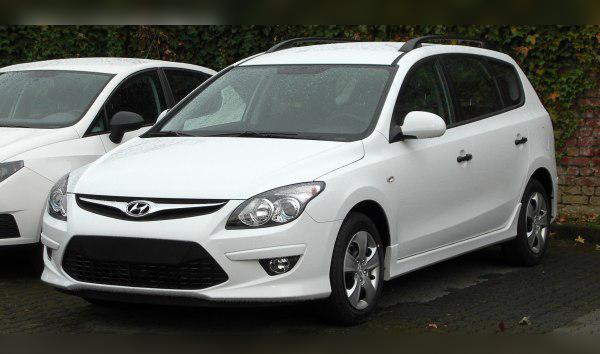
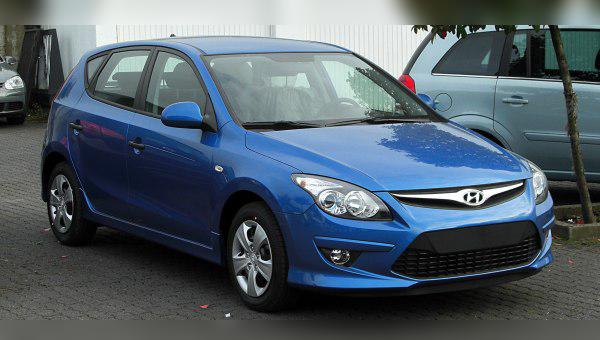
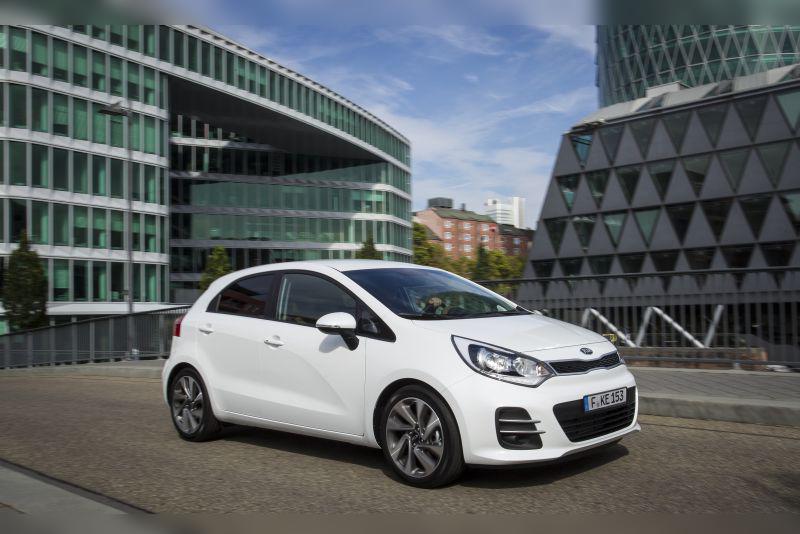
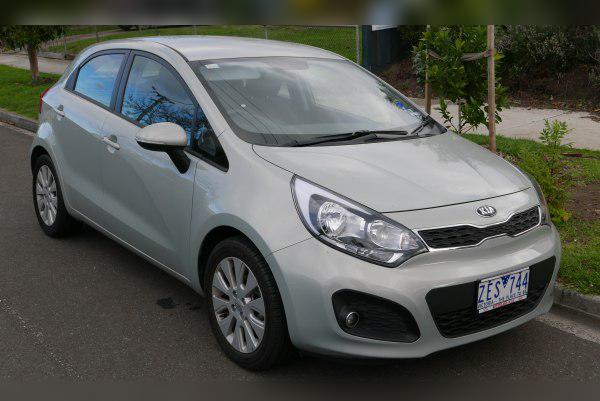
The G4FA engine, with a displacement of 1.4 litres and an output of 80 kW (109 hp), is one of the most important powerplants in the history of the Hyundai–Kia group. It is part of the well-known Gamma engine family and was widely used in the first generations of the Hyundai i30 and Kia Cee'd, as well as in the Kia Rio (third generation). Its main philosophy is simplicity – naturally aspirated, port fuel injection (MPI) and the absence of unnecessary electronics. This is exactly what makes it a favourite choice among used-car buyers who want a reliable vehicle with predictable running costs, but it still has a few “childhood diseases” that any serious buyer must pay attention to.
Technical specifications
| Specification | Data |
|---|---|
| Engine code | G4FA (Gamma) |
| Displacement | 1396 cc |
| Power | 80 kW (109 hp) at 6200 rpm |
| Torque | 137 Nm at 4200 rpm |
| Fuel type | Petrol |
| Injection type | MPI (Multi-Point Injection – port injection) |
| Induction | Naturally aspirated (no turbo) |
| Valve timing system | Chain, DOHC, 16V, CVVT |
Reliability and maintenance: Chain, oil and failures
When you open the bonnet, you’ll find a fairly spacious and logically laid-out engine bay. The G4FA uses a timing chain, not a timing belt. In theory, the chain should be long-lasting, but in practice with these engines (especially early model years up to 2010) chain stretch is one of the most common issues. The symptoms are a metallic rattling noise on cold start that disappears after a few seconds when oil pressure builds up. If the problem is ignored, the chain can jump a tooth, leading to contact between valves and pistons.
Wondering when the “major service” is due? Since the engine has a chain, a classic “major service” is not done at a strictly defined mileage. In practice, the condition of the chain, tensioner and guides is checked at around 150,000 to 200,000 km and replaced if necessary. At the same time, the auxiliary belt with rollers and the water pump are replaced.
Oil consumption and a potentially fatal failure
The sump capacity is a modest 3.3 litres of oil. The recommended grade is usually 5W-30 or 5W-40. The small capacity means the oil gets dirty more quickly, so mechanics strongly recommend doing an oil change at no more than 10,000 to 12,000 km, never at 20,000 km. Neglected oil changes are what kill the timing chain.
As for oil consumption, a healthy unit should not use more than 0.1–0.2 litres per 1,000 km. However, this engine has a serious design flaw: the catalytic converter. It is located too close to the exhaust manifold. Over time (often due to poor-quality fuel or misfires), the ceramic honeycomb of the catalytic converter starts to break up. Because of back pressure in the exhaust, the engine can suck that sharp ceramic dust back into the cylinders. This causes severe scoring on the cylinder walls, the piston rings fail, and the result is drastic oil consumption (over 1 l/1000 km) and loss of compression. The solution is often a full engine rebuild.
Since this is a pure petrol engine, maintenance is simple. The spark plugs are replaced at intervals of around 40,000 to 60,000 km for standard copper/nickel plugs, although owners often fit iridium plugs that last up to 100,000 km. Replace them on time to protect the ignition coils.
Specific components: Flywheel and fuel injection
The good news for your wallet is that the G4FA engine does not have a dual-mass flywheel. It is equipped with a conventional solid flywheel, so the potential hit to your budget when replacing the clutch kit is significantly reduced.
The fuel system is a classic MPI (Multi-Point Injection). Unlike more modern GDI (direct injection) engines, there are no issues with carbon build-up on the intake valves here, as the petrol flows over the valves and cleans them. The injectors are very reliable, they rarely fail, and if they do get clogged, ultrasonic cleaning is quick, effective and not expensive (depending on the market).
Worried about modern eco systems? You don’t have to be. This engine does not have a turbocharger (and therefore no turbo-related failures), no DPF filter (reserved only for diesels) and of course no AdBlue system. Although it has an exhaust gas recirculation system, it does not use the typical troublesome EGR valve that plagues diesels; instead, this is managed via the variable valve timing system (CVVT).
Real-world fuel consumption and performance
In everyday driving, this engine is a typical naturally aspirated “revvy little unit” that needs high revs for brisk driving. The modest 137 Nm of torque is only available at a fairly high 4,200 rpm.
Is the engine “lazy”? In a lighter Kia Rio, it’s perfectly adequate. However, in heavier models such as the Hyundai i30 CW (estate) or Kia Cee'd SW, the engine is noticeably underpowered. When overtaking or driving uphill under full load with the air conditioning on, you’ll have to drop one or even two gears and press the accelerator to the floor.
Fuel consumption is roughly as follows:
- City driving: Realistically expect between 8.0 and 9.5 l/100 km, depending on how heavy your right foot is and how bad the traffic is.
- Country roads: It drops to a reasonable 6.0 l/100 km with smooth driving.
- Motorway: Due to short gear ratios, at 130 km/h the engine spins at a fairly high 3,800 to 4,000 rpm. It becomes noisy in the cabin, and fuel consumption jumps to over 7.5–8 l/100 km.
Extras: LPG conversion and remapping
Given the city fuel consumption, many owners consider installing LPG. Is the G4FA suitable for LPG? The answer is: Yes, but with great caution.
The main catch with this engine is that it does not have hydraulic valve lifters. Valve clearance is adjusted mechanically (using shims/buckets). Running on LPG raises combustion temperatures, which wears out the valve seats more quickly. If you don’t check valve clearances every 40,000 to 50,000 km, the valves will start to “sink”, compression will be lost and eventually the valves will burn. The recommendation is to install a high-quality LPG system with valve lubrication (so-called valve saver) or to set up the map so that above 3,500 rpm the engine switches back to petrol.
When it comes to remapping (“Stage 1”), the short answer is: don’t bother. Since this is a small-displacement naturally aspirated petrol engine, optimising the ECU map will give you at most 5–8 hp and maybe 10 Nm of torque. You won’t feel that difference in real driving, and you’ll just waste money. This engine is not meant for racing.
Gearbox: Manual and automatic options
The G4FA is most commonly paired with a 5-speed manual gearbox (later model years and facelift versions also received a 6-speed manual). These gearboxes are generally reliable, but drivers occasionally report difficulty engaging reverse or first gear when cold. Also, the input shaft bearing can become noisy at higher mileages. Thanks to the absence of a dual-mass flywheel, the cost of a complete clutch kit (pressure plate, disc, release bearing) is not high (depending on the market). Changing the oil in the manual gearbox is recommended every 60,000 to 80,000 km to preserve the synchros.
There is also an option of an old-school 4-speed automatic gearbox (with torque converter). This gearbox is extremely robust and reliable, but it increases fuel consumption by about 1 to 1.5 l/100 km and makes the car even slower. With the automatic, it is absolutely crucial to change the oil and filter every 60,000 km. If, during a test drive, the automatic jerks when shifting or holds revs for too long before changing gear, this is a sign of a neglected valve body.
Buying used and conclusion
What you must check before buying
- Cold start: Ask the seller to leave the engine completely cold. Listen carefully during the first few seconds after starting. Any metallic rattling indicates a stretched chain that needs urgent replacement.
- Compression test and exhaust condition: Because of the catalytic converter issue, ask a mechanic to use an endoscope through the spark plug hole to check for scoring on the cylinder walls. Check the exhaust – bluish smoke when revving indicates that the engine is burning oil, and the repair is very expensive.
- Service history: Look for a car whose owner changed the oil at a maximum of 10,000–15,000 km intervals. Long-life intervals will kill this engine.
Final verdict
Who is the G4FA 1.4 CVVT (109 hp) engine for? It is a perfect powerplant for drivers looking for an affordable, simple hatchback for city use and occasional trips out of town. It doesn’t offer any sporty performance, it’s noisy on the motorway, but it saves you from the stress and sky-high costs associated with turbos, DPFs and dual-mass flywheels. If you find a healthy example with good cylinders and a quiet timing chain, you’ll get a loyal and predictable partner on the road.