Hyundai/Kia 1.6 G4FC engine: Experiences, issues, fuel consumption and used-car buying tips
- Old-school reliability: A simple naturally aspirated petrol engine with MPI injection that can cover high mileage with regular maintenance.
- Powertrain: The engine uses a timing chain instead of a timing belt. There is no dual-mass flywheel and no sensitive turbocharger.
- Typical weaknesses: Chain stretch at higher mileage and potential issues with the catalytic converter that can damage the cylinders.
- Fuel consumption: Slightly higher in city driving (around 9 to 10 l/100 km).
- LPG (Autogas): Tolerates LPG conversion, but requires manual valve adjustment and a valve lubrication system (drip oiler).
- Maintenance: Very affordable, parts are not expensive (depends on the market).
Contents
- Introduction: Korean long-distance workhorse
- Technical specifications
- Reliability and maintenance
- Specific parts and costs
- Fuel consumption and performance
- Additional options and modifications (LPG and remapping)
- Transmissions: Manual and automatic
- Buying used and conclusion
Introduction: Korean long-distance workhorse
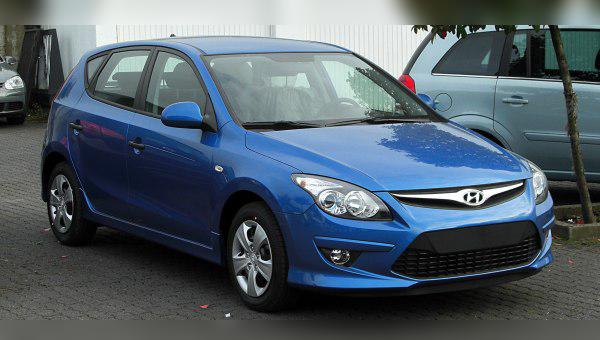
When we mention the G4FC engine from the Gamma family, we are talking about one of the most widespread and most important powerplants for the South Korean giants Hyundai and Kia. This naturally aspirated 1.6‑liter petrol engine was installed in a huge number of models in the late 2000s and early 2010s, including the Hyundai i20, i30, as well as the Kia Cee'd, Pro Cee'd and Soul. Its importance lies in the fact that it brought top reliability and simplicity to the compact class, becoming an ideal choice for drivers who want to avoid the expensive repairs typical of modern diesels.
Technical specifications
| Parameter | Data |
|---|---|
| Engine displacement | 1591 cc |
| Power | 93 kW (126 hp) at 6300 rpm |
| Torque | 151 Nm at 4200 rpm |
| Engine code | G4FC (Gamma family) |
| Injection type | MPI (Multi-Point Injection) – port fuel injection |
| Turbo/Naturally aspirated | Naturally aspirated engine |
| Fuel type | Petrol (Gasoline) |
Reliability and maintenance
Chain instead of belt
The G4FC engine is designed with a timing chain instead of a conventional timing belt. In theory, the chain should last as long as the engine itself, but practice has shown otherwise. The chain tends to stretch, and the tensioners can weaken.
Most common failures and symptoms
This powerplant is considered very durable, but it has a few known quirks:
- Catalytic converter core disintegration: This is the most dangerous failure. The ceramic honeycomb of the catalytic converter can start to crumble. Due to the specific design of the exhaust manifold and valve overlap, ceramic dust is drawn back into the cylinders, which leads to scoring of the cylinder walls (so‑called scuffing) and complete engine destruction. Symptom: rattling from the exhaust manifold area and a sudden increase in oil consumption.
- Timing chain stretch: Symptoms include rattling and a metallic clatter from a cold engine on first start in the morning (like a sewing machine), as well as unstable idle.
- Lack of hydraulic lifters: The G4FC has no hydraulic valve lifters, but mechanical bucket tappets. The valves must be adjusted manually, usually after 100,000 km, which increases service costs. Symptom of excessive clearance: loud operation of a fully warmed‑up engine.
When is the major service done?
A classic “major service” interval does not strictly apply, since the timing is chain‑driven and is replaced only when needed. However, in practice, replacement of the chain, tensioners and guides should be planned in the 150,000 to 200,000 km range. The price of the chain kit and labor is not high (depends on the market).
Oil quantity and viscosity
This engine takes around 3.3 liters of engine oil. It is recommended to use fully synthetic oil of 5W‑30 or 5W‑40 grade, depending on climate, with API SM/ILSAC GF‑4 specifications. Always change the oil at a maximum of every 10,000 to 15,000 km.
Oil consumption
A healthy G4FC should not consume too much oil. It is considered normal to use around 0.1 to 0.2 liters per 1,000 km due to higher revs. However, if the engine consumes more than 0.5 liters between services, this is a clear sign of hardened valve stem seals or worn piston rings, often caused by the aforementioned dust from the catalytic converter.
Spark plug replacement
As a typical petrol engine, the G4FC requires regular spark plug replacement. Standard nickel plugs should be replaced every 40,000 km, while iridium plugs (if fitted) can last 60,000 to 80,000 km.
Specific parts and costs
This is where the 1.6 G4FC saves the owner the most money, because it lacks most of the expensive components that owners of modern cars fear.
- Dual-mass flywheel: None. The G4FC comes paired with a conventional (solid) flywheel, which significantly reduces the cost of clutch replacement. A clutch kit is not expensive (depends on the market).
- Fuel injection system: Unlike newer GDI engines, this engine uses MPI (Multi-Point Injection) into the intake ports. The injectors are extremely reliable, rarely clog and are not very sensitive to poorer fuel quality. The cost of cleaning them is minimal.
- Turbocharger: The engine is naturally aspirated, which means there is no turbo, no intercooler, and no worries about overhauling them.
- EGR and DPF: As an older‑generation petrol engine, it has no complex EGR valve that clogs with soot, and absolutely no DPF filter.
- AdBlue: Being a petrol engine, there is no AdBlue system.
Fuel consumption and performance
How much does it use in the city?
The 1.6 Gamma engine is not a fuel‑economy champion. In stop‑and‑go city driving, real‑world consumption is between 8.5 and 10 l/100 km, depending on how heavy your right foot is and on the model (a Hyundai i30 wagon / Kia Cee'd SW will use more than a lighter i20).
Is the engine “sluggish”?
It cannot really be called sluggish, as 126 hp is a perfectly decent output. However, since it is naturally aspirated, it develops its maximum torque of 151 Nm only at 4200 rpm. This means that a driver used to turbo diesels may feel a lack of pull at low revs. For strong acceleration when overtaking, you need to shift down and spin the engine above 3500 rpm.
Behavior on the motorway
On the motorway at 130 km/h, behavior depends on the gearbox. In models with a 5‑speed manual (fitted before the facelift), the engine spins at a fairly high 3800–4000 rpm, which increases cabin noise and fuel consumption. With the 6‑speed gearbox (newer models), revs are slightly lower (around 3400 rpm), cruising is more pleasant, and noise is noticeably reduced.
Additional options and modifications
Is it suitable for LPG?
This engine works very well on LPG systems because it has simple MPI injection. However, there is a major TRAP: the engine has no hydraulic lifters, and the valves (and valve seats) are made of somewhat softer materials. The high combustion temperature of LPG can quickly damage them (the “Check Engine” light comes on, the car loses compression). That is why INSTALLING A VALVE LUBRICATION SYSTEM (DRIP OILER) IS MANDATORY and valve clearances must be strictly checked every 40,000 to 50,000 km. If this is respected, running on LPG is trouble‑free.
ECU remap (Stage 1)
In short: A waste of money. Since the engine is naturally aspirated, changing the fuel and ignition maps can give at most 5 to 8 hp, which is completely imperceptible in real driving. Remapping only makes sense on turbo engines.
Transmissions: Manual and automatic
Which gearboxes are paired with the G4FC?
It was paired with 5‑speed and 6‑speed manual gearboxes, as well as an old, reliable 4‑speed automatic transmission with a torque converter.
Transmission failures and maintenance
- Manual gearbox: A common issue is difficulty engaging first gear and reverse. The synchros of the lower gears can be a bit rough. Clutch replacement is simple and not expensive, because there is no dual‑mass flywheel (depends on the market). At higher mileage, oil can leak from the driveshaft seals. It is recommended to change the gearbox oil every 80,000 km.
- Automatic gearbox: The 4‑speed automatic is a technological dinosaur – it is slow, increases fuel consumption by about 1–1.5 liters and reduces performance. On the other hand, it is crystal‑reliable. There is no sophisticated mechatronics unit to fail. It is maintained by regular oil changes (and filter, if accessible in the transmission pan) every 60,000 km. There is no dual‑mass flywheel, only a conventional torque converter.
Buying used and conclusion
What to check before buying?
When buying a used car with the 1.6 G4FC engine, make sure to do the following:
- Listen to the engine when it is completely cold. If you hear rattling in the first few seconds, the crankshaft is knocking or the chain is scraping, be prepared to invest in timing replacement.
- Scan it with diagnostics: Check for stored “misfire” codes, which may indicate a compression problem.
- Inspect the catalytic converter: An experienced mechanic can use an endoscope through the first lambda sensor opening to inspect the condition of the ceramic honeycomb in the catalytic converter. If it is cracked, walk away from that car.
- Suspension and steering: Hyundai/Kia models from these generations often have an issue with the steering rack bushing, which produces a dull knock over small road imperfections.
Who is this engine for?
The G4FC is ideal for people who want stress‑free transportation. This is not an engine for racing or towing heavy trailers. It is a reliable workhorse that will easily serve an average family, endure city traffic jams and, with regular servicing and occasional timing chain inspection, cover hundreds of thousands of kilometers without major issues. If you can accept slightly higher fuel consumption and the need to downshift on uphill sections, this 1.6 petrol is one of the best used‑car buys in its class.