Engine G4LH 1.5 T-GDi (160 hp): Experiences, issues, fuel consumption and used car buying tips
Key points in brief (TL;DR):
- Modern Smartstream turbo petrol engine that replaces the older 1.4 T-GDi generation, offering an excellent balance of power and fuel consumption.
- Uses a timing chain, which eliminates the need for a traditional major timing belt service.
- Performance is excellent; the engine is absolutely not “lazy” and easily handles the bodies of the i30, Ceed and XCeed models.
- Due to GDi (direct) injection, LPG installation is expensive and usually not cost-effective.
- The automatic 7DCT gearbox requires careful driving in city traffic and is more expensive to maintain compared to the manual.
- It has a GPF filter (petrol equivalent of a DPF) which can cause trouble if the car is driven exclusively on short city trips.
Contents:
- Introduction and basic information
- Technical specifications
- Reliability and maintenance
- Specific parts and costs
- Fuel consumption and performance
- Additional options and modifications
- Gearbox and drivetrain
- Buying used and conclusion
Introduction and basic information
The engine designated G4LH is the backbone of Hyundai and Kia’s C-segment lineup from 2020/2021 onwards. Commercially known as the 1.5 T-GDi Smartstream, this unit was developed to replace the very popular 1.4 T-GDi. It brings innovative CVVD (Continuously Variable Valve Duration) technology, which controls valve opening duration depending on driving conditions, optimizing performance and reducing harmful emissions.
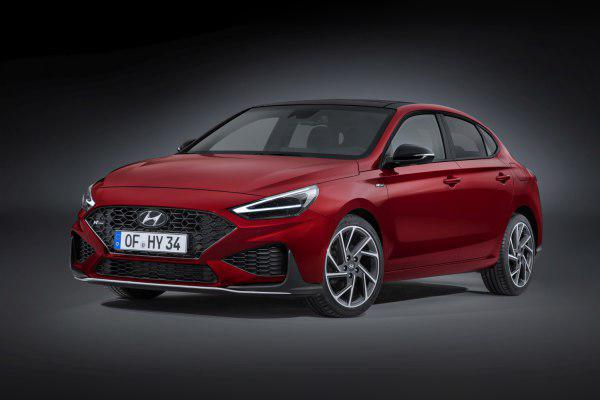
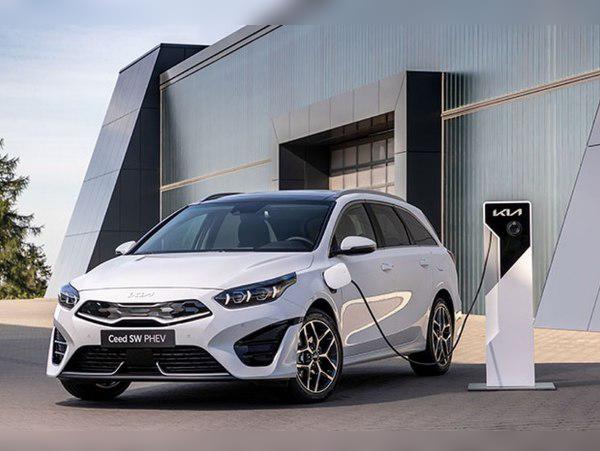
This engine is very often paired with a 48V Mild Hybrid (MHEV) system, whose role is to assist during acceleration and enable coasting with the engine switched off to save fuel. You can find it under the bonnets of facelifted models such as the Hyundai i30 (Hatchback, Fastback, CW) and the entire Kia Ceed family (Ceed, ProCeed, XCeed).
Technical specifications
| Characteristic | Data |
|---|---|
| Engine code | G4LH |
| Displacement | 1482 cc |
| Power | 118 kW (160 hp) |
| Torque | 253 Nm (at 1500 - 3500 rpm) |
| Fuel type | Petrol (Gasoline) |
| Injection system | Direct injection (GDi) |
| Induction | Turbocharger with intercooler |
Reliability and maintenance
One of the first questions every buyer asks concerns the timing system. The G4LH engine uses a timing chain. This is good news because the classic “major service” (which involves replacing the timing belt, tensioners and water pump at a certain mileage) does not exist here. The chain is designed to last as long as the engine itself, but in practice its condition should definitely be checked after 150,000 km. The auxiliary drive (serpentine belt and rollers) is replaced as needed, most often around 90,000 to 120,000 km.
As for the most common failures, since the engine is relatively new, chronic “issues” are only just beginning to appear. What is typical for all direct-injection engines is carbon buildup on the intake valves. Drivers notice this as rough idle or slight hesitation during cold starts. It is resolved by intake decarbonization every 60,000 to 80,000 km. On the first production batches, there were reports of ECU software problems causing hesitation under acceleration, but this has mostly been resolved with updates at authorized service centers.
The sump capacity is about 4.2 liters of oil. Due to the complex CVVD system and narrow oil passages, only low-viscosity oil is used, most commonly 0W-20 (ACEA C5 specification). Under normal operating conditions the engine does not consume oil between services to an extent that would require topping up. Up to 0.2 liters per 1000 km is considered acceptable if the car is driven aggressively or for long periods at high revs on the motorway.
Since this is a petrol engine, the spark plugs play a key role in coil health and combustion efficiency. Iridium spark plugs are mandatory, and they should be replaced every 60,000 to 75,000 kilometers.
Specific parts and costs
Does this petrol engine have a dual-mass flywheel? Yes, it does. Especially in versions paired with automatic DCT gearboxes, as well as in MHEV (Mild Hybrid) variants with the intelligent manual transmission (iMT). The dual-mass flywheel serves to dampen vibrations from the powerful turbo engine and protect the gearbox, and the cost of replacement is high (Depends on the market).
The injection system is direct (GDi). The injectors operate at high pressure and are quite reliable, but they are extremely sensitive to poor fuel quality. Dirty injectors will cause increased fuel consumption and reduced performance. It is recommended to use higher-quality fuel with additives or occasionally add a dedicated GDi system cleaner.
The turbocharger is a single unit, controlled by an electronic actuator (wastegate). Its service life is impressive; if the oil is changed regularly (ideally every 10,000 to 15,000 km) and the driver has the habit of letting the turbo cool down for a minute at idle after spirited driving before switching off, the turbo will easily last over 200,000 km.
Emissions regulations are strict nowadays. Although this is a petrol engine, it does not have a DPF, but it does have a GPF (Gasoline Particulate Filter). The principle is similar: if the car never leaves stop-and-go city traffic, the filter can clog. Symptoms include loss of power and the check engine light. It is necessary to “blow it out” occasionally with motorway driving at higher revs. The engine also has an EGR valve which, due to cleaner petrol combustion, causes fewer issues than on diesels.
Does it have AdBlue? No, the AdBlue system is fitted only to newer diesel engines to reduce NOx emissions, so you don’t have to worry about it on this petrol engine.
Fuel consumption and performance
Many people are interested in real-world fuel consumption. Considering the 160 hp and 253 Nm, this engine is not exactly frugal in the city. In urban driving conditions, you can expect consumption between 7.5 and 9.0 l/100 km, depending on how heavy your right foot is and on traffic conditions. The Mild Hybrid system slightly lowers this figure by using the start-stop system more efficiently, shutting the engine off while you are still rolling to a stop at traffic lights.
Is it “lazy”? Absolutely not. With torque available from just 1500 rpm, driving is very flexible and reminiscent of diesel engines, but with quieter operation and a wider rev range. The engine easily copes with the compact car bodies it is fitted to, and overtaking on country roads is safe and quick.
On the motorway, the engine is an excellent cruiser. Thanks to well-chosen gear ratios (both manual and DCT), at 130 km/h in top gear the engine spins at a comfortable 2500 to 2700 rpm. Cabin noise is minimal, and fuel consumption at this speed is around 6.5 to 7.0 liters.
Additional options and modifications
If you cover high annual mileage and are wondering whether the engine is suitable for LPG conversion, the answer is – generally no. Because of direct injection, a conventional sequential LPG system is not cost-effective. You would have to install an expensive system that injects liquid gas through the petrol injectors (to keep them cool), or a system that uses both petrol and LPG in parallel. The payback period of such systems on this engine is very long, and the potential for technical problems is high.
For tuning enthusiasts, a “chip tune” (Stage 1 remap) is possible. The engine has a decent power reserve from the factory, so with a software-only modification it can safely be taken to around 185 to 190 hp and close to 300 Nm of torque. However, caution is advised: if the car has the 7DCT automatic gearbox with dry clutches, its torque limit is close to that figure, so aggressive tuning can drastically shorten the service life of the clutch packs.
Gearbox and drivetrain
With the G4LH engine, buyers could choose between two basic transmission types: a 6-speed manual (often iMT – intelligent manual transmission in MHEV versions) and a 7-speed DCT automatic with dual clutch (7DCT).
The manual (iMT) gearbox is specific in that there is no physical mechanical link between the clutch pedal and the clutch itself (“clutch-by-wire”). Electronics control clutch engagement. Failures are rare, but early models did suffer from clutch actuator issues. When replacing the clutch kit on the manual gearbox, the dual-mass flywheel must also be replaced. Replacing the complete set is expensive (Depends on the market), but it lasts significantly longer than its automatic counterpart.
The automatic 7DCT gearbox offers speed and comfort, but uses “dry” clutches. Its biggest enemy is stop-and-go driving on uphill city streets. The most common symptoms of failure are juddering (“kangarooing”) when moving off from a standstill or when shifting from first to second gear. This indicates that the clutch packs are worn or overheated. Replacing the dry clutch set on this DCT gearbox is very expensive (Depends on the market).
As for maintenance, neither gearbox is truly “maintenance-free”, even if manufacturers sometimes suggest so. For the manual gearbox, it is advisable to change the oil every 80,000 to 100,000 km. For the 7DCT, it is essential to replace the gearbox oil and the oil in the hydraulic actuator block every 60,000 kilometers to keep the system clean and functional.
Buying used and conclusion
What to check before buying?
When buying a used car with the 1.5 T-GDi engine, make sure you do the following:
- Cold start: Listen to the engine when it is completely cold. Metallic rattling from the front of the engine in the first few seconds may indicate a stretched timing chain or a bad tensioner.
- Idle check: Once the engine is warm, the idle speed must be stable. If you feel slight vibrations, there is a good chance that the intake valves are clogged with carbon deposits or the injectors are dirty.
- Automatic gearbox test drive: Test the car in heavy traffic. Take your foot off the accelerator and let the car “creep”. If the gearbox shudders instead of transferring power smoothly, the clutches are due for replacement.
- Diagnostics: Reading OBD fault codes is mandatory to check the condition of the GPF filter and the CVVD system.
Conclusion: Who is it for?
The G4LH 1.5 T-GDi engine is an excellent choice for families, business users and anyone who needs a car for everyday use in mixed driving conditions (a bit of city, a bit of open road). It offers great performance, quiet operation and decent fuel economy considering its power output.
However, it is not ideal for taxi drivers or for people who drive only 5 kilometers a day exclusively in city traffic – due to direct injection, the GPF filter and the sensitivity of the dry-clutch DCT to stop-and-go use. If your budget allows, look for a car with a well-documented service history (ideally with oil changes at a maximum of every 15,000 km) and a manual gearbox if you want the lowest long-term running costs.