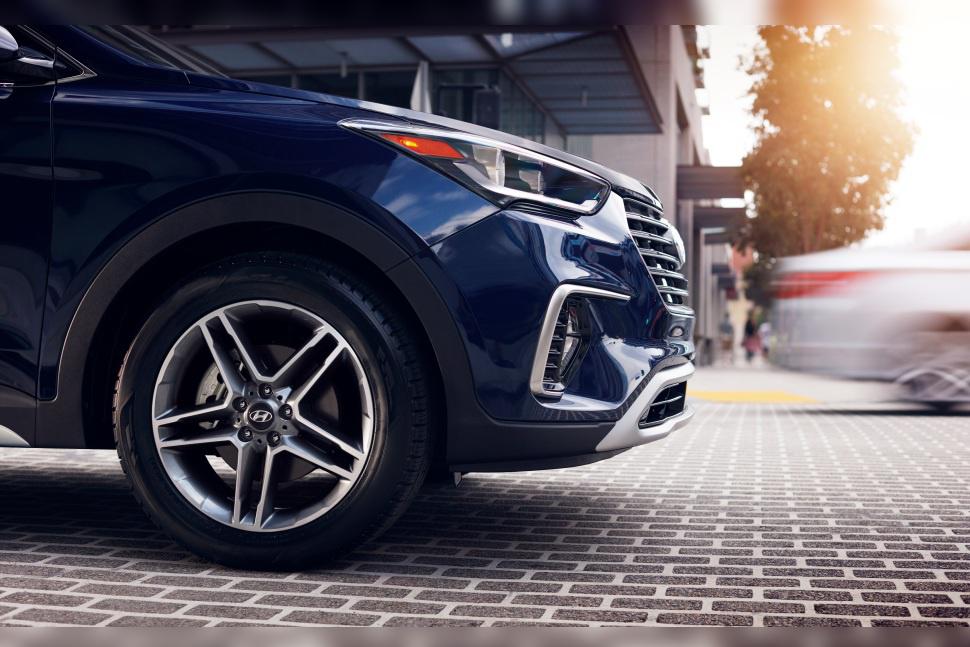
Experiences, issues and tips for buying used: Hyundai 2.2 CRDi R II / D4HB (200 HP)
In short – the most important (TL;DR)
- Excellent torque: With 440 Nm and 147 kW (200 HP), this engine easily moves heavy SUVs like the Hyundai Palisade and Grand Santa Fe.
- Chain-driven timing: There is no classic major service with a timing belt, which lowers fixed maintenance costs, but the chain needs to be listened to at higher mileage.
- Reliable injectors and turbo: It uses a reliable Bosch Common Rail system and a VGT turbo which, with regular oil changes, easily go beyond 250,000 km.
- Emissions as Achilles’ heel: Driving exclusively in the city leads to clogging of the EGR valve and DPF filter. On newer versions, pay attention to the AdBlue system.
- Automatic requires care: The gearbox is durable, but it requires an oil change every 60,000 km if you want to avoid expensive repairs.
- Not frugal in the city: Expect consumption of 10 to 12 l/100 km in urban conditions, which is the price of a heavy body.
Contents
- Introduction: The powerful heart of Korean heavyweights
- Technical specifications
- Reliability and maintenance
- Specific parts and costs
- Fuel consumption and performance
- Additional options and modifications
- Transmissions: Manual vs automatic
- Buying used and conclusion
Introduction: The powerful heart of Korean heavyweights
When you’re buying a massive seven‑seater family SUV or a seriously large vehicle, the engine is the most important factor. The Hyundai 2.2 CRDi (code R II / D4HB) with 147 kW (200 HP) represents the pinnacle of the Korean manufacturer’s diesel technology. This engine was installed in the brand’s flagships: the massive Hyundai Palisade, Grand Santa Fe (NC) and the third generation of the popular Santa Fe (DM) model.
It was developed with the idea of offering huge torque capable of dealing with more than two tons of weight, while maintaining reliability and refined operation. In practice, this is one of the most respected and most durable diesel engines in its class, but due to the complex exhaust after‑treatment systems and the weight of the vehicles it is fitted to, it requires a specific maintenance approach.
Technical specifications
| Specification | Data |
|---|---|
| Displacement | 2199 cc (2.2 l) |
| Power | 147 kW (200 HP) |
| Torque | 440 Nm |
| Engine codes | R II / D4HB |
| Injection type | Common Rail (Bosch), direct injection |
| Charging method | Turbo (VGT – Variable Geometry), intercooler |
Reliability and maintenance
Timing drive: Chain instead of belt
Many drivers will be pleased to hear that the D4HB engine uses a timing chain rather than a timing belt. In practice this means there is no classic fixed “major service” every 90,000 or 100,000 km. Still, the chain is not eternal. Its lifespan depends entirely on lubrication quality. A first serious inspection of the chain, tensioner and guides is recommended at around 200,000 to 250,000 km. If you hear rattling or a metallic noise on cold start that disappears after a few seconds, that’s a clear sign the chain is stretched and it’s time to replace it.
What does get replaced as part of the drive system maintenance is the auxiliary drive (serpentine belt, rollers, tensioner and water pump), usually every 80,000 to 100,000 km. One common failure is the crankshaft pulley (damper), whose rubber layer wears out over time, causing vibrations and an unpleasant noise. Replacing this pulley is not cheap, but it’s necessary to prevent damage to the crankshaft and auxiliary drive system.
Oil and service intervals
When it comes to oil, this engine wants plenty of it. Depending on the filter and exact sump version, it takes between 6.5 and 7.0 liters of oil. The manufacturer requires high‑quality synthetic oil, most often in 5W‑30 with ACEA C3 specification (because of the DPF). Experienced mechanics recommend forgetting about “Long Life” intervals of 30,000 km and doing minor services strictly every 10,000 to 15,000 km. As for oil consumption between services, a healthy unit uses very little – consumption of about 0.5 liters until the next change is considered absolutely normal. If you notice consumption rising above 1 liter over a few thousand kilometers, the problem is usually worn turbo or piston rings.
Specific parts and costs
Injection system (injectors)
Fuel is delivered via a reliable Bosch Common Rail system. Injectors on 2.2 CRDi engines (usually piezo or solenoid, depending on the year) are extremely robust. Their service life is long and they rarely cause issues before 200,000 to 250,000 km. When they do wear out, symptoms include hard cold starts, rough idle, increased fuel consumption and black smoke under full throttle. Reconditioning or replacing injectors can be expensive, from 150 to 300 EUR per piece (depending on the market).
Turbocharger
This unit breathes through a single variable‑geometry turbocharger (eVGT). Turbo lag is minimal and the turbo is generally long‑lasting. Problems usually arise if the owner neglects oil change intervals or switches off a hot engine immediately after hard motorway driving, which leads to oil coking in the turbo bearings. The variable‑geometry actuator can stick due to soot if the vehicle is driven exclusively at low revs in the city.
Emissions: EGR, DPF and AdBlue systems
Like every modern diesel, the Hyundai D4HB is equipped with a DPF filter and EGR valve. These components suffer if the car spends most of its life in stop‑and‑go city traffic. Symptoms of a clogged EGR include engine hesitation and loss of power, while DPF problems show up as a warning light on the dashboard, rising oil level (due to diesel entering the sump during interrupted regenerations) and the car going into “safe mode”.
Newer models fitted with this engine (such as the Palisade and facelifted Santa Fe models built to meet Euro 6 standards) also have an AdBlue (SCR) system. This system often gives owners headaches in winter, as the AdBlue tank module and pump can fail due to fluid crystallization. Replacing this module is often expensive (depending on the market), so it’s advisable to regularly top up the tank with quality fluid.
Fuel consumption and performance
If you’re expecting the economy of a small city car, you’re looking in the wrong place. Models like the Grand Santa Fe or Palisade are massive and weigh over 2 tons. Because of that, real‑world city consumption is often between 10 and 12 l/100 km, and in winter on short trips it can reach 13 liters.
On the other hand, this engine is anything but sluggish. The 440 Nm of torque available from low revs simply swallows the vehicle’s mass, allowing smooth acceleration without excessive noise or strain, even when the car is fully loaded with passengers and luggage.
The natural habitat of the 2.2 CRDi is the motorway. Thanks to well‑chosen gear ratios in the automatic gearbox (6‑ or 8‑speed), fuel consumption on the open road drops significantly. At 130 km/h the engine “relaxes” at around 2,000 to 2,200 rpm (depending on the gearbox type), while consumption is a very decent 7 to 8 l/100 km. Sound insulation in these models is excellent, so the diesel’s operation inside the cabin at these speeds is barely noticeable.
Additional options and modifications
This engine is diesel‑only (LPG conversion is not an option). For those who feel 200 HP is not enough for such heavy vehicles, the D4HB unit is an excellent base for a so‑called “Stage 1” remap. Without changing any hardware and without compromising engine safety, a software tune can safely raise power to around 230 to 240 HP, while torque can go up to 500–520 Nm. This modification makes overtaking on A‑roads easier and can slightly reduce consumption on the open road, provided the work is done by a reputable professional tuning shop. However, you should be cautious because the torque converter in the gearbox has its own durability limits.
Transmissions: Manual vs automatic
Due to the class of vehicles it is fitted to, the D4HB engine is most often, and in the case of the Palisade and Grand Santa Fe almost exclusively, paired with an automatic gearbox (6‑speed or the newer 8‑speed). Six‑speed manual gearboxes are rare and can mostly be found in more basic versions of the standard Santa Fe (DM) model.
Manual gearbox and flywheel
If you do opt for the rare version with a manual gearbox, keep in mind that this engine uses a serious dual‑mass flywheel (DMF). Due to the huge torque, the flywheel is under heavy load. When it wears out, symptoms include strong vibrations at idle, jerks and shuddering when setting off, and metallic rattling when switching the engine off. The price of a clutch kit with dual‑mass flywheel is high to very high (depending on the market).
Automatic gearbox (torque converter)
The automatic paired with this engine is a classic torque‑converter unit. It does not have a conventional dual‑mass flywheel and clutch, which spares you that expensive failure. These automatic gearboxes were developed in‑house (within the Hyundai group) and are known for being robust and smooth when shifting. Still, they are not indestructible.
The most common failures of the automatic gearbox occur solely due to lack of maintenance. If you feel harsh gear changes (a thump when engaging “D” or “R”), slipping out of gear or hesitation when shifting, this is often a sign of overheated oil full of metal particles and a damaged valve body. For the automatic to last as long as the engine, it is absolutely essential to change the gearbox oil (with flushing) and filter every 60,000 km. If you stick to this, the gearbox will run flawlessly for hundreds of thousands of kilometers.
Buying used and conclusion
Buying a used Hyundai SUV with the 2.2 CRDi engine can be a fantastic move if you’re looking for a powerful, reliable and spacious car for long journeys. When buying, make sure to check the following:
- Listen to the engine when cold: Open the bonnet at the first cold start of the day. Any noise resembling chain rattle or strange vibrations from the front (crankshaft pulley) should be used as an argument to lower the asking price.
- Test the gearbox: During gentle driving, the gearbox should shift gears imperceptibly. Start and stop several times – if the car jerks when engaging reverse or pushes forward harshly, the gearbox valve body is probably on its way out.
- Diagnostics are a must: Don’t buy blind. Hook the car up to proper diagnostics and check DPF saturation, live injector values and whether any EGR‑related fault codes have been cleared.
- Exhaust check: The engine should be able to rev freely to high rpm at idle without any struggle. Thick black, blue or white smoke from the exhaust is a red flag (injectors, turbo, coolant).
Who is it for? This engine was built for long journeys on A‑roads and motorways. If you need a car for family holidays, hauling loads and towing a trailer, the 2.2 CRDi is a phenomenal choice. On the other hand, if you plan to drive this two‑tonne SUV only in stop‑and‑go traffic to the supermarket or work (a few kilometers a day), you’ll face high fuel consumption and inevitable, expensive emissions‑related issues (DPF, EGR). For proper use, this engine needs open roads to “stretch its legs”.