Chevrolet 6.6 Duramax LMM V8 (365 HP): Experiences, problems, fuel consumption and used-buying guide
- Monstrous torque: With 895 Nm, this engine literally plays with heavy loads and trailers.
- No timing belt or chain: The timing is driven by a robust set of gears (gear-driven), which eliminates the classic and expensive “major service”.
- No AdBlue system: This is the last generation of Duramax engines that is spared the problematic urea injection system, which is a huge plus for reliability.
- First Duramax with a DPF filter: Due to stricter emission standards, a DPF was introduced, which often causes headaches for drivers if the vehicle is used mainly in the city.
- Problematic transmission cooler lines: Leaking fluid from the transmission cooler lines is a factory flaw you must check immediately.
- Flawless transmission with proper maintenance: It is paired with the legendary Allison 1000 automatic transmission, which requires regular oil and filter changes.
Contents
- Introduction: The General Motors heavy-hitter
- Technical specifications
- Reliability and maintenance
- Specific parts (costs)
- Fuel consumption and performance
- Additional options and modifications
- Transmission and drivetrain
- Buying used and conclusion
Introduction: The General Motors heavy-hitter
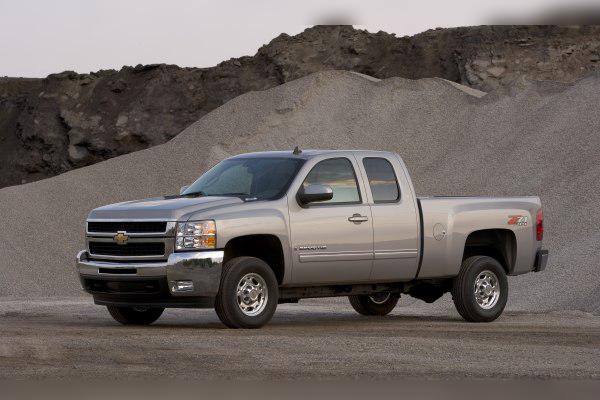
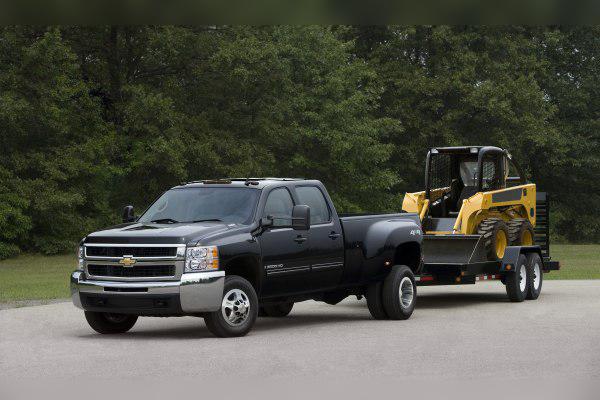
When we talk about serious towing vehicles, the 6.6 V8 Duramax is a name spoken with respect in mechanic circles. The LMM code denotes the generation of this engine that was installed in the Chevrolet Silverado 2500 HD and 3500 HD (GMT900 platform) from 2007 to 2010. This engine was General Motors’ answer to increasingly strict emission standards, bringing major changes to the exhaust system while retaining brutal power. If you need a pickup that will hook up construction machinery, a yacht or heavy trailers and cruise across the continent, you’re in the right place.
Technical specifications
| Specification | Data |
|---|---|
| Displacement | 6599 cc (6.6L) V8 |
| Power | 268 kW (365 HP) at 3200 rpm |
| Torque | 895 Nm at 1600 rpm |
| Engine code | LMM (the eighth digit in the VIN is “6”) |
| Fuel type / Injection | Diesel / Bosch Common Rail (CP3 pump) |
| Forced induction | Garrett VGT (variable-geometry turbo) + intercooler |
Reliability and maintenance
Timing system: No belt, no chain
One of the best things about the 6.6 Duramax is its timing design. This engine has no timing belt and no timing chain. Power from the crankshaft to the camshaft and high-pressure pump is transmitted via a system of massive gears (gear-driven). Because of this, the classic “major service” that European car owners are used to simply doesn’t exist here. At 100,000 to 150,000 km you only replace the serpentine belt, idlers, tensioners and water pump, which falls under regular maintenance. Repairing this part of the system is not expensive (depends on the market).
Oil: Capacity, viscosity and consumption
This gigantic V8 takes about 9.5 liters of oil (including the filter). The recommended viscosity for most climates is 15W-40, while for very cold regions a fully synthetic 5W-40 is advised. Considering the heavy-duty operating conditions, I recommend changing the oil at a maximum of 10,000 to 15,000 km.
As for oil consumption, the Duramax LMM is an extremely “tight” engine. It is normal for it to use between 0.5 and 1 liter per 10,000 km, especially if you frequently tow heavy loads. If you have to top up significantly more, it’s time to check the piston rings or turbo, because that is not factory behavior.
Most common failures and injector reliability
Unlike the older LB7 engines where injectors were a nightmare, the LMM uses an advanced Bosch Common Rail system with a CP3 high-pressure pump. The injectors are located outside the valve cover, which makes any work on them easier. Injector longevity is excellent – they easily exceed 300,000 km without issues, provided the fuel filter is changed regularly (it is very sensitive to dirt and water). Installing an additional fuel filtration system (e.g. FASS or Airdog) is recommended to maximize injector life.
The main weaknesses of this engine mostly come down to emissions equipment and cooling. The most common issue you’ll encounter is deterioration and leakage of the transmission cooler lines, which happens due to poor factory crimping. There are also frequent problems with the EGR cooler, which can leak internally into the intake, losing coolant without any visible external leak.
Specific parts (costs)
Dual-mass flywheel and clutch
This model comes exclusively with a heavy-duty automatic transmission. Therefore, it does not have a classic dual-mass flywheel and clutch. It uses a so-called flexplate (automatic transmission flywheel) to which the torque converter is bolted. Flexplate failures are extremely rare unless the vehicle has been tuned to over 1000 Nm and used for extreme competition. The absence of clutch and dual-mass flywheel replacement means huge savings.
Turbo, DPF and EGR systems
The Duramax LMM uses a Garrett VGT turbocharger (with variable geometry). The typical lifespan of the turbo is over 250,000 km. However, the variable vane mechanism can stick due to soot buildup. Rebuilding this type of turbo is expensive (depends on the market).
The DPF filter and EGR valve are by far the weakest points of this engine. LMM is the first Duramax generation that received a DPF. The regeneration process uses a lot of fuel and often interrupts the cycle if the vehicle is driven mostly in the city. If the DPF is clogged, the engine goes into limp mode (reduced power mode). The EGR valve also gets dirty with soot quickly and sticks. Many owners, where regulations allow it, “delete” these systems both in software and physically, because the engine breathes much better afterwards, but you must be careful due to strict inspection and emission tests.
The good news? This engine does NOT have an AdBlue system. No tank heaters for urea, no AdBlue injectors, no NOx sensors that cost a small fortune. That is one of the main reasons why the LMM is highly sought after on the used market.
Fuel consumption and performance
City, highway and driving behavior
To be brutally honest: the Chevrolet Silverado 2500HD/3500HD weighs between 2.8 and 3.5 tons (depending on cab and wheel configuration). Expecting low fuel consumption is unrealistic.
- City driving: Real-world consumption is between 18 and 22 l/100 km. Frequent stop-and-go driving clogs the EGR and loads the DPF at lightning speed.
- Highway: On the open road, this beast becomes civilized. At 130 km/h it cruises at very low revs (around 1800–2000 rpm), thanks to the six-speed transmission and massive torque. Consumption drops to a tolerable 13 to 16 l/100 km.
Is the engine “lazy”? Absolutely not. Those 895 Nm pin you to the seat even in a rig this big. Throttle response is direct and the engine easily conquers any incline, even with a fully loaded 5-ton trailer.
Additional options and modifications
Duramax engines are known worldwide for their ability to handle huge amounts of tuning. A Stage 1 remap on the LMM engine goes by without any mechanical stress for the engine’s internal components. You can safely gain an extra 60 to 90 HP (raising total power to around 450 HP) and an additional 150 to 200 Nm of torque.
However, you must know one thing: the transmission is the bottleneck for tuning. Although the Allison 1000 is fantastic, a stock transmission can handle a limit of about 120 HP over factory output. If you tune the engine to a “Stage 2” or higher map, the torque converter will start to slip and the transmission will go into protection mode. Serious tuning requires an upgraded (“built”) transmission.
Transmission and drivetrain
The legendary Allison 1000
In the HD (Heavy Duty) series, this engine was paired exclusively with the Allison 1000 6-speed automatic transmission. Forget about a manual gearbox in this generation and configuration. The Allison is a robust workhorse, built for serious loads.
Automatic transmission maintenance and issues
For this transmission to last virtually forever, changing the fluid and filters (it has an internal filter and an external spin-on filter) is necessary every 60,000 to 80,000 km. Always use fluid that meets the Dexron VI specification or special synthetic fluids recommended for Allison transmissions. The system holds a lot of fluid (if you do a full flush, even over 15 liters), so servicing the transmission is indeed expensive (depends on the market).
The most common failure (besides the aforementioned leaking cooler lines) is failure of the neutral safety switch on the side of the transmission (PRNDL switch), which causes the vehicle not to start or to shift gears poorly. The transmission itself rarely fails mechanically, unless the owner has been abusing it with excessive “chipping”.
Buying used and conclusion
What you must check before buying?
- Transmission and cooler lines: Crawl under the truck and look up front around the radiator. If everything is oily, the transmission lines are leaking.
- Coolant condition: Check the expansion tank. If coolant is missing or you see traces of soot, the EGR cooler is probably leaking, and in the worst case there may be a head gasket issue (rarer on the LMM, but it happens).
- Cold start noise and exhaust gases: Since it has a DPF, the exhaust should be clean. If, when you rev it, you see a black cloud of smoke despite the DPF being present, the DPF is probably drilled out or completely clogged and cracked inside. Light blue smoke at idle indicates injectors at the end of their life.
- Front suspension: Given the engine weighs almost half a ton, the front end (ball joints, tie rods, pitman arm) is under huge stress and often wears out.
Who is this engine for?
Duramax LMM 6.6 V8 is not meant for short trips to the bakery and back. This is a brutal, purpose-built machine for work, long-distance driving and towing anything you can hook up to it. The biggest advantage of this used engine is the absence of an AdBlue system, the robustness of the engine block and the excellent Bosch injection system. If you manage to sort out (or regularly maintain) the emissions systems and fix small issues like the transmission lines, you’ll get a vehicle that can easily cover more than 600,000 km without opening the engine. Maintenance is expensive (depends on the market), but that’s the price you pay for a vehicle with this level of capability.