Mercedes-Benz M 104 E 32 (104.992) 3.2 220 hp: Experiences, issues, fuel consumption and used-car buying tips
- Legendary inline six (R6) known for its silky smooth operation, balance and outstanding mechanical design.
- Biggest drawback: Biodegradable engine wiring harness that cracks due to age and heat.
- Timing chain drive: Saves you from the classic “major timing service”, but requires visual inspection after 250,000 km.
- City fuel consumption: Expect high numbers, often between 14 and 17 l/100 km.
- Highway: A brilliant cruiser, quiet, with huge power reserves for overtaking.
- Oil leaks: A weak point is the head gasket at the 6th cylinder, where the engine most often “sweats” oil.
- LPG: Handles sequential LPG systems very well, which drastically reduces running costs.
Contents
- Introduction: The golden age of engineering
- Technical specifications
- Reliability and maintenance
- Specific components and systems
- Fuel consumption and performance
- Additional options and modifications (LPG and chip tuning)
- Gearbox and drivetrain
- Buying used and conclusion
Introduction: The golden age of engineering
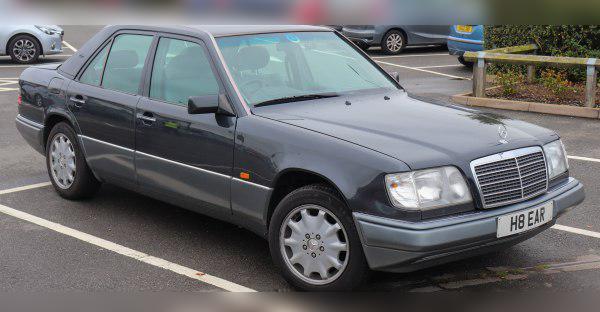
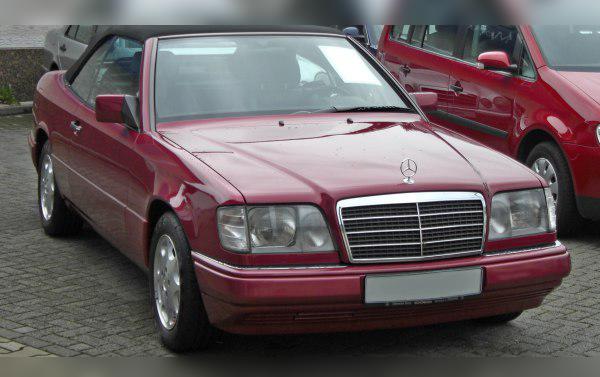
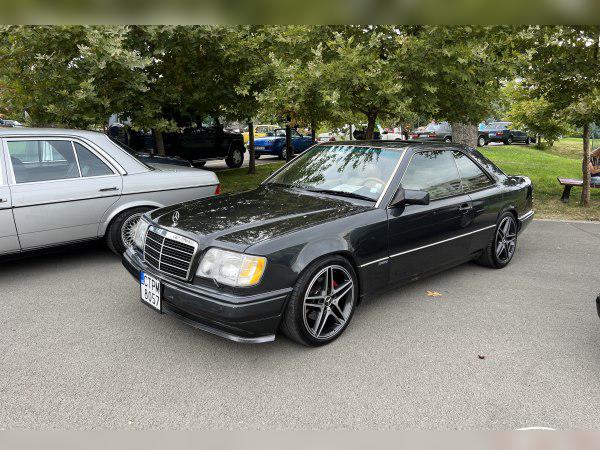
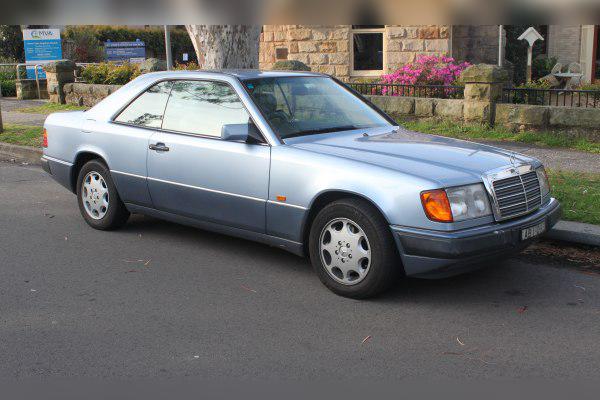
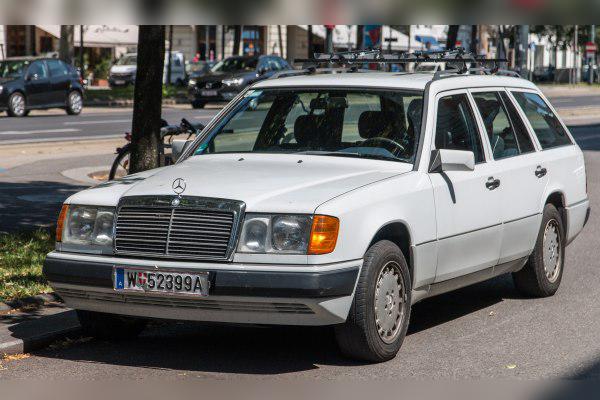
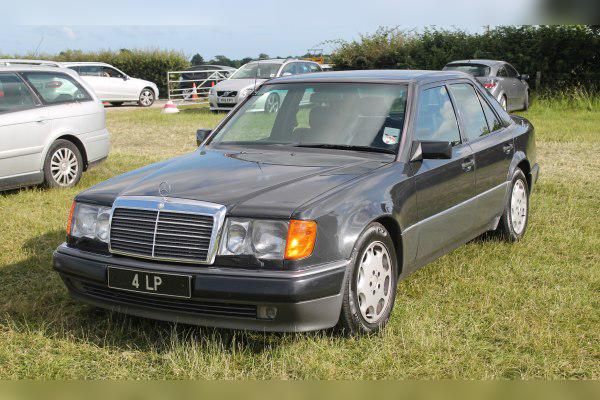
When people talk about engines that defined the “golden age” of German engineering, the Mercedes-Benz M 104, and especially its E 32 (3.2-litre) variant with the code 104.992, is right at the top of the list. Fitted mainly in the legendary W124 series (including sedans, T-model estates, C124 coupés and A124 convertibles), this engine was the pinnacle of the range below the V8 models. The move from the older M 103 engine brought a 24-valve (DOHC) head, electronic fuel injection and noticeably better performance. This is not an engine for someone looking for the cheapest way to get from A to B, but a serious machine for enthusiasts who appreciate smooth running and robust mechanicals.
Technical specifications
| Characteristic | Data |
|---|---|
| Engine code | M 104 E 32 / 104.992 |
| Engine displacement | 3199 cc |
| Power output | 162 kW (220 hp) |
| Torque | 310 Nm |
| Fuel type | Petrol (Gasoline) |
| Configuration | Inline 6-cylinder (R6), 24 valves |
| Aspiration | Naturally aspirated |
| Injection type | Bosch HFM (Electronic fuel injection) |
Reliability and maintenance
Timing system: Chain instead of belt
One of the best pieces of news for owners of this engine is that it uses a double timing chain. Because of this, there is no classic interval for a major timing service as we know it from engines with a toothed belt. The chain is incredibly durable, but not eternal. It is recommended that at around 250,000 km to 300,000 km you check the chain guides (which are plastic and can become brittle) as well as the hydraulic tensioner. If you hear rattling on a cold start, that is a sign it’s time to replace the timing chain set.
Most common failures and weak points
Mechanically, the bottom end of the engine (block, crankshaft, pistons) is practically indestructible. However, the engine has two very pronounced weaknesses:
- Eco wiring (biodegradable wires): In the early 1990s, production switched to environmentally friendly wire insulation that does not cope well with engine bay heat. The result? The insulation crumbles, wires short together, which leads to failing ignition coils and even a failed ECU (engine control unit). Replacing or refurbishing the engine wiring harness is mandatory and can be an expensive item (depending on the market).
- Oil leaks at the head gasket: A design flaw of the M 104 engines is heat build-up in the area of the 6th cylinder (closest to the cabin). Over time, the cylinder head gasket fails there and the engine starts to “sweat” oil on the right-hand side of the block, and sometimes oil even enters the coolant.
Engine oil and service intervals
The sump of this massive engine holds around 7 to 7.5 litres of oil. The most commonly recommended grade is 10W-40, although in colder climates and for well-preserved engines, 5W-40 synthetic oil provides better protection at start-up. Oil consumption between services is present, especially on older examples. The usual culprits are valve stem seals that have hardened. For high-mileage engines, consumption of around 0.5 to 1 litre per 1000 km is considered normal. Spark plugs on this petrol engine are replaced every 30,000 to 40,000 km (standard copper/nickel) or up to 60,000 km if you use platinum plugs.
Specific components and systems
Fuel injection system
The M 104 E 32 uses the Bosch HFM (Hot-Film Engine Management) injection system. It is incomparably more reliable than the older K-Jetronic (mechanical) system. Petrol injectors rarely fail, but it is advisable to have them cleaned in an ultrasonic bath from time to time. What does tend to fail is the MAF sensor (airflow meter) and the electronic throttle body, especially if the wiring harness is in poor condition.
EGR, DPF, turbo and AdBlue
As a classic 1990s petrol engine, this unit has no turbocharger, no DPF filter and no AdBlue system. Because of that, maintenance costs related to emissions systems are minimal. Certain variants are equipped with an EGR valve to reduce exhaust emissions. It can get clogged with soot, which results in an unstable idle, but cleaning is simple and not expensive (depending on the market).
Fuel consumption and performance
Performance and driving feel
This engine is anything but “lazy”. With 220 hp and 310 Nm of torque (available in a very even manner), it carries the heavy W124 body with ease. Throttle response is linear, and above 4,000 rpm the engine takes on a sharp, sporty note and delivers full power.
Real-world fuel consumption
The biggest issue with this engine nowadays is visiting the petrol station:
- City driving: 14 to 17 l/100 km (with automatic gearbox and A/C, in heavy traffic).
- Country roads: 8 to 10 l/100 km.
- Motorway: At 130 km/h, consumption is around 10–11 l/100 km.
At 130 km/h, depending on the gear ratios (which differ between the 4-speed and 5-speed automatics), the engine “cruises” at a very pleasant 3000 to 3500 rpm, in near-total silence.
Additional options and modifications (LPG and chip tuning)
LPG conversion
The good news is that the M 104 is equipped with electronic fuel injection, which makes it an excellent candidate for a sequential LPG system. Unlike the M 103 engine with the K-jet head, which suffered from “detonation”, this engine runs flawlessly on a quality sequential LPG setup. Power loss is negligible, and the savings on fuel are huge.
Chip tuning (Stage 1)
Plain and simple: Don’t waste your money. Since this is a naturally aspirated petrol engine, remapping the ECU (Stage 1) can bring at most 10 to 15 hp. The difference in driving is negligible. Instead of a chip, invest your money in refreshing the ignition system and a new engine wiring harness.
Gearbox and drivetrain
Gearbox options and common failures
The M 104 E 32 was paired with both manual and automatic gearboxes:
- 5-speed manual gearbox: Robust, but known for a slightly vague and “rubbery” shift feel. The most common failures include worn synchros in second and third gear. With manual gearboxes, this model has a dual-mass flywheel, whose replacement is very expensive (depending on the market). That’s why many people prefer the automatic.
- 4-speed automatic (722.3 / 722.4): A legendary hydraulic gearbox. Almost indestructible. Failures show up as harsh jolts when shifting, most often due to vacuum leaks at the modulator (a cheap fix) or worn clutch packs caused by irregular oil changes.
- 5-speed automatic (722.5): This is essentially a 4-speed gearbox with an electronically controlled fifth gear (overdrive) added. The fifth gear often fails due to sensor issues or lack of lubrication.
Gearbox maintenance
For automatic gearboxes, one rule is sacred: ATF oil and filter must be changed every 60,000 km. If the gearbox is neglected, the oil loses its viscosity, which leads to slipping gears and eventually complete transmission failure.
Buying used and conclusion
What to check when buying?
When you’re looking at a used W124 or C124 with the 3.2 engine, focus on the following:
- Wiring inspection: Open the bonnet, find the wiring harness around the thermostat or ignition coils, gently spread the insulation. If you see bare wires, be prepared to pay for a new harness.
- Head gasket: Look at the right-hand side of the engine (exhaust side), all the way at the back towards the windscreen. If the block is oily and dirty there, the head gasket is on its way out.
- Cold start: The engine should fire up “on half a turn” without extended cranking. Listen carefully to the front of the engine – rattling indicates a loose timing chain or a bad tensioner.
- Suspension and driveshaft: These cars have a complex rear multi-link suspension and robust propshafts. Play in the propshaft or knocking from the rear is a sign of worn bushings.
Who is this engine for?
The Mercedes-Benz M 104 E 32 (104.992) is an engineering masterpiece that today enjoys the status of a modern classic. Due to its high fuel consumption, it is not the best choice for everyday city traffic, unless you install LPG. The ideal buyer is a classic Mercedes enthusiast who wants a reliable, powerful and incredibly comfortable car for weekend drives and long-distance cruising. If you provide it with quality maintenance (sort out the wiring harness and head gasket), this inline-six will easily cover more than half a million kilometres.