Mercedes M 111 E 20 / 111.945 (136 hp): Experiences, problems, fuel consumption and used car buying guide
Key points (TL;DR)
- Exceptional longevity: This is old-school Mercedes engine engineering. With regular maintenance it easily exceeds 500,000 km.
- Timing chain drive: Uses a reliable double chain that rarely needs replacement before 300,000 km.
- Ideal for LPG: This naturally aspirated engine works brilliantly with sequential LPG systems, which is a lifesaver given its high city fuel consumption.
- Performance and weight: In the C-Class (W202) it’s adequate, but in the heavier E-Class (W210) it feels noticeably “sluggish”.
- Most common failures: Degradation of the engine wiring harness, dirty throttle body and problems with the mass air flow sensor (MAF).
- Gearbox: The famous 5G-TRONIC automatic is virtually indestructible if the oil is changed on time, while the manual gearboxes feel a bit “rubbery” in the hand.
Contents
- Introduction: A legend from the nineties
- Technical specifications
- Reliability and maintenance
- Specific parts (Costs)
- Fuel consumption and performance
- Additional options and modifications
- Gearboxes: Maintenance and issues
- Buying used and conclusion
Introduction: A legend from the nineties
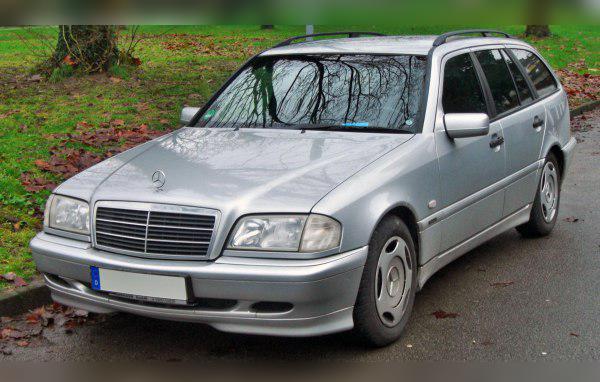
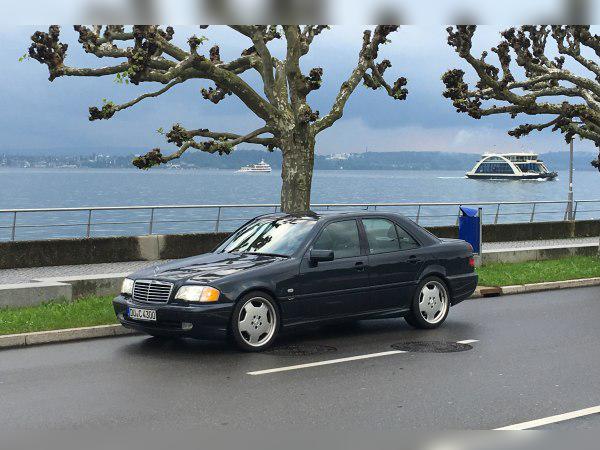
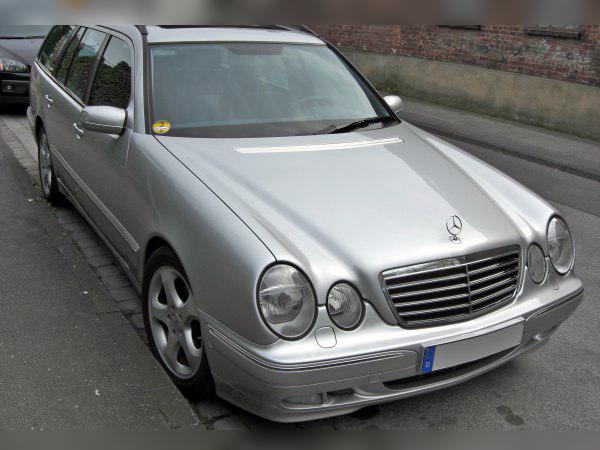
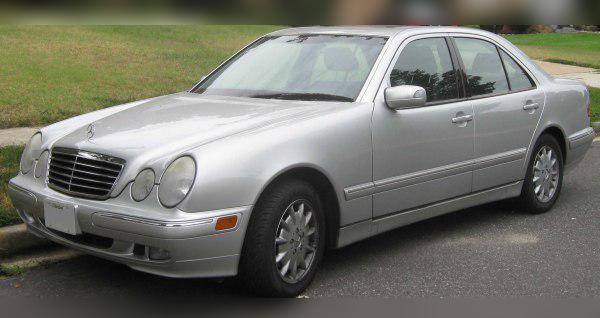
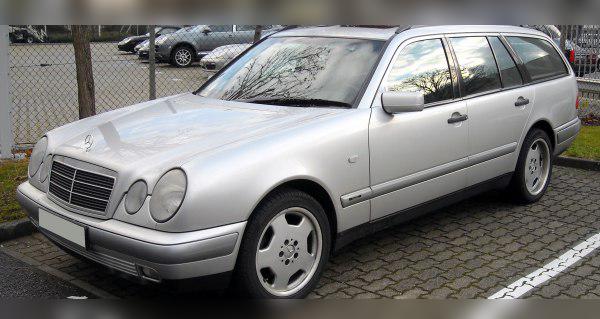
The engine designated M 111 E 20 (code 111.945) is one of the most recognizable Mercedes powerplants from the nineties and early 2000s. As a 2.0-liter naturally aspirated petrol engine with 136 horsepower, it was installed in extremely popular models such as the C-Class (W202 and S202 estate facelift) and the E-Class, the popular “Okonja” (W210 and S210). This engine was not built to break speed records, but to cover hundreds of thousands of kilometers of carefree driving. For many drivers it is synonymous with the famous slogan about “indestructible” Mercedes cars.
Technical specifications
| Specification | Data |
|---|---|
| Engine displacement | 1998 cc |
| Power | 100 kW (136 hp) |
| Torque | 190 Nm |
| Engine codes | M 111 E 20 / 111.945 |
| Injection type | Indirect electronic (Multipoint - MPI) |
| Turbo / Naturally aspirated | Naturally aspirated engine |
Reliability and maintenance
Timing and service intervals
Instead of a timing belt, this engine uses a double timing chain. In practice, this system has proven to be extremely durable. There is no “major service” in the classic sense (belt and water pump replacement every 60,000 km), but the chain is not eternal. It is recommended to inspect it after 300,000 km, when it may stretch, which manifests as rattling on cold start. What is regularly done as the equivalent of a major service is replacement of the auxiliary (serpentine) belt, idler pulleys, tensioner and water pump, usually every 100,000 to 150,000 km. The price of these parts is generally not high (depends on the market).
Most common issues
Although very reliable, the M 111 has its weak spots. The most notorious problem of this engine is degradation of the engine wiring harness (the so-called “eco wiring” issue on earlier series). Engine heat eventually dries out the wire insulation, it cracks and can cause short circuits that burn the ECU. Symptoms include engine jerking, stalling while driving, or random warning lights on the instrument cluster. Other common problems include a dirty throttle body (causing fluctuating idle) and failure of the mass air flow sensor (MAF), which makes the car lose power and consume more fuel. Oil leaks from the cylinder head gasket are also common, usually at the rear right side of the engine.
Lubrication and oil consumption
The engine takes about 5.5 liters of oil. For older engines, 10W-40 (semi-synthetic) has proven to work best, although 5W-40 (fully synthetic) also works great if the engine does not consume oil. The M 111 is known to start using more oil over time, most often due to hardened valve stem seals. Normal oil consumption between services is considered to be 0.5 to 1 liter per 10,000 km. If consumption exceeds 2 liters, it is time for a thorough inspection or replacement of valve stem seals and piston rings.
Ignition system
Since this is a classic petrol engine, the spark plugs should be replaced every 60,000 km. If you install quality platinum or iridium plugs, this interval can be extended, but if you run the car on LPG, it is recommended to replace them every 30,000 km due to higher combustion temperatures and the greater sensitivity of the gas system to a weak spark.
Specific parts (Costs)
When it comes to the fuel injection system, the M 111 uses a classic multipoint system (MPI). The petrol injectors on this engine are of excellent quality and very rarely cause problems. If they do get clogged, ultrasonic cleaning usually solves the issue permanently, at a very low cost.
If you are wondering whether this model has a turbocharger, the answer is no. It is a purely naturally aspirated engine, so you are spared the worries and high costs of turbo or intercooler repairs.
As for emission control systems – since this is an older-generation petrol engine, it does not have a DPF filter, nor an AdBlue system, so you have absolutely none of those maintenance costs. It has a simple exhaust gas recirculation system, but the EGR on this petrol engine very rarely causes serious trouble compared to modern diesels.
Fuel consumption and performance
Is this engine sluggish?
The answer depends mostly on the body style it’s installed in. In the C-Class (W202), with 136 hp (100 kW) and 190 Nm of torque, the car behaves quite decently and feels responsive. However, if this engine is in a heavy E-Class estate (S210), expect the car to feel “lazy”. Acceleration is long, especially when overtaking on open roads with the air conditioning on.
Real-world fuel consumption
This is an old-school engine design and it cannot boast fuel efficiency. Real-world city consumption is between 11 and 13 l/100 km, depending on how heavy your right foot is and on traffic conditions. On country roads, consumption drops to about 7 to 8 liters.
Highway driving
The M 111 was made for cruising. At 130 km/h on the highway, combined with the 5G-TRONIC or the 5-speed manual, the engine usually spins at around 3,200 to 3,500 rpm. The engine is refined, but since there is no sixth gear, at these speeds it can be a bit louder in the cabin, although the excellent sound insulation of the W210 and W202 models largely neutralizes this.
Additional options and modifications
LPG conversion
If there is an ideal engine for LPG, this is it. The M 111 has indirect injection, robust valves and handles installation of a sequential LPG system extremely well. Most owners opt for this because it halves running costs, especially in city driving. The power loss on LPG is barely noticeable.
ECU remap (Stage 1)
If you are planning to increase this engine’s power with an ECU remap, don’t bother. Naturally aspirated engines without a turbo do not respond well to map changes. A “Stage 1” tune on this engine brings a negligible 5 to at most 8 hp, which you will not feel in real driving, and you will pay for the service for nothing.
Gearboxes: Maintenance and issues
This engine was mostly paired with two options: a classic 5-speed manual gearbox and the legendary 5G-TRONIC (code 722.6) automatic transmission.
Manual gearbox and dual-mass flywheel
The manual gearboxes are mechanically almost indestructible, but their biggest downside is that they feel a bit stiff and “rubbery” in the hand, and over the years the synchros for second and third gear can fail if the car has been driven aggressively. Does it have a dual-mass flywheel? Most models paired with a manual gearbox from these series (especially facelift versions) do have a dual-mass flywheel. Replacing the complete clutch with the dual-mass flywheel is quite an expensive job. It is often very costly (depends on the market) compared to the purchase price of the vehicle itself. Checking by VIN is mandatory before buying parts.
Automatic gearbox (5G-TRONIC)
If you are buying this Mercedes, the automatic is highly recommended. The 5G-TRONIC is arguably the best gearbox of its time. Its biggest weak point is the electro-hydraulic control plate (conductor plate), which can fail, as well as the notorious oil leak at the pilot connector, where oil can travel capillarily through the wiring to the transmission control unit and cause chaos. Symptom: the gearbox “sticks” in second gear (limp mode) or shifts harshly. Regular gearbox servicing (oil and filter change) must be done every 60,000 km for the automatic to last virtually forever.
Buying used and conclusion
What to check before buying?
During the test drive, be sure to pay attention to the following:
- Idle quality: The engine should idle very smoothly. If the revs fluctuate, the problem may be a dirty throttle body or false air from cracked intake hoses.
- Condition of the wiring: Open the hood and visually inspect the wiring around the engine, especially near the block. If the insulation is brittle and crumbles to the touch, walk away from that car or be prepared for the cost of a new wiring harness.
- Exhaust smoke and oil: Do an acceleration test – blue smoke from the exhaust indicates worn piston rings or valve stem seals. Check the rear right corner of the engine (viewed from the front) for traces of oil “sweating” (head gasket).
- Bodywork (Most important!): The biggest enemy of this engine is the car it’s installed in. The W202 and W210 are notorious for catastrophic corrosion resistance. A great engine is useless if the sills, fenders, rocker panels and suspension mounts are completely rotten.
Who is this engine for?
The Mercedes M 111.945 is intended for calm drivers who want old-school reliability rather than performance and racing from traffic light to traffic light. It is an excellent choice for families or as a workhorse, provided an LPG system is installed and you find a car with solid bodywork. Maintenance is straightforward, every local mechanic knows it inside out, and you get a comfortable ride with the feel of a “proper, heavy Mercedes”.