Mercedes-Benz 4.0 V8 BiTurbo M 177.980 (476 hp) – Experiences, problems, fuel consumption and used car buying tips
1. The most important in short (TL;DR)
- Performance and sound: One of the best modern V8 engines, it delivers incredible acceleration and the unmistakable AMG sound, even though it replaced the old naturally aspirated 6.2 engine.
- Architecture: Features a “Hot-V” design, where both turbochargers are placed between the cylinder banks for better throttle response.
- Maintenance: Requires a very deep pocket. Shortened oil change intervals are a must, and repairs are very expensive (Depends on the market).
- Oil consumption: Under hard driving, this engine is factory‑designed to consume a certain amount of oil, which is not a sign of failure as long as it is within normal limits.
- Gearbox: Uses a specific AMG SPEEDSHIFT MCT gearbox (without a classic torque converter), which requires strict maintenance and proper software adaptation.
- Tuning potential: The 476 hp version is software‑detuned compared to the more powerful “S” models, which means that a “Stage 1” remap brings huge gains.
2. Contents
- 3. Introduction: The end of the naturally aspirated era and the birth of a new beast
- 4. Technical specifications
- 5. Reliability and maintenance
- 6. Specific parts (Costs)
- 7. Fuel consumption and performance
- 8. Additional options and modifications
- 9. Gearbox
- 10. Buying used and conclusion
3. Introduction: The end of the naturally aspirated era and the birth of a new beast
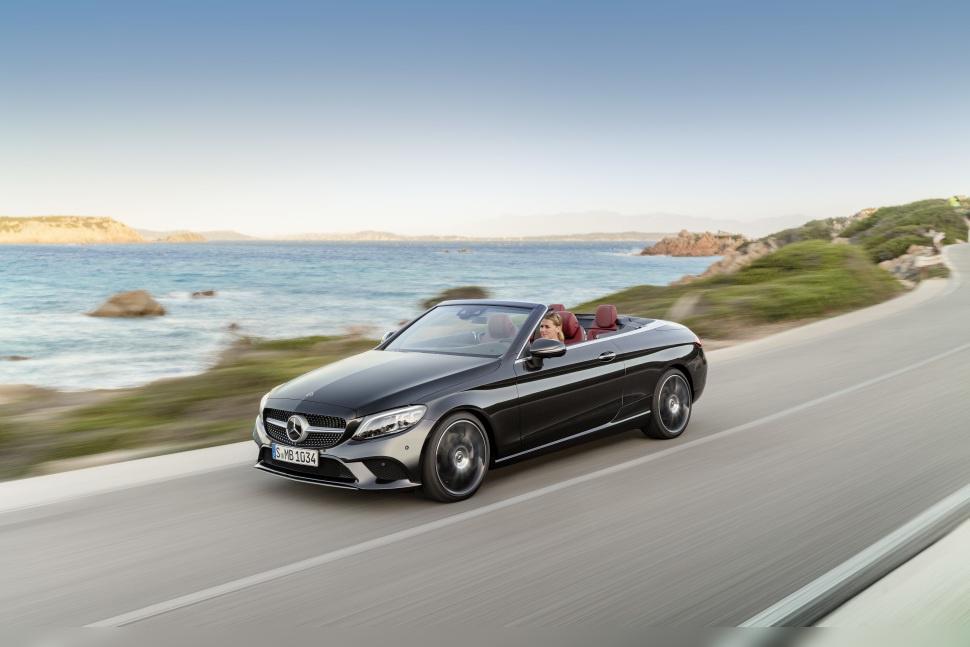
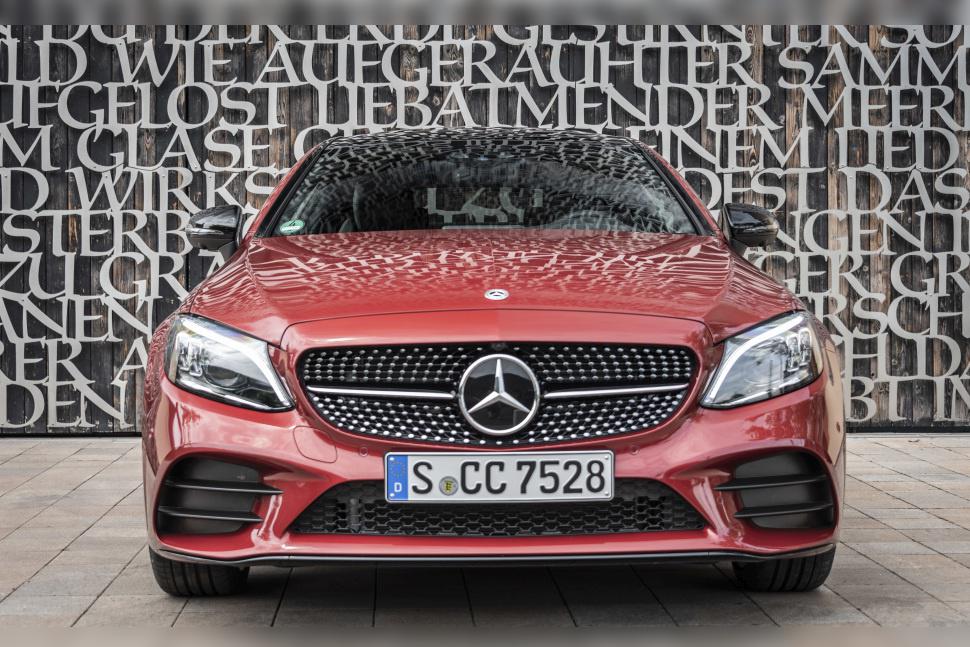
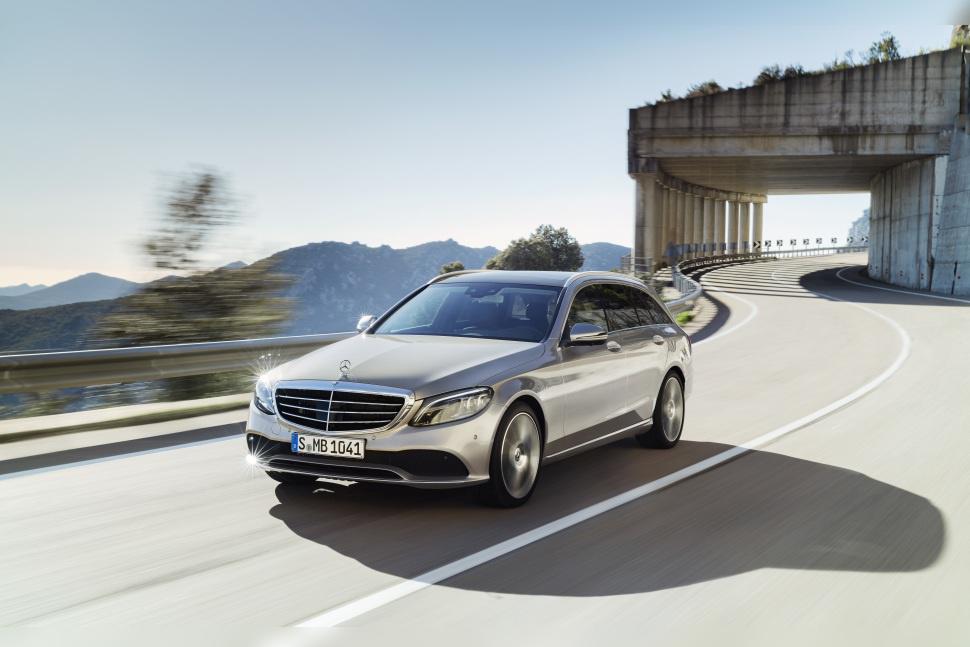
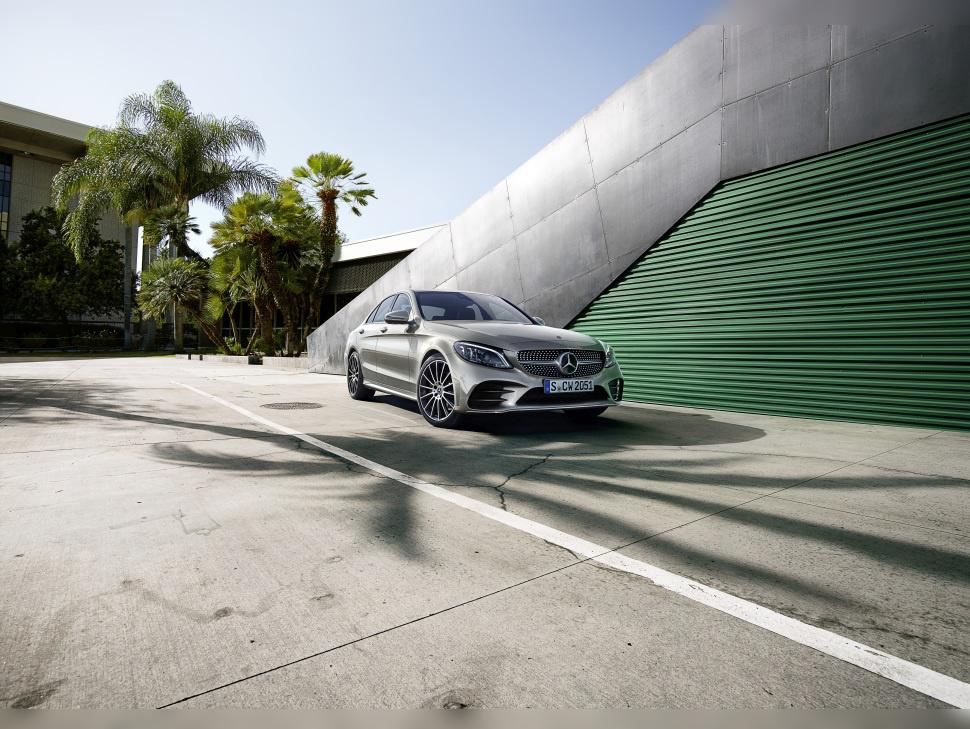
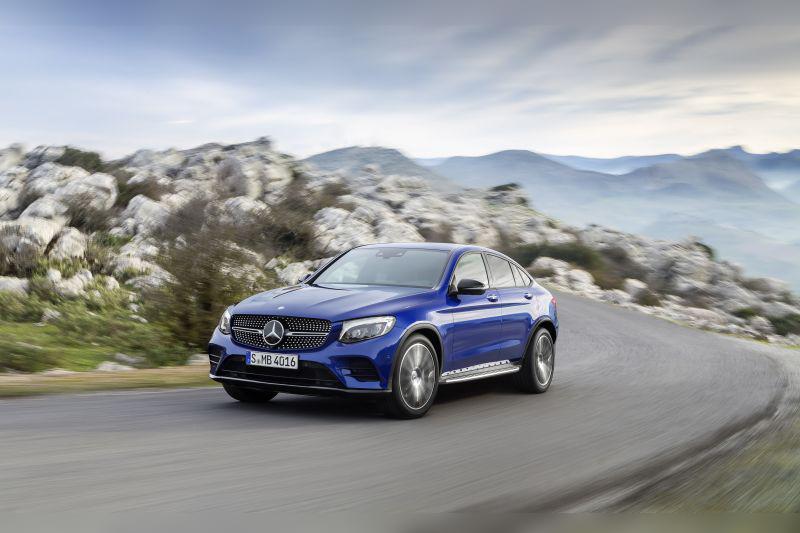
When Mercedes-AMG decided to retire the legendary 6.2‑liter naturally aspirated V8 (M156) and move to a smaller displacement with two turbochargers, many purists were skeptical. However, the engine with the code M 177.980 turned out to be a technological masterpiece. It is installed in a range of models from the W205 (C‑Class) and X253 (GLC) generations, both before and after the facelift (2018).
Its main characteristic is the “Hot inside V” configuration. This means that the exhaust manifolds and turbochargers are located inside the V of the engine block itself, rather than on the outside. This provides an extremely fast throttle response and more compact engine dimensions, but at the same time creates enormous heat under the hood, which the cooling system must handle flawlessly.
4. Technical specifications
| Characteristic | Data |
|---|---|
| Engine code | M 177.980 |
| Displacement | 3982 cc (4.0L) |
| Power | 350 kW (476 hp) at 5500 – 6250 rpm |
| Torque | 650 Nm at 1750 – 4500 rpm |
| Engine type and injection | V8, Petrol (Direct injection – Piezo) |
| Forced induction | BiTurbo (Two turbochargers), Intercooler (Water‑to‑air) |
5. Reliability and maintenance
Does this engine have a timing belt or chain and when is the major service done?
The M 177.980 engine uses a timing chain. More precisely, it uses a complex system of several chains responsible for the camshafts and the oil pump. Unlike some older engines where the chain was on the rear side, here the system is somewhat more accessible, but still requires top‑level mechanic expertise.
A classic “major service” with a strict interval does not exist on this engine. The chain is designed to last as long as the engine itself, but in practice around 150,000 to 200,000 km is the point when the chain tensioners and guides should be thoroughly inspected. If, on a cold start, you hear a metallic rattling that lasts longer than two seconds, that is a clear symptom that the chain is stretched or the tensioner has weakened. Replacing the chain is very expensive (Depends on the market). In addition to the chain, the accessory belt (serpentine belt) and its pulleys are usually replaced at around 80,000 – 100,000 km.
Most common failures and weak points
Although mechanically extremely robust, due to the enormous heat in the V‑angle (“Hot‑V”), coolant hoses, vacuum lines and plastic parts become brittle and crack over time. Drivers notice this as an unexplained loss of coolant or a drop in engine power accompanied by the “Check Engine” light.
Another common problem is ignition coils. Because of the high operating temperature, they fail faster than on standard cars. Symptoms are engine jerking under acceleration and the engine running on “seven cylinders” (misfire).
Oil capacity, viscosity and oil consumption
This V8 engine holds an impressive around 9 liters of engine oil. It is essential to use only oils that strictly meet AMG specifications (usually MB 229.5 for models without GPF or MB 229.51/229.52 for newer ones with a particulate filter). The recommended viscosity is most often 0W‑40 or 5W‑40, but only from premium manufacturers.
Does it consume oil? Yes, and this is considered normal. Due to the tolerances required for high performance and the forged engine components, Mercedes allows consumption of up to 0.8 liters per 1000 km under hard driving. In normal mixed driving, topping up around 1–1.5 liters between two services (which are done at a maximum of 10,000 km) is completely common.
Spark plugs
As a high‑performance petrol engine with direct injection and strong turbocharging, the M 177 “eats” spark plugs. It is recommended to replace the spark plugs every 40,000 to 50,000 km. Worn spark plugs directly lead to overloading and failure of the aforementioned coils, and can also cause improper combustion that damages the cylinders.
6. Specific parts (Costs)
Fuel injection system
The engine uses extremely precise and sensitive high‑pressure Piezo injectors. They are not known as chronically problematic, but they are very sensitive to poor fuel quality. A clogged or faulty injector “leaks” fuel into the cylinder, washes the oil film off the cylinder walls and can lead to catastrophic engine damage (seizure). The cost of replacing the injectors is expensive (Depends on the market).
Turbochargers
The two turbochargers spin at over 150,000 rpm. Their lifespan depends entirely on the car’s owner. If the engine is switched off immediately after hard driving on the highway, the oil carbonizes inside the hot turbines and they soon fail. With proper cooldown before shutting off the engine and regular oil changes, they will last over 200,000 km. Rebuilding or replacing the turbos is very expensive (Depends on the market).
Emissions systems (DPF, EGR, AdBlue, GPF)
Since this is a petrol engine, it does not have a DPF (diesel particulate filter) and does not use AdBlue fluid. Therefore, it does not suffer from urea crystallization or AdBlue pump issues that plague diesels.
However, it is important to note the difference in model years: models produced from the end of 2018 (mainly facelift W205 and X253) are equipped with a OPF/GPF filter (Gasoline Particulate Filter) due to stricter Euro 6d‑TEMP standards. This filter muffles the exhaust sound (which is why older models sound louder) and can become clogged if the car is driven exclusively in city traffic, requiring regeneration on open roads.
7. Fuel consumption and performance
City driving
Buyers of this type of car do not look at fuel consumption, and for good reason. In pure stop‑and‑go city driving, real‑world consumption ranges from 16 to 20 l/100 km, depending on how heavy your right foot is. The heavy GLC body (X253) takes an even bigger toll than the C‑Class (W205).
Response and highway cruising
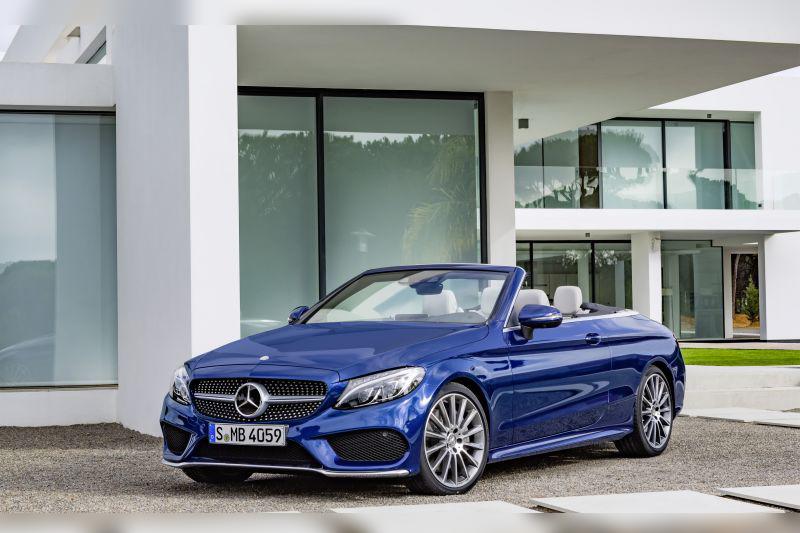
Is the engine lazy for this chassis? Absolutely not. With 650 Nm available from just 1750 rpm, every touch of the throttle pins the driver to the seat, whether you are in a C‑Class cabriolet or a GLC SUV. The feeling of acceleration is brutal.
On the highway, this is an excellent cruiser. At 130 km/h, thanks to the modern 7‑ or 9‑speed gearbox, the engine spins at a very relaxed below 2000 rpm. In such driving conditions (and in “Comfort” mode), fuel consumption drops dramatically to a very reasonable 10 to 12 l/100 km.
8. Additional options and modifications
LPG conversion
Absolutely not. Installing an LPG system on this V8 BiTurbo engine with direct Piezo injection is sacrilege from a reliability standpoint. Technically, an extremely expensive and complex liquid‑phase system would be required to protect the injectors, but in practice nobody does this. The high operating temperatures would quickly destroy the LPG system components, and engine damage would be inevitable.
Remap (Stage 1)
This is a dream engine for tuners. Mercedes offered this engine in two power variants – the base C63/GLC63 with 476 hp and the more powerful C63 S / GLC 63 S with 510 hp. Hardware‑wise, these two engines are almost identical; the differences are mostly in software and details in the suspension, electronic differential and similar.
For that reason, with just a Stage 1 remap (software tuning), the 476 hp model safely and reliably jumps to around 560 to 600 hp and over 750 Nm to 800 Nm of torque. The engine block (“closed‑deck” design) and forged connecting rods handle these figures without issue, provided that you change the oil every 7,000 km.
9. Gearbox: AMG SPEEDSHIFT MCT
Types of gearboxes and how they work
There is no manual gearbox available for this engine and these models. The only option is the AMG SPEEDSHIFT MCT (Multi‑Clutch Technology). Before the facelift (until mid‑2018), a 7‑speed MCT was installed, while newer facelift models use a faster and more efficient 9‑speed MCT.
This is not a dual‑clutch gearbox (DSG/PDK), nor is it a classic automatic. Its base is a planetary automatic gearbox, but it does not have a dual‑mass flywheel or a traditional hydraulic torque converter. Instead, it uses a compact wet start‑up clutch, immersed in oil. This allows sharper and more brutal launches from a standstill, and reduces weight and inertia.
Failures and servicing of the gearbox
Symptoms of MCT gearbox issues include jerking and harsh jolts when moving off from a standstill or when stopping (especially shifts from 2nd to 1st gear). Often the problem is not mechanical but software‑related, and can be solved by resetting the adaptations at an authorized service center. However, if “Race Start” (Launch Control) is used frequently, the wet clutch pack will wear out. Repairing or replacing this clutch is very expensive (Depends on the market).
Gearbox maintenance is critical. The gearbox oil (together with the filter) must be changed at a maximum of 50,000 to 60,000 km. If you often drive the car on track or very aggressively, halve that interval.
10. Buying used and conclusion
What to pay attention to when buying?
- Cold start noises: Insist that you are the one to start the car for the first time that day. Any rattling from the rear part of the engine area indicates timing chain issues.
- Service history: This engine does not tolerate neglect. If there is no clear proof that the oil was changed strictly at up to 10,000 km or earlier, skip that car. Extended service intervals of 20,000+ km are fatal for the camshafts and turbos.
- Condition of hoses under the hood: Visually inspect the rubber hoses and plastic connectors above the engine (“Hot‑V”). If they are hard as stone or cracked, this is a sign of overheating in the engine bay and you can expect unforeseen expenses.
- Driveshaft, differential and suspension: The C 63 and GLC 63 chew through rear tires and are subjected to enormous forces in the drivetrain. It is essential to check the differential bushings and joints. On pre‑facelift C63 models, also check whether the mechanical limited‑slip differential operates smoothly (the S model has an electronically controlled differential).
Who is this engine for?
The Mercedes‑AMG 4.0 V8 BiTurbo (M 177.980) with 476 hp is an engine for enthusiasts who seek uncompromising performance and character that is rarely seen in today’s automotive industry. Its thunderous sound and power delivery are unforgettable. However, it requires an owner fully aware of the running costs: tires, brakes (which are astronomical), fuel and shortened service intervals make it extremely expensive to own. This is not a car for everyday trips to the bakery, but an engineering marvel that needs highways and quality mountain roads to truly breathe.