Mercedes M 270.910 Engine (1.6 Turbo 122 HP) – Owner experiences, issues, fuel consumption and used car buying tips
Key points in short (TL;DR)
- Timing drive: Uses a timing chain. Chain stretch is possible on pre-2015 models if the oil was changed infrequently.
- Fuel injection system: Direct injection. Prone to carbon buildup on intake valves.
- Performance and tuning: Factory 122 HP (90 kW) is sufficient, but the engine is software-detuned. A Stage 1 remap easily raises it to ~150+ HP without negative consequences.
- Gearbox: The 7G-DCT automatic requires strict servicing every 60,000 km. The manual gearbox uses an expensive dual-mass flywheel.
- Fuel consumption: Efficient on the open road, but in city driving (especially in heavier bodies like the GLA) it can reach up to 10 l/100 km.
- No diesel headaches: No DPF, no EGR (in the classic sense) and no AdBlue system, which drastically reduces running costs compared to diesels.
Contents
- Introduction and engine applications
- Technical specifications
- Reliability, maintenance and common issues
- Specific components and costs
- Fuel consumption and driving performance
- Additional options, LPG and remapping
- Gearbox (Manual vs. 7G-DCT)
- Buying used and Conclusion
Introduction and engine applications
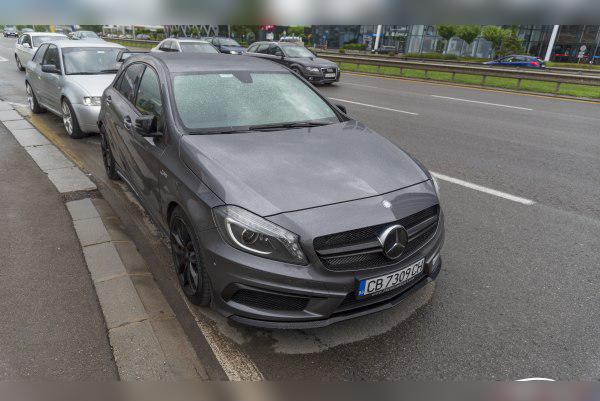
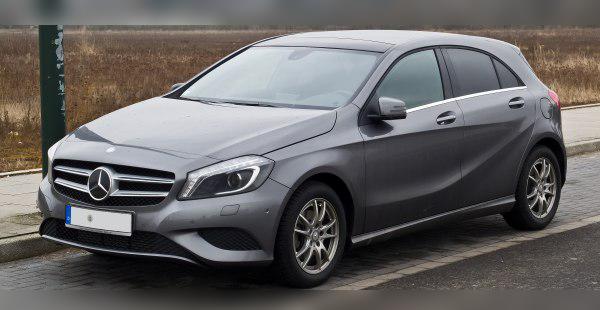
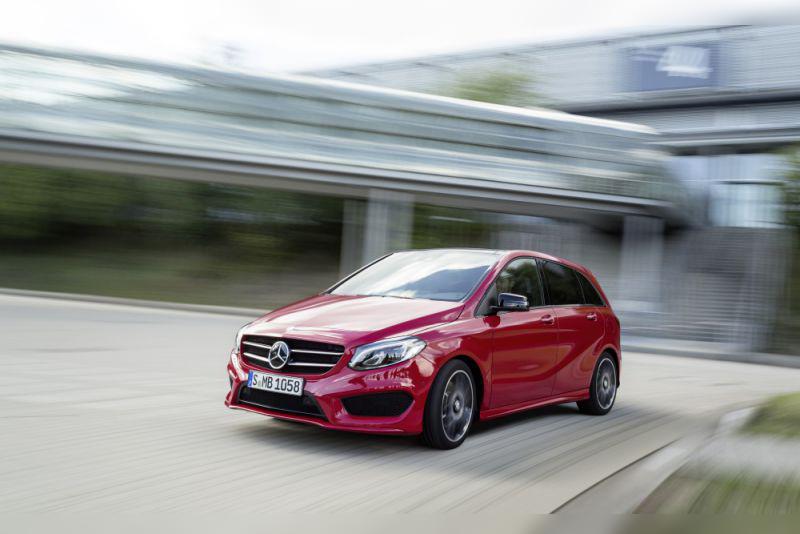
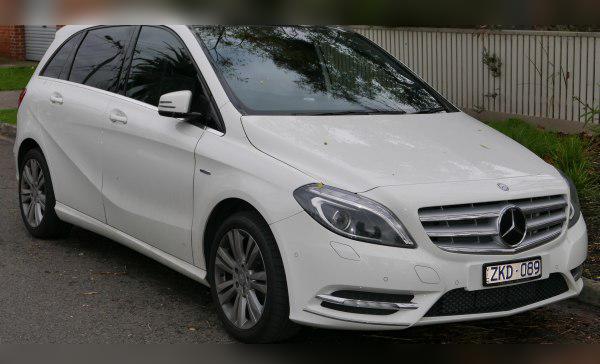
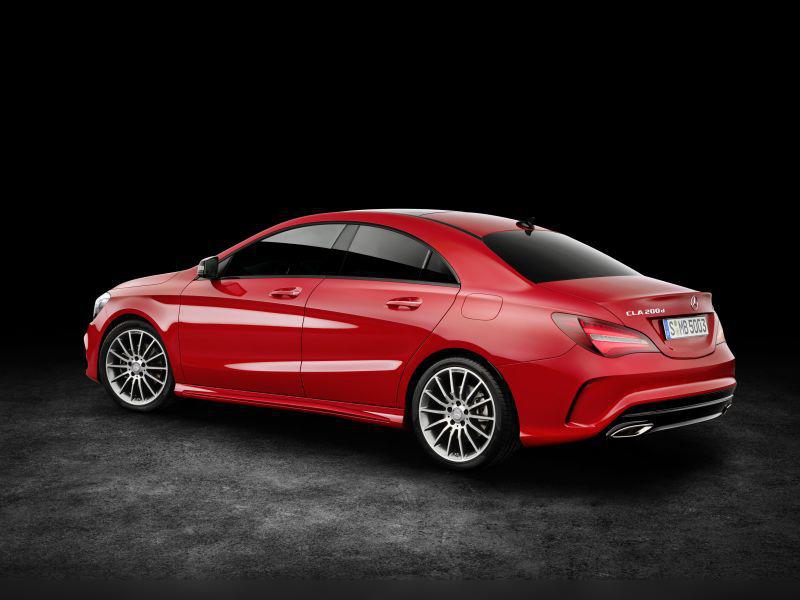
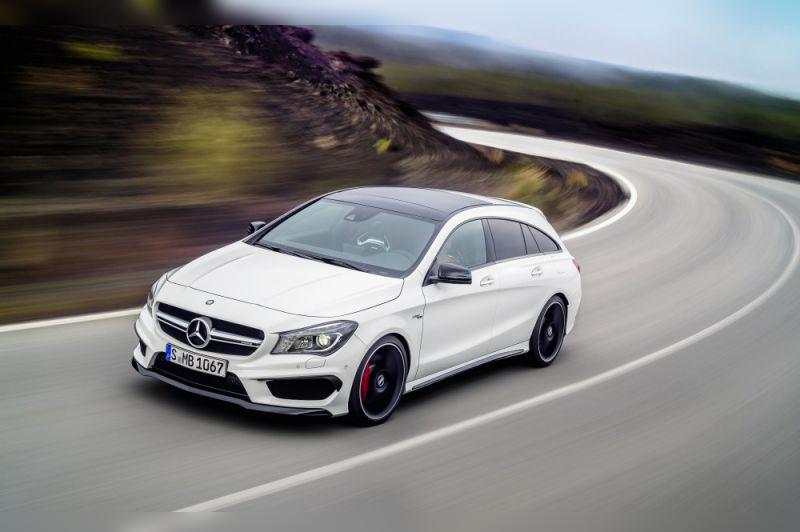
When Mercedes-Benz switched to a front-wheel-drive architecture (with a transversely mounted engine) for its compact class, the M 270 engine family was born. The specific version with the internal code M 270.910, with a displacement of 1.6 litres and an output of 122 HP (90 kW), is the base petrol unit in models such as the A-Class (W176), B-Class (W246), the stylish CLA (C117/X117), and the crossover GLA (X156). Interestingly, this engine is also found under the bonnet of the Infiniti Q30 1.6, which mechanically shares its DNA entirely with the Mercedes A-Class.
This engine was designed to offer the smoothness of a petrol unit with low-end torque similar to a diesel, thanks to a modern turbocharger. BlueEFFICIENCY models bring minor aerodynamic and software tweaks to reduce emissions, but at their core, the heart of the car is identical.
Technical specifications
| Specification | Data |
|---|---|
| Displacement | 1595 cc (1.6 l) |
| Power | 90 kW (122 HP) at 5000 rpm |
| Torque | 200 Nm at 1250–4000 rpm |
| Engine code | M 270.910 |
| Injection type | Direct injection (CGI) |
| Charging | Turbocharger (IHI) + intercooler |
| Camshaft drive | Chain |
Reliability, maintenance and common issues
One of the first questions every buyer asks is what drives the camshafts. The M 270.910 engine uses a timing chain. By design, the chain is intended to last the life of the engine, so there is no fixed interval for a “major service” in the sense of a timing belt replacement. However, in practice, especially on pre-facelift models (up to 2015), the chain can stretch at mileages of around 120,000 to 150,000 km. The symptom of this problem is a pronounced rattling noise on cold start (the so‑called “cold start rattle”). If the driver ignores this sound, the chain can jump a tooth, leading to serious damage to valves and crankshaft.
As for regular servicing (minor service), this engine takes around 5.8 litres of engine oil. Only fully synthetic oil of grade 5W-30 or 5W-40 that meets the strict Mercedes specification MB 229.5 is recommended. The engine tends to consume a small amount of oil, especially if driven aggressively. Consumption of up to 0.5 litres per 10,000 km is considered completely normal, but anything above that points to weakening piston rings or an issue with the PCV valve (oil vapour separator). Always change the oil at a maximum of every 15,000 km or once a year.
Since this is a petrol engine with direct injection, operating temperatures and cylinder pressures are high. Because of this, spark plugs must be replaced every 60,000 km. Skipping this interval puts a heavy load on the ignition coils, which will quickly fail due to arcing, leaving the engine running on three cylinders (you will notice strong engine jerks and a lit Check Engine light).
Among other common issues, the thermostat stands out. It often sticks in the open position, so in winter the engine cannot reach its operating temperature of 90°C, which increases fuel consumption and component wear.
Specific components and costs
Given that this is a turbocharged petrol engine, the fuel injection system is extremely complex. It uses high-pressure piezo and solenoid injectors. They are generally trouble-free if you use quality fuel, but direct injection has one inherent drawback – carbon buildup on intake valves. Since the fuel does not wash the valves on its way to the cylinder, after about 100,000 km the valves become coated with deposits, causing rough idle and loss of performance. Cleaning the valves (so‑called “walnut blasting”) should be carried out as preventive maintenance. The cost of this procedure varies, but it is generally considered a routine job on modern petrol engines and is not excessively expensive (depends on the market).
This engine does not have a DPF filter or AdBlue system, as it is a petrol unit, which means you will avoid the expensive issues typical of modern diesels (clogged filters in city driving, NOx sensor failures). As for an EGR valve in the classic sense, this engine mostly achieves exhaust gas recirculation via variable valve timing (VVT system), so there is no physical part that clogs up in the way we are used to on diesels.
The turbocharger is a single-turbo configuration (manufacturer IHI) and is considered very durable. With regular oil changes, its service life easily exceeds 200,000 km. However, play can develop in the wastegate shaft, resulting in a metallic rattle when lifting off the throttle and a slight drop in power.
Fuel consumption and driving performance
With 122 HP and 200 Nm of torque available from as low as 1250 rpm, this engine feels stronger on the road than the figures suggest. In lighter models such as the A-Class, the engine is quite lively and perfectly adequate for everyday driving. But is it “lazy”? If you put it in the crossover body of the GLA and load it up for a trip, you will definitely feel it running out of breath when overtaking on hilly roads, as the extra weight takes its toll.
Fuel consumption is a double-edged sword. On open roads and highways, the engine is extremely economical. On the motorway, thanks to long gear ratios, at 130 km/h the engine cruises at a very relaxed ~2500 rpm (in seventh gear with the automatic), using an excellent 6.0 to 6.5 l/100 km. However, in city stop‑and‑go driving, especially in winter, real-world consumption rarely drops below 8 l/100 km, and in heavier models (B-Class and GLA) it easily climbs to 9–10 l/100 km.
Additional options, LPG and remapping
Many petrol owners consider fitting an LPG system. For the M 270.910, installing LPG is not cost-effective and is generally not recommended. Due to the direct injection system, standard LPG kits do not work. You need a specialised liquid-phase LPG injection system that uses the engine’s factory injectors, or a system that constantly injects a certain percentage of petrol to cool the petrol injectors. These systems are very expensive (depends on the market) and the savings calculation often does not add up.
On the other hand, this engine is something of a “holy grail” for remapping (Stage 1). Mechanically, it is completely identical to the more powerful M 270 version used in models badged “200” (where it produces 156 HP). The only difference is in the ECU software map. Because of this, the engine can be tuned very safely and reliably to around 150 to 160 HP, while torque rises to as much as 250–280 Nm. After this modification, the engine’s character changes completely, becoming much more agile, while in normal driving fuel consumption remains the same or even drops slightly.
Gearbox (Manual vs. 7G-DCT)
This engine comes with two types of gearboxes: a conventional 6-speed manual and a 7-speed dual-clutch automatic known as 7G-DCT.
If you choose the manual gearbox, be aware that it comes paired with a dual-mass flywheel. In a petrol engine, the dual-mass flywheel is subjected to fewer vibrations than in a diesel and can last a long time, but when the time comes to replace the complete clutch and flywheel set, the cost is high to very high (depends on the market). The mechanical part of the manual gearbox itself is almost indestructible.
The 7G-DCT automatic gearbox is a much more popular choice and suits the character of this engine perfectly. However, it requires strict maintenance. The oil and filter in this gearbox must be changed every 60,000 km (on newer versions the manufacturer extended this to 100,000 km, but specialists still insist on 60k as a preventive measure). If the gearbox is not serviced, the hydraulic block (mechatronics) becomes contaminated. Mechatronics failures manifest as jerks when engaging “D” or “R”, harsh gear changes and skipped gears. Replacing the clutch pack in the 7G-DCT (which typically comes due between 150,000 and 200,000 km in city use) is a very expensive job (depends on the market).
Buying used and Conclusion
When looking at a used car with the M 270.910 engine, your absolute priorities should be:
- Cold start: Ask the seller not to start the car before you arrive. Open the bonnet, ask someone to start the engine while you listen. If you hear a metallic rattle that disappears after 2–3 seconds, the chain is due for replacement.
- Automatic gearbox test drive: Drive gently, simulating city traffic. The gearbox should shift gears imperceptibly. Any jerking when stopping or setting off is a red flag.
- Diagnostics: Always connect the original (Star) diagnostic tool. Check the history of misfires (cylinder misfire counts). This will indicate the condition of the spark plugs, coils, or potential carbon buildup on the valves.
Conclusion: Who is this engine for?
The Mercedes M 270.910 (1.6 122 HP) is an excellent “entry-level” premium engine. It is ideal for drivers who cover moderate annual mileage (mostly city with occasional highway/motorway trips) and who want a reliable unit without the diesel headaches of DPF filters. Thanks to its excellent potential for easy and safe remapping, it is a smarter purchase than the more expensive “A 200” for enthusiasts. Just keep in mind that the badge on the bonnet also dictates the price of suspension and brake parts, so always leave room in your budget for quality post-purchase maintenance.