Mercedes-Benz M 271.860 (1.8 CGI) 184 HP: Experiences, problems, fuel consumption and used car buying tips
- Biggest weak point: Single-row timing chain and camshaft phase variators (sprockets). They require attention at around 100,000 km.
- Performance: The turbocharger replaced the old supercharger, providing excellent low-end torque. The engine easily copes with heavier sedans.
- Injection: The direct injection system (CGI) means better efficiency, but also more expensive LPG (autogas) installation and possible carbon buildup on intake valves.
- Transmissions: The 5G-TRONIC is virtually indestructible but slow, while the 7G-TRONIC PLUS offers lower fuel consumption and quicker response, with mandatory regular servicing.
- Fuel consumption: Considering the weight of the C and E class, expect around 10 to 12 l/100 km in city driving.
- Buying recommendation: Buy only examples with a fully documented service history and always listen to the engine on the first (cold) start.
Contents
- Introduction: About the M 271.860 engine
- Technical specifications
- Reliability, maintenance and common failures
- Specific parts and costs
- Real-world fuel consumption and performance
- LPG (autogas) and remapping (tuning)
- Transmissions: Manual and automatic
- Buying used and conclusion
Introduction: About the M 271.860 engine
The engine with the code M 271.860 represents a significant evolution of the famous Mercedes M 271 family of four-cylinder petrol engines. While earlier generations (known from older models) used a mechanical supercharger (Kompressor) and port injection, this version brings two key innovations: a turbocharger and direct fuel injection (CGI - Stratified Charged Gasoline Injection).
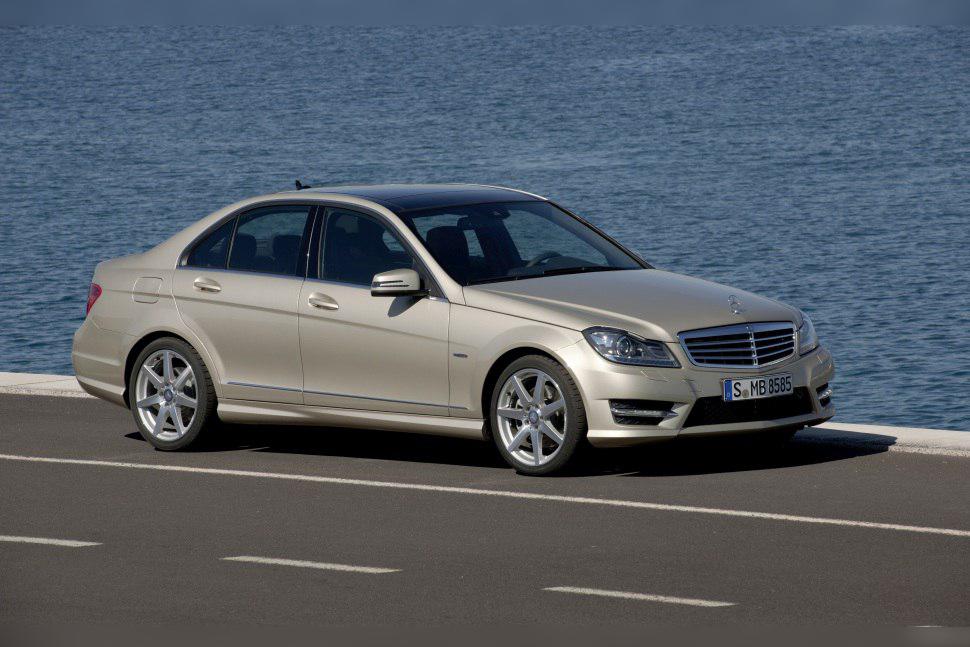
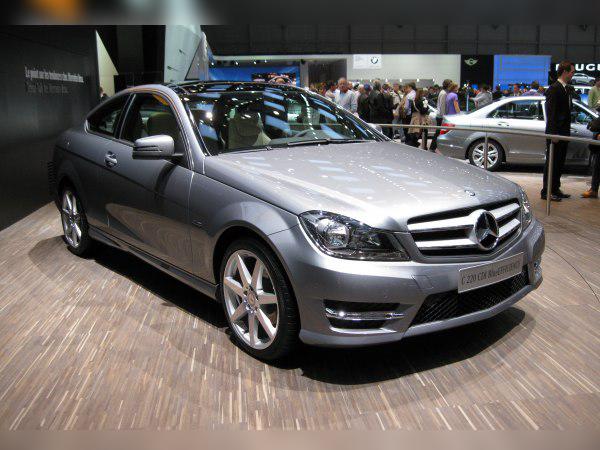
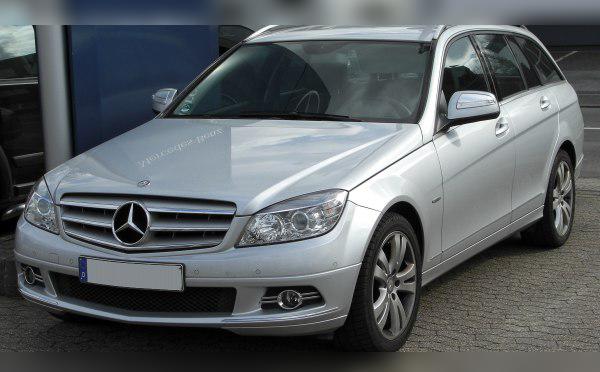
With 184 HP and 270 Nm of torque available from low revs, this engine was installed in facelifted C-Class models (W204, S204, C204) and E-Class models (W212, S212, A207, C207) in the period when Mercedes was pushing its "BlueEFFICIENCY" strategy to reduce emissions and fuel consumption. Although it offers smooth operation and solid power, this engine hides several serious design flaws that can be very expensive for any used car owner if neglected.
Technical specifications
| Parameter | Data |
|---|---|
| Displacement | 1796 cc |
| Power | 135 kW (184 HP) |
| Torque | 270 Nm |
| Engine codes | M 271.860 (M271 DE 18 AL) |
| Injection type | Direct injection (CGI) |
| Charging | Turbocharger with intercooler |
| Camshaft drive | Chain (single-row) |
Reliability, maintenance and common failures
Does this engine have a timing belt or a chain, and when is the major service due?
The M 271.860 engine has a timing chain, and this is also its biggest Achilles’ heel. Mercedes used a single-row chain in this engine (similar to a bicycle chain), which is quite prone to stretching. A classic "major service" with a fixed interval (as with a timing belt) does not exist in the service book, but workshop practice says otherwise: a complete timing replacement usually has to be done between 80,000 and 120,000 km.
What are the most common failures?
A detailed overview of the most expensive and most frequent issues:
- Chain stretching and camshaft variator wear: Due to the engine’s design, the chain stretches and the sprockets on the camshafts (phase variators / VANOS on other brands) lose their teeth. Symptoms: A metallic rattling noise that lasts a few seconds on the first cold start. If you ignore the sound, the chain can jump a tooth, which leads to catastrophic engine failure (valves hitting the pistons). Replacing the entire set (chain, guides, tensioner and both variators) is mandatory and counts as a very expensive repair: from 800 to 1,500 EUR (depending on the market).
- High-pressure fuel pump (HPFP) and fuel mixing with oil: Since this is a CGI engine, the high-pressure pump can fail at the seals and start pushing pure petrol into the sump with the engine oil. Symptoms: The "oil" level on the dipstick rises, the oil strongly smells of petrol, and the engine loses lubrication viscosity, which accelerates wear of the chain and crankshaft bearings.
- Clogged PCV valve (crankcase ventilation system): It clogs easily, which leads to increased pressure in the crankcase and oil leaks through seals.
Engine oil: Quantity, grade and consumption
The engine takes about 5.5 liters of oil. Fully synthetic oil with a viscosity of 5W-30 or 5W-40 that meets Mercedes standards MB 229.3 or MB 229.5 is recommended. Oil must be changed every 10,000 to 15,000 km at most (do not wait for the factory 25,000 km interval), because fresh oil and good pressure directly protect the chain and variators.
As for oil consumption, the engine usually uses about 0.5 to 1 liter per 10,000 km, which is considered completely normal. If consumption exceeds 0.5 liters per 1,000 km, this points to a problem with piston rings, valve stem seals or a leak at the turbocharger.
How often are spark plugs replaced?
Since this is a turbocharged petrol engine with direct injection, operating temperatures are high. Iridium or platinum spark plugs should be replaced every 60,000 km. Ignoring this interval can lead to coil failure (each plug has its own coil) and rough engine operation (jerking, misfires).
Specific parts and costs
Does the engine have a dual-mass flywheel?
If the engine is paired with a manual gearbox, yes, it has a dual-mass flywheel. Its lifespan depends on driving style, but it usually lasts over 150,000 km. In versions with an automatic transmission, the role of the flywheel is performed by the torque converter (wandler), so there is no classic dual-mass flywheel.
Injection system and injectors
This is a CGI (Charged Gasoline Injection) engine with high-pressure injectors that spray fuel directly into the cylinder. The injectors are relatively reliable, but very sensitive to poor fuel quality. Dirty injectors manifest as rough idle and poorer throttle response. Also, as with all direct-injection engines, over time carbon builds up on the intake valves because they are not washed by fuel (only air passes through the intake). Cleaning the valves by walnut shell blasting is recommended at around 150,000 km.
Turbocharger
This engine uses a single turbocharger, which has generally proven to be an extremely reliable component. The turbo’s lifespan often exceeds 200,000 to 250,000 km without overhaul, provided that the oil is changed on time and the car is not switched off immediately after aggressive highway driving (to allow the turbo to cool down).
EGR, DPF and AdBlue systems
Since this is a petrol engine, this model has no DPF filter and no AdBlue system (those are reserved for diesel units). It also does not have a classic external EGR valve that requires regular cleaning; exhaust gas recirculation is done internally by overlapping valve opening phases using the VVT system (variators).
Real-world fuel consumption and performance
Real fuel consumption
Although the "BlueEFFICIENCY" badge suggests low fuel consumption, the heavy body takes its toll. In city driving, consumption ranges from 10 to 12 l/100 km, depending on traffic and how heavy your right foot is. On open roads (single carriageway) it drops to about 6.5 to 7 l/100 km.
Performance and driving feel
The engine is absolutely not sluggish. With 184 HP and 270 Nm (available at around 1800–4600 rpm), this engine offers elasticity typical of modern turbodiesels, but with a wider rev range and the quieter operation of a petrol engine. It easily moves the hefty E-Class (W212) and is more than adequate for everyday needs and safe overtaking.
Behavior on the highway
On the motorway the engine is quiet, cruises smoothly and benefits from excellent sound insulation. At 130 km/h:
- With the old 5G-TRONIC gearbox, revs are around 2,600 rpm.
- With the newer 7G-TRONIC PLUS gearbox, revs drop to about 2,100 – 2,300 rpm, which drastically reduces cabin noise and lowers highway fuel consumption to about 7.5 – 8 l/100 km.
LPG (autogas) and remapping (tuning)
LPG (autogas) installation
While LPG installation on older generations of this engine (with a supercharger) was routine and cheap, on the 1.8 CGI it is not economically viable in most cases. Due to direct injection, the petrol injectors are located inside the cylinder and must constantly spray a small amount of petrol so they do not overheat and melt. Because of this, a conventional LPG system consumes both gas and petrol (for example, 80% gas, 20% petrol). There are specialized systems that inject liquid gas directly through the petrol injectors, but installation costs range from expensive to very expensive (depending on the market).
Remapping (Stage 1)
Turbo engines love a remap. With software optimization (Stage 1), the M 271.860 can safely be pushed to about 210 to 220 HP, while torque increases to an impressive 320 to 350 Nm. The engine and turbo have enough factory headroom to withstand this increase without sacrificing reliability, provided that the timing chain is in perfect condition before remapping.
Transmissions: Manual and automatic
Which transmissions were fitted?
Depending on model year and equipment, it was paired with three types of gearboxes:
- 6-speed manual: Less common (more often in the C-Class). Reliable, with no chronic issues. If the clutch kit and dual-mass flywheel need replacing, the cost is: expensive (depending on the market).
- 5G-TRONIC (722.6 automatic): Old-school. Although it has only 5 gears and shifts more slowly, mechanically it is almost indestructible. The only known issue is oil leakage at the transmission connector plug, which is a repair of just a few dozen euros.
- 7G-TRONIC PLUS (722.9 automatic): Fitted from 2011 (facelift). Offers faster shifts and lower fuel consumption. However, it is more sensitive electronically (valve body/mechatronics failures in the gearbox) and absolutely does not tolerate skipped services.
Transmission servicing
On manual gearboxes, the oil should be replaced preventively at 100,000 km. On automatic transmissions (both 5G and 7G), servicing is mandatory every 60,000 km. The service includes draining the old oil, replacing the filter, cleaning the magnets in the sump and filling with original ATF oil according to specification. Do not forget that on automatics the torque converter also needs to be flushed during the service.
Buying used and conclusion
What to check before buying?
When inspecting a used car with this engine, the following steps are essential:
- Cold start (absolute priority): The car must be completely cold before you arrive. Stand by the bonnet and ask the owner to start the engine. If during the first 2 to 3 seconds you hear a loud metallic rattle or clatter (similar to a diesel), the chain and variators are done. Get your wallet ready.
- Check the smell of engine oil: Pull out the dipstick and smell it. If you notice a strong smell of petrol, this is a clear sign that the high-pressure pump is leaking fuel into the sump.
- Original diagnostics (Star/Xentry): Check the camshaft angle parameters and any fault codes related to misfires or turbo pressure.
Who is this engine for?
The Mercedes-Benz M 271.860 is an extremely pleasant engine to drive. Smooth, quiet, with plenty of power available at the press of the accelerator. It is an excellent alternative for people who drive less than 15,000 km per year and do not want the potential problems that modern diesels bring (DPF, AdBlue and EGR valves in city driving).
However, this is not an engine on which you can save money when it comes to maintenance. If you are buying a used car without invoices for a recently replaced chain and variators, you should definitely negotiate the price down by the cost of a major timing service immediately after purchase. With regular oil changes every 10,000 km and the timing system sorted, this is a durable and long-lasting power unit.