Mercedes M 278.929 (455 HP) V8 BiTurbo – Experiences, problems, fuel consumption and used car buying tips
- Brutal power and torque: Performance is on a supercar level, the engine moves the heavy S-Class without any effort.
- Timing chain drive: Uses a timing chain whose tensioners and non-return valves require attention.
- Sensitive cylinders (Silitec): The most expensive potential issue – a mandatory cylinder inspection with an endoscopic camera before purchase.
- No dual-mass flywheel: Paired exclusively with automatic transmissions and a torque converter.
- Maintenance costs: Very expensive. This is a top-class V8 engine that does not tolerate saving on parts and oil.
- LPG (Autogas): Installation is not recommended due to direct injection and high temperatures.
Contents
- Introduction: Get to know the M 278.929
- Technical specifications
- Reliability and maintenance
- Specific parts (costs)
- Fuel consumption and performance
- Additional options and modifications
- Transmission and drivetrain
- Buying used and conclusion
Introduction: Get to know the M 278.929
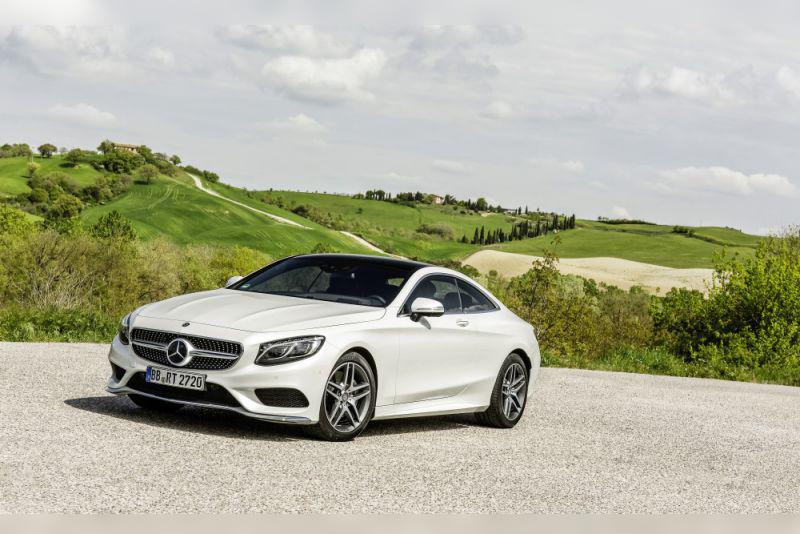
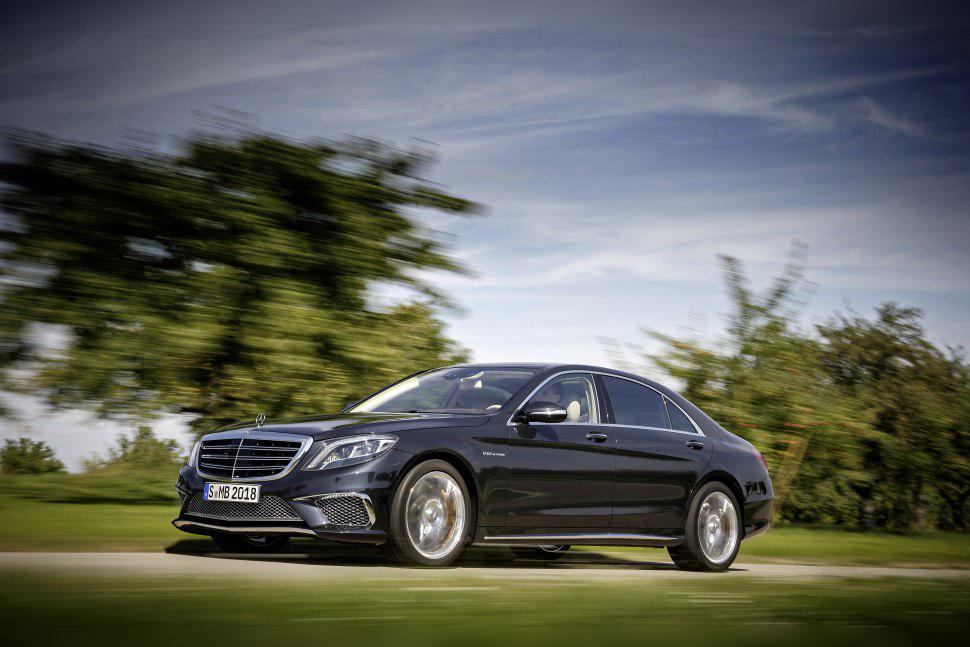
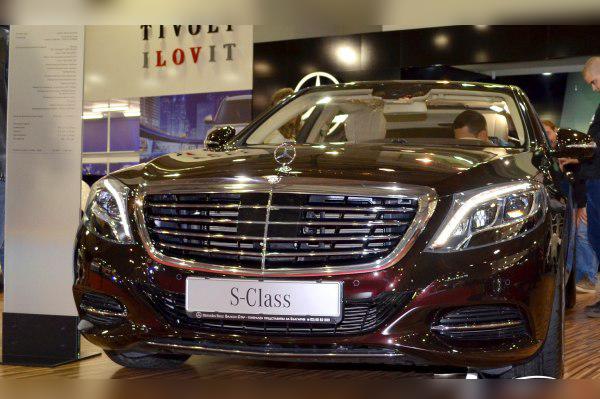
The engine designated as M 278.929 is an engineering masterpiece from Stuttgart. It is a 4.7-liter V8 BiTurbo petrol engine designed to replace the older naturally aspirated 5.5-liter units. Its main task was to deliver drastically higher torque at lower revs while reducing emissions. This specific derivative with 455 HP (335 kW) and a massive 700 Nm of torque is reserved for the top of the range – it was installed in the S-Class generations W222, V222 (long wheelbase) and C217 (S-Class Coupe).
Driving a car with this engine is an experience in itself; power is delivered linearly, with no turbo lag, and the sound insulation and smoothness make you feel like you are driving a V12. However, beneath that refinement hides a very complex mechanical assembly that requires surgically precise maintenance.
Technical specifications
| Characteristic | Data |
|---|---|
| Engine displacement | 4663 cc (4.7 L) |
| Power | 335 kW (455 HP) |
| Torque | 700 Nm (from 1800 rpm) |
| Engine code | M 278.929 |
| Injection type | CGI Direct injection (Piezo injectors) |
| Charging method | BiTurbo (Two turbochargers with intercooler) |
Reliability and maintenance
Timing system: Belt or chain?
The Mercedes M 278.929 uses a timing chain. Although earlier generations of the M278 engine had chronic issues with chain stretching, in this later version the problem was mitigated but not completely eliminated. The biggest issue comes from the hydraulic chain tensioners and oil non-return valves in the cylinder heads. If the oil drains from the tensioners while the car is parked, on the first cold start you will hear a sharp metallic rattle lasting 2 to 3 seconds until the pump builds up pressure. Ignoring this symptom leads to the chain jumping teeth and catastrophic engine failure.
Most common failures
The main nightmare of every M278 owner is cylinder wall damage (Silitec coating). Due to carbon deposits, poor lubrication, or injectors that “dribble” fuel and wash the oil film off the cylinder wall, the cylinders wear (scoring). The driver notices this as increased oil consumption, rough idle (misfires) and a dull knocking noise from the engine block. The solution is re-sleeving the engine, which is extremely expensive (depends on the market).
Another common problem is oil leakage at the camshaft sensors. Pressurized oil passes through the sensor, enters the engine wiring harness and, via capillary action, reaches the ECU, causing short circuits. Fortunately, installing “sacrificial” cables (adapter extensions) solves this problem preventively and is not expensive.
Service intervals and oil
There is no classic interval for a major service, because the engine uses a chain. However, a visual inspection of the chain and replacement of the accessory belt, rollers and tensioner is recommended at around 100,000 km. If rattling occurs on a cold start, the chain and related components must be replaced regardless of mileage (most often between 120,000 and 150,000 km).
The engine takes an impressive 8.0 to 8.5 liters of oil. The manufacturer recommends the MB 229.5 specification in grades 5W-30 or 5W-40. It is recommended to change the oil strictly every 10,000 km or once a year, because long “LongLife” intervals of 25,000 km kill these engines. Oil consumption between services is present; considering the two turbos and large displacement, it is normal to consume about 1 to 1.5 liters per 10,000 km with spirited driving. If it needs a liter of oil every 1,000 km, the engine has a serious problem.
Spark plugs
Since this is a powerful petrol engine with direct injection, spark plugs are replaced every 60,000 km or every 4 years. Using only OEM or top-quality aftermarket (NGK/Bosch) spark plugs is mandatory, with strict adherence to the specified tightening torque. A bad spark plug causes misfires, fuel does not burn properly, and unburned petrol washes oil off the cylinders and directly contributes to their wear.
Specific parts (costs)
Fuel injection system
The engine uses a sophisticated CGI direct injection system with Piezo injectors. They operate at extremely high pressure and deliver fuel in several pulses during one stroke. Over time they can become porous and start leaking fuel. Overhauling petrol Piezo injectors is practically impossible, and buying new ones is very expensive (depends on the market). In addition to the injectors, the high-pressure fuel pumps (HPFP) mounted on the camshafts can fail due to poor fuel quality, which manifests as loss of power and engine stalling under full throttle.
Turbochargers
The M278 has two turbochargers. Their service life largely depends on regular oil changes. On average, they easily last over 200,000 km without issues. However, what often fails are the turbo cooling lines and hoses (water and oil), whose plastic and rubber become brittle due to the enormous temperatures in the “V” of the engine (the so-called hot-V effect – even though the turbos on the M278 are on the outside of the block, the area around them is scorching hot). Replacing turbo hoses and seals requires many labor hours.
Emission control systems
Since this is a petrol engine, it does not have a DPF filter, diesel EGR or AdBlue system. Because of that, you will not have the typical city-driving issues related to regeneration. Instead, this engine relies on a PCV valve (crankcase ventilation system). Over time, the PCV membrane cracks, causing rough idle fluctuations, a hissing sound and increased oil consumption. Fortunately, replacing the PCV system is not a very expensive job if caught in time.
Fuel consumption and performance
Real-world fuel consumption
If you are worried about fuel consumption, the S 500 with a V8 engine is probably not the car for you. In city driving conditions, where stop-and-go traffic is inevitable, the heavy S-Class will unashamedly consume between 16 and 20 liters per 100 km. The laws of physics cannot be cheated when you need to move over 2 tons of weight from a standstill.
Performance on the highway and in the city
This engine is in no way “lazy”. With 700 Nm available from an incredible 1800 rpm, the car sets off authoritatively and accelerates frighteningly fast for its mass. On the highway, this engine is in its natural habitat. At 130 km/h, paired with the 9G-Tronic transmission, the engine “sleeps” at around 1,300 to 1,400 rpm. In these cruising conditions, fuel consumption drops drastically and can go down to a surprising 8.5 to 10 liters per 100 km.
Additional options and modifications
LPG installation
Is the M278 suitable for LPG? Plain and simple: No. Due to direct petrol injection inside the cylinder, the tips of the petrol injectors require constant cooling with liquid petrol. Even the most modern LPG systems that inject liquid gas or mix gas and petrol pose a huge risk. The thermal load on this engine is already enormous; installing LPG will almost certainly lead to burnt valves and destruction of the already sensitive cylinders.
Chiptuning
The tuning potential of this engine is brutal. Because it is factory-limited (so as not to overlap with S63 AMG models), a simple Stage 1 remap using only software, without any hardware changes, raises power from 455 HP to about 530 to 550 HP, while torque jumps to over 800 Nm. However, this comes with a warning: such torque puts a lot of stress on the transmission and 4MATIC transfer case. If you decide to remap, the oil change intervals in both the engine and transmission must be halved.
Transmission and drivetrain
Types of transmissions and their behavior
This V8 engine was never paired with a manual transmission, so it does not have a classic dual-mass flywheel or clutch kit. Power is transmitted through state-of-the-art automatic transmissions with a torque converter: the older but proven 7G-Tronic Plus (on earlier W222 model years) and the more modern 9G-Tronic with nine gears. Both options are available with 4MATIC all-wheel drive.
Transmission failures and maintenance
On the 7G-Tronic Plus transmission, the most common issue is harsh jolts when shifting from second to first gear, often caused by clogged valves in the mechatronic unit (valve body). The 9G-Tronic is smoother and faster, but has a more complex valve body. Although there is no dual-mass flywheel, there is a lock-up clutch inside the torque converter that wears over time. When it fails, the driver feels vibrations at constant speeds, and torque converter overhaul is expensive (depends on the market).
Also, on 4MATIC versions, the front differential and transfer case are very sensitive. If you drive with tires of different wear levels or different profiles front and rear, the transfer case will destroy itself very quickly.
Transmission service: The manufacturer once claimed that the oil is “lifetime”, but real-world experience proves the opposite. Regular transmission service (oil, filter and gasket replacement and flushing) is absolutely essential. On the 7G-Tronic this is done every 60,000 km, while the 9G-Tronic can handle up to 100,000 km, but mechanics recommend shortening the interval to 80,000 km to preserve the mechatronics.
Buying used and conclusion
What must be checked before buying?
When looking at a used Mercedes S 500 with this engine, aesthetics are secondary. Focus on the mechanics:
- Cold start: The engine must be completely cold. Bring a friend to stand by the hood. When you crank it, listen for metallic rattling in the first three seconds (problem with chain and tensioners).
- Cylinder endoscopy: This is the only way to be sure. Pay a skilled mechanic to remove the spark plugs and inspect the cylinder walls with a camera. If there are deep scratches (scoring), walk away from that car – the repair is financial suicide.
- Wiring and oil: Check the connectors on the camshaft sensors. If they are oily, it means oil has started traveling towards the ECU.
- Diagnostics (Star/Xentry): Be sure to check the history of misfires and injector corrections.
Conclusion: Who is this car for?
The Mercedes M 278.929 in the S 500 model is intended for true enthusiasts of powerful V8 machines who demand maximum comfort, silent cruising and explosive acceleration. However, this is a used car from the premium segment whose purchase price has dropped, but the cost of maintenance and spare parts remains at the level of a new car worth over 100,000 euros.
Do not buy this engine if you cannot afford the remaining budget for regular repairs and potential major failures (chain, air suspension, injectors). With conscientious maintenance by Mercedes-Benz specialists, driving this V8 engine is the ultimate highway pleasure.