Mercedes OM 640.940 (A 180 CDI / B 180 CDI) – Experiences, problems, fuel consumption and used-car buying tips
In short (TL;DR)
- Timing chain drive: The engine uses a timing chain, which reduces regular maintenance costs, but chain replacement requires engine removal due to the specific chassis design.
- High‑quality engine block: The engine itself is extremely durable and can cover very high mileage without issues with internal components.
- Problematic injector washers: A common issue is the loosening of the copper washers under the injectors (“black death”), which is easy to fix if caught in time.
- Sandwich floor: Due to the tilted engine position, the working space is cramped. Any major job (clutch, chain, turbo replacement) requires lowering the engine together with the front subframe, which significantly increases labor costs.
- Autotronic gearbox: The continuously variable (CVT) gearbox is the weakest point of this car. If not regularly serviced, failures are extremely expensive.
- DPF and EGR: Sensitive to exclusively city driving, prone to clogging.
Contents
- Introduction: About the engine and models
- Technical specifications
- Reliability and maintenance
- Specific parts and potential failures
- Fuel consumption and performance
- Additional options and modifications
- Gearbox and drivetrain
- Buying used and conclusion
Introduction: About the engine and models
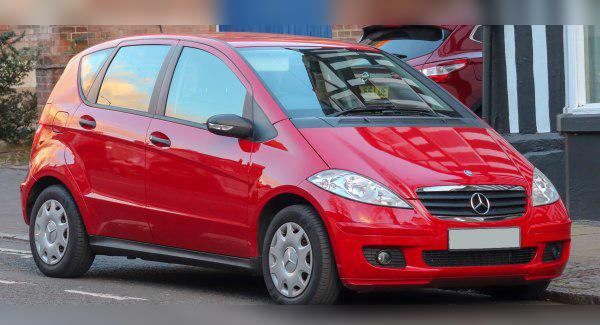
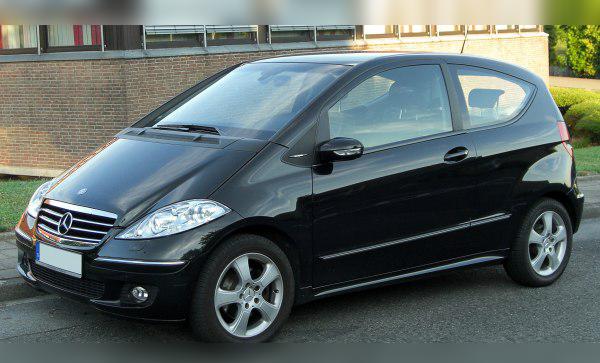
The engine designated as OM 640.940 is a well‑known Mercedes four‑cylinder diesel unit that was installed in the A‑Class (W169, C169) and B‑Class (W245). What makes this engine unique, but at the same time a nightmare for mechanics, is its architecture. It was designed for installation in the so‑called “sandwich floor”, which means it is mounted at a steep angle so that in the event of a frontal collision it slides underneath the passenger compartment. The 180 CDI with 109 hp (80 kW) is the sweet spot – it offers noticeably better performance than the weaker 160 CDI, while being more economical than the more powerful 200 CDI.
Technical specifications
| Specification | Data |
|---|---|
| Displacement | 1991 cc |
| Power | 80 kW (109 hp) |
| Torque | 250 Nm |
| Engine code | OM 640.940 |
| Injection type | Common Rail (Bosch) |
| Intake | Turbocharger (VGT), intercooler |
| Camshaft drive | Timing chain |
Reliability and maintenance
This power unit uses a timing chain rather than a timing belt to transfer power from the crankshaft to the camshafts. Because of that, there is no classic major service in the sense of regular belt replacement at a set mileage. Only the auxiliary (serpentine) belt, rollers, tensioner and water pump are replaced, roughly every 100,000 to 120,000 km. However, the chain is not eternal. It usually starts to stretch after around 250,000 km. The symptom is rattling on cold start. The problem is that replacing the chain on the OM 640 requires removing the entire powertrain together with the front subframe, which makes the job very expensive in terms of labor hours.
As for lubrication, the engine takes exactly 5.8 liters of oil. A synthetic oil of grade 5W‑30 that meets Mercedes specification MB 229.31 or 229.51 is recommended (mandatory because of the DPF filter). The engine is generally well sealed and does not consume excessive oil. Consumption of 0.2 to 0.5 liters between two services (every 10,000–15,000 km) is considered completely normal and is usually due to evaporation and minimal passage through the turbo bearings.
When it comes to the injectors, Mercedes used a reliable Bosch Common Rail system. The injectors themselves can easily exceed 300,000 km with good‑quality fuel. However, the most common failure on this engine is related to the copper washers under the injectors. Over time they loosen, so compression and unburnt fuel escape, forming a black, hard mass around the injectors (known as “black death”). Symptoms for the driver are: exhaust smell in the cabin when the ventilation is on and a rhythmic “hissing” in the engine’s operation. Replacing the washers is not expensive (depends on the market), but if neglected, removing seized injectors can be extremely complicated.
Specific parts and potential failures
The 180 CDI engine has a single turbocharger with variable geometry (VGT). Turbo lifespan is excellent if oil and filter change intervals are respected. Failures are mostly limited to the variable vane mechanism sticking due to soot build‑up (common with low‑rpm city driving), which results in loss of power and the engine going into limp mode (safety mode).
Post‑facelift models (from 2008 onwards, and some earlier depending on the Euro emissions standard) are equipped with a DPF filter and an EGR valve. These systems are a chronic weak point of all diesels in city conditions. The EGR valve gets dirty and sticks, while the DPF filter can become completely clogged if regenerations are repeatedly interrupted. Symptoms include loss of power, the “Check Engine” light coming on, and increased fuel consumption. One advantage of this engine, considering its generation, is that it does not have an AdBlue system, so you are spared problems with pumps, tank heaters and urea injectors that cause headaches for owners of newer vehicles.
Fuel consumption and performance
With its 109 hp and 250 Nm of torque, the A 180 CDI (as well as the B 180 CDI) is by no means a “sluggish” car. Although the B‑Class is heavier, 250 Nm provides excellent in‑gear acceleration and power that is more than sufficient for everyday needs, overtaking and climbing hills. Throttle response is good, especially on models with a manual gearbox.
Regarding fuel consumption, be realistic: the heavy chassis and taller body take their toll. Real‑world city consumption is between 6.5 and 7.5 l/100 km, especially in winter or heavy traffic. On open roads the situation is much better, with consumption dropping to around 4.5 to 5 l/100 km. On the motorway, at 130 km/h, the engine cruises at about 2400–2600 rpm (depending on whether it’s the 6‑speed manual or the Autotronic). Cabin noise is minimal at that point, and fuel consumption is around 5.5 to 6 l/100 km.
Additional options and modifications
Since this is the same engine block as in the more powerful 200 CDI version (which delivers 140 hp from the factory), the OM 640 in 180 CDI guise is very suitable for electronic power upgrades. A safe Stage 1 remap can raise power from 109 hp to around 135–140 hp and torque to nearly 300 Nm, without endangering the crankshaft or turbo. WARNING: Remapping is strongly recommended only for models with a manual gearbox. If you have the Autotronic (CVT) gearbox, avoid any power increase, as this gearbox cannot handle high torque and the metal belt inside will inevitably start slipping and fail.
Gearbox and drivetrain
This engine came with a 6‑speed manual gearbox and a automatic continuously variable (CVT) gearbox marketed as Autotronic (code 722.8).
The manual gearbox is extremely reliable and has no characteristic failures. However, models with this gearbox and the 109 hp engine are equipped with a dual‑mass flywheel. Its lifespan is around 200,000 km, depending on driving style. Symptoms of wear are knocking at idle, vibrations when starting and stopping the engine, and judder when moving off. The cost of replacing the clutch kit and dual‑mass flywheel is very high (depends on the market) for two reasons: the parts themselves (LUK/Sachs) are expensive, and labor is extremely costly because, due to the sandwich floor, the entire front subframe with the engine has to be removed.
The Autotronic (CVT) gearbox is a story of its own. It offers incredibly smooth driving, but is notorious for its reliability issues. The most common failures include: electronic control unit failure (the gearbox ECU is located inside the gearbox itself and overheats), valve body failure, and in the worst case, breaking or slipping of the metal belt that transmits power. Symptoms are: jerking when moving off, fluctuating revs even though the accelerator pedal is held steady, going into limp mode (staying in one “gear”) and the “Transmission Visit Workshop” message on the display. Oil changes in the Autotronic gearbox are absolutely critical and must be done strictly every 60,000 km. If this interval has been skipped, buying such a used car is a huge risk. For the manual gearbox, it is recommended to refresh the oil at 100,000 km (not mandatory, but beneficial for the synchros).
Buying used and conclusion
When buying an A 180 CDI or B 180 CDI with the OM 640 engine, focus on the following:
- Listen to the engine when cold: Rattling on start‑up indicates a stretched chain, which is a huge expense.
- Inspect the injectors: Remove the plastic engine cover. If you see black tar‑like deposits around the injectors or notice a strong smell of diesel/exhaust in the cabin, count on replacing the washers and re‑machining the injector seats.
- Test the clutch and gearbox: On a manual, switch off the engine without pressing the clutch and listen for a metallic knock (dual‑mass flywheel). On an Autotronic, the car must move off smoothly, without any jerks, and the revs during acceleration must rise linearly. Ask for invoices confirming gearbox oil changes!
- Check with diagnostics: Be sure to read the DPF saturation status and the condition of the glow plugs.
Conclusion: Who is this engine for?
The OM 640.940 (180 CDI) is an excellent, robust and economical engine for those who want a spacious car with compact exterior dimensions (A‑ and B‑Class). It is ideal for mixed driving (city and highway). If you are planning a long‑term purchase, our strong recommendation is the version with the manual gearbox. The Autotronic version should be bought only and exclusively if you have proof that the gearbox oil has been changed on time from day one, and if you have a reserve budget for a potential gearbox electronics failure. Keep in mind that maintenance of this car is more expensive than that of conventional hatchbacks like the Golf or Focus due to its specific chassis design, so choose only well‑maintained examples.