Mercedes-Benz OM 651.911 (170 hp): Experiences, problems, fuel consumption and used-car buying tips
Key points in short (TL;DR)
- Timing system: The engine uses a timing chain located at the rear (towards the gearbox), which makes the replacement procedure complicated and very expensive (depends on the market).
- Performance and flexibility: The BiTurbo system delivers an excellent 400 Nm already at 1,400 rpm, which makes it extremely responsive, without any noticeable turbo lag.
- Injection system: Early series (mostly up to 2012) had issues with Delphi piezo injectors, which were later mostly replaced in factory campaigns with more reliable electromagnetic ones.
- Weak points: Coolant leaks (water pump, plastic housings), cracking of the plastic intake manifold and DPF sensors.
- Eco systems: BlueTEC models are equipped with an AdBlue system which, over time, can require high maintenance costs due to NOx sensor failures.
- Fuel consumption: Considering its power, a very economical engine on open roads and highway cruising.
Contents
- Introduction: About the model and the engine
- Technical specifications
- Reliability and maintenance
- Specific parts and costs
- Fuel consumption and performance
- Additional options and modifications
- Gearbox and power transfer
- Buying used and conclusion
Introduction: About the model and the engine
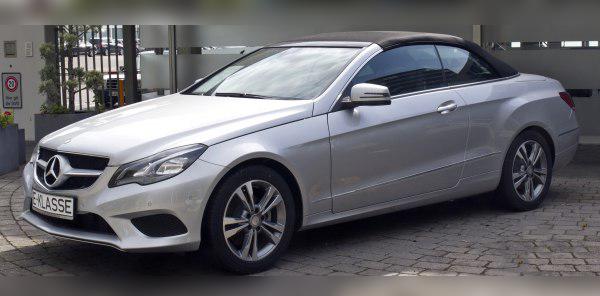
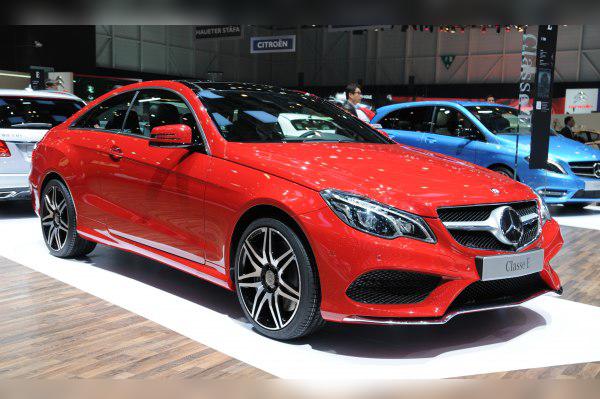
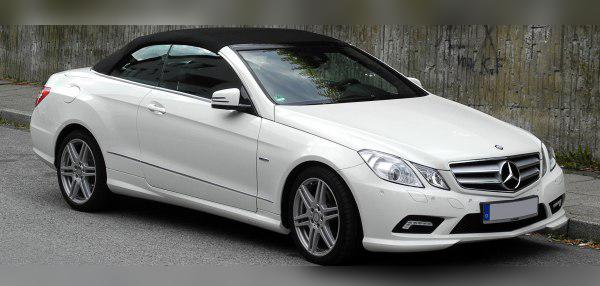
The engine with the code OM 651.911 is one of the most important power units in Mercedes’ recent history. Designed to replace the proven but older OM 646, this 2.1‑liter diesel carried the burden of the entire fleet – it was installed in everything from the C and E class, all the way to commercial vehicles and the S class. The variant we are talking about here delivers a round 170 hp (125 kW) with an impressive 400 Nm of torque. Due to the huge number of units produced in models such as the W204, C207, S204 and A207, this is an engine for which there is extremely rich service experience across Europe.
The main characteristic of this version is the advanced BiTurbo system (two‑stage turbocharging), which provides linear acceleration similar to engines with a significantly larger displacement, while at the same time managing to meet strict emission standards.
Technical specifications
| Engine displacement | 2143 cc |
| Power | 125 kW (170 hp) |
| Torque | 400 Nm |
| Engine codes | OM 651.911 |
| Fuel type and injection | Diesel / Common Rail direct injection |
| Charging system | BiTurbo (small and large turbocharger), intercooler |
Reliability and maintenance
Does this engine have a timing belt or a chain?
This unit uses a timing chain (simplex, single‑row chain) to drive the camshafts. A specific feature of the OM 651 engine is that the engineers decided to move the timing system (chain and sprockets) to the rear of the engine, towards the gearbox. The goal was pedestrian safety in a collision (a lower profile of the front of the engine), but for mechanics this is a nightmare. In many cases, for a complete and proper chain replacement, the engine has to be removed or the gearbox taken off.
What are the most common failures on this engine?
Although fundamentally robust, the OM 651.911 has several characteristic issues to watch out for:
- Cooling system problems: Coolant leaks are very common. The main culprits are the water pump and the plastic flange/housing of the fuel filter. Due to heat cycles, the plastic eventually becomes brittle and cracks. The driver notices this as a drop in coolant level in the reservoir and a specific sweet smell under the hood. The repair is not extremely expensive, but it is labor‑intensive.
- Intake manifold: The plastic intake manifold can crack over time due to pressure and high temperatures. Symptoms include hissing air under throttle, loss of power, increased black smoke and the “Check Engine” light coming on.
- DPF sensors: The differential pressure sensor often fails, sending incorrect information to the ECU, which prevents DPF regeneration and can lead to serious engine clogging.
At what mileage is the major service due?
There is no official factory interval for a major service (chain replacement), as it is assumed that the chain lasts for the “lifetime” of the engine. However, real‑world experience on the European market has shown that the chain stretches and requires attention at around 200,000 to 250,000 km. Because it is located at the rear, replacing the chain and tensioner is very expensive (depends on the market), so many owners wait until the chain starts to audibly warn them.
How many liters of oil does this engine take and which grade is recommended?
During a regular oil service this engine takes around 6.5 liters of oil. You must use only fully synthetic oil of grade 5W‑30 that meets the Mercedes‑Benz specification MB 229.51 or the newer MB 229.52 (so‑called Low‑SAPS oils adapted to engines with a DPF). Using the wrong oil directly damages the DPF and the turbochargers.
Does it consume oil between services?
Under normal conditions, the engine should not have excessive oil consumption. Topping up 0.5 to 1 liter per 15,000 km is considered completely normal, especially if the car is often driven at high speeds on the highway, due to the presence of the two‑stage turbocharger. If it consumes significantly more, the piston rings or turbochargers should be checked for leaks.
How long do the injectors last and how reliable are they?
The first series of OM 651 engines had a huge problem with Delphi piezo injectors, which could suddenly cut off engine operation. In the industry, this problem is known as one of the major recalls. Fortunately, after factory campaigns, a large number of vehicles received upgraded electromagnetic injectors, as well as a new engine wiring harness and software. In models after 2011/2012, this was mostly resolved systemically. If the injectors are of the newer type, they will easily cover 250,000 to 300,000 km before needing refurbishment. The driver will notice worn injectors through rough idle, “hammering” engine operation, increased black smoke and harder cold starts in winter.
Specific parts and costs
Does this engine have a dual‑mass flywheel?
It depends on the gearbox. Versions paired with the six‑speed manual gearbox do have a dual‑mass flywheel (DMF). Replacing it, together with the clutch kit and hydraulic release bearing, is always expensive (depends on the market). On the other hand, versions with an automatic gearbox (the majority of vehicles with this engine) use a torque converter, so they do not have a classic dual‑mass flywheel assembly as in manuals, although the converter still absorbs vibrations and may require overhaul at high mileage.
Injection system and turbochargers
The injection system operates at extremely high pressures, and good‑quality fuel and regular fuel filter changes are crucial. As mentioned, the early series of Delphi injectors were poor; Bosch and later revisions are excellent.
As for power, this engine uses a BiTurbo (two‑stage turbocharging) system. There are two turbochargers – a small high‑pressure one (responds quickly at low revs) and a large low‑pressure one (comes into its own at higher speeds). Their service life is excellent (they easily exceed 250,000 km), but only if the oil is changed on time. In case of failure, overhauling the BiTurbo system or the flap system that redirects exhaust gases is very expensive (depends on the market), as it involves a lot of mechanical work and vacuum actuators.
Does this model have a DPF, EGR valve and AdBlue?
As a modern diesel, it does have both a DPF and an EGR valve. The EGR valve requires periodic cleaning because it causes the entire intake manifold to accumulate a thick layer of soot. The DPF works quite well, but if the vehicle is used 90% in the city on short trips, it will definitely clog, which triggers a chain reaction of failures in the differential pressure sensor and dilution of engine oil (diesel entering the sump due to interrupted regenerations).
Regarding the AdBlue fluid (SCR system): Models with the BlueEFFICIENCY badge (often Euro 5) usually do not have AdBlue. On the other hand, models with the BlueTEC badge (and the E 220d with Euro 6 standard) are equipped with an AdBlue system. This system often causes serious problems. NOx sensors, the AdBlue tank heater and the pump module tend to fail. Any intervention on the SCR system is very expensive (depends on the market), which is why on BlueTEC models a detailed check with the original Star diagnostic tool is mandatory.
Fuel consumption and performance
What is the real fuel consumption in city driving?
Although Mercedes’ official figures sound very optimistic, in real heavy city traffic this engine consumes between 7.5 and 8.5 l/100 km. On heavier models such as the E‑Class estate (S204 or S212), this easily goes over 9 liters in the city. The Start‑Stop system (Eco mode) helps somewhat at traffic lights, but it does not make a dramatic difference.
Is this engine “lazy”?
On the contrary, the engine is not lazy at all. The main advantage of BiTurbo technology is that it masks any turbo lag. A massive 400 Nm is available already from 1,400 rpm. In the C‑Class (W204, C204) it even provides a somewhat sporty feel in mid‑range acceleration, while in the heavier E‑Class (C207/A207) it feels extremely smooth and powerful. Due to the huge torque at low revs, there is rarely a need to downshift when overtaking.
How does it perform on the highway?
The highway is the natural environment for the OM 651. Thanks to Mercedes’ excellent aerodynamics and gear ratios (especially with the 7G‑Tronic and 9G‑Tronic gearboxes), at a cruising speed of 130 km/h the engine runs at a very relaxed 1,900 to 2,200 rpm. At these speeds the unit is extremely quiet, and average fuel consumption drops to an impressive 5.2 to 6.0 l/100 km.
Additional options and modifications
How far can this engine be safely tuned (Stage 1)?
The OM 651 is a fantastic engine for a software remap. The same basic block and drivetrain are used in more powerful variants (such as the 250 CDI with 204 hp and 500 Nm). A safe Stage 1 remap on the 220 CDI 170 hp version easily raises power to 205–215 hp and torque to an impressive 480–500 Nm. If the injectors, DPF and automatic gearbox are in perfect condition, the engine will handle this power without any issues, and it can even show slightly lower fuel consumption on open roads due to less effort needed to move the mass.
Gearbox and power transfer
Which gearboxes are fitted and what are the common issues?
Depending on the production year and model, the following gearboxes were combined with this engine:
- 6‑speed manual: Robust and precise. The biggest problem is wear of the aforementioned dual‑mass flywheel at higher mileage.
- 5G‑TRONIC (older 5‑speed automatic): A virtually indestructible gearbox (“bulletproof”), but noticeably slower in shifting and increases fuel consumption compared to newer versions.
- 7G‑TRONIC PLUS (7‑speed automatic): The most common choice on facelift versions from 2011. It offers an excellent balance of comfort and efficiency. The most frequent issues are jerks when shifting from 2nd to 1st gear and mechatronic (valve body) problems due to neglected oil changes.
- 9G‑TRONIC (9‑speed automatic): Available on later E‑Class models (2013+). It shifts imperceptibly, lowers revs and fuel consumption to a minimum, but requires top‑notch, precise maintenance.
Service interval for the gearbox
Regardless of what the old service booklets say (the so‑called “filled for life” stories), the automatic gearbox definitely requires regular servicing. The automatic transmission oil and filter, with a thorough system flush, should be changed every 60,000 to 80,000 km. If during a test drive the car jerks, hesitates, or if the rev counter “hunts” up and down while driving at a constant throttle on the open road (most often a sign of a worn torque converter), be prepared for a repair that is very expensive (depends on the market).
Buying used and conclusion
What exactly should be checked before purchase?
- Cold start and chain noise: The car must be completely cold before inspection. If, on startup, you hear a sharp metallic noise (rattling, scraping) that lasts 3 to 5 seconds until the engine builds oil pressure and the tensioner tightens, the chain is due for an urgent and costly replacement.
- Coolant and oil leaks: Check the plastic hose junctions and the thermostat/water pump housing on the front and top of the block for traces of dried coolant.
- Diagnostics (mandatory before purchase): Connect the vehicle to Mercedes Star diagnostics. Check the DPF saturation level (amount of ash in grams and pressure difference), injector corrections in operation (they must not deviate drastically), as well as the fault memory related to the SCR / AdBlue system if it is a BlueTEC model.
Final conclusion: Who is this engine for?
A Mercedes‑Benz with the OM 651.911 (170 hp) engine is intended exclusively for people who regularly cover long distances, live for comfortable highway cruising and value superior torque with low fuel consumption. Due to the complexity of the accompanying eco systems (DPF, EGR, AdBlue), as well as the sensitive rear‑mounted chain, this diesel is absolutely not recommended for city use and short stop‑and‑go driving. Buying a well‑proven used example with detailed service history and upgraded injectors is a bull’s‑eye, but be prepared for the fact that maintaining a premium vehicle with a BiTurbo system requires deeper pockets when the time comes for regular servicing of its components.