Mercedes 2.1 BiTurbo OM 651.924 (250 CDI/BlueTEC): Experiences, issues, fuel consumption and used-car buying tips
- Power and torque: With 204 hp and an impressive 500 Nm, this engine offers V6 diesel performance with four‑cylinder fuel consumption.
- Timing chain: It is located at the rear of the engine (towards the cabin), which makes replacement significantly more expensive and complicated once it stretches.
- Injectors: Early series had notorious issues with Delphi piezo injectors, but in later models (from 2013/2014) these problems were largely solved by switching to proven solenoid or revised versions.
- BiTurbo system: Two turbos guarantee the absence of turbo lag, but they also double potential maintenance costs at high mileage.
- AdBlue (BlueTEC): Versions with the BlueTEC badge often suffer from failures of NOx sensors and the heater in the AdBlue tank, which can be extremely expensive.
- Gearboxes: Automatic transmissions (7G and 9G) are excellent, provided the oil has been changed strictly every 60,000 km.
- Recommendation: An excellent choice for long distances and highway driving, but a poor choice if you mainly drive in stop‑and‑go city traffic due to the DPF and EGR systems.
Contents
Introduction: A high‑class workhorse
The engine with the code
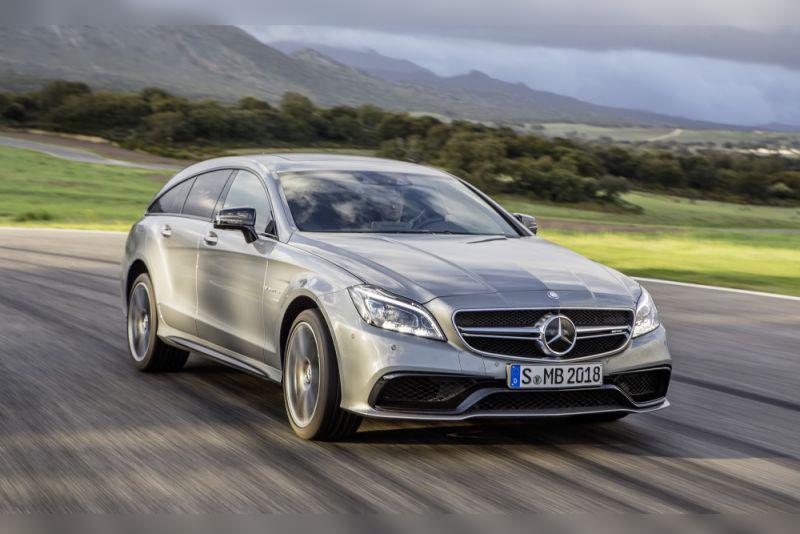
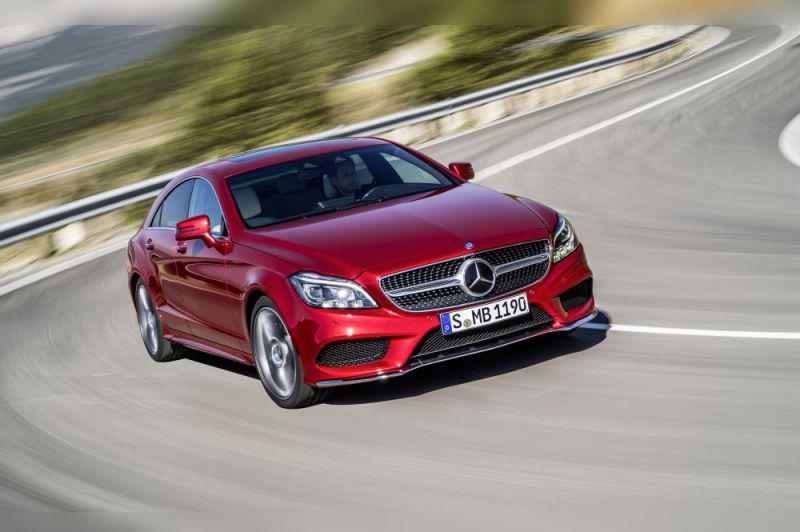
OM 651.924 is one of the most powerful iterations of Mercedes’ famous 2.1‑liter diesel. It was installed mainly in the E‑Class (W212/S212) and CLS (C218/X218), including facelift versions. Its badge on the trunk is usually
250 CDI or
250 BlueTEC (depending on the Euro emission standard and the presence of the AdBlue system). This engine is extremely important for Mercedes because it had to reconcile two worlds: to offer massive torque typical of larger six‑cylinder units, while at the same time meeting strict emission standards and keeping fuel consumption low. Although it carries a reputation of being “problematic” from its early production days (before 2012), the versions found in facelift models are significantly refined and more reliable, provided they have been properly maintained.
Technical specifications
| Parameter |
Value |
| Engine code |
OM 651.924 |
| Displacement |
2143 cc |
| Power |
150 kW (204 hp) |
| Torque |
500 Nm |
| Fuel type |
Diesel |
| Injection system |
Common‑rail (direct injection) |
| Forced induction |
BiTurbo (two turbochargers), intercooler |
Reliability and maintenance
Does this engine have a timing belt or a chain?
The OM 651 engine uses a
chain for timing. What is specific (and somewhat infamous among mechanics) is that the chain is located
at the rear of the engine, right next to the firewall. This engineering solution allowed for better pedestrian protection in a crash and a lower hood line, but it made chain replacement extremely demanding. To replace the chain completely with all guides and tensioners, the engine often has to be removed from the car, which makes labor very expensive (depends on the market).
At what mileage is the “major service” done?
Since the engine has a chain, a “major service” in the classic sense does not exist at a fixed interval. The chain is designed to last a long time, but in practice
chain stretching most often occurs between
200,000 and 250,000 km. The symptom is a clearly audible metal‑on‑metal rattle during the first cold start (until the tensioner gets oil pressure). As soon as you hear that sound, replacement is mandatory, because a broken or skipped chain leads to catastrophic engine failure (valves hitting the pistons).
Oil: quantity, grade and consumption
This engine takes exactly
6.5 liters of engine oil. Due to the DPF filter, it is mandatory to use oil that meets
Mercedes‑Benz specifications 229.51 or 229.52 (low‑SAPS oils), most commonly in
5W‑30 grade.
As for oil consumption, the OM 651 is not known as a heavy oil burner like some competing engines. It is normal for it to consume between
0.1 and 0.5 liters per 10,000 km. If the engine consumes more than 1 liter per 10,000 km, the problem often lies in the turbos, failed crankcase ventilation (PCV valve) or piston rings.
Injectors and the most common failures
Since this is a diesel unit, injector life depends on fuel quality, but on average they last between
200,000 and 250,000 km. Early versions of the OM 651 engine (before 2012) had huge problems with Delphi piezo injectors that would suddenly fail, putting the car into limp mode (safety mode). In the models you mentioned (facelift 2013/2014+), Mercedes solved this problem by switching to more reliable solenoid injectors or revised piezo systems.
Besides the timing system, the
most common failures on this engine include:
1.
Coolant leaks at the water pump or plastic junctions.
2.
Mixing of oil and coolant due to failure of the oil filter housing gasket (a common and potentially dangerous issue if not noticed in time).
Specific parts and costs
Dual‑mass flywheel
If the car has a manual gearbox (which is very rare in the E‑Class and CLS with this engine),
yes, it has a dual‑mass flywheel. Its lifespan is usually around 150,000–200,000 km, and replacement together with the clutch is expensive (depends on the market). Automatic transmissions do not have a classic dual‑mass flywheel, but use a torque converter (the so‑called
Wandler), which has an integrated lock‑up clutch. When that fails, you feel vibrations during acceleration and cruising, and torque converter overhaul is in the same price range as dual‑mass flywheel replacement.
Turbochargers (BiTurbo system)
The engine has
two turbochargers (BiTurbo) connected in a sequential system. The smaller turbo works at low revs and spools up quickly, providing instant response, while the larger turbo takes over at higher revs to deliver maximum power. Their service life is usually over 250,000 km if oil is changed regularly and the engine is not switched off hot immediately after hard driving. Failures occur more often on
vacuum hoses and actuators (wastegates) than on the turbos themselves. The failure manifests as loss of power and a whistling sound under acceleration. Overhauling two turbos is very expensive (depends on the market).
DPF, EGR and AdBlue (BlueTEC) issues
Yes, the engine has a DPF (diesel particulate filter) and an EGR valve. If the car is driven mainly in the city, the
EGR valve and intake manifold quickly fill with soot deposits. There are plastic flaps (swirl flaps) in the intake manifold that regulate airflow; due to soot they can get stuck, which leads to the Check Engine light coming on and loss of power. Intake cleaning is recommended as prevention.
AdBlue (on BlueTEC models): This is by far the most painful point of the newer versions of this engine. The system is used to reduce NOx emissions. The most common failures are
NOx sensors (there are two of them) and the
heater/pump integrated into the AdBlue tank. Repairing these systems is extremely expensive (depends on the market). The symptom is a message on the dashboard saying, for example, that you have 800 km left before the engine will no longer start if the problem is not resolved.
Fuel consumption and performance
Real‑world fuel consumption
In heavy bodies such as the Mercedes E‑Class and CLS (especially estates and 4MATIC versions that exceed 1.8 tons), fuel consumption in strictly
city driving ranges from
7.5 to 9.5 l/100 km.
On open roads and country highways, consumption drops drastically and can be surprisingly low, around
5.0 to 6.0 l/100 km.
Performance: Is the engine “lazy”?
Absolutely not. With
500 Nm of torque available very low down (thanks to the small turbo), throttle response is excellent. This engine moves the E‑Class and CLS with incredible ease. Only at speeds above 160 km/h do you feel that it lacks the breath of a larger 3.0 V6 engine, but in everyday driving and sudden overtakes on country roads, the 250 CDI is fantastically quick and agile.
On the motorway
This is the natural environment for the OM 651 engine. At 130 km/h, paired with the 7G‑Tronic or 9G‑Tronic gearbox, the engine cruises at very low revs (between 1,600 and 1,900 rpm, depending on the ratio), in almost complete silence. Fuel consumption on the motorway at 130 km/h is around
6.0 to 6.5 l/100 km.
Additional options and modifications (Remapping)
This engine is very popular for chiptuning (software optimisation). Since it has a BiTurbo system and a strong block, a safe
Stage 1 remap can raise power to about
235 to 245 hp and torque to a frightening
580 to 600 Nm.
However, although the engine can mechanically withstand this power, you should be careful. The main limiting factor becomes the torque converter (Wandler) in the automatic transmission, which can start to slip if this much torque is used too aggressively. Also, the increased thermal load on the DPF filter can shorten its service life.
Transmissions and power delivery
Which transmissions are fitted?
Over the years of production, this engine was paired with several gearboxes:
-
5G‑Tronic: An older but virtually indestructible five‑speed automatic (mainly in earlier model years before the major facelift).
-
7G‑Tronic PLUS: The most common choice in models from 2011 to 2014. A seven‑speed automatic that offers an excellent compromise between comfort and efficiency.
-
9G‑Tronic: A nine‑speed latest‑generation automatic, fitted towards the end of W212 and C218 production. Incredibly smooth and economical.
-
6‑speed manual: Very, very rare to find in 250 CDI models, let alone in the luxury CLS.
Transmission failures and maintenance
Manual gearboxes are mechanically flawless, but require clutch and dual‑mass flywheel replacement as mentioned earlier.
With
automatic transmissions (especially the 7G‑Tronic PLUS), the most common problems originate from the
valve body (mechatronics) or speed sensors inside the gearbox. Symptoms are harsher shifts from 2nd to 3rd gear, “thumping” when shifting from D to R, or staying stuck in one gear.
The golden rule for all Mercedes automatics is:
Oil, filter and gasket in the gearbox must be changed strictly every 60,000 km! The procedure is done using a machine flush under pressure so that old oil is also removed from the torque converter. Skipping this service guarantees valve body failure, which is an extremely expensive repair (depends on the market).
Buying used and conclusion
What exactly should you check before buying?
When looking at a used E 250 or CLS 250 with this engine, focus on the following:
1.
Cold start (sound check): The car must have been parked and off for several hours. Ask the seller not to start it before you arrive. If during cranking and the first few seconds of running you hear a loud metallic rattle from the area near the windshield/rear of the engine – the chain needs replacing.
2.
Transmission history: Ask strictly for proof (invoices) that the oil in the automatic gearbox has been changed. If the car has 250,000 km and the oil has never been changed, expect torque converter problems.
3.
Diagnostics are mandatory: Do not buy this car without dedicated original diagnostics (Star/Xentry). Check DPF saturation (ash content in grams), injector corrections (they must be within normal limits) and definitely the condition of the AdBlue system if it is a BlueTEC model.
4.
Oil leaks: Inspect the bottom of the engine, around the oil pan and at the front near the water pump and oil filter housing.
Who is this engine for?
Mercedes’ 2.1 BiTurbo (OM 651.924) with 204 hp is a masterful long‑distance cruiser. If you need a reliable, fast and spacious car (E‑Class or CLS) with which you will regularly cruise on main roads and motorways across Europe, this is one of the best engines you can choose. It offers performance close to V6 units, with noticeably lower registration and fuel costs.
On the other hand, if the car will mainly be used as a city taxi or for short trips where the engine does not have time to warm up properly, the DPF and EGR systems will drive you crazy and repairs will be expensive.