Nissan MR20DE 2.0 (141 hp) – Experiences, issues, fuel consumption and used-car buying tips
- Timing chain drive: Saves you from the classic “major service”, but requires regular oil changes to prevent the chain from stretching.
- Risk when changing spark plugs: The cylinder head walls are extremely thin. Over-tightening the spark plugs leads to cracking of the cylinder head and mixing of oil and coolant.
- Oil consumption: Pre-facelift models (up to 2010) often suffer from poor piston rings that cause increased oil consumption.
- CVT transmission maintenance: The automatic is comfortable, but requires strict oil changes every 40,000 to 50,000 km, otherwise failures are very expensive.
- LPG (Autogas): Not the happiest solution because the engine has no hydraulic lifters and the valve seats are soft.
- No expensive eco peripherals: Since it’s a naturally aspirated petrol engine, forget about problems with DPF filters, AdBlue systems, sensitive injectors and EGR valves.
Contents
- Introduction: About the engine and models
- Technical specifications
- Reliability and maintenance
- Specific parts and costs
- Fuel consumption and performance
- Additional options and modifications
- Transmission and drivetrain
- Buying used and conclusion
Introduction: About the engine and models
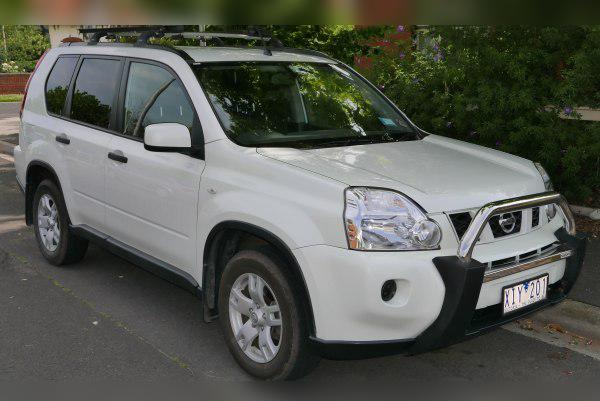
When people talk about reliable, old-school naturally aspirated petrol engines that can easily handle larger bodies, the MR20DE (known as M4R at Renault) designation comes up very often. This two-litre petrol engine is the result of joint development by the Nissan–Renault alliance. It was conceived as a robust and simple unit that would offer buyers an alternative to modern but often delicate diesels. It was installed in extremely popular SUVs such as the first-generation Nissan Qashqai (J10, as well as the extended Qashqai+2 NJ10) and the spacious Nissan X-Trail (T31). With its 141 hp and 196 Nm of torque, this engine targets drivers who value longevity more than lightning-fast in-gear acceleration.
Technical specifications
| Specification | Data |
|---|---|
| Engine code | MR20DE (Renault: M4R) |
| Engine displacement | 1998 cc |
| Power | 104 kW (141 hp) at 6000 rpm |
| Torque | 196 Nm at 4800 rpm |
| Injection type | Multi-Point Injection (MPI) – Indirect injection |
| Aspiration | Naturally aspirated (No turbo) |
| Timing system | Chain (Timing chain) |
Reliability and maintenance
One of the first questions every buyer asks is about the timing system. The MR20DE engine uses a timing chain. In practice, this means there is no classic “major service” in the sense of replacing a timing belt every 60,000 or 80,000 km. However, that doesn’t mean the timing is eternal. The service life of the chain directly depends on the quality of the oil and the replacement intervals. On average, the chain can last between 200,000 and 250,000 km before it stretches, and the symptom of wear is metallic rattling on a cold start. When the time comes for an inspection, at around 100,000 to 120,000 km it is recommended to replace the auxiliary (serpentine) belt, idler pulleys, tensioner and water pump, which represents a kind of major service for the engine’s peripheral components.
As for lubrication, this engine takes about 4.4 litres of engine oil, with a recommended viscosity of 5W-30 or 5W-40, depending on the climate and the manufacturer’s recommendation in the manual. The burning issue with older versions of this engine (pre-facelift, before 2010) is increased oil consumption. The cause lies in the design of the piston rings, which tend to seize due to carbon deposits, especially if the car is driven mostly in the city with infrequent oil changes. Consumption of 0.2 to 0.3 litres per 1000 km is considered “normal” by the manufacturer for older models, although it indicates wear. If you see bluish smoke from the exhaust when you press the accelerator, the rings are most likely due for replacement. On facelifted models (from 2010 onwards), Nissan revised the rings and mitigated this problem.
Since this is a petrol engine, spark plugs are a key item. It is recommended to install iridium spark plugs, which are replaced every 60,000 to 90,000 km. However, this is where we come to the most dangerous flaw of this engine. The cylinder head walls around the spark plug threads are extremely thin. If a mechanic over-tightens a spark plug (does not use a torque wrench and exceeds the specified 15–20 Nm), the cylinder head cracks! The symptoms of this costly failure are mixing of oil and coolant, loss of coolant, “mayonnaise” on the oil filler cap and engine overheating. Therefore, entrust spark plug replacement only to a meticulous mechanic.
Specific parts and costs
One of the biggest benefits of this engine lies in what it doesn’t have. Since the MR20DE is a naturally aspirated petrol engine with indirect (MPI) injection, it does not have a turbocharger, a high-pressure fuel pump, sensitive piezo injectors or complex exhaust after-treatment systems. You won’t have to worry about a clogged DPF filter, a problematic EGR valve or a frozen AdBlue system. The injectors are simple, their service life is extremely long, and if they do get dirty (most often due to poor fuel), ultrasonic cleaning is an inexpensive and effective solution.
On the other hand, the drivetrain can bring surprises. If you are buying a model with a manual gearbox (especially in 4x4 versions of the X-Trail and Qashqai), the engine often has a dual-mass flywheel. Although the vibrations of a petrol engine are much milder than those of a diesel, so the flywheel lasts significantly longer, when the time comes to replace it (together with the clutch kit), the cost can be considered very high (depending on the market). In front-wheel-drive versions you can also find a regular solid flywheel, so it is necessary to check the exact setup via the VIN before purchase.
Fuel consumption and performance
We must not forget that the Qashqai+2 and X-Trail are not light cars, and their aerodynamic drag is high. Consequently, the 141 hp MR20DE is not a racer. The engine often feels somewhat “lazy” at low revs, given that the maximum torque of 196 Nm is delivered only at a high 4800 rpm. To get the car to accelerate dynamically when overtaking, you have to rev it high, which brings noise and higher fuel consumption.
In terms of real-world consumption in city traffic, you can expect figures of 10 to 12 litres per 100 km, or even more if it is a 4x4 version with an automatic transmission. On the motorway, at a cruising speed of 130 km/h, consumption is around 8 to 9 litres. The engine speed on the motorway depends on the gearbox. With the six-speed manual, at 130 km/h the engine will be spinning at a reasonable and relatively quiet ~3200 rpm. The CVT, on the other hand, can lower the revs on level ground by keeping the engine in its optimal range, but on every incline it will “pin” the needle at 4000+ rpm, creating the so-called “scooter effect”.
Additional options and modifications
Due to the high fuel consumption, many owners wonder whether the MR20DE is suitable for LPG (autogas) conversion. The technical answer is: it can be done, but it requires great care. This engine does not have hydraulic valve lifters (clearances are adjusted manually using shims), and the valve seats are made of relatively soft material. Running on LPG raises combustion temperatures, which leads to rapid valve seat recession. If you install LPG, it is mandatory to fit a valve lubrication system (so-called valve saver / flashlube) and strictly check valve clearances every 40,000 km. If this is neglected, the valves will burn, and repairing the cylinder head is extremely expensive.
As for remapping (Stage 1 software optimisation), on a naturally aspirated engine like this it is basically a waste of money. The absence of a turbocharger means that by remapping the ECU you can gain at most 5 to 8 hp, which in practice you will not even feel in a heavy SUV.
Transmission and drivetrain
The MR20DE was offered in combination with a six-speed manual or a continuously variable CVT automatic (Jatco JF011E), with options for front-wheel drive (2WD) or all-wheel drive (4WD).
The manual gearbox is mechanically extremely reliable and rarely causes headaches. The most common expense is simply regular replacement of the clutch kit and, if fitted, the dual-mass flywheel. As a preventive measure, the oil in the manual gearbox is usually changed every 60,000 to 80,000 km.
The Jatco CVT gearbox, on the other hand, requires encyclopaedic levels of care. The automatic provides extremely smooth city driving because there are no classic jolts during gear changes. However, its reliability depends solely on regular maintenance. The gearbox manufacturer (Jatco) insists on replacing the NS-2 fluid and the transmission filter every 40,000 to 50,000 km. If the oil is not changed on time, tiny metal shavings from the chain destroy the valve body and the stepper motors. Symptoms of a failing CVT are jerking when moving off, fluctuating revs even though you hold the accelerator pedal steady, dull thumps when shifting from P to D or R, and entering “limp mode” (safety mode) with a warning light. Repairing a damaged CVT is considered very expensive (depending on the market).
Buying used and conclusion
When you go to look at a used car with this engine, you need to be thorough. The most important things are:
- Pre-start inspection: Be sure to check the dipstick before starting the engine. If the oil is at the minimum (or below), the owner does not take care of the car or the engine is consuming abnormal amounts of oil.
- Cold start: The engine must be completely cold when starting. If you hear metallic scraping and rattling for the first 2–3 seconds, the chain is stretched and needs to be replaced.
- Test drive with CVT: Drive the car both very gently and with full throttle. Any jerking, sudden jumps of the rev counter or delayed response are signs that the gearbox needs an overhaul.
- Service history check: Ask for invoices for spark plug replacement and ask whether the car is losing coolant, due to the aforementioned issue with a cracked cylinder head.
Final word: The Nissan (Renault) MR20DE 2.0 with 141 hp is an automotive “workhorse”. Who is it for? It is intended for calm drivers who cover around 10,000 to 15,000 kilometres per year, mostly locally with occasional family trips, and who are fed up with expensive repairs on modern turbo diesels (DPF, injectors, pumps). If you can forgive it slightly higher fuel consumption and a somewhat lazier character, and if you find a regularly serviced example whose CVT (if fitted) has not been abused and overheated, this engine can serve you for hundreds of thousands of kilometres without stress.