Nissan 2.0 QR20DE engine: Experiences, issues, fuel consumption and used car buying guide
- Timing system: Uses a chain that tends to stretch after 150,000 km, which leads to engine running issues.
- Oil consumption: A common problem caused by stuck piston rings and worn valve stem seals.
- Catalytic converter: Disintegration of the pre-catalyst can suck ceramic dust into the cylinders and permanently destroy the engine block.
- Transmission: The automatic CVT gearbox (especially in the Primera P12) is extremely sensitive to poor maintenance and repairs are very expensive.
- LPG (Autogas): Handles LPG conversion well, but requires regular valve clearance checks because the engine has no hydraulic lifters.
- Purpose: A reliable workhorse if you find a well-preserved example, but it needs a meticulous owner who doesn’t skimp on quality oil.
Contents
- Introduction: Old-school workhorse
- Technical specifications
- Reliability and maintenance
- Specific parts and costs
- Fuel consumption and performance
- Additional options and modifications
- Gearbox and power delivery
- Buying used and conclusion
Introduction: Old-school workhorse
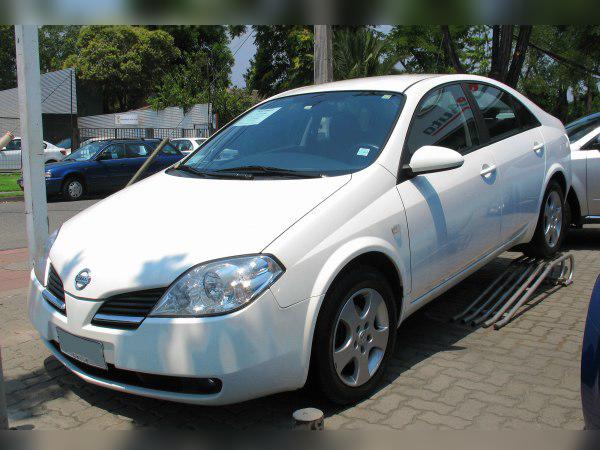
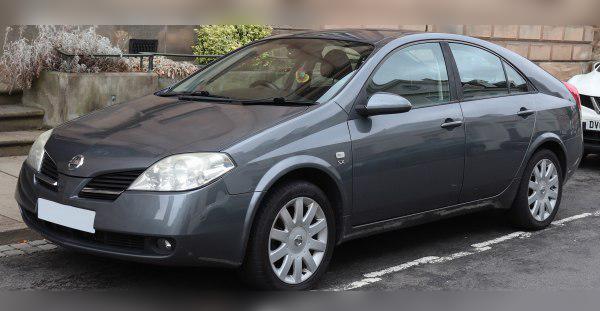
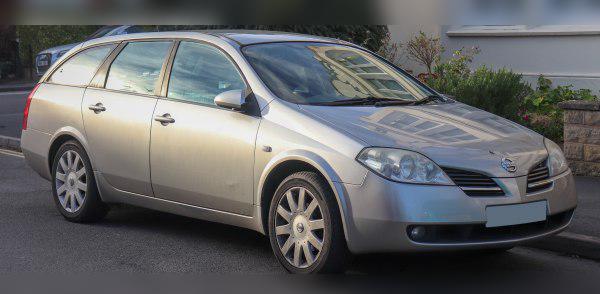
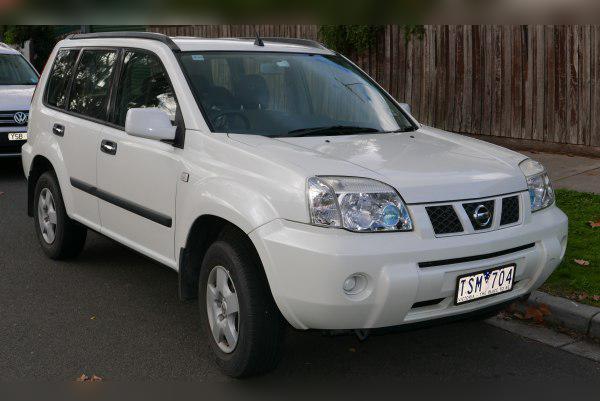
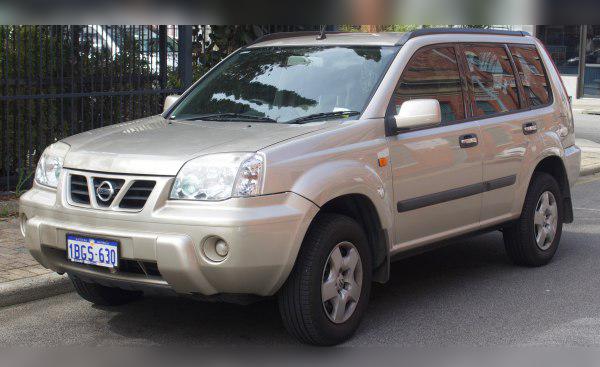
The QR20DE engine is Nissan’s naturally aspirated 2.0-liter petrol unit that replaced the legendary SR series in the early 2000s. It was mainly installed in family cruisers such as the Nissan Primera (P12) and the first generation of the popular SUV Nissan X-Trail (T30). Its aluminum construction brought lower weight and smoother operation, but also introduced certain engineering compromises. Although it was designed as a very long-lasting engine, real-world use has shown that it is sensitive to neglect, especially irregular oil changes.
Technical specifications
| Specification | Data |
|---|---|
| Engine displacement | 1998 cc |
| Engine power | 103 kW (140 hp) |
| Torque | 192 Nm |
| Engine code | QR20DE |
| Injection type | Multi-point (indirect injection) |
| Aspiration | Naturally aspirated |
Reliability and maintenance
When talking about this engine’s architecture, it’s important to note that it uses a timing chain to drive the camshafts, not a timing belt. In theory, the chain should last as long as the engine itself, but in practice with the QR20DE it’s different. The most common failure on this unit is timing chain stretch, which usually occurs between 150,000 and 200,000 km. The driver will notice this through rough running on cold start (metallic rattling), loss of performance and, eventually, the “Check Engine” light coming on with diagnostic trouble codes related to the crankshaft and camshaft sensors (P0335 and P0340).
As for servicing, a classic “major service” in the sense of routinely replacing the timing set at a fixed mileage is not done preventively. Instead, the chain, guides and tensioner are replaced when the chain starts to make noise or when diagnostic errors appear. The cost of this job ranges from 200 to 450 euros (depending on the market).
The engine takes approximately 3.9 to 4.0 liters of engine oil (including the filter), and the manufacturer’s recommended viscosity is usually 5W-30, although on higher-mileage engines in warmer climates 5W-40 has proven to work very well.
Oil consumption between services is this engine’s Achilles’ heel. The problem arises due to stuck oil control rings on the pistons and worn valve stem seals. Around 0.2 to 0.3 liters per 1000 km is tolerated as normal consumption; however, on poorly maintained engines it can jump to over 1 liter per 1000 km. In that case, replacing the rings and refurbishing the cylinder head becomes inevitable – an expensive but necessary job (depending on the market).
Since this is a petrol engine, the spark plugs play a key role in smooth running and in protecting the ignition coils. For standard plugs, the replacement interval is around 60,000 km, while engines equipped with platinum or iridium plugs can go up to 100,000 km before needing replacement.
Specific parts and costs
In its standard petrol version, this engine usually comes with a solid flywheel (no dual-mass flywheel), which is a huge relief for the owner’s wallet. This applies to the classic 5-speed manual gearboxes paired with the QR20DE.
The fuel injection system is a classic multi-point setup (indirect fuel injection into the intake manifold). The injectors are extremely reliable and rarely cause problems. They are not as sensitive to poor-quality fuel as modern direct-injection injectors, and if they do become clogged, ultrasonic cleaning is usually inexpensive and solves the issue.
Because this is a naturally aspirated petrol engine, it has no turbocharger, no intercooler, no DPF filter and no AdBlue system. This immediately eliminates many of the potentially very expensive failures typical of modern diesels and turbocharged petrol engines.
Certain versions of this engine have an EGR valve to meet emission standards, but it does not clog nearly as aggressively as on diesel engines. However, one specific and catastrophic failure on this engine relates to the pre-catalyst integrated directly into the exhaust manifold. Due to overheating or poor combustion, the ceramic honeycomb of the pre-cat can crumble. Because of the specific valve timing overlap, the engine can suck this abrasive ceramic dust back into the cylinders, which permanently scores the cylinder walls and destroys the engine. As a preventive measure, many owners remove this honeycomb on older used cars.
Fuel consumption and performance
The Nissan Primera P12 and X-Trail T30 are fairly heavy and not particularly aerodynamic cars, and the 140 hp engine has no help from a turbocharger. For that reason, don’t expect agility or sporty performance.
The engine feels somewhat “lazy” when pulling away from a standstill, especially in the heavy 4x4 X-Trail. The 192 Nm of torque is delivered at a relatively high 4000 rpm, so for any brisk overtaking you have to rev it high.
Real-world fuel consumption in stop-and-go city driving often unpleasantly surprises owners. In the Primera it’s around 10–11 l/100 km, while in the X-Trail T30 it often exceeds 12 or even 13 l/100 km in winter driving conditions.
On open roads and highways (non-motorway) consumption can drop to a reasonable 7–8 l/100 km. On motorways, at a cruising speed of 130 km/h, depending on the gear ratios (manual or automatic), the tachometer usually sits between 3,200 and 3,500 rpm. At these speeds the engine becomes clearly audible in the cabin, and fuel consumption rises to about 9–10 l/100 km due to higher air resistance.
Additional options and modifications
Because of the relatively high petrol consumption, many drivers opt for an LPG conversion. The good news is that the indirect injection system accepts a sequential LPG kit very easily and cheaply.
However, there is one major drawback for LPG users: the QR20DE does not have hydraulic valve lifters. Valve clearance is adjusted mechanically by selecting appropriate shims (buckets). Since LPG burns at higher temperatures and gradually “sinks” the valve seats, the clearance must be checked every 40,000 to 50,000 km. If this is neglected, the valves end up “tight” and can burn. Installing a valve saver system (Flashlube) is recommended.
When it comes to “chipping” (Stage 1 remap), on naturally aspirated engines this is simply a waste of money. A software remap can extract at most 5 to 8 hp from this engine, which in practice you won’t even notice given the vehicle’s weight. If you want a fast car, this is not the engine for you.
Gearbox and power delivery
Depending on the model and market, three types of gearboxes were fitted to this engine:
- 5-speed manual gearbox: By far the most reliable option. Failures are extremely rare, with worn synchros appearing only on cars that have covered close to half a million kilometers. The clutch is standard, and the cost of replacing the complete kit (pressure plate, disc, release bearing) is not high (depending on the market).
- Conventional automatic (4-speed): Mostly fitted to the X-Trail T30. It’s an old-fashioned, slow but “indestructible” gearbox (with a hydraulic torque converter). It can’t boast speed or fuel efficiency, but it rarely fails as long as it has oil.
- CVT automatic gearbox (Hyper CVT): Often installed in the Primera P12. This is the weakest link in this drivetrain. The most common failures involve the “stepper” motor that controls the ratio changes, as well as wear of the metal belt due to irregular oil changes. Repairing a CVT gearbox is very expensive (depending on the market).
Gearbox service intervals: For the manual gearbox, it’s advisable to change the oil every 60,000 to 80,000 km. For CVT and conventional automatics, changing the oil and filter every 60,000 km is absolutely mandatory if you want to prevent costly failures.
Buying used and conclusion
You need to be careful when buying a used car with the QR20DE engine. Always schedule the inspection in the morning when the engine is completely cold.
What exactly should you check?
- Listen to the engine at first start: If you hear the chain rattling in the first few seconds, prepare money for a timing set replacement.
- Watch the exhaust: Have someone else start the car while you observe the tailpipe. Bluish smoke at startup or when revving hard clearly indicates oil burning (rings or valve stem seals).
- Dipstick: Pull out the oil dipstick. If the oil is at the minimum level or black like tar, walk away from that car – this engine does not forgive lack of lubrication.
- OBD diagnostics: Read the fault codes. Any codes related to the camshaft/crankshaft position sensors (P0340/P0335) indicate a stretched chain.
Who is this engine for?
The QR20DE is for calm drivers who need a spacious and safe car for long trips or winter conditions (in the case of the 4x4 X-Trail), and who want to avoid the expensive failures of modern diesels (dual-mass flywheel, turbo, high-pressure injectors, DPF). Peripheral maintenance is cheap, but for the engine block itself to last, you must use quality oil, change it at a maximum of every 10,000 km, and regularly check the level on the dipstick.